Category Archives: Microbiology

Research -France publishes 2021 Campylobacter data

Food Safety News

Data from Campylobacter surveillance in 2021 confirmed trends seen in previous years, according to the most recent statistics published by Santé Publique France.

Findings are based on the National Reference Center (CNR) for Campylobacter and Helicobacter and mandatory declaration of outbreaks. Past data from 2020 showed Campylobacter infections were not impacted by public health measures taken because of the COVID-19 pandemic.

Campylobacter has been increasing since 2013 when online data entry was introduced. Scientists said this could reflect an actual rise in infections or it may be because of other factors such as better detection methods.

RASFF Alerts – Animal Feed – Salmonella – Poultry Meal – Pet Food

RASFF

Salmonella in poultry meal from Germany in Belgium

RASFF

Salmonella in farina di bufalo per pet food from India in Italy

Hong Kong – Trade instructed to suspend importing and selling of raw oysters harvested in Carlingford Lough in Ireland

CFS

The Centre for Food Safety (CFS) of the Food and Environmental Hygiene Department today (January 4) instructed the trade to suspend the import of raw oysters harvested in Carlingford Lough (LH-CL-BN) in Ireland. The trade should also stop using or selling the product concerned immediately should they possess it.

A spokesman for the CFS said, “The CFS was notified by the Centre for Health Protection of the Department of Health of two food poisoning clusters which involved consumption of raw oysters at one restaurant in Mong Kok and one restaurant in Central. The CFS conducted investigations at the restaurants concerned and found that both restaurants had sold raw oysters which had been harvested in Carlingford Lough (LH-CL-BN) in Ireland. For the sake of prudence, the CFS has immediately instructed the trade to suspend the import into and sale within Hong Kong of all raw oysters harvested in Carlingford Lough (LH-CL-BN) in Ireland. ”

The CFS has also instructed the supplier and restaurants concerned to stop supplying and selling the affected raw oysters immediately, and is tracing the distribution of the affected product. The trade should also stop using or selling the product concerned immediately should they possess it.

The spokesman pointed out that as oysters feed by filtering a large volume of seawater, pathogens can accumulate in them if they are grown in or harvested from contaminated water. Raw or partially cooked oysters are high-risk foods. Susceptible groups, such as pregnant women, young children, the elderly and people with weakened immune systems or liver diseases, should avoid eating raw oysters.

The CFS will inform the Irish authorities and will also notify the local trade. It will continue to follow up on the incident and take appropriate action to safeguard food safety and public health. An investigation is ongoing.

Ends/Wednesday, January 4, 2023

USA -FDA – Investigations of Foodborne Illness Outbreaks

FDA

What’s New

  • On December 30, 2022, FDA issued an advisory for the outbreak Salmonella Typhimurium (reference #1137) linked to alfalfa sprouts. SunSprout Enterprises issued a voluntary recall on December 29, 2022 and later expanded their recall on the same day. FDA has also initiated traceback, an on-site inspection, and sample collection and analysis.
  • There are no other updates to this week’s table.

Hong Kong – Food Safety Tips for “Poon Choi”

CFS

Seasonal Food Safety Tips

Leaflet

Research – Raw Aquatic Food Products – A Source of Pathogens and Parasites

CFS

The harmful microorganisms of concern include both bacteria (e.g. Vibrio parahaemolyticus (VP) and Vibrio cholerae (VC)) and viruses (e.g. norovirus). VP occurs naturally in seawater (estuaries and coastal areas). Hence, some seafood is inevitably contaminated with VP. On the other hand, VC can live in both saltwater and freshwater such as rivers. In Hong Kong, norovirus is a prevalent foodborne virus that is commonly found in polluted seawater and shellfish living in polluted areas is easily contaminated.

India – 100 people suffer food poisoning after baptism ceremony in Kerala; case filed, probe underway

India Today

Over 100 people suffered food poisoning after consuming food served at a baptism ceremony in Kerala last Thursday. Police have registered a case and are conducting further investigations.


Australia – At Least 70 Contract Salmonella Following Conference at the Crown Plaza Terrigal Pacific Hotel

Food Poisoning News

A hotel on the New South Wales Central Coast suffered from a severe food poisoning outbreak of Salmonella after approximately 70 out of 230 people who attended a two-day conference at the Crown Plaza Terrigal Pacific hotel on November 30th fell ill. A total of 27 out of the 70 illnesses have now been confirmed by medical professionals as cases of Salmonella.

The NSW Food Authority are currently investigating the cause of this outbreak and urges, “anyone who felt unwell or had concerns after the conference should seek medical care, get in touch with their local public health unit, or contact conference organizers, the Aboriginal Languages Trust.”

Authorities are continuing to investigate food that may have been contaminated at the conference, and for the time being, the hotel’s kitchen has voluntarily closed, though “it is required to do [so] under the Food Act of 2003.”

USA – Outbreak Investigation of Salmonella: Sprouts (December 2022)

FDA

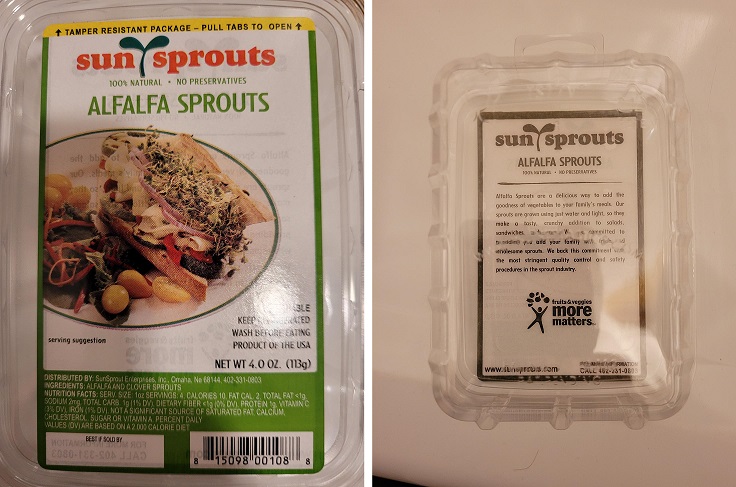
The U.S. Food and Drug Administration (FDA), along with the Centers for Disease Control and Prevention (CDC) and state and local partners, is investigating a multistate outbreak of Salmonella Typhimurium infections. FDA’s traceback investigation is ongoing but has identified Sun Sprouts brand alfalfa sprouts grown by CW Sprouts Inc., doing business as (DBA) SunSprout Enterprises of Fremont, NE as a likely source of illnesses in this outbreak.

Based on the epidemiologic information provided by the CDC along with interviews conducted by state and local public health officials, the individuals identified in this outbreak reported consuming alfalfa sprouts prior to their illness onset, either at local restaurants or in their homes after purchasing from local grocery stores. Preliminary traceback evidence indicates that the restaurants and grocery stores identified in this outbreak received alfalfa sprouts from SunSprout Enterprises. Additionally, two of the individuals identified in this outbreak confirmed they had purchased Sun Sprouts brand alfalfa sprouts from their local grocery store. Whole Genome Sequencing (WGS) conducted on clinical samples collected from ill individuals identified 15 isolates that matched the outbreak strain: OK (1), NE (8), and SD (6). WGS for additional clinical isolates are still pending sequencing.

On December 29, 2022, SunSprout Enterprises initiated a voluntary recall of two lots (# 4211 and 5211) of raw alfalfa sprouts due to potential contamination with Salmonella. On the same day, SunSprout Enterprises expanded their voluntary recall to include two additional lots (# 3212, and 4212) of raw alfalfa sprouts. The raw alfalfa sprouts for all recalled lots (#4211, 5211, 3212, and 4212) are packaged in 4-ounce clamshells and 2.5 lb packages with best sold by dates between 12/10/2022 and 1/7/2023.

The investigation is ongoing to determine the source of contamination and whether additional products are linked to illnesses. FDA will update this advisory should additional consumer safety information become available.

Recommendation

Advice for consumers, restaurants, and retailers: Consumers, restaurants, and retailers should not eat, sell, or serve recalled Sun Sprouts brand alfalfa sprouts.

Consumers, restaurants, and retailers should check their refrigerators for recalled Sun Sprouts brand alfalfa sprouts with best by dates between 12/10/2022 and 1/7/2023. If you purchased or used recalled alfalfa sprouts, you should use extra vigilance in cleaning and sanitizing any surfaces that may have come in contact with these products, to reduce the risk of cross contamination.

If you or someone in your household ate Sun Sprouts alfalfa sprouts and have symptoms of salmonellosis, please contact your healthcare provider.

Suppliers and Distributors: Suppliers, distributors and others in the supply chain should not use, ship or sell recalled alfalfa sprouts grown by SunSprout Enterprises. If there has been potential cross-contamination or mixing of recalled alfalfa sprouts with products from other sources, suppliers and distributors should not use any comingled and potentially cross-contaminated product and should use extra vigilance in cleaning any surfaces and storage areas that may have come into contact with recalled alfalfa sprouts.

Product Images

Recalled products include raw alfalfa sprouts sold in 4-ounce clamshells and 2.5 Ib packages, with best by dates between 12/10/2022 and 1/7/2023.

Outbreak Investigation of Salmonella from Sprouts (December 2022) - Product Image

Case Count Map Provided by CDC

Outbreak Investigation of Salmonella from Sprouts (December 2022) - CDC Distribution Map as of 12/30/2022

Case Counts

Total Illnesses: 15
Hospitalizations: 2
Deaths: 0
Last illness onset: 12/13/2022
States with Cases: NE, OK, SD

Research – Effect of Ultra-High-Pressure Homogenization Processing on the Microbiological, Physicochemical, and Sensory Characteristics of Fish Broth

MDPI

Abstract

The effect of ultra-high-pressure homogenization (UHPH) treatments at 300 MPa at inlet temperatures (Ti) between 45 and 75 °C on the microbiological, physical, and sensorial characteristics of fish broth was evaluated. Before the application of UHPH treatments, different fish broth formulations were tested, selecting the formula with the best organoleptic and nutritional characteristics and the lowest cost, containing 45% monkfish heads and rock fish in the same proportion. The microbiological shelf-life of fish broth during cold storage at 4 and 8 °C was extended by a minimum of 20 days by applying UHPH treatments at inlet temperatures (Ti) between 45 and 65 °C. Fish broth UHPH-treated at Ti = 75 °C was microbiologically sterile during storage at 4 °C, 8 °C, and room temperature. Fish broth UHPH-treated was physically stable, significantly reducing the particle size. Color showed higher luminosity and lower yellowness as the inlet temperature increased. In fish broth UHPH-treated at Ti = 75 °C, selected for its microbiological stability, no differences were observed in the nutritional composition, antioxidant activity, and sensorial perception compared to untreated fish broth. Hence, UHPH treatments showed to be an alternative to preserving fish broth with an improved microbiological shelf-life and good sensorial characteristics.