Category Archives: Microbiology

France – Product recall: Kerméné brand VPF barded pork muzzle – Listeria monocytogenes

Oulah

Product recall: Kerméné brand VPF barded pork muzzle

ENCOUNTERED PROBLEM

Presence of Listeria monocytogenes

PROPOSED SOLUTION

People who may have this product are asked not to consume it and to return it to the point of sale where it was purchased.

People who have consumed this product and who have a fever, isolated or accompanied by headaches, are invited to consult their doctor, notifying him of this consumption.
Pregnant women should pay special attention to these symptoms, as well as immunocompromised people and the elderly. These symptoms may suggest listeriosis, a disease that can be serious and can take up to eight weeks to incubate.

FURTHER INFORMATION


▸ Lot
11652420


▸ DLC – DDM
05/21/2021


▸ Start / end date of marketing
From 05/08/2021 to 05/12/2021


▸ Health mark
FR 22.364.008 CE


Lannion geographic sales area


▸ Distributors
Center E.LECLERC Perlandis


▸ Consumer service contact
0296480094


▸ Source
PERLANDIS Center Leclerc

France – Product reminder: LES VIGNES MARINES branded rope mussels for Dumet Island breeding France

Oulah

Product reminder: LES VIGNES MARINES branded rope mold for Dumet Island breeding France

ENCOUNTERED PROBLEM

Presence of Escherichia coli

PROPOSED SOLUTION

People who hold the product in question are asked not to consume them – and more particularly young children, pregnant women, immunocompromised people and the elderly – and to return them to the point of sale where they were purchased.

People who have consumed it and who present symptoms such as diarrhea, abdominal pain or vomiting should consult their doctor as soon as possible, mentioning this consumption and the possible link with the bacterium Escherichia coli.

In the absence of symptoms within 10 days after consuming the affected products, there is no need to worry and consult a doctor.

The E. coli bacterium is naturally present in the digestive microflora of humans and warm-blooded animals. Some strains of E. coli are pathogenic, and can be responsible in humans for various disorders ranging from mild diarrhea to more serious forms such as hemorrhagic diarrhea or severe kidney damage such as HUS, mainly in young children.

FURTHER INFORMATION

▸ Barcode
3663515862999


▸ Lot
• 20210515
• 20210516


▸ DLC – DDM
between 05/23/2021 and 05/24/2021


▸ Start date / End of marketing
From 05/18/2021 to 05/21/2021


▸ Health mark
FR 44.069.002 CE


▸ Distributors
E. Leclerc Stores


▸ Contact
customer service 0960445769


▸ Source
COOPERATIVE SUPPLY COMPANY – SCAPMAREE LECLERC

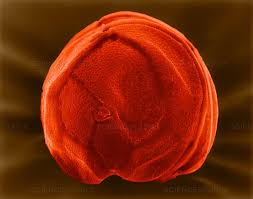
Research -Salmonella use intestinal epithelial cells to colonize the gut

Science Daily

kswfoodworld salmonella

The immune system’s attempt to eliminate Salmonella bacteria from the gastrointestinal (GI) tract instead facilitates colonization of the intestinal tract and fecal shedding, according to National Institutes of Health scientists. The study, published in Cell Host & Microbe, was conducted by National Institute of Allergy and Infectious Diseases (NIAID) scientists at Rocky Mountain Laboratories in Hamilton, Montana.

Salmonella Typhimurium bacteria (hereafter Salmonella) live in the gut and often cause gastroenteritis in people. The Centers for Disease Control and Prevention estimates Salmonella bacteria cause about 1.35 million infections, 26,500 hospitalizations and 420 deaths in the United States every year. Contaminated food is the source for most of these illnesses. Most people who get ill from Salmonella have diarrhea, fever and stomach cramps but recover without specific treatment. Antibiotics typically are used only to treat people who have severe illness or who are at risk for it.

Salmonella bacteria also can infect a wide variety of animals, including cattle, pigs and chickens. Although clinical disease usually resolves within a few days, the bacteria can persist in the GI tract for much longer. Fecal shedding of the bacteria facilitates transmission to new hosts, especially by so-called “super shedders” that release high numbers of bacteria in their feces.

NIAID scientists are studying how Salmonella bacteria establish and maintain a foothold in the GI tract of mammals. One of the first lines of defense in the GI tract is the physical barrier provided by a single layer of intestinal epithelial cells. These specialized cells absorb nutrients and are a critical barrier that prevent pathogens from spreading to deeper tissues. When bacteria invade these cells, the cells are ejected into the gut lumen — the hollow portion of the intestines. However, in previous studies, NIAID scientists had observed that some Salmonella replicate rapidly in the cytosol — the fluid portion — of intestinal epithelial cells. That prompted them to ask: does ejecting the infected cell amplify rather than eliminate the bacteria?

To address this question, the scientists genetically engineered Salmonella bacteria that self-destruct when exposed to the cytosol of epithelial cells but grow normally in other environments, including the lumen of the intestine. Then they infected laboratory mice with the self-destructing Salmonella bacteria and found that replication in the cytosol of mouse intestinal epithelial cells is important for colonization of the GI tract and fuels fecal shedding. The scientists hypothesize that, by hijacking the epithelial cell response, Salmonella amplify their ability to invade neighboring cells and seed the intestine for fecal shedding.

The researchers say this is an example of how the pressure exerted by the host immune response can drive the evolution of a pathogen, and vice versa. The new insights offer new avenues for developing novel interventions to reduce the burden of this important pathogen.

EU Research – Risk characterisation of ciguatera poisoning in Europe

EFSA

The EuroCigua project main objective is to characterize the risk of Ciguatera Poisoning (CP) in Europe including several specific objectives: to determine the incidence of ciguatera in Europe and the epidemiological characteristics of cases; to assess the presence of ciguatoxin in food and the environment in Europe and to develop and validate methods for the detection, quantification and confirmation of the presence of ciguatoxin contaminated specimens.

This report compiles the activities carried out during the EuroCigua project from the signing in April 2016 until December 2020. The present document corresponds to Deliverable No. 6: “Final Scientific Report” on Risk characterization of ciguatera food poisoning in Europe of the Specific Agreement no. 1 “MANAGEMENT AND SCIENTIFIC COORDINATION” within the Framework Partnership Agreement GP/EFSA/AFSCO/2015/03 “Risk characterization of ciguatera food poisoning in Europe”.

EU – Shiga toxin-producing Escherichia coli (STEC) infection – Annual Epidemiological Report for 2019

ECDC

ECDC’s annual surveillance reports provide a wealth of epidemiological data to support decision-making at the national level. They are mainly intended for public health professionals and policymakers involved in disease prevention and control programmes.

Executive summary

  • For 2019, 29 EU/EEA countries reported 8 313 confirmed cases of Shiga toxin-producing Escherichia coli (STEC) infection.
  • The overall notification rate was 2.2 cases per 100 000 population.
  • After a stable period, the notification rate increased in 2018−2019.
  • The highest notification rates were reported in Denmark, Iceland, Ireland, Malta, and Norway.
  • The highest rate of confirmed cases was observed in 0–4-year-old children (10.3 cases per 100 000 population).

EU – Legionnaires’ disease – Annual Epidemiological Report for 2019

ECDC

Legionella_Plate_01

ECDC’s annual surveillance reports provide a wealth of epidemiological data to support decision-making at the national level. They are mainly intended for public health professionals and policymakers involved in disease prevention and control programmes.

Executive summary

  • Legionnaires’ disease remains an uncommon and mainly sporadic respiratory infection with an overall notification rate in 2019 for the EU/EEA of 2.2 cases per 100 000 population.
  • There is heterogeneity in notification rates between EU/EEA countries, with the highest rate reported by Slovenia (9.4 cases per 100 000 population).
  • The annual notification rate increased in recent years, from 1.4 in 2015 to 2.2 cases per 100 000 population in 2019.
  • There was a marginal decrease of less than 1% in the number of reported cases in 2019, compared with 2018.
  • Four countries (France, Germany, Italy, and Spain) accounted for 71% of all notified cases in 2019.
  • Males aged 65 years and above were most affected (8.4 cases per 100 000 population).
  • Only 10% of cases were culture-confirmed (10%) probably meaning that disease caused by Legionella species other than Legionella pneumophila is under-estimated.

USA – Salmonella Outbreaks Linked to Backyard Poultry

CDC

Fast Facts
  • Illnesses: 163
  • Hospitalizations: 34
  • Deaths: 0
  • States: 43
  • Recall: No
  • Investigation status: Active
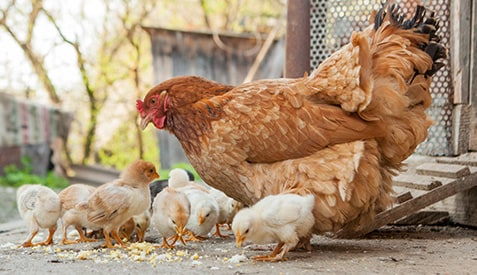
Backyard poultry with chickens eating

Backyard Poultry and Salmonella

Backyard poultry, like chicken and ducks, can carry Salmonella germs even if they look healthy and clean. These germs can easily spread to anything in the areas where they live and roam.

You can get sick from touching your backyard poultry or anything in their environment and then touching your mouth or food, and swallowing Salmonella germs.

What Backyard Flock Owners Should Do
  • Wash your hands
    • Always wash your hands with soap and water immediately after touching backyard poultry, their eggs, or anything in the area where they live and roam.
    • Use hand sanitizer if soap and water are not readily available. Consider having hand sanitizer at your coop.
  • Be safe around backyard flocks
    • Don’t kiss or snuggle backyard poultry, and don’t eat or drink around them. This can spread Salmonella germs to your mouth and make you sick.
    • Keep your backyard flock and supplies you use to care for them (like feed containers and shoes you wear in the coop) outside of the house. You should also clean the supplies outside the house.
  • Supervise kids around flocks
    • Always supervise children around backyard poultry and make sure they wash their hands properly afterward.
    • Don’t let children younger than 5 years touch chicks, ducklings, or other backyard poultry. Young children are more likely to get sick from germs like Salmonella.
  • Handle eggs safely
    • Collect eggs often. Eggs that sit in the nest can become dirty or break.
    • Throw away cracked eggs. Germs on the shell can more easily enter the egg though a cracked shell.
    • Rub off dirt on eggs with fine sandpaper, a brush, or a cloth. Don’t wash them because colder water can pull germs into the egg.
    • Refrigerate eggs to keep them fresh and slow the growth of germs.
    • Cook eggs until both the yolk and white are firm, and cook egg dishes to an internal temperature of 160°F to kill all germs.

Call your healthcare provider right away if you have any of these severe symptoms:

  • Diarrhea and a fever higher than 102°F
  • Diarrhea for more than 3 days that is not improving
  • Bloody diarrhea
  • So much vomiting that you cannot keep liquids down
  • Signs of dehydration, such as:
    • Not urinating (peeing) much
    • Dry mouth and throat
    • Feeling dizzy when standing up

France – Product recall: EARL DE VILLIERS brand fresh and matured goat cheese – Listeria monocytogenes

Oulah

ENCOUNTERED PROBLEM

Presence of Listeria monocytogenes

PROPOSED SOLUTION

Those in possession of this product are asked not to consume it and to return it to the point of sale where it was purchased.

People who have consumed this product and who present with fever, isolated or accompanied by headaches, are invited to consult their attending physician, notifying him of this consumption.
Pregnant women should pay special attention to these symptoms, as well as immunocompromised people and the elderly. These symptoms may suggest listeriosis, a disease that can be serious and can take up to eight weeks to incubate.

FURTHER INFORMATION

▸ Names of models or references
• Pouligny St Pierre
• logs
• farm pavers
• Cinder pyramids


▸ Lot
all lots manufactured from 03/20/2021


▸ Start date / End of marketing
From 03/21/2021 to 05/20/2021


▸ Health mark
FR 36 114 001 CE


Carrefour Contact and Express distributors Lerclerc Super U and U express Nice basket Netto GIE Berry Touraine SCPL Rungis Grocery stores, butchers, cheese makers from Indre Proxi Services and Super Vival Maison des fromages Spar


▸ Consumer service contact
0682704495


▸ Source
EARL DE VILLIERS

USA – Poultry Poop has sickened 163 in 43 states with Salmonella

Food Poison Journal

As of May 20, 2021, a total of 163 people infected with one of the outbreak strains have been reported from 43 states. Illnesses started on dates ranging from February 12, 2021, to April 25, 2021.

Sick people range in age from less than 1 to 87 years, with a median age of 24 years, and 58% are female. Of 109 people with information available, 34 (31%) have been hospitalized. No deaths have been reported.

The true number of sick people in an outbreak is likely much higher than the number reported, and the outbreak may not be limited to the states with known illnesses. This is because many people recover without medical care and are not tested for Salmonella. In addition, recent illnesses may not yet be reported as it usually takes 2 to 4 weeks to determine if a sick person is part of an outbreak.

USA – Cat Food – Recalled: Natural Balance L.I.D. Green Pea & Chicken Formula – Salmonella

Petful

A single “best by” date of this dry cat food is being recalled by Natural Balance because of the potential for salmonella contamination.

Maker: Natural Balance Pet Foods, Inc.
Cause: Potential for salmonella
Announcement: FDA alert dated May 20, 2021 (archived here)
What was recalled: The following specific lot/sizes of dry cat food:

  • Natural Balance L.I.D. Limited Ingredient Diets Green Pea & Chicken Formula Dry Cat Food, 5 lb. bags, UPC #2363300233, Lot #1008080 06:42N811202:20, best by March 10, 2022
  • Natural Balance L.I.D. Limited Ingredient Diets Green Pea & Chicken Formula Dry Cat Food, 10 lb. bags, UPC #2363300235, Lot #1008080 06:42N811202:20, best by March 10, 2022

Only the specific dry cat food listed above is part of this limited recall. No other Natural Balance products are affected.