Category Archives: Microbiology

USA – Manna Pro Products LLC Issues Limited Voluntary Recall of Flock Party Quack Snacks Sold in the United States Because of Possible Health Risk Due to Potential Salmonella Contamination

FDA

Product image front Flock Party Quack Snacks poultry treat MannaPro Net Wt 1.68 lb (762g)

Company Announcement

Manna Pro Products, LLC, St. Louis, Missouri, is voluntarily recalling a single lot of Flock Party Quack Snacks (poultry treat) with a Best By date of 12/2023, packaged in 1.68 pound bags because it has the potential to be contaminated with Salmonella. Manna Pro Products LLC was informed by the State of West Virginia of a positive Salmonella spp. result in a routine surveillance sample of Flock Party Quack Snacks.

Salmonella is a risk to humans from handling contaminated products, especially if they have not thoroughly washed their hands after having contact with the products or any surfaces exposed to these products.

Healthy people infected with Salmonella should monitor themselves for some or all of the following symptoms: nausea, vomiting, diarrhea or bloody diarrhea, abdominal cramping and fever. Rarely, Salmonella can result in more serious ailments, including arterial infections, endocarditis, arthritis, muscle pain, eye irritation, and urinary tract symptoms. Consumers exhibiting these signs after having contact with this product should contact their healthcare providers.

The bags are magenta and light blue in color and made of plastic (see images below). These products have a Best By date of 12/2023, which is printed on the bottom of the bag. This voluntary recall applies only to Flock Party Quack Snacks with Best By dates of 12/2023. Distribution of this product has been suspended while Manna Pro continues its investigation as to the source of the contamination.

This product was distributed beginning February 2, 2021 at retail stores throughout the United States.

Customers who purchased Flock Party Quack Snacks with a Best By date of 12/2023 should stop feeding the product immediately, throw the product away, and contact Manna Pro at the phone number below for a full refund.

Customers with questions or concerns should contact Manna Pro at (800) 690-9908 ext. 2, Monday through Friday from 8:00 AM to 4:00 PM Central time.

Members of the media can should refer their inquiries to Noah Messel of O’Malley Hansen at (314) 656-8302 or Noah.Messel@omalleyhansen.com.

Hong Kong – High-risk Foods

CFS

Banner

What comes to your mind when you hear the term ‘high-risk foods’? Sushi? Sashimi? Or raw oysters? Raw or undercooked food are generally high-risk foods. You may not notice that some common dishes may contain raw or undercooked ingredients, such as mango pudding made with raw eggs, smoked salmon sandwiches, and congee made with undercooked beef. The CFS would like to share with the public, especially susceptible populations, on how to be vigilant about high-risk foods in their daily diet. At the same time, the CFS would also like to urge the food trade on what efforts can be made for empowering consumers to make informed choices about high-risk foods.

Research – Low-Temperature Virus vB_EcoM_VR26 Shows Potential in Biocontrol of STEC O26:H11

MDPI

Shiga toxin-producing Escherichia coli (STEC) O26:H11 is an emerging foodborne pathogen of growing concern. Since current strategies to control microbial contamination in foodstuffs do not guarantee the elimination of O26:H11, novel approaches are needed. Bacteriophages present an alternative to traditional biocontrol methods used in the food industry. Here, a previously isolated bacteriophage vB_EcoM_VR26 (VR26), adapted to grow at common refrigeration temperatures (4 and 8 °C), has been evaluated for its potential as a biocontrol agent against O26:H11. After 2 h of treatment in broth, VR26 reduced O26:H11 numbers (p < 0.01) by > 2 log10 at 22 °C, and ~3 log10 at 4 °C. No bacterial regrowth was observed after 24 h of treatment at both temperatures. When VR26 was introduced to O26:H11-inoculated lettuce, ~2.0 log10 CFU/piece reduction was observed at 4, 8, and 22 °C. No survivors were detected after 4 and 6 h at 8 and 4 °C, respectively. Although at 22 °C, bacterial regrowth was observed after 6 h of treatment, O26:H11 counts on non-treated samples were >2 log10 CFU/piece higher than on phage-treated ones (p < 0.02). This, and the ability of VR26 to survive over a pH range of 3–11, indicates that VR26 could be used to control STEC O26:H11 in the food industry. View Full-Text

Research – A Microbiological Survey of Minced Beef at Retail in Scotland

FSS

Click to access FSS_Report_Retail_Mince_FINAL.pdf

France – Minced steak made to order – Salmonella

Gov france

  • Product category Food
  • Product sub-category Meats
  • Product brand name unbranded
  • Names of models or references Minced steak made to order
  • Product identification
    Lot
    /
  • Start date / End of marketing From 06/04/2021 to 06/04/2021
  • Storage temperature Product to be stored in the refrigerator
  • Further information Product manufactured on 6/4/2021
  • Geographical sales area Flers and boroughs
  • Distributors Butcher Aurélien Flers

Practical information regarding the recall

  • Reason for recall presence of Salmonella
  • Risks incurred by the consumer Salmonella spp (causative agent of salmonellosis)
  • Consumer behavior Stop consuming
    Destroy the product
  • Sanitary recommendation Food poisoning caused by salmonella results in sudden onset gastrointestinal disorders (diarrhea, vomiting) often accompanied by fever and headaches which generally occur 6 to 72 hours after consumption of the contaminated products. These symptoms may be more pronounced in young children, pregnant women, immunocompromised individuals and the elderly. People who have consumed these products and who present these symptoms are invited to consult their doctor, notifying him of this consumption. In the absence of symptoms within 7 days after consuming the affected products, there is no need to worry and consult a doctor. If the product must be cooked before consumption:
  • Compensation modalities Refund
  • End date of the recall procedure Saturday 26 June 2021

UK – Happy Hounds Wales Ltd recalls frozen raw dog food products due to the presence of Salmonella

FSA

Happy Hounds Wales Ltd is recalling certain types of frozen raw dog food because of the presence of salmonella in the products.

Product details

Frozen Beef Mince 993
Pack size 1kg
Batch code 993
Best before 31/05/2022
Frozen Lamb & Beef 992/993
Pack size 1kg
Batch code 992/993
Best before 31/05/2022
Frozen Turkey and Beef 991/993
Pack size 1kg
Batch code 991/993
Best before 01/06/2022
Frozen Diced Heart
Pack size 1.5kg
Batch code 993
Best before 01/06/2022

Risk statement

The presence of Salmonella in the products listed above. Salmonella is a bacterium that can cause illness in humans and animals. The product could therefore carry a potential risk, because of the presence of salmonella, either through direct handling of the pet food, or indirectly, for example from pet feeding bowls, utensils or contact with the faeces of animals.

In humans, symptoms caused by salmonella usually include fever, diarrhoea and abdominal cramps. Infected animals may not necessarily display signs of illness, but symptoms can include diarrhoea.

Action taken by the company

Happy Hounds is recalling the above products. Point of sale notices will be displayed in all retail stores that are selling these products. These notices explain to customers why the products are being recalled and tell them what to do if they have bought the product.

Our advice to consumers

(pet owners): If you have bought any of the above products do not use them. Instead, return them to the store from where they were bought for a full refund.

When handling and serving raw pet food it is always advised to clean utensils and feeding bowls thoroughly after use. Consumers should wash their hands thoroughly after handling raw pet food, bowls, utensils or after contact with the faeces of animals. Raw pet food should be stored separately from any food (especially ready to eat foods). Care should be taken when defrosting to avoid cross-contamination of foods and surfaces.

Research – Seventh external quality assessment scheme for Listeria monocytogenes typing

ECDC

Human listeriosis is a relatively rare but serious foodborne disease with an EU notification rate of 0.47 cases per 100 000 population in 2018 [3]. The number of human listeriosis cases in the EU increased between 2008 and 2016. In 2017-2018, the level of reported cases was stable.

Since 2007, ECDC has been responsible for the EU-wide surveillance of listeriosis, including facilitating detection, and investigation of foodborne outbreaks. Surveillance data, including basic typing parameters for the isolated pathogen, are reported by European Union/European Economic Area (EU/EEA) countries to The European Surveillance System (TESSy), including molecular typing data. This molecular surveillance system relies on the capacity of laboratories to provide comparable data to FWD-Net. In order to ensure the EQA is linked to the development of surveillance methods used by NPHRLs in the EU/EEA, EQAs 5 to 7 featured a molecular typing-based cluster analysis using either pulsed-field gel electrophoresis (PFGE) and/or whole-genome sequencing (WGS)-derived data.

The objectives of the EQA are to assess the quality and comparability of typing data reported by NPHRLs participating in FWD-Net. Test isolates for the EQA were selected to cover isolates currently relevant for public health in the EU and represent a broad range of clinically relevant types for invasive listeriosis. Two sets of 11 test isolates were selected for serotyping and molecular typing-based cluster analysis. Eighteen laboratories signed up and 17 completed the exercise, representing a decrease in participation from 20 laboratories (15%) for EQA-5, but the same level of participation as for EQA-6. The majority of participants (12/17; 71%) completed the full EQA scheme.

In total, 14 (82%) participants participated in the serotyping part. Molecular serogrouping results were provided by 13 of 15 (93%) participants. Three participants performed both conventional serotyping and molecular serogrouping. The performance of molecular serogrouping was highest, with 100% correct results. For the conventional method, 75% of the participants correctly serotyped all test isolates. One new participant mistyped five of the 11 isolates. Since the first EQA in 2012, a trend towards substituting conventional serotyping with molecular serogrouping has been observed.

Of the 17 laboratories participating in EQA-7, 15 (88%) performed molecular typing-based cluster analysis using a method of their choice. The purpose of the cluster analysis part of the EQA was to assess the NPHRL’s ability to identify a cluster of genetically closely related isolates, i.e. to correctly categorise the cluster test isolates regardless of the method used, not to follow a specific procedure.

The cluster of closely related isolates was pre-defined by the EQA provider using WGS-derived data. Therefore, as expected, the correct cluster delineation was difficult to obtain by the use of less discriminatory methods, e.g. PFGE. None of the three participants using PFGE did identify the correct cluster. Thirteen laboratories performed cluster analysis using WGS-derived data. Performance was high, with 100% of the participants correctly identifying the cluster of closely related isolates. An allele-based method was preferred since 84% (11/13) used core genome multilocus sequence type (cgMLST), compared with 16% (2/13) using single nucleotide polymorphism (SNP).

In EQA-7, the EQA provider introduced an additional part to the molecular typing-based cluster analysis: an assessment of four EQA provided genomes. This was designed to mimic an urgent outbreak situation, where sequence data may have been produced in other laboratories and the available sequences must be addressed despite, for example, possible poor quality. The majority of participants successfully identified the different characteristics in the modified genomes, and also correctly concluded one cluster isolate as being part of the cluster defined in the cluster analyses part of the EQA and one non-cluster genome as not being part of the cluster of closely related isolates.

In EQAs 5-7, participants were free to choose their preferred analytical method for the WGS-based cluster identification. The conclusion from EQA-5 was that cgMLST has higher consistency compared to SNP analysis. The conclusion was not as obvious in either EQA-6 or EQA-7, since only a few SNP analyses were reported in these schemes compared with six SNP analyses in EQA-5. One participant changed from SNP analysis to cgMLST and
identified the cluster correctly, unlike in EQA-6.

Research – Feedborne Salmonella enterica Serovar Jerusalem Outbreak in Different Organic Poultry Flocks in Switzerland and Italy Linked to Soya Expeller

MDPI

Poultry feed is a leading source of Salmonella infection in poultry. In Switzerland, heat-treated feed is used to reduce Salmonella incursions into flocks in conventional poultry production. By contrast, organic feed is only treated with organic acids. In 2019, the Swiss National Reference Center for Enteropathogenic Bacteria identified the rare serovar S. Jerusalem from samples of organic soya feed. Further, in July 2020, the European Union’s Rapid Alert System for Food and Feed published a notification of the detection of S. Jerusalem in soya expeller from Italy. During 2020, seven S. Jerusalem isolates from seven different poultry productions distributed over six cantons in Switzerland were reported, providing further evidence of a possible outbreak. Using whole-genome sequencing (WGS), S. Jerusalem isolates from feed and from animals in Switzerland were further characterized and compared to S. Jerusalem from organic poultry farm environments in Italy. WGS results showed that feed isolates and isolates from Swiss and Italian poultry flocks belonged to the sequence type (ST)1028, grouped in a very tight cluster, and were closely related. This outbreak highlights the risk of spreading Salmonella by feed and emphasizes the need for a heat-treatment process for feed, also in organic poultry production.

USA – How to Report Seafood-Related Natural Toxin Illness

FDA

To help FDA effectively investigate, remove unsafe seafood products from the market, and develop new prevention strategies, the FDA relies on illness reporting from public health officials and healthcare providers. While most foodborne outbreaks are tracked through the FDA’s Coordinated Outbreak Response and Evaluation (CORE) network, seafood-related illnesses caused by natural toxins have a unique reporting mechanism. This web page provides information on commonly occurring seafood-related illnesses and how to report them to the FDA.  To report an illness from raw bivalve molluscan shellfish, email the FDA at shellfishepi@fda.hhs.gov.

The FDA receives reports of illnesses associated with the consumption of specific types of fish. These illnesses may originate from the activity of certain bacteria, toxins produced by marine algae, or hazards inherent in the fish.

Commonly occurring illness:

Illness and reporting information for the commonly occurring illnesses are provided in each section. Contact the FDA with any questions or need for clarification of the illness or reporting.

In addition to the illnesses listed above, reporting of other less frequently occurring illnesses from natural toxins may be accomplished by emailing the FDA at Seafood.Illness@fda.hhs.gov.  Refer to Chapter 6 of the “Fish and Fishery Products Hazards and Controls Guidance” for a comprehensive list of natural toxin illnesses. To report illnesses related to miscellaneous natural toxin illnesses, please email FDA at Seafood.Illness@fda.hhs.gov.

The FDA works with first responders, physicians, and state and local health departments to investigate illnesses and outbreaks, manage them, and learn how to lessen future occurrences.

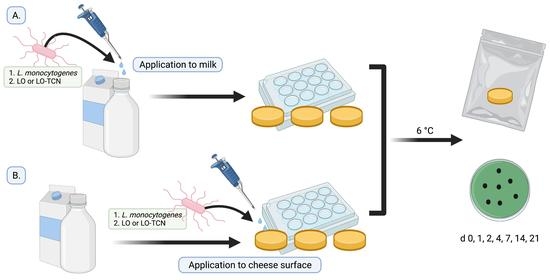
Research – Evaluation of Lactose Oxidase as an Enzyme-Based Antimicrobial for Control of L. monocytogenes in Fresh Cheese

MDPI

Listeria monocytogenes is a ubiquitous pathogen that can cause morbidity and mortality in the elderly, immune compromised, and the fetuses of pregnant women. The intrinsic properties of fresh cheese—high water activity (aW), low salt content, and near-neutral pH—make it susceptible to L. monocytogenes contamination and growth at various points in the production process. The aim of this study was to investigate the ability of lactose oxidase (LO), a naturally derived enzyme, to inhibit the growth of L. monocytogenes in fresh cheese during various points of the production process. Lab-scale queso fresco was produced and inoculated with L. monocytogenes at final concentrations of 1 log CFU/mL and 1 CFU/100 mL. LO and LO sodium thiocyanate (TCN) combinations were incorporated into the milk or topically applied to the finished cheese product in varying concentration levels. A positive control and negative control were included for all experiments. When L. monocytogenes was inoculated into the milk used for the cheese-making process, by day 28, the positive control grew to above 7 log CFU/g, while the 0.6 g/L treatment (LO and LO + TCN) fell below the limit of detection (LOD) of 1.3 log CFU/g. In the lower inoculum, the positive control grew to above 7 log CFU/g, and the treatment groups fell below the LOD by day 21 and continued through day 28 of storage. For surface application, outgrowth occurred with the treatments in the higher inoculum, but some inhibition was observed. In the lower inoculum, the higher LO and LO-TCN concentrations (0.6 g/L) reduced L. monocytogenes counts to below the LOD, while the control grew out to above 7 log CFU/g, which is a >5 log difference between the control and the treatment. These results suggest that LO could be leveraged as an effective control for L. monocytogenes in a fresh cheese. View Full-Text