Category Archives: Microbiology

UK – FSA working on reasons behind foodborne illness decline

Food Safety News

The Food Standards Agency’s chief scientific advisor has said potential trends in foodborne infections must be monitored after a decline during the COVID-19 pandemic.

Robin May said data from the past 12 months shows a substantial drop in foodborne disease rates for four major pathogens but this is likely because of fewer patients going to general practioners’ (GP) offices and reduced diagnostic testing during the coronavirus pandemic.

May said understanding the true level of foodborne disease in 2020 and early 2021 will require detailed analysis, work which the FSA has started.

“An accurate benchmark will be invaluable as we start to monitor post-COVID trends and establish, for instance, whether changes in domestic and commercial hygiene practices may ultimately lead to a lasting change in foodborne disease rates,” he said.

“In terms of foodborne disease reporting, the bottom line is we don’t know what the data really looked like for last year because so much of our data comes from things like GP reporting, which people were not doing.

Research – UV-C LED Irradiation Reduces Salmonella on Chicken and Food Contact Surfaces

MDPI

Ultraviolet (UV-C) light-emitting diode (LED) light at a wavelength of 250–280 nm was used to disinfect skinless chicken breast (CB), stainless steel (SS) and high-density polyethylene (HD) inoculated with Salmonella enterica. Irradiances of 2 mW/cm2 (50%) or 4 mW/cm2 (100%) were used to treat samples at different exposure times. Chicken samples had the lowest Salmonella reduction with 1.02 and 1.78 Log CFU/cm2 (p ≤ 0.05) after 60 and 900 s, respectively at 50% irradiance. Higher reductions on CB were obtained with 100% illumination after 900 s (>3.0 Log CFU/cm2). Salmonella on SS was reduced by 1.97 and 3.48 Log CFU/cm2 after 60 s of treatment with 50% and 100% irradiance, respectively. HD showed a lower decrease of Salmonella, but still statistically significant (p ≤ 0.05), with 1.25 and 1.77 Log CFU/cm2 destruction for 50 and 100% irradiance after 60 s, respectively. Longer exposure times of HD to UV-C yielded up to 99.999% (5.0 Log CFU/cm2) reduction of Salmonella with both irradiance levels. While UV-C LED treatment was found effective to control Salmonella on chicken and food contact surfaces, we propose three mechanisms contributing to reduced efficacy of disinfection: bacterial aggregation, harboring in food and work surface pores and light absorption by fluids associated with CB. View Full-Text

USA – FDA Core Investigation Table Update

FDA

USA – Arizona: Marijuana products recalled due to possible contamination with Salmonella or Aspergillus fungus

Outbreak News Today

Arizona state health officials announced Wednesday that multiple Arizona marijuana establishments and dispensaries are initiating a voluntary recall of specific marijuana products due to possible contamination with Salmonella or Aspergillus.

To date, no illnesses have been reported. This announcement is being made out of an abundance of caution. Patients who have purchased potentially contaminated products should not ingest, inhale, or otherwise consume them and should dispose of them. If you have already consumed any of the products and have any of the symptoms described below, please contact your healthcare provider or seek emergency care in the event of an emergency.

The Arizona Department of Health Services (ADHS) is advising purchasers to dispose of the products in the link aboe, which were found in laboratory tests to be positive for Salmonella or Aspergillus:

USA – Shigella linked to Splash Park at Tanganyika Wildlife Park in Goddard Kansas

Food Poison Journal

The Kansas Department of Health and Environment (KDHE) and Sedgwick County Health Department (SCHD) continue to investigate cases of illness associated with Tanganyika Wildlife Park in Goddard, Kan., just west of Wichita. KDHE became aware of the possible link between the cases on Friday, June 18 and began investigation the same day.

Initially, there were three cases that were identified as linked to the park. These cases have tested positive for Shigella bacteria. Additional testing is underway to determine if the bacteria from each person are related. Shigella is a bacteria spread from person-to-person through exposure to contaminated stool (faeces).

Shigella spreads easily; just a small number of bacteria can spread illness.

Canada -Updated Food Recall Warning – Al-Rabih brand Tahini recalled due to Salmonella

CFIA

Al-Rabih - Tahini (100% Sesame) – Sesame Paste

Recall details

Ottawa, June 23, 2021 – The food recall warning issued on June 14, 2021 has been updated to include additional product information. This additional information was identified during the Canadian Food Inspection Agency’s (CFIA) food safety investigation.

Phoenicia Group Inc. is recalling Al-Rabih brand Tahini from the marketplace due to possible Salmonella contamination. Consumers should not consume the recalled product described below.

Recalled product

Brand Product Size UPC Codes
Al-Rabih Tahini (100% Sesame) – Sesame Paste 4.54 kg 5 281003 551101 Lot #129130 27320
Best before 22/SE/04

What you should do

If you think you became sick from consuming a recalled product, call your doctor.

Check to see if you have the recalled product in your home. Recalled products should be thrown out or returned to the store where they were purchased.

Food contaminated with Salmonella may not look or smell spoiled but can still make you sick. Young children, pregnant women, the elderly and people with weakened immune systems may contract serious and sometimes deadly infections. Healthy people may experience short-term symptoms such as fever, headache, vomiting, nausea, abdominal cramps and diarrhea. Long-term complications may include severe arthritis.

Background

This recall was triggered by CFIA test results. The CFIA is conducting a food safety investigation, which may lead to the recall of other products. If other high-risk products are recalled, the CFIA will notify the public through updated Food Recall Warnings.

The CFIA is verifying that industry is removing the recalled product from the marketplace.

Illnesses

There have been no reported illnesses associated with the consumption of this product.

Norway – Research – Risk ranking and source attribution of food- and waterborne pathogens for surveillance purposes – Toxoplasma the top risk!

VKM

Toxoplasma

Background
Providing risk managers with the information that they need for decision making is an important element in food-safety management. The present risk assessment was undertaken to establish a scientific basis that could be used to assist the Norwegian Food Safety Authority (NFSA) in implementing risk-based surveillance, monitoring, and control programmes for pathogens in food and water. The assessment approach used here consisted of two steps:(1) risk ranking of 20 selected pathogens based on the incidence and severity of their associated diseases following infection with the pathogens via food or water, and(2) a source attribution process aimed at identifying the main pathogen-food combinations that may pose a risk to human health for each of the ranked pathogens. We used an expert knowledge elicitation (EKE) procedure with a panel of nine experts, including all eight members of the Panel on Biological Hazards of the Norwegian Scientific Committee for Food and Environment (NSCFE) and one invited expert on food/water-borne viral infections.
Risk Ranking
The 20 pathogens selected for risk ranking were defined in the terms of reference (ToR) received from NFSA. We performed a multicriteria-based ranking of the pathogens in terms of their public health impact from food/water-borne transmission in Norway. The risk ranking utilized six criteria that estimated the incidence of food- and waterborne illness attributable to each pathogen, the severity of acute and chronic illness, the fraction of chronic illness, fatality rate, and the probability for future increased disease burden. For each pathogen, all criteria were scored by the expert panel members, and individual criterion scores were combined into an overall score for every pathogen. To achieve this, each criterion was weighted in terms of its relative importance, as judged by the expert panel. The overall scores so calculated were the basis for the ranking.
Source attribution
For each of the ranked pathogens, the subsequent source-attribution process aimed to identify the main food vehicles, reservoirs, and sources of infection for outbreak-related and sporadic cases of illness, the relative importance of food sources, and preventable risk factors in Norway. To achieve this, both microbiological and epidemiological data were scrutinized. These encompassed results from national surveillance and monitoring programmes, prevalence surveys, outbreak investigations, and research, including analytic epidemiological studies. When Norwegian data were sparse or absent, international reports and research were used.
Results
The six highest-ranked pathogens were, in descending order: Toxoplasma gondii, Campylobacter spp., Echinococcus multilocularis, enterohaemorrhagic E. coli (EHEC), Listeria monocytogenes, and non-typhoid Salmonella. It should be emphasized, however, that confidence intervals revealed considerable overlaps between the scores. The food vehicles associated with the pathogens varied widely. It is notable, however, that fresh produce was identified as being among the main food vehicles for 12 of the 20 pathogens, drinking water was associated with 8, and 5 were linked to raw milk or products thereof

USA – After U.S. recall, firm initiates nationwide Canadian recall of cat food because of Salmonella concerns

Food Safety News

Natural Balance Pet Foods Inc. is recalling certain cat food products in Canada because of possible Salmonella contamination, which can be dangerous to pets and people who handle the food.

The company reported that 378 units of the affected product were sold in Canada from February to April 2021.

As of June 2, the company had not received any reports of illness, complaints or injuries in Canada.

The products are the same that were recalled in the United States in May.

In the U.S. the issue was found by the Minnesota Department of Agriculture during a routine state surveillance sample.

New Zealand – Real Milk Timaru brand raw (unpasteurised) drinking milk – Listeria monocytogenes

MPI

Product identification
Product type Raw (unpasteurised) drinking milk
Name of product (size) Real Milk Timaru brand raw (unpasteurised) drinking milk (1L)
Date marking Use by date: 17/06/21, 18/06/21 and 19/06/21
Batch marking Purchased on and between 13 and 15 June 2021.

Lot numbers: 210613, 210614 and 210615

Package size and description The product is sold in a 1L glass bottle.
Distribution The product was sold via a vending machine at 22 Fairview Road, Timaru. The product was also available via home deliveries in the South Canterbury area and online at:

The product has not been exported.

Notes This recall does not affect any other batches of Real Milk Timaru brand raw (unpasteurised) drinking milk.

Consumer advice

Customers are asked to check the lot number, use by date written on the product and date of purchase.

If you have purchased any of the affected product listed on this notice, do not consume it. Customers should return the product to Real Milk Timaru for a full refund. Alternatively, consume after heating to 70°C and holding at this temperature for one minute. If you don’t have a thermometer, heat the milk until it nearly reaches a boil (or scald the milk) before drinking it.

There have been no reports of associated illness in New Zealand. If you have consumed any of this product and have any concerns about your health, seek medical advice.

MPI’s advice on how to reduce the risk of illness if you drink raw unpasteurised milk

More information on Listeria

Who to contact

If you have questions, contact Real Milk Timaru:

  • Phone: ​027 221 4552
  • Address: 22 Fairview Road, Timaru.

Ireland – Boil water notice issued for Clare Island public water supply

Con-telegraph

crypto

FOLLOWING advice from the Health Service Executive, Irish Water and Mayo County Council have issued a boil water notice for the area supplied by the Clare Island public water supply to protect approximately 165 people following a recent drinking water quality test.

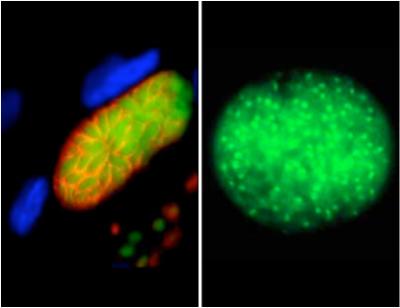
The notice has been put in place due to the detection of cryptosporidium in the Clare Island public water supply.

Cryptosporidium is a tiny parasite found in human and animal waste. If it is swallowed (ingested), it can cause a disease called cryptosporidiosis. The symptoms of cryptosporidiosis include fever, stomach upset, weight loss and diarrhoea.

Cryptosporidium may be found in water if it has been contaminated or if there has been a problem with water treatment.