
Category Archives: Food Poisoning

USA – Kentucky E. coli O103 Outbreak Linked to Fast Food Consumption

Food Poisoning Bulletin

An E. coli O103 outbreak in Kentucky has been linked to fast food consumption, according to a release from the Kentucky Department for Public Health. The Kentucky E. coli outbreak has sickened at least 19 people. Those illnesses have been confirmed by the Kentucky Department of Public Health. The release is intended for doctors and lab providers, so they are alert to patients who present with acute diarrheal illness

RASFF Alerts – STEC E.coli – Steak Tartare – Chilled Lamb – Cheese -Bovine Meat

RASFF-Logo

RASFF – shigatoxin-producing Escherichia coli (O111; vtx1+ /25g) in steak tartare from Poland in Slovakia

RASFF – shigatoxin-producing Escherichia coli (stx+ eae+) in chilled lamb from the Netherlands, slaughtered in Belgium in Belgium

RASFF – shigatoxin-producing Escherichia coli (O26 stx+ eae+ /25g) in cheese (Crottin de Chavignol) from France in Belgium

RASFF – shigatoxin-producing Escherichia coli (O26 stx+ eae+ /25g) in partly chilled and partly frozen bovine meat from Belgium in Belgium

RASFF Alert – Histamine – Chilled Mackerel

RASFF-Logo

RASFF – histamine (260 mg/kg – ppm) in chilled mackerel from France in Belgium

RASFF Alert – Bacillus cereus – Whole Black Pepper

RASFF-Logo

RASFF – Bacillus cereus (1300 CFU/g) in and microbial contamination (> 300000 CFU/g) of whole black pepper from Brazil in Italy

RASFF Alerts – Ochratoxin A – Organic Raisins – Wholemeal Rye Flour

RASFF-Logo

RASFF – ochratoxin A (26 µg/kg – ppb) in organic raisins from Turkey in the Netherlands

RASFF – ochratoxin A (4.4 µg/kg – ppb) in wholemeal rye flour from Germany in Germany

RASFF Alerts – Aflatoxin – Organic Pistachios – Groundnuts – Groundnut Kernels – Watermelon Seeds – Brown Rice

RASFF-Logo

RASFF – aflatoxins (B1 = 948; Tot. = 1253 µg/kg – ppb) in organic pistachios from Italy in Switzerland

RASFF – aflatoxins (B1 = 27; Tot. = 30 µg/kg – ppb) in groundnuts kernels from India in the Netherlands

RASFF – aflatoxins (B1 = 49.06; Tot. = 56.68 µg/kg – ppb) in pistachios from Iran, via Turkey in Italy

RASFF – aflatoxins (B1 = 2.7 µg/kg – ppb) in groundnuts from the United States in the Netherlands

RASFF – aflatoxins (B1 = 10; Tot. = 10 µg/kg – ppb) in groundnuts in shell from China in the Netherlands

RASFF – aflatoxins (B1 = 6.3; Tot. = 6.9 µg/kg – ppb) in blanched groundnuts from the United States in the Netherlands

RASFF – aflatoxins (B1 = 21; Tot. = 80 µg/kg – ppb) in organic blanched groundnuts from China in the Netherlands

RASFF – aflatoxins (B1 = 7.4 µg/kg – ppb) in groundnuts from the United States in the Netherlands

RASFF – aflatoxins (B1 = 8.3; Tot. = 9.6 µg/kg – ppb) in blanched groundnuts from the United States in the Netherlands

RASFF – aflatoxins (B1 = 3.1 µg/kg – ppb) in blanched groundnuts from the United States in the Netherlands

RASFF – aflatoxins (B1 = 32; Tot. = 62 µg/kg – ppb) in groundnut kernels from Argentina in the Netherlands

RASFF – aflatoxins (B1 = 27; Tot. = 33 µg/kg – ppb) in groundnuts from the United States in the Netherlands

RASFF – aflatoxins (B1 = 36; Tot. = 69) in groundnut kernels from Argentina in the Netherlands

RASFF – aflatoxins (B1 = 24.7; Tot. = 30.4 / B1 = 25.2; Tot. = 29.8 / B1 = 29.8; Tot. = 31.1 µg/kg – ppb) in blanched groundnuts from China in Lithuania

RASFF – aflatoxins (B1 = 6.6; Tot. = 7.3 µg/kg – ppb) in watermelon seeds from Turkey in Germany

RASFF – aflatoxins (B1 = 7.1 µg/kg – ppb) in organic brown rice from unknown origin, via Germany in Austria

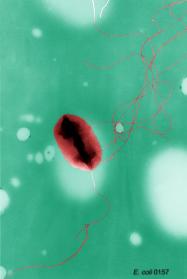
USA – Aurora Packing Recalls Beef Products For Possible E. coli 0157

Food Poisoning Bulletin

kswfoodworld E.coli O157

Image CDC


Aurora Packing Company of Illinois is recalling about 4,838 pounds of beef heel and chuck tender products because they may be contaminated with E. coli O157:H7 bacteria. No confirmed reports of illness have been received in association with this recall.

The products were produced and packed on February 27, 2019. These are the recalled products:

  • Varying catch weight cardboard box case packages containing bulk pieces of “AURORA ANGUS BEEF BONELESS BEEF – CHUCK TENDER” and case code 61150 marked on the label.
  • Varying catch weight cardboard box case packages containing bulk pieces of “BONELESS BEEF – HEEL MEAT” and case code 29970 on the label.
  • Varying catch weight cardboard box case packages containing bulk pieces of “BONELESS BEEF – HEEL MEAT” and case code 49970 stamped on the label.

These products have the establishment number “EST. 788” inside the USDA mark of inspection. They were shipped for institutional use in Illinois, Iowa, and Wisconsin. The problem was discovered during FSIS traceback activities after routine testing.

USA – Beef heel and chuck tender recalled over E. coli O157:H7 fears

Food Safety News

Aurora Packing Company, Inc.,  located in North Aurora, IL  is recalling approximately 4,838 pounds of beef heel and chuck tender products that may be contaminated with E. coli O157: H7, according to the U.S. Department of Agriculture’s Food Safety and Inspection Service (FSIS).

The bulk beef products were produced and packed on Feb. 27, 2019. The following products are subject to recall:

  • Varying catch weight cardboard box case packages containing bulk pieces of “AURORA ANGUS BEEF BONELESS BEEF – CHUCK TENDER” and case code 61150 represented on the label.
  • Varying catch weight cardboard box case packages containing bulk pieces of “BONELESS BEEF – HEEL MEAT” and case code 29970 represented on the label.
  • Varying catch weight cardboard box case packages containing bulk pieces of “BONELESS BEEF – HEEL MEAT” and case code 49970 represented on the label.

The products subject to recall bear establishment number “EST. 788” inside the USDA mark of inspection. These items were shipped for institutional use in Illinois, Iowa, and Wisconsin.

The problem was discovered during traceback activities following routine FSIS testing. There have been no confirmed reports of adverse reactions due to consumption of these products.

Research – Influence of Antimicrobial Agents on the Thermal Sensitivity of Foodborne Pathogens: A Review

Journal of Food Protection

Consumers are driving food production toward the use of more organic antimicrobial agents such as essential oils (EOs) by demanding more natural and clean-label food products. Due to the strong aromatic and flavor properties of EOs, their use is often precluded, or limited to concentrations below the flavor threshold. However, adding EOs at concentrations this low often renders their biocidal activity ineffective. An opportunity exists for low concentrations of EO antimicrobial agents to be combined with mild heating (e.g., 42 to 55°C) for short treatment times to use the hurdle concept for additive or synergistic effects on foodborne pathogens such as Escherichia coli O157:H7, Salmonella, or Listeria monocytogenes; norovirus; and surrogate organisms. In some cases, especially with fruit juices, this intervention combination is described as antimicrobial-assisted pasteurization. Used below the organoleptic quality threshold, EOs, which otherwise would have little effect on the inactivation of foodborne pathogens, are effective antimicrobial agents when used in conjunction with mild thermal processes. Thermal processes combined with antimicrobial agents can be used for processing liquids, eggs, juices, drinks, and fresh produce. This review highlights research literature where antimicrobial agents and mild heating have been combined to increase the inactivation of foodborne pathogen populations. Commodities and testing substrates reviewed include buffers and nutrient broths, juices, liquid egg, mangoes, cut lettuce, cut and shredded cabbage, shredded carrot, baby spinach leaves, and salsa. Opportunities exist for the application of this hurdle technology to a whole array of food products, which could benefit from pathogen reduction or elimination, and to prevention of aqueous cross-contamination and/or internalization during the washing of fresh produce.

Research – Estimate of the annual burden of foodborne illness in nondeployed active duty US Army Service Members: five major pathogens, 2010–2015

Cambridge.org

In this study, we estimate the burden of foodborne illness (FBI) caused by five major pathogens among nondeployed US Army service members. The US Army is a unique population that is globally distributed, has its own food procurement system and a food protection system dedicated to the prevention of both unintentional and intentional contamination of food. To our knowledge, the burden of FBI caused by specific pathogens among the US Army population has not been determined. We used data from a 2015 US Army population survey, a 2015 US Army laboratory survey and data from FoodNet to create inputs for two model structures. Model type 1 scaled up case counts of Campylobacter jejuniShigella spp., Salmonella enterica non-typhoidal and STEC non-O157 ascertained from the Disease Reporting System internet database from 2010 to 2015. Model type 2 scaled down cases of self-reported acute gastrointestinal illness (AGI) to estimate the annual burden of Norovirus illness. We estimate that these five pathogens caused 45 600 (5%–95% range, 30 300–64 000) annual illnesses among nondeployed active duty US Army Service members. Of these pathogens, Norovirus, Campylobacter jejuni and Salmonella enterica non-typhoidal were responsible for the most illness. There is a tremendous burden of AGI and FBI caused by five major pathogens among US Army Soldiers, which can have a tremendous impact on readiness of the force. The US Army has a robust food protection program in place, but without a specific active FBI surveillance system across the Department of Defence, we will never have the ability to measure the effectiveness of modern, targeted, interventions aimed at the reduction of specific foodborne pathogens.