Category Archives: Food Poisoning

Germany – Camembert de Normandie AOP Marie Harel au lait cru, 250 g Trademark: Marie Harel -STEC E.coli

LMW

Warning type: Food
Date of first publication: 08/04/2021
Product name:

Camembert de Normandie AOP Marie Harel au lait cru, 250 g Trademark: Marie Harel

Product pictures:

Unnamed.PNG

Gillot SAS

Manufacturer (distributor): Gillot SAS company
Reason for warning:

due to suspected contamination with undesired bacteria (Escherichia coli, STX1-Gen, STEC) these products will be withdrawn from sale

Packaging Unit: 250 g
Durability: 08/07/2021
Lot identification: Batch number: 161311
Additional Information: Reference is made to the company’s customer information sheet attached.
Contact to the responsible authorities:

Baden-Württemberg: poststelle@mlr.bwl.de

Bavaria: poststelle@lgl.bayern.de
Brandenburg:Konsumenterschutz@Msgiv.Brandenburg.de
Hamburg:poststelle@justiz.hamburg.de
Hesse:Schnellwarnung@rpda.hessen.de
Mecklenburg-Western Pomerania:poststelle@lm.mv-regierung.de
Rhineland-Palatinate:Poststelle.Referat22@lua.rlp.de
Saxony-Anhalt:poststelle@ms.sachsen-anhalt.de
Press releases and information
title Attachment or web link
Customer information

Luxembourg – RECALL: PIMENTAO DOCE OF THE DOM DUARTE BRAND – Ochratoxin A

SAP

The Luxembourg food safety authorities recall the following product:

Last name Pimentao Doce
Mark Dom Duarte
Unity 50 g
Date of Minimum Durability (DDM) 06/30/2024
Lot L169S20

Danger  : Presence of ochratoxin A

Ochratoxin A is a mold-produced mycotoxin that can be found in different products such as grains, coffee, rice, spices and raisins. With repeated consumption, ochratoxin A may be carcinogenic and may have toxic effects on the kidneys.

Sale in Luxembourg by: Grupo Celeste (Epicerie), Esch-sur-Alzette

A sale by other operators cannot be excluded.

Source of information: RASFF (Rapid Alert System for Food and Feed)

Communicated by: Government Commission for Quality, Fraud and Food Safety .

Australia – Koo canned mixed vegetable varieties – Microbial Contamination

FSANZ

Product information

Sapro Australia is conducting a recall of a variety of Koo brand vegetable products:

Baked Beans in Tomato Sauce; Butter Beans in Flavoured Brine; Butter Beans in Tomato Sauce; Corn Creamstyle Sweetcorn; Whole Kernel Sweetcorn in Brine; Mixed Vegetables in Hot Curry Sauce; Mixed Vegetables in Curry Sauce; Mixed Vegetables in Brine; Baked Beans in Chilli Sauce.

The products have been available for sale at independent food retailers nationwide.

Date markings

Date of Manufacture from 1/5/2019 up to and including 5/5/2021.

Koo canned vegetables

Problem

The recall is due to potential microbial contamination as a result of a canning failure.

Food safety hazard

Food products with potential microbial contamination may cause illness if consumed.

Country of origin

South Africa

What to do​

Consumers should not eat this product and should return the products to the place of purchase for a full refund. Any consumers concerned about their health should seek medical advice.

For further information please contact:

Sapro Australia
0414070564
www.saproaustralia.com.au

Related links:

USA – Pure Eire Dairy closes in wake of E. coli outbreak

Food Safety News

Pure Eire Dairy in Washington state has closed down for good. State officials linked the dairy to an outbreak of E. Coli infections beginning in May.

As of June 24 there were 17 confirmed patients in the outbreak. Ten of the patients are younger than 10 years old. Ten of the 17 patients have had such severe symptoms they had to be admitted to hospitals. The Washington health department has not released the ages of those who have hospitalized.

Of the 17 outbreak patients, four have developed hemolytic uremic syndrome (HUS), a type of kidney failure that can be fatal. Three of the patients live in Arizona and are thought to have become infected through person-to-person contact by visitors from Washington.

Most of the sick people reported eating organic yogurt made by the Pure Eire Dairy in Othello, WA. Both PCC brand and Pure Eire brand yogurt have been recalled.

Romania – Botulism cases reported in Romania; homemade ham implicated

Food Safety News

CDC Clost Spore

Two people in Romania have been diagnosed with botulism, according to Agerpres, the country’s news agency.

This past weekend, a man went to hospital in the city of Arad and his wife was later diagnosed as being infected. They are believed to have eaten homemade ham.

The news agency reported that there was no antitoxin available so health officials had to get some from Moldova. Both patients remain under observation in hospital.

Botulism poisoning is a rare illness caused by toxins produced by Clostridium botulinum bacteria.

A recent study analyzed the clinical and epidemiological data of patients diagnosed with botulism and hospitalized at one facility in Romania. Findings were published in the journal Environmental Science and Pollution Research.

USA – Apparent Food Poisoning Sends Milwaukee Police Officers To Hospital

Seehafer News

Milwaukee police confirm that “several” officers had to seek hospital treatment after they were sickened in an apparent case of food poisoning.

Multiple sources indicate the number of sick officers was 11.

The food was apparently prepared privately and didn’t come from a restaurant.

The officers involved work at Police District 5, just north of the downtown Milwaukee area.

They were celebrating the retirement of a supervisor and the promotion for another person.

France – Gala artisanal apple puree with no added sugars – Mycotoxin – Patulin

Gov france

Identifying information for the recalled product

  • Product category Food
  • Product sub-category Fruits and vegetables
  • Product brand name  Carrefour Quality Line
  • Names of models or references Homemade apple puree without added sugar Gala glass jar 500g
  • Product identification
    GTIN Lot Dated
    3523680410190 All lots Date of minimum durability 02/13/2022
  • Packaging500g glass jar
  • Start date / End of marketing From 03/08/2021 to 07/30/2021
  • Storage temperature Product to be stored at room temperature
  • Further information Supplier name: SAS, ZA de la Belle Croix 2, 72510 Requeil
  • Geographical sales area Whole France
  • Distributors crossroads

Practical information regarding the recall

  • Reason for recall potential presence of patulin at a threshold exceeding the maximum authorized regulatory threshold.
  • Risks incurred by the consumer Other biological contaminants
  • Consumer behaviour Stop consuming
    Return the product to the point of sale
    Contact the consumer service
    Destroy the product
  • Contact number0969397000
  • Compensation modalities Repayment
  • End date of the recall procedure Monday, August 30, 2021
  • Additional public information For any additional information, you can contact the Carrefour consumer service by dialling the following number 09 69 39 7000 from Monday to Saturday between 9 a.m. and 7 p.m. (non-surcharged call from a landline).

Singapore – Downgrading of food stall, Al Habib Indian Muslim Food (Block 312A Sumang Link, #01-05 Punggol Parcvista Singapore 821312), due to food poisoning incident

SFA

18 persons were reported to have gastroenteritis symptoms after consuming food prepared at Al Habib Indian Muslim Food on 23 January 2021. None of them were hospitalised.
A joint inspection by the Ministry of Health and the Singapore Food Agency (SFA) was conducted at the food stall on 26 January 2021. Several hygiene lapses were identified during the inspection and SFA is taking enforcement action against the licensee for these lapses.
SFA has adjusted the restaurant’s food hygiene grade from “B” to “C” with effect from 30 July 2021, to be reviewed in 12 months. The premises will also be kept under surveillance.
Food operators are reminded to adhere to good food hygiene and safety processes. Good hygiene practices such as the washing of hands before handling food can greatly reduce the incidence of gastroenteritis when adopted by all key stakeholders, including the industry and public.
The information provided on this website should not be used as basis for any legal proceedings. Neither SFA nor any of its employees involved in the supply of the above information shall be liable for any loss or damage suffered by any member of the public by reason of any error or omission of whatever nature appearing therein or however caused.

USA – Oysters and Vibriosis

CDC

What You Need to Know

  • Eating raw oysters and other undercooked seafood can put you at risk for infections, such as vibriosis.
  • Vibriosis is caused by some kinds of Vibrio bacteria.
  • Most Vibrio infections happen during warmer months, but they can happen anytime.
  • An oyster that contains Vibrio doesn’t look, smell, or taste different from any other oyster.
  • A way to kill Vibrio in oysters is to cook them properly.
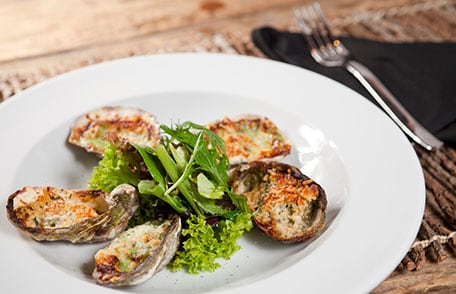
Plate of baked oysters

Many people enjoy eating raw oysters, and raw oyster bars are growing in popularity. But eating raw or undercooked oysters and other shellfish can put you at risk for foodborne illness.

Learn about vibriosis, an illness caused by infection with certain kinds of Vibrio bacteria, and steps you can take to protect your health when it comes to oysters and other shellfish.

Vibrio bacteria naturally inhabit coastal waters where oysters live. Because oysters feed by filtering water, Vibrio and other harmful bacteria and viruses can concentrate in their tissues. When someone eats raw or undercooked oysters, germs that might be in the oyster can cause illness.

CDC estimates that about 80,000 people get vibriosis—and 100 people die from it—in the United States every year. Most of these illnesses happen from May through October when water temperatures are warmer. However, you can get sick from eating raw or undercooked oysters during any month of the year, and raw oysters from typically colder waters also can cause vibriosis.

An oyster that contains harmful bacteria doesn’t look, smell, or even taste different from any other oyster. You can kill Vibrio in oysters and certain other shellfish, such as mussels and clams, by cooking them properly.

What are the symptoms of vibriosis?

Most Vibrio infections from oysters, such as Vibrio parahaemolyticus infection, result in mild illness, including diarrhea and vomiting. However, people with a Vibrio vulnificus infection can get very sick. As many as 1 in 5 people with a Vibrio vulnificus infection die. This is because Vibrio vulnificus infection can lead to bloodstream infections, severe blistering skin lesions, and limb amputations.

If you develop symptoms of vibriosis, tell your medical provider if you recently ate or touched raw oysters or other raw shellfish or came into contact with salt water or brackish water. Brackish water is a mixture of salt water and fresh water. It is often found where rivers meet the sea.

Who is more likely to get vibriosis?

Anyone can get vibriosis, but you may be more likely to get an infection or severe illness if you:

  • Have liver disease, cancer, diabetes, HIV, or the blood disorder thalassemia
  • Receive immune-suppressing therapy for the treatment of disease
  • Take medicine to lower stomach acid levels
  • Have had recent stomach surgery
  • Are 65 years or older

How do people get vibriosis?

Most people become infected by eating raw or undercooked shellfish, particularly oysters. Other people become infected by:

  • Getting brackish or salt water in a wound, such as when they’re swimming, wading, or fishing.
  • Cutting themselves on an item, such as a rock or pier, that has come into contact with brackish or salt water.
  • Getting raw seafood juices or drippings in a wound.

How can I stay safe?

Follow these tips to reduce your chances of getting an infection when eating or touching shellfish and other seafood:

  • Don’t eat raw or undercooked oysters or other shellfish. Fully cook them before eating, and only order fully cooked oysters at restaurants. Hot sauce and lemon juice don’t kill Vibrio bacteria and neither does alcohol.
    • Some oysters are treated for safety after they are harvested. This treatment can reduce levels of vibriosis in the oyster, but it does not remove all harmful germs. People who are more likely to get vibriosis should not eat any raw or undercooked oysters.
  • Separate cooked seafood from raw seafood and its juices to avoid cross contaminationexternal icon.
  • Wash your hands with soap and water after handling raw seafood.
  • Stay out of salt water or brackish water if you have a wound (including from a recent surgery, piercing, or tattoo).
    • Cover any wounds if they could touch raw seafood or raw seafood juices, or if you might come into contact with brackish or salt water.
  • Wash open wounds and cuts thoroughly with soap and water if they contacted salt water or brackish water or raw seafood or raw seafood juices or drippings.

What are tips for cooking shellfish?

Before cooking, discard any shellfish with open shells.

For shellfish in the shell, either:

  • Boil until the shells open and continue boiling another 3-5 minutes, or
  • Add to a steamer when water is already steaming and cook for another 4–9 minutes.

Only eat shellfish that open during cooking. Throw out any shellfish that do not open fully after cooking.

For shucked oysters, either:

  • Boil for at least 3 minutes,
  • Fry in oil for at least 3 minutes at 375°F,
  • Broil 3 inches from heat for 3 minutes, or
  • Bake at 450°F for 10 minutes.

USA – Greater Omaha Packing Recalls Raw Beef Products Due to Possible E. Coli O157:H7 Contamination

FSIS USDA

FSIS Announcement

WASHINGTON, July 29, 2021 – Greater Omaha Packing, an Omaha, Neb. establishment, is recalling approximately 295,236 pounds of raw beef products intended for non-intact use that may be contaminated with E. coli O157:H7, the U.S. Department of Agriculture’s Food Safety and Inspection Service (FSIS) announced today.

The raw beef products intended for non-intact use were produced on July 13, 2021. The complete list of products and product codes for the beef products that are subject to recall can be found here.

The products subject to recall bear establishment number “EST. 960A” inside the USDA mark of inspection. These items were distributed to further processors in Illinois, Indiana, Minnesota and Nebraska.

The problem was discovered when FSIS collected a routine product sample that confirmed positive for the presence of E. coli O157:H7. There have been no confirmed reports of adverse reactions due to consumption of these products.

Anyone concerned about an injury or illness should contact a healthcare provider. E. coli O157:H7 is a potentially deadly bacterium that can cause dehydration, bloody diarrhea, and abdominal cramps 2–8 days (3–4 days, on average) after exposure the organism. While most people recover within a week, some develop a type of kidney failure called hemolytic uremic syndrome (HUS). This condition can occur among persons of any age but is most common in children under 5-years old and older adults. It is marked by easy bruising, pallor, and decreased urine output. Persons who experience these symptoms should seek emergency medical care immediately.

FSIS routinely conducts recall effectiveness checks to verify recalling firms notify their customers of the recall and that steps are taken to make certain that the product is no longer available to consumers. When available, the retail distribution list(s) will be posted on the FSIS website at www.fsis.usda.gov/recalls.

FSIS advises all consumers to safely prepare their raw meat products, including fresh and frozen, and only consume beef products that have been cooked to a temperature of 145°F and allow to rest for at least 3 minutes and ground meat products that have been cooked to a temperature of 160°F. The only way to confirm that the beef product is cooked to a temperature high enough to kill harmful bacteria is to use a food thermometer that measures internal temperature, https://www.fsis.usda.gov/safetempchart.

Consumers and members of the media with questions about the recall can contact Angel Besta, Vice President of Technical Resources, Greater Omaha Packing at (402) 515-2727.

Consumers with food safety questions can call the toll-free USDA Meat and Poultry Hotline at 1-888-MPHotline (1-888-674-6854) or live chat via Ask USDA from 10 a.m. to 6 p.m. (Eastern Time) Monday through Friday. Consumers can also browse food safety messages at Ask USDA or send a question via email to MPHotline@usda.gov. For consumers that need to report a problem with a meat, poultry, or egg product, the online Electronic Consumer Complaint Monitoring System can be accessed 24 hours a day at https://foodcomplaint.fsis.usda.gov/eCCF/.

Company Information

Omaha, NE

ESTABLISHMENT ID

M960A

PROCESSING CATEGORY

Raw – Non Intact

Company Contact Information

COMPANY MEDIA CONTACT
Greater Omaha Packing
Angel Besta, Vice President of Technical Resources