What’s New
- For the outbreak of Salmonella Typhimurium (reference # 1113) in a not identified food, the investigation status has now closed.

Posted in food contamination, food handler, Food Hazard, Food Hygiene, Food Illness, Food Inspections, Food Micro Blog, Food Microbiology, Food Microbiology Blog, Food Microbiology Research, Food Microbiology Testing, Food Pathogen, food recall, Food Safety, Food Safety Alert, Food Safety Management, Food Safety Regulations, Food Testing, Foodborne Illness, foodborne outbreak, foodbourne outbreak, Illness, outbreak
Delhaize recall
Product: Delhaize Brand Chef’s Tray.
Problem: Possible presence of Salmonella.
Delhaize asks its customers not to consume and to return the product below to the store.
In collaboration with the FASFC, Delhaize has decided to withdraw this product from the market and to recall it from consumers due to the presence of Salmonella.

Product info:
Name: PLATEAU DU CHEF
Brand: Delhaize
EAN code: 2205746000000
Expiry date: 11-01-2023
Batch number: 05200201099 Marketing
period: from 03/01/23 to 11/01/23
Every day, Delhaize performs hundreds of internal quality controls to guarantee the quality and food safety of its products at all times.
In the meantime, Delhaize has already taken all affected products off the shelves and tightened checks on the product and the supplier. Customers who have purchased this product are asked not to consume it. Customers have the option of returning the product in question to the point of sale where they purchased it. Reimbursement for each affected item is guaranteed.
Other products of the same assortment are not affected and can therefore be consumed in complete safety. Delhaize would like to apologize for the inconvenience caused.
Advice and information for consumers:
What if you have already purchased the product?
Do not consume the product and return it to your Delhaize store. The product will be refunded to you.
For further information , customers can contact our Customer Service on the free number 0800/95 713 .
Posted in afsca, food contamination, food handler, Food Hazard, Food Hygiene, Food Inspections, Food Micro Blog, Food Microbiology, Food Microbiology Blog, Food Microbiology Testing, Food Pathogen, food recall, Food Safety, Food Safety Alert, Food Safety Management, Food Safety Regulations, Food Testing, Salmonella
Product: “Le Claousou du Causse Méjean” sheep’s milk cheese (250g) from the Fédou brand.
Problem: Possible presence of listeria monocytogenes.
The FASFC is withdrawing the sheep’s milk cheese “Le Claousou du Causse Méjean” from the Fédou brand from sale and recalling it from consumers because of the possible presence of listeria monocytogenes.

Product description:
– Product name: “Le Claousou du Causse Méjean”
– Brand: le Fédou
– Batch number: 22 335 001
– Expiry dates (DLC): 01/17/2023 and 01/18/2023
– Weight : 250g
The product was sold via several points of sale in Belgium.
For any additional information , you can contact the FASFC contact point for consumers: 0800/13.550 or pointdecontact@afsca.be .
Posted in afsca, food contamination, food handler, Food Hazard, Food Hygiene, Food Inspections, Food Micro Blog, Food Microbiology, Food Microbiology Blog, Food Microbiology Testing, Food Pathogen, food recall, Food Safety, Food Safety Alert, Food Safety Management, Food Safety Regulations, Food Testing, Listeria, Listeria monocytogenes
Martinelli’s Gold Medal Apple Juice is being recalled because it has elevated patulin levels. Patulin is a toxic chemical contaminant that is produced by several species of mold, including Aspergillus and Penicillium. It is the most common mycotoxin found in apples and is commonly found in apple juice and cider.
Posted in food contamination, food handler, Food Hazard, Food Hygiene, Food Inspections, Food Micro Blog, Food Microbiology, Food Microbiology Blog, Food Microbiology Testing, Food Poisoning, food recall, Food Safety, Food Safety Alert, Food Safety Management, Food Safety Regulations, Food Testing, Food Toxin, Mold Toxin, Mould Toxin, Mycotoxin, Patulin

| Batch | Date | |
|---|---|---|
| 22,335,001 | Date of minimum durability 17/01/2023 | |
| 22,335,001 | Date of minimum durability 01/18/2023 | |
Posted in food contamination, food handler, Food Hazard, Food Hygiene, Food Inspections, Food Micro Blog, Food Microbiology, Food Microbiology Blog, Food Microbiology Testing, Food Pathogen, food recall, Food Safety, Food Safety Alert, Food Safety Management, Food Safety Regulations, Food Testing, Listeria, Listeria monocytogenes
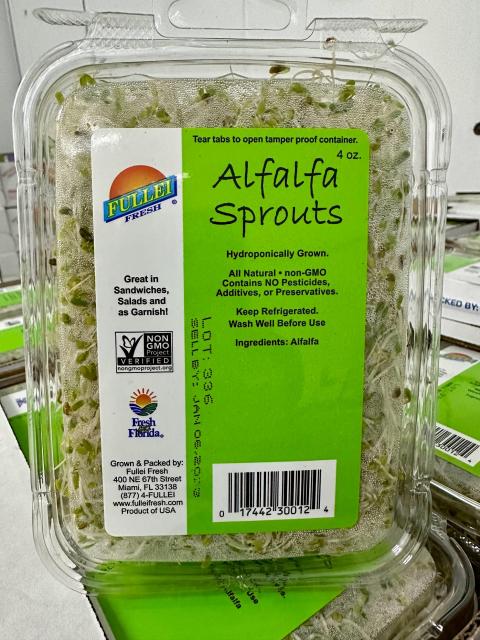
MIAMI, FL – Fullei Fresh is voluntarily recalling Alfalfa Sprouts due to the detection of Shiga toxin producing E.coli (STEC.) It is a strain of e.coli which is not part of their routine e.coli O157:H7 and salmonella testing which is normally conducted on every lot produced. There have been no known illnesses reported to date in connection with this product.
The affected Fullei Fresh brand alfalfa sprout lot number is 336. They were shipped to distributors and retailers in Florida between December 9-23, 2022. No other lots or products are affected.
The lot numbers are printed on the 8 ounce retail packs and on 5 lb. bulk cardboard boxes in the barcode (the last 3 digits being 336.) Pictures are attached.
Should you be in possession of these products, please discard.
Posted in FDA, food contamination, food handler, Food Hazard, Food Hygiene, Food Inspections, Food Micro Blog, Food Microbiology, Food Microbiology Blog, Food Microbiology Testing, Food Pathogen, Food Poisoning, food recall, Food Safety, Food Safety Alert, Food Safety Management, Food Safety Regulations, Food Testing, Food Toxin, STEC, STEC E.coli
Investigated Illnesses and Outbreaks Table Update for Seafood Related Natural Toxin and Scombrotoxin Fish Poisoning
Table 1: Closed Illness and Outbreak Incidents is a list of investigations that were managed by FDA’s Seafood-Related Natural Toxin and Scombrotoxin Fish Poisoning Team for Fish Other Than Molluscan Shellfish. The listed incidents have been completed at this time.
The table is managed and updated when a significant number of illnesses have been investigated in a specific period of time or at least quarterly.
The table has been updated to illustrate additional information such as
The following FDA tracking numbers, and illness type have been added to the table:
The table may be found at: How to Report Seafood-Related Toxin and Scombrotoxin Fish Poisoning Illnesses | FDA
Posted in Decontamination Microbial, Food Micro Blog, Food Microbiology, Food Microbiology Blog, Food Microbiology Testing, Food Poisoning, Food Toxin, Marine Biotoxin, microbial contamination, Microbial growth, Microbiological Risk Assessment, Microbiology, Microbiology Investigations, Microbiology Risk, Poisoning, Scombroid, scombroid poisoning
“ANKER herring in jelly”

Anker GmbH Fisch- und Feinkostfabrik Gewerbestraße 6 23942 Dassow
Salmonella
Salmonella disease manifests itself within a few days after infection with diarrhoea, abdominal pain and occasionally vomiting and a slight fever. The symptoms usually subside on their own after a few days. In particular, infants, small children, pregnant women, the elderly and people with a weakened immune system can develop more severe illnesses. Anyone who has eaten this food and develops severe or persistent symptoms should seek medical attention and report possible salmonella infection. It makes no sense to seek preventive medical treatment without symptoms. Further information on the pathogen can be found here: http://www.infection-protection.de/erregersteckbriefe/salmonellen.
Posted in food contamination, food handler, Food Hazard, Food Hygiene, Food Inspections, Food Micro Blog, Food Microbiology, Food Microbiology Blog, Food Microbiology Testing, Food Pathogen, food recall, Food Safety, Food Safety Alert, Food Safety Management, Food Safety Regulations, Food Testing, Salmonella

| GTIN | Date | |
|---|---|---|
| 3564706604988 | Use-by date 30/12/2022 | |
Posted in food contamination, food handler, Food Hazard, Food Hygiene, Food Inspections, Food Micro Blog, Food Microbiology, Food Microbiology Blog, Food Microbiology Testing, Food Pathogen, food recall, Food Safety, Food Safety Alert, Food Safety Management, Food Safety Regulations, Food Testing, Listeria, Listeria monocytogenes

In 2021, surveillance of Campylobacter infections confirmed the epidemiological and biological trends already observed in recent years. Specifically, the data shows:
The number of Campylobacter strains listed by the CNR has been increasing since 2013, the year in which the network’s laboratories introduced online data entry. By way of comparison, at European level, the trend in the number of Campylobacter infection notifications remained stable over the 2016-2020 period. This increase observed in France could be a reflection of a real increase in Campylobacter infections. However, several factors, such as the grouping of laboratories into technical platforms and the increasingly systematic use of multiplex PCR (diagnostic tests that allow the presence of several targeted pathogens to be tested at the same time from the same sample) , facilitating the detection of Campylobacter sp , could have contributed to the increase in the number of strain isolations and therefore of the notification by the laboratories of the network over time.
Posted in Campylobacter, campylobacter coli, Campylobacter jejuni, Food Micro Blog, Food Microbiology, Food Microbiology Blog, Food Microbiology Research, Food Microbiology Testing, microbial contamination, Microbial growth, Microbiological Risk Assessment, Microbiology, Microbiology Investigations, Microbiology Risk


