Archives
-
Join 346 other subscribers
KSWFoodWorld
Blog Stats
- 444,788 Views
Category Archives: Food Microbiology Research
Research – Bacterial Changes in Boiled Crayfish between Different Storage Periods and Characterizations of the Specific Spoilage Bacteria
This study investigated changes in the microbial compositions of crayfish tails during storage at 4 °C (for 0–12 days) as measured using high-throughput sequencing (HTS). The specific spoilage organisms (SSOs) in the crayfish tails were isolated using culture-dependent cultivation methods, and they were identified by 16S rRNA and characterized for their enzymatic spoilage potentials (e.g., protease, lipase, phospholipase, and amylase). The spoilage abilities of the selected strains in the crayfish tails were assessed by inoculating them into real food. Moreover, the microbial growth and the volatile basic nitrogen (TVB-N) changes were monitored during the storage period. The results from the HTS showed that the dominant genus of shrimp tails evolved from Streptococcus (D0) to Pseudomonas (D4) and, finally, to Paenisporosarcina (D12) during storage. Seven bacterial species (Acinetobacter lwoffii, Aeromonas veronii, Kurthia gibsonii, Pseudomonas sp., Exiguobacterium aurantiacum, Lelliottia amnigena, and Citrobacter freundii) were screened from the spoiled shrimp tails by the culture-dependent method, among which Aeromonas veronii had the strongest spoilage ability.
Research – The Effect of Different Organic Acids and Their Combination on the Cell Barrier and Biofilm of Escherichia coli
Abstract
Organic acids are natural antimicrobial compounds commonly used in the food industry. In this study, acetic, lactic, butyric, citric, and malic acid at minimum inhibitory concentrations and their combinations at optimal inhibition concentrations were used to treat E. coli, and the effects on the cell barrier and biofilm of E. coli were evaluated. Acetic acid showed the highest membrane-damaging effect, while citric acid and malic acid could specifically damage the cell wall of E. coli, leading to alkaline phosphatase leakage. The RT-qPCR results showed that organic acids upregulated the membrane-protein-related genes of E. coli, and the combination of organic acids had a wider range of effects than single organic acid treatment. Moreover, organic acids inhibited the formation of E. coli biofilm and cellular activity within the biofilm. This study showed that the combination of organic acids plays a synergistic inhibitory role mainly through multiple destructive effects on the cell barrier and exhibited synergistic anti-biofilm effects. The three–three combination of acetic, lactic acid, and a third organic acid (butyric, citric, or malic) can play a better synergistic antibacterial effect than the two-pair combination of acetic and lactic acid. These findings have implications for the usage, development, and optimization of organic acid combinations.
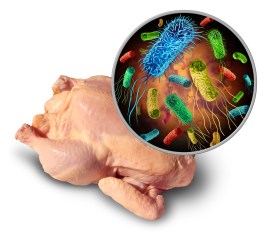
Researchers explore the significance of Salmonella-positive foods in the UK.

According to a study, the Salmonella prevalence on tested foods on sale in the United Kingdom was low but highest for imported frozen chicken.
Researchers from the Quadram Institute and the University of East Anglia in England isolated Salmonella from 42 food samples.
Salmonella isolates collected from food using whole genome sequencing (WGS) were compared to isolates from humans in the UK.
Raw foods were collected at retail in Norfolk, including 311 samples each of chicken, leafy greens, and pork, 279 prawns, and 157 salmon between May 2018 and November 2019.
Posted in Decontamination Microbial, Food Micro Blog, Food Microbiology, Food Microbiology Blog, Food Microbiology Research, Food Microbiology Testing, microbial contamination, Microbial growth, Microbiological Risk Assessment, Microbiology, Microbiology Investigations, Microbiology Risk, Salmonella, Salmonella in Chicken
RASFF Alert – Aflatoxin – Rice Cakes
Aflatoxins in rice cakes from the Netherlands, via Germany in Austria, Czech Republic, Germany, Hungary, Netherlands, Slovenia.
Posted in Aflatoxin, Aspergillus Toxin, food contamination, food handler, Food Hazard, Food Hygiene, Food Inspections, Food Micro Blog, Food Microbiology, Food Microbiology Research, Food Microbiology Testing, Food Poisoning, Food Quality, food recall, Food Safety, Food Safety Alert, Food Safety Management, Food Safety Regulations, Food Testing, Food Toxin, Mold Toxin, Mould Toxin, Mycotoxin, RASFF
RASFF Alert – Food Poisoning from Long Life Milk
Food poisoning from long life milk, from Belgium. in the Netherlands
Posted in Decontamination Microbial, Food Illness, Food Micro Blog, Food Microbiology, Food Microbiology Blog, Food Microbiology Research, Food Microbiology Testing, Food Poisoning, Foodborne Illness, Illness, microbial contamination, Microbial growth, Microbiological Risk Assessment, Microbiology, Microbiology Investigations, Microbiology Risk, Poisoning, RASFF
Research – Scientists assess Listeria risk in three food categories
Experts have made several recommendations ahead of a potential update to guidelines relating to the control of Listeria in food.
Consumer practices deviating from the intended use of a food highlights the need for improved labeling about correct preparation and businesses need to assess the potential impacts of climate change, said scientists brought together by the United Nation’s Food and Agriculture Organization (FAO) and World Health Organization (WHO).
The FAO/WHO Joint Expert Meeting on Microbiological Risk Assessment (JEMRA) met in Geneva, Switzerland, from late May to early June 2023, to perform risk assessments of Listeria monocytogenes in selected foods using models developed since a previous meeting.
Posted in Decontamination Microbial, Food Micro Blog, Food Microbiology, Food Microbiology Blog, Food Microbiology Research, Food Microbiology Testing, Listeria, Listeria monocytogenes, microbial contamination, Microbial growth, Microbiological Risk Assessment, Microbiology, Microbiology Investigations, Microbiology Risk
Research – Prevalence and Association of Campylobacter spp., Salmonella spp., and Blastocystis sp. in Poultry

Abstract
Poultry and poultry meat are considered the most important sources of human campylobacteriosis and salmonellosis. However, data about the occurrence of Campylobacter and Salmonella concomitantly with intestinal protozoa such as Blastocystis sp. in poultry remain very scarce. Therefore, this study aimed to investigate the presence and possible interactions between these three microorganisms in fecal samples from 214 chickens collected either on farms or from live bird markets in Egypt. The results obtained showed that Campylobacter spp., Salmonella spp., and Blastocystis sp. were present in 91.6% (196/214), 44.4% (95/214), and 18.2% (39/214) of tested samples, respectively, highlighting an active circulation of these microorganisms. Moreover, a significant positive correlation was reported between the occurrence of Campylobacter spp. and Blastocystis sp. together with a significant negative correlation between Blastocystis sp. and Salmonella spp. This study confirms the association reported previously between Blastocystis sp. and Campylobacter spp. while disclosing an association between Blastocystis sp. and Salmonella spp.; it also highlights the need to improve studies on the interactions between bacteria and eukaryotes in the gut microbiota of poultry.
Posted in Campylobacter, campylobacter coli, Campylobacter jejuni, Decontamination Microbial, Food Micro Blog, Food Microbiology, Food Microbiology Blog, Food Microbiology Research, Food Microbiology Testing, microbial contamination, Microbial growth, Microbiological Risk Assessment, Microbiology, Microbiology Investigations, Microbiology Risk, Salmonella, Salmonella in Chicken
Norway – Outbreak of E. coli (EHEC infection)

This outbreak is caused by a different EHEC bacterium than the outbreak reported in June. FHI has started an outbreak investigation together with relevant municipal chief medical officers, the Norwegian Food Safety Authority and the Veterinary Institute. All the infected fell ill in July and none of them have traveled abroad.
The infected are aged < 5 to 45 years, and live in Trøndelag (4), Viken and Vestfold and Telemark. Two of them have developed the serious complication haemolytic uraemic syndrome (HUS). In addition, a further HUS case has been notified where EHEC has been detected, but we are awaiting more analyzes before we can say whether the person is infected with the same strain of bacteria as the other cases. It is not yet known what the source of infection is, but it is common for gastrointestinal bacteria to become infected through food.
– At the present time, we cannot say whether this is a limited outbreak or whether there may be new cases, says Silje Bruland Lavoll, senior physician in the section for infection from food, water and animals at the Norwegian Institute of Public Health. Investigative work can be complicated and take time, and in many cases we are unable to find the source of infection or to clarify whether it is a common source.
– We follow the situation closely and work closely with the municipal health service, the Norwegian Food Safety Authority and the Veterinary Institute, she adds.
– The Norwegian Food Safety Authority assists the Norwegian Institute of Public Health and municipal chief physicians in obtaining information from the sick persons and their relatives. Interviews are conducted about what the people have eaten and what they have been in contact with, says senior advisor Turid Berglund in the biological food safety section of the Norwegian Food Safety Authority.
Preliminary analyzes show that it is the bacterium EHEC O26:H11, which has been detected in all those infected. FHI is now working on further analyzes (whole genome sequencing) to confirm this.
Posted in E.coli, EHEC, food bourne outbreak, Food Illness, Food Micro Blog, Food Microbiology, Food Microbiology Blog, Food Microbiology Research, Food Microbiology Testing, Foodborne Illness, foodborne outbreak, foodbourne outbreak, HUS, Illness, Matportalen, microbial contamination, Microbial growth, Microbiological Risk Assessment, Microbiology, Microbiology Investigations, Microbiology Risk, outbreak, STEC, STEC E.coli
Afghanistan – 200 people suffer food poisoning in E. Afghanistan
KHOST, Afghanistan, Aug. 7 (Xinhua) — At least 200 people were sickened in food poisoning in east Afghanistan’s Khost province, an official said on Monday.
The incident occurred in Satkai village of Zazai Maidan district on Sunday evening when the villagers attended a charity meal, and all the victims had been taken to nearby hospitals and clinics, said provincial police spokesman Mustaghfar Garbaz.
Without providing more details, the official added that further investigations were underway.
In the meantime, villager and eyewitness Tahir Azimi claimed that around 400 people were sick with the charity meal.
Posted in Decontamination Microbial, food bourne outbreak, Food Illness, Food Micro Blog, Food Microbiology, Food Microbiology Blog, Food Microbiology Research, Food Microbiology Testing, Foodborne Illness, foodborne outbreak, foodbourne outbreak, Illness, microbial contamination, Microbial growth, Microbiological Risk Assessment, Microbiology, Microbiology Investigations, Microbiology Risk, outbreak
USA – Irrigation water likely link in Utah E. coli Outbreak
According to Utah health official and media, in the last two weeks, eight cases of E. coli (likely a shiga-toxin producing E. coli like E. coli O157:H7) were reported in Utah County residents, with at least five of the subjects hospitalized (likely with hemolytic uremic syndrome – HUS) due to the severity of symptoms.
Currently, all reported cases are residents of Lehi or have close ties to the city, says a statement from the Utah County Health Department.
Epidemiologists are working to identify the source of infection, it says. Preliminary investigation links the likely source of spread to using pressurized irrigation water for drinking and play.
Posted in Contaminated water, E.coli, food bourne outbreak, Food Micro Blog, Food Microbiology, Food Microbiology Blog, Food Microbiology Research, Food Microbiology Testing, foodborne outbreak, foodbourne outbreak, Illness, microbial contamination, Microbial growth, Microbiological Risk Assessment, Microbiology, Microbiology Investigations, Microbiology Risk, outbreak, STEC, STEC E.coli, Water, water microbiology, Water Safety