Category Archives: Food Microbiology Research

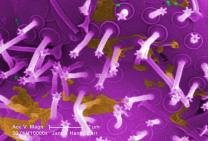
Research – Washing away stubborn biofilms using fungal cleaning products

Science Daily biofilm

Lurking inside pipes and on the surfaces of indwelling medical devices, slimy layers of bacteria, called biofilms, cause problems ranging from largescale product contamination to potentially fatal chronic infections. Biofilms are notoriously difficult to eliminate — not surprising given that one of their main functions is to protect encased bacteria from threats such as predation, antibiotics, and chemical cleaning agents.

Bleach, harsh oxidizing cleaning products, and petrochemical-derived detergents called surfactants combined with scrubbing are the most effective methods of removing biofilms. However, bleach and harsh chemicals are obviously unsuitable for use in biological settings, and while surfactants are used in products such as hand soap and cosmetics, many are toxic to the environment and can damage the surfaces that they are used on.

But in a study published this month in peer-reviewed journal Langmuir, researchers from the University of Tsukuba have found a new way of tackling biofilms, using cleaning agents derived from microbes themselves.

Netherlands – Deaths linked to Dutch Listeria outbreak double

Food Safety News

The number of deaths linked to a Listeria outbreak from meat products in 2019 has doubled.

It had been thought 21 people were infected with Listeria monocytogenes in the Netherlands and Belgium. One person fell sick in October 2017, eight in 2018, and 12 in 2019. Three people died. All patients were hospitalized and one woman had a miscarriage. Two Dutch patients were pregnant women in their 30s. The others were from 64 to 94 years old and 10 were men.

Now it is known that Listeria in processed meats from Offerman, a Ter Beke subsidiary, made 35 people sick. Two women miscarried and six patients died. The information was revealed in the Dutch Food and Consumer Product Safety Authority’s (NVWA) annual report.

Research – Scientists say Campylobacter behind August 2019 outbreak in Beijing

Food Safety News

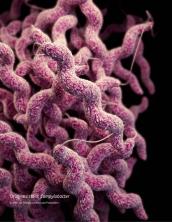
campy2

Image CDC

Researchers in China have reported the first identified outbreak caused by a local Campylobacter jejuni infection in Beijing.

A total of 14 patients were sick who worked at the same factory. They had shared a common meal supplied from a meal delivery company. The outbreak was not related to the ongoing COVID-19 outbreak.

“Recently, the accelerated pace of life may dramatically increase use of meal delivery in major cities and may subsequently increase the risk of infection or food poisoning caused by foodborne pathogens,” said researchers in an article in China CDC Weekly.

Research – Aflatoxin Contamination of Commercial Maize Products During an Outbreak of Acute Aflatoxicosis in Eastern and Central Kenya

PubMed

In April 2004, one of the largest aflatoxicosis outbreaks occurred in rural Kenya, resulting in 317 cases and 125 deaths. Aflatoxin-contaminated homegrown maize was the source of the outbreak, but the extent of regional contamination and status of maize in commercial markets (market maize) were unknown. We conducted a cross-sectional survey to assess the extent of market maize contamination and evaluate the relationship between market maize aflatoxin and the aflatoxicosis outbreak. We surveyed 65 markets and 243 maize vendors and collected 350 maize products in the most affected districts. Fifty-five percent of maize products had aflatoxin levels greater than the Kenyan regulatory limit of 20 ppb, 35% had levels > 100 ppb, and 7% had levels > 1,000 ppb. Makueni, the district with the most aflatoxicosis case-patients, had significantly higher market maize aflatoxin than did Thika, the study district with fewest case-patients (geometric mean aflatoxin = 52.91 ppb vs. 7.52 ppb, p = 0.0004). Maize obtained from local farms in the affected area was significantly more likely to have aflatoxin levels > 20 ppb compared with maize bought from other regions of Kenya or other countries (odds ratio = 2.71; 95% confidence interval, 1.12-6.59). Contaminated homegrown maize bought from local farms in the affected area entered the distribution system, resulting in widespread aflatoxin contamination of market maize. Contaminated market maize, purchased by farmers after their homegrown supplies are exhausted, may represent a source of continued exposure to aflatoxin. Efforts to successfully interrupt exposure to aflatoxin during an outbreak must consider the potential role of the market system in sustaining exposure.


Research – Food safety risk posed to consumers of table eggs from layer farms in Gauteng Province, South Africa: Prevalence of Salmonella species and Escherichia coli , antimicrobial residues, and antimicrobial resistant bacteria

Wiley Online hazegg.jpg

The study conducted on 39‐layer farms in Gauteng Province, South Africa determined the prevalence and resistance of enteropathogens, and antimicrobial residues in table eggs collected from the farms. Eggs were tested for the presence of bacteria using standard methods. The resistance of bacteria to eight antimicrobial agents was determined using the disc diffusion method. Antimicrobial residues were detected in table eggs using the microbial inhibition test, enzyme‐linked immunosorbent assay (ELISA), and high performance liquid chromatography (HPLC). Risk factors for egg contamination by bacteria and antimicrobial residues were determined through a questionnaire survey of farmers. The farm prevalence of Salmonella spp. and Escherichia coli in table eggs was 7.7 and 48.7%, respectively. Nineteen (48.7%) and 2 (5.1%) of eggshells and egg contents, respectively, were positive for coli but only eggshells yielded Salmonella species, 2.0% (4 of 196). Overall, 71.4% of 49 coli isolates exhibited resistance to one or more antimicrobial agents. The farm prevalence and egg content prevalence of antimicrobial residues was 2.6 and 0.5%, respectively, with the detection of sulfonamide (79 ppb) and oxytetracycline (106 ppb). The prevalence of resistant coli and Salmonella spp. and the occurrence of antimicrobial residues in egg content may pose food safety and therapeutic threats to consumers.

Research – Combination of ultraviolet light‐C and clove essential oil to inactivate Salmonella Typhimurium biofilms on stainless steel

Wiley Online

Salmonella typhimurium is able to form biofilms as a resistance mechanism against antimicrobials; therefore, it represents a problem for assuring food safety and highlights the importance of research on anti‐biofilm technologies. In this study, S. typhimurium biofilms were inactivated with the combination of clove essential oil (CEO) and ultraviolet light (UV‐C). The volatile composition of the CEO determined by gas chromatography showed eugenol as the major constituent (82%). A combination of CEO with UV‐C achieved a complete bacterial reduction (6.8 log/cm2) on biofilms with doses of 1.2 mg/ml and 76.41 mJ/cm2, respectively. Individually, the CEO at 1.2 mg/ml caused a reduction of 1.8 log CFU/cm2 of attached bacteria cells on stainless steel, while UV‐C individually used at 620.4 mJ/cm2 caused a 2.9 log CFU/cm2 reduction compared to control biofilms. In conclusion, this study demonstrated a synergistic effect of combining CEO and UV‐C irradiation to inactivate biofilms of S. typhimurium .

Research – Prevalence of Shiga Toxin-Producing Escherichia Coli in Beef Cattle

PubMed

A large number of Shiga toxin-producing Escherichia coli (STEC) strains have caused major outbreaks and sporadic cases of human illnesses, including mild diarrhea, bloody diarrhea, hemorrhagic colitis, and the life-threatening hemolytic uremic syndrome. These illnesses have been traced to both O157 and non-O157 STEC. In a large number of STEC-associated outbreaks, the infections were attributed to consumption of ground beef or other beef products contaminated with cattle feces. Thus, beef cattle are considered reservoirs of STEC and can pose significant health risks to humans. The global nature of the human food supply suggests that safety concerns with beef will continue and the challenges facing the beef industry will increase at the production and processing levels. To be prepared to address these concerns and challenges, it is critical to assess the role of beef cattle in human STEC infections. In this review, published reports on STEC in beef cattle were evaluated to achieve the following specific objectives: (i) assess the prevalence of STEC in beef cattle, and (ii) determine the potential health risks of STEC strains from beef cattle. The latter objective is critically important because many beef STEC isolates are highly virulent. Global testing of beef cattle feces revealed wide ranges of prevalence rates for O157 STEC (i.e., 0.2 to 27.8%) and non-O157 STEC (i.e., 2.1 to 70.1%). Of the 261 STEC serotypes found in beef cattle, 44 cause hemolytic uremic syndrome and 37 cause other illnesses.

Research -Predictive model for growth of Salmonella Newport on Romaine lettuce

Wiley Online

Cross‐contamination of ready‐to‐eat (RTE) salad vegetables with Salmonella from raw chicken followed by growth during meal preparation are important risk factors for human salmonellosis. To better predict and manage this risk, a model (general regression neural network) for growth of a chicken isolate of Salmonella Newport (0.91 log) on Romaine lettuce (0.18 g) at times (0–8 hr) and temperatures (16–40°C) observed during meal preparation was developed with Excel, NeuralTools, and @Risk. Model performance was evaluated using the acceptable prediction zones (APZ) method. The proportion of residuals in the APZ (pAPZ) was 0.93 for dependent data (= 210) and 0.93 for independent data (= 72) for interpolation. A pAPZ ≥0.70 indicates acceptable model performance. Thus, the model was successfully validated for interpolation and can be used with confidence to predict and manage this important risk to public health.


Research – Effect of essential oils on pathogenic and biofilm-forming Vibrio parahaemolyticus strains

Tandfonline

In this study, the effect of three essential oils (EOs) – clove oil (CO), thyme oil (TO), and garlic oil (GO), which are generally recognized as safe – on the planktonic growth, minimum inhibitory concentration (MIC), minimum bactericidal concentration (MBC), motility, biofilm formation, and quorum sensing (QS) of Vibrio parahaemolyticus was investigated. All three EOs showed bacteriostatic activity, with MICs in the range 0.02%–0.09% (v/v). CO and TO completely controlled planktonic growth at 0.28% and 0.08% (v/v), which is four times their MIC (4 × MIC), after 10 min, whereas GO completely controlled growth at 0.36% (v/v) (4 × MIC) after treatment for 20 min. V. parahaemolyticus motility was significantly reduced by all three EOs at 4 × MIC (0.28% for CO, 0.08% for TO, and 0.36% for GO), whereas QS was controlled and biofilm formation reduced by all three EOs at 8 × MIC (0.56% for CO, 0.16% for TO, and 0.72% for GO) after 30 min of treatment. These results suggest that CO, TO, and GO have a significant inhibitory effect on V. parahaemolyticus cells in biofilm sand thus represent a promising strategy for improving food safety. These results provide the evidence required to encourage further research into the practical use of the proposed EOs in food preparation processes.

Research – Raw is still risky: Six years after a toddler died, Australian advocates want raw milk back on the table

Barf blog

In late 2014, three children in the Australian state of Victoria developed hemolytic uremic syndrome linked to Shiga-toxin toxin producing E. coli in unpasteurized bath milk produced by Mountain View Dairy Farm. One child died, and two others developed cryptosporidiosis.

The Victorian government quickly banned the sale of so-called bath milk, which although labeled as not fit for human consumption, was a widely recognized way for Australian consumers to access raw milk.