Category Archives: Food Microbiology Research

Research – Contamination of spinach at germination: A route to persistence and environmental reintroduction by Salmonella

ACA kswfoodworld Salmonella

The effects of using contaminated seed and water on the persistence and internalization of Salmonella Newport in organic spinach cultivars- Lazio, Space, Emilia and Waitiki were studied. Seeds were contaminated by either immersing in a suspension of Salmonella and then sprouted or were sprouted in Salmonella contaminated water in the dark at 25 °C. After 5 days, germinated sprouts were analyzed for S. Newport population and internalization. Germinated sprouts were potted in soil and grown in a plant incubator for 4 weeks. Leaves, stems and roots were sampled for Salmonella population by plating on CHROMagar™. Plants surface-sterilized with chlorine were analyzed for internalized pathogen. Potting soil and water runoff were sampled for Salmonella after 4 weeks of plant growth. Contaminated seeds and irrigation water had S. Newport populations of 7.64±0.43 log CFU/g and 7.12±0.04 log CFU/ml, respectively. Sprouts germinated using contaminated water or seeds had S. Newport populations of 8.09±0.04 and 8.08±0.03 log CFU/g, respectively and had a Salmonella population that was significantly higher than other spinach tissues (P<0.05). Populations of S. Newport in leaves, stem and roots of spinach plants were as follows: contaminated seed- 2.82±1.69, 1.69±0.86, and 4.41±0.62 log CFU/ml; contaminated water- 3.56±0.90, 3.04±0.31, and 4.03±0.42 log CFU/ml of macerated tissue suspension, respectively. Internalization was observed in plants developing from contaminated seeds and in sprouts germinated using contaminated water. S. Newport populations of 2.82±0.70 log CFU/g and 1.76±0.46 log CFU/ml were recovered from soil and water runoff, respectively. The results indicate that contamination of spinach during germination can result in persistence, internalization and environmental reintroduction of Salmonella.

Research – Which Foods May Be Contaminated With Listeria Monocytogenes Bacteria?

Food Poisoning Bulletin

Which foods may be contaminated with Listeria monocytogenes bacteria? Outbreaks of listeriosis, the illness caused by this pathogen, that have been linked to these kinds of foods go back to 1985. The Centers for Disease Control and Prevention have put together a list of foods that people in high risk groups should avoid.


Research – Escherichia coli Biofilms

Springer Link ecoli

Escherichia coli is a predominant species among facultative anaerobic bacteria of the gastrointestinal tract. Both its frequent community lifestyle and the availability of a wide array of genetic tools contributed to establish E. coli as a relevant model organism for the study of surface colonization. Several key factors, including different extracellular appendages, are implicated in E. coli surface colonization and their expression and activity are finely regulated, both in space and time, to ensure productive events leading to mature biofilm formation. This chapter will present known molecular mechanisms underlying biofilm development in both commensal and pathogenic E. coli.

Australia – Simplot Australia Pty Ltd — Leggo’s Tuna Bake with Spinach & Garlic 500g

FSANZ

Photograph of Leggos Tuna Bake

The recall is due to the incorrect pH level being detected in the sauce, which has the potential for microbial growth.

What are the hazards?

Food products with microbial contamination may cause illness if consumed.

What should consumers do?

Do not consume this product and return it to the place of purchase for a full refund.

For further information, please contact Simplot’s Consumer Information Service on 1800 061 279.

Traders who sold this product

Coles
Woolworths
IGA
Independent grocers

Where the product was sold
New South Wales
Northern Territory
Online
South Australia
Tasmania
Victoria
Western Australia
Dates available for sale
  • 21 May 2020 – 15 June 2020

Recall advertisements and supporting documentation

Research – Home Canning and Botulism

Food Safety.gov

Home canning is an excellent way to preserve garden produce and share it with family and friends. But it can be risky—or even deadly—if not done correctly and safely.

It’s summertime and time to harvest the delicious produce you’ve been growing. You may be thinking about home canning as a way to preserve your garden goodies. But beware! If home canning is not done the proper way, your canned vegetables and fruits could cause botulism.

What is botulism?

Botulism is a rare but potentially deadly illness caused by a poison most commonly produced by a germ called Clostridium botulinum. The germ is found in soil and can survive, grow, and produce a toxin in certain conditions, such as when food is improperly canned. The toxin can affect your nerves, paralyze you, and even cause death.

You cannot see, smell, or taste botulinum toxin—but taking even a small taste of food containing this toxin can be deadly.


UK – Primula recalls all Primula Cheese tubes because of Clostridium botulinum

FSA

cdc clost spore

Image CDC

Primula Ltd is recalling all Primula Cheese tubes, (chilled and ambient) because the product might be contaminated with Clostridium botulinum due to a production fault. They have taken the precautionary step of recalling all products because one product might contain Clostridium botulinum.

Product details

Product code Primula Plain Original Cheese Spread
Pack size 150g
Batch code All batch codes
Best before All dates
Product code Primula Cheese Spread with Smoked Paprika
Pack size 150g
Batch code All batch codes
Best before All dates
Product code Primula Cheese Spread with Jalapeno
Pack size 150g
Batch code All batch codes
Best before All dates
Product code Primula Light Cheese Spread
Pack size 150g
Batch code All batch codes
Best before All dates
Product code Primula Cheese Spread with Ham
Pack size 150g
Batch code All batch codes
Best before All dates
Product code Primula Cheese Spread with Chive
Pack size 150g
Batch code All batch codes
Best before All dates
Product code Primula Cheese Spread with Prawn
Pack size 150g
Batch code All batch codes
Best before All dates
Product code Primula Original Cheese Spread (ambient)
Pack size 100g
Batch code All batch codes
Best before All dates
Product code Primula Cheese Spread with Ham (ambient)
Pack size 100g
Batch code All batch codes
Best before All dates
Product code Primula Cheese spread with Chives (ambient)
Pack size 100g
Batch code All batch codes
Best before All dates

Risk statement

Manufacturing controls that could potentially affect the safety of the products listed above could not be demonstrated satisfactorily by the company.

The issue relates to controlling factors to prevent the growth and toxin production of Clostridium botulinum. Botulinum toxin may cause a serious form of food poisoning called botulism and can be fatal.

A recall from customers is being carried out as a precautionary measure.

Action taken by the company

Primula Ltd is recalling the above products. Point of sale notices will be displayed in all retail stores that are selling these products. These notices explain to customers why the products are being recalled and tell them what to do if they have bought the product. Please see the attached notice.

Our advice to consumers

If you have bought any of the above products, do not eat them. Instead contact Primula on 0800 716 551 or primula@kavli.co.uk to arrange a refund. If customers are making an essential trip to the store from where it was bought, they can return the item in-store for a full refund.

Research -Carbon dioxide as a novel indicator for bacterial growth in milk

Wiley Online

Human milk spoils due to bacterial, yeast, or mold contamination. Current domestic methods of assessing milk spoilage are subjective or rely on time and temperature‐based guidelines. A key unmet food safety need remains the objective assessment of human milk spoilage. Experiments were conducted using a simplified human milk spoilage model based on goat’s milk as a human milk surrogate, spiked with a single bacterial strain (Staphylococcus epidermidis ), in which pH and carbon dioxide (CO2) concentration were measured along with bacteria count over 160 hr. Bacteria count correlated highly with CO2 but not with pH. A 0.21% CO2 concentration threshold could be defined for milk spoilage (correlating to a bacteria count threshold of 105 CFU/ml), with sensitivity and specificity above 84%. These findings suggest that CO2 measurement is a promising method to detect S. epidermidis growth in milk which merits further investigation for the objective and quantitative assessment of milk spoilage.


Research -Fate of Listeria on various food contact and noncontact surfaces when treated with bacteriophage

Wiley Online

Listeria kswfoodworld food safety food poisoning

Image CDC


Study objective was to determine efficacy of a bacteriophage suspension against Listeria spp. when applied to three common types of materials used in food manufacturing facilities. Materials included two food contact materials (stainless steel and polyurethane thermoplastic belting) and one noncontact material (epoxy flooring). Coupons of each material were inoculated with a cocktail containing L. monocytogenes and L. innocua (4 to 5‐log10 CFU/cm2). Two phage concentrations and a control, 0, 2 × 107 and 1 × 108 PFU/cm2 were evaluated. Treated samples were held at 4 or 20°C for 1 and 3 hr to determine the effect of temperature and treatment time. Reductions in Listeria populations ranged from 1.27 to 3.33 log10 CFU/cm2 on stainless steel, from 1.17 to 2.76 log10 CFU/cm2 on polyurethane thermoplastic belting, and from 1.19 to 1.76 log10 CFU/cm2 on epoxy resin flooring. Higher phage concentration (1 × 108 PFU/cm2), longer treatment time (3 hr), and processing area temperature of 20°C showed a greater ( ≤ .05) reduction of Listeria on the stainless‐steel and polyurethane thermoplastic belting coupons. Overall, Listeria reduction by phage treatment occurred on all three materials tested, under all conditions.


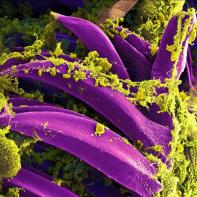
Norway – Norway investigates source of Yersinia increase

Food Safety News

kswfoodworld.com

Image CDC

Officials in Norway are investigating an increase in Yersinia infections in the past month.

The Norwegian Institute of Public Health (Folkehelseinstituttet) reported a Yersinia enterocolitica O3 infection has been detected in 13 people living in several counties.

Outbreak investigations to find the source of infection have been started with local authorities, the Veterinary Institute and Norwegian Food Safety Authority (Mattilsynet).

Patients are between 2 and 57 years old and most are women. They live in Agder, Oslo, Rogaland and Trøndelag.

Bacteria with similar DNA profiles have been found in all 13 people and samples were taken during the last two weeks of May and first week of June.

Research – The European Union control strategy for Campylobacter spp. in the broiler meat chain

Wiley Online

Campylobacter

Image CDC


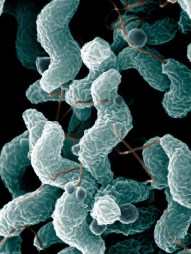
Campylobacter is the most common cause of bacterial gastroenteritis worldwide and the most frequently reported foodborne pathogen in the European Union (EU). While campylobacteriosis is generally self‐limiting, some patients could develop severe sequelae. The predominant source of infection is poultry. This review addresses the most relevant factors influencing the prevalence and contamination level of Campylobacter spp. in the poultry chain continuum. The emphasis was put on the novel control strategy for Campylobacter that is based on evidence‐based risk assessment and the introduction of process hygiene criterion intended for monitoring the prevalence and counts of Campylobacter spp. on broiler carcasses at slaughter level. The reduction of Campylobacter spp. in the poultry meat chain in the EU can only be achieved with an integrated meat safety assurance approach. This includes primary interventions at the level of the poultry farm, implementation of effective control measures at slaughterhouses, and fostering awareness campaigns aimed at consumers.