Category Archives: Food Microbiology Research

Research – Non-O1/Non-O139 Vibrio cholerae—An Underestimated Foodborne Pathogen? An Overview of Its Virulence Genes and Regulatory Systems Involved in Pathogenesis

MDPI

Abstract

In recent years, the number of foodborne infections with non-O1 and non-O139 Vibrio cholerae (NOVC) has increased worldwide. These have ranged from sporadic infection cases to localized outbreaks. The majority of case reports describe self-limiting gastroenteritis. However, severe gastroenteritis and even cholera-like symptoms have also been described. All reported diarrheal cases can be traced back to the consumption of contaminated seafood. As climate change alters the habitats and distribution patterns of aquatic bacteria, there is a possibility that the number of infections and outbreaks caused by Vibrio spp. will further increase, especially in countries where raw or undercooked seafood is consumed or clean drinking water is lacking. Against this background, this review article focuses on a possible infection pathway and how NOVC can survive in the human host after oral ingestion, colonize intestinal epithelial cells, express virulence factors causing diarrhea, and is excreted by the human host to return to the environment.

Research – Synergistic effect of cinnamaldehyde and eugenol on the inhibition of Bacillus velezensis and the shelf life on quinoa fresh noodles

Wiley Online

The synergistic effects of eugenol and cinnamaldehyde (MEC) were firstly used for quinoa fresh noodles (QFN) preservation. The amount of eugenol and cinnamaldehyde in combination was reduced 75% MIC value and 50% MBC value compared to the single application of eugenol and cinnamaldehyde respectively. The shelf life of QFN was prolonged 2.5 times by MEC at 25°C. Besides, MEC can significantly maintain the texture and color of QFN with less odor impact. Further mechanisms of MEC in anti-Bacillus velezensis were suggested to affect the lag phase during growth, and disrupt the cell integrity with adenosine triphosphate and protein leakage. In addition, the observing winkle and break of cell membrane was also obtained by scanning electron microscope. Besides, a lower concentration of MEC inhibited the growth of biofilm. MEC did present a synergistic and strengthening antibacterial capacity in the inhibition of B. velezensis, and can be suggested as an antimicrobial agent in food preservations.

Research – Comprehensive Insights into Ochratoxin A: Occurrence, Analysis, and Control Strategies

MDPI

Abstract

Ochratoxin A (OTA) is a toxic mycotoxin produced by some mold species from genera Penicillium and Aspergillus. OTA has been detected in cereals, cereal-derived products, dried fruits, wine, grape juice, beer, tea, coffee, cocoa, nuts, spices, licorice, processed meat, cheese, and other foods. OTA can induce a wide range of health effects attributable to its toxicological properties, including teratogenicity, immunotoxicity, carcinogenicity, genotoxicity, neurotoxicity, and hepatotoxicity. OTA is not only toxic to humans but also harmful to livestock like cows, goats, and poultry. This is why the European Union and various countries regulate the maximum permitted levels of OTA in foods. This review intends to summarize all the main aspects concerning OTA, starting from the chemical structure and fungi that produce it, its presence in food, its toxicity, and methods of analysis, as well as control strategies, including both fungal development and methods of inactivation of the molecule. Finally, the review provides some ideas for future approaches aimed at reducing the OTA levels in foods.

UK – Shiga toxin-producing Escherichia coli (STEC) data: 2021

Gov UK

Updated 18 April 2024

The main points of the 2021 annual report are:

Overall, 1,181 confirmed cases of STEC were reported in England during 2021, a decrease of 2% compared to 2020.

A total of 365 confirmed cases of Shiga toxin-producing Escherichia coli (STEC) O157 were reported in England in 2021, no change compared to 2020. A total of 1,234 confirmed cases of Shiga toxin-producing Escherichia coli (STEC) non-O157 were reported in England in 2021, an increase of 46% compared to 2020.

The lowest annual incidence of STEC O157 was in the East Midlands region (0.41 per 100,000 population) and the highest in the North East region (1.02 per 100,000 population). The lowest incidence of STEC non-O157 was in the Yorkshire and Humber region (0.62 per 100,000 population) and the highest in the London region (4.21 per 100,000 population).

Children aged 1 to 4 years had the highest annual incidence of infection due to STEC O157 (2.3 per 100,000 population, 95% confidence interval (CI) 1.78 to 3.02). Children aged under 1 years had the highest incidence of infection due to STEC non O157 (7.08 per 100,000 population, 95% confidence interval (CI) 7.01 to 7.21).

Around a third (36%, 127 out of 365) of confirmed STEC O157 cases in England were hospitalised and 2% (6 out of 365) were reported to have developed haemolytic uraemic syndrome (HUS). Where information is available, two-thirds (65%, n=274 out of 431) of confirmed STEC non-O157 cases in England were hospitalised; and 1% (14 out of 1,234) of all STEC non-O157 were reported to have developed HUS).

A further 443 specimens in England were positive for stx genes on PCR at the Gastrointestinal Bacteria Reference Unit (GBRU), indicating STEC, but an organism was not cultured therefore a STEC serogroup could not be ascertained.

The most commonly isolated non-O157 STEC serogroup was STEC O26 (n=145 out of 786, 18%).

Four outbreaks of STEC in England involving 52 cases, ranging from 10 to 19 cases, were investigated in 2021: 2 involved STEC O157 and suspected vehicles were identified and 2 involved STEC O26 outbreaks and no vehicles were identified.

Since 2018, the number of STEC O157 notifications has declined and the number of STEC non-O157 has increased two-fold (218%). Overall, there is an increase in STEC notifications, and the burden placed on public health and clinical services is also increasing, especially given the two-fold increase in hospitalisation reported in 2021 for non-O157 cases.

Danish campaign results show Norovirus uncertainty

Food Safety News

According to the Danish food agency, there is still uncertainty among chefs and kitchen workers about the management of norovirus.

A Danish Veterinary and Food Administration (Fødevarestyrelsen) control and guidance campaign targeted restaurants, kitchens, and shops that supply ready-to-eat (RTE) food. Work involved 829 visits from June to November 2023.

The agency asked kitchen managers what steps they should take to prevent outbreaks. Some said they were unsure how far they could go concerning an employee’s illness and health.

Research – Health warning due to Aflatoxins in almonds linked to production of cancer cells

D1

The EU’s Rapid Alert System for Food and Feed (Rasf) has issued an alert after detecting its presence. aflatoxin above the permissible level in Almond Coming from the United States. The analysis has been done at border controls.

aflatoxins are Very poisonous mushroom and harmful for human consumption, is associated with chronic exposure to these substances production of cancer cells,

The notification states “Serious” risk When the analyzes conducted exceeded the maximum permitted level of this substance of 10 micrograms/kg – ppb. However, the RASF system does not offer any data related to the region of the country, the brand under which it is marketed or the plantation from which these contaminated almonds come.

In that sense, FACUA-Consumers in Action criticizes that the limited information published by the European Commission creates doubts about all almonds coming from the United States, since it is not the producing company or even the region of the country. Does not give details about. Which has been cultivated.

Researchers Estimate Leafy Greens Foodborne Illness Outbreaks Cost U.S. $5 Billion Annually

Food Safety.com

A recent review authored by researchers from Ohio State University has established pathogen-specific foodborne illness burden estimates for leafy greens in the U.S. by combining three outbreak-based attribution models with illness incidence and economic cost models.

USA -FDA – Investigations of Foodborne Illness Outbreaks

FDA

What’s New

  • A new outbreak of E. coli O157:H7 illnesses linked to a not yet identified product (ref #1221) has been added to the table. FDA has initiated traceback.
  • For the outbreak of Salmonella Typhimurium (ref #1218) in a not yet identified food, the case count has increased from 11 cases to 12 cases.
  • For the outbreak of Listeria monocytogenes (ref #1214) linked to queso fresco and cotija cheese, the advisory was updated on April 10, 2024. The outbreak has ended, and FDA’s investigation is closed.
  • For the investigation of elevated lead levels in Cinnamon Applesauce Pouches (ref # 1198), these products are off the market and no longer available for sale; however, they have a long shelf life. Consumers should check their pantries and discard any recalled products. FDA’s response has transitioned from this investigation to post-incident actions and activities. Future updates on lead-related actions and activities can be found on the FDA Post- Incident Response Activities: Elevated Lead & Chromium Levels: Cinnamon Applesauce Pouches page.

Information – Listeria monocytogenes Contamination in Ready-to-Eat (RTE) Meats

Meriuex Nutriscience

The presence of Listeria monocytogenes, an environmental pathogen, poses significant risks to consumers. This bacterium, found in soil, water, and decaying vegetation, can contaminate various foods, potentially leading to mild listerial gastroenteritis or severe listeriosis, which carries a notably high mortality rate compared to other foodborne illnesses. Vulnerable populations such as pregnant women, the elderly, and individuals with weakened immune systems face the most significant risk of listeriosis from consuming contaminated foods.

Read more at the link above.

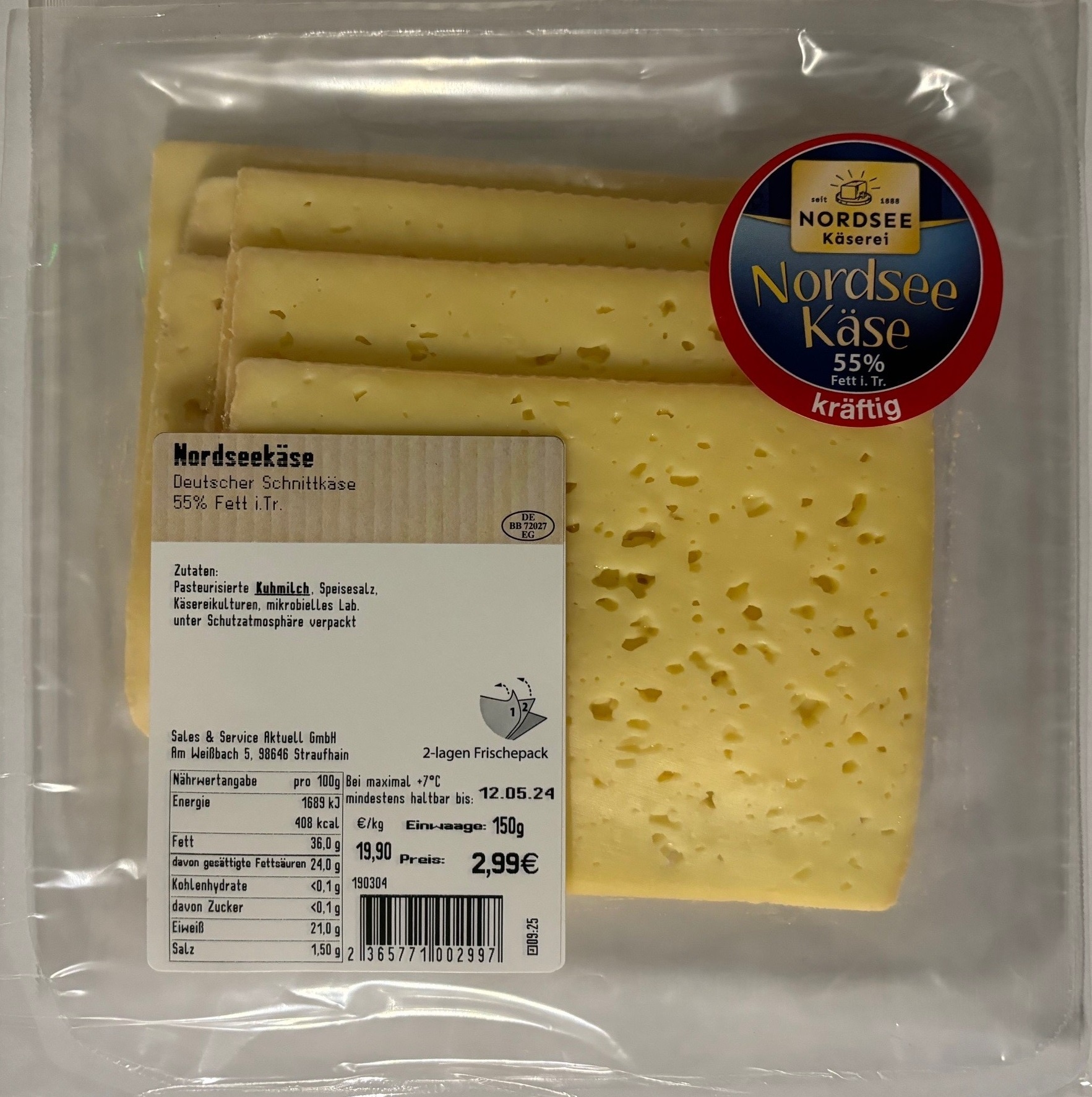
Germany – North Sea cheese 55% slices in a multi-layer pack, 150g – Listeria monocytogenes

Lebensmittelwarnung

Alert type: Groceries
Date of first publication: April 16, 2024
Product name:

North Sea cheese 55% slices in a multi-layer pack, 150g

Product images:

North Sea Cheese Edeka.jpg

Product image of North Sea cheese – slices in a multi-layer pack, approx. 150 grams

Manufacturer (distributor):

Sales & Service Aktuell GmbH Am Weißbach 5 98646 Straufhain

Reason for warning:

Listeria monocytogenes – bacteria

Packaging Unit: 150g
Durability: 05/11/2024, 05/12/2024, 05/13/2024, 05/14/2024
Lot identification:

320304, 190304, 730304, 300304

Additional Information:

The company Sales & Service Aktuell GmbH in 98646 Straufhain is carrying out a voluntary recall of the North Sea cheese product.

Unfortunately, microbiological contamination (Listeria monocytogenes) cannot be ruled out.  Due to the suspicion of microbiological contamination, it cannot be ruled out that consumption of the product could lead to health problems.

Click to access 20240412_Marktaushang_SS_Produktr%FCckruf_Nordseek%E4se-Scheiben.pdf