Category Archives: Food Microbiology Research

Norway – Monitoring program 2021: Listeria in salmon slaughterhouses and on salmonids

Mattilsynet

The Norwegian Food Safety Authority has taken listeria samples from 60 slaughterhouses that the Institute of Marine Research has analyzed. The results show that Listeria is present in both the production environment and on fish in some salmon slaughterhouses.

Surveillance program is a measure that the Norwegian Food Safety Authority initiated to gain more knowledge about the segment following a salmonella outbreak in 2019 where 58 became ill after eating exotic dried fruit mixture.

What did we investigate? Listeria in the production environment in the salmon slaughterhouse and from fish that came in and went out of the slaughterhouse.

358 samples from 60 different salmon slaughterhouses (49 establishments and 11 boats):

  • 108 from the production environment
  • 47 from the surface to fish entering
  • 59 from the surface to fish at the last stage of production
  • 144 from raw material at the last stage of production
Period: September 1, 2020 – September 1, 2021
What were we looking for? Listeria monocytogenes
What did we find? Listeria monocytogenes was detected in 22 samples from nine of 49 salmon slaughterhouses (18%), of which 5 had several positive samples.

The 22 positive tests included:

  • 9 samples from the production environment
  • 4 samples of the surface of fish on their way into the slaughterhouse
  • 5 samples of the surface of fish
  • 4 product samples at the last stage of production.

Detection in end product at 6 of 49 (12%) salmon slaughterhouses. The product samples had low concentrations of L. monocytogenes (<10 CFU / g)

None of the slaughter boats had samples with findings of L. monocytogenes .

Norway – Audit of listeria measures in salmon slaughterhouse 2021


Mattilsynet


In 2021, the Norwegian Food Safety Authority carried out an inspection campaign in which establishments and vessels that slaughter salmonids were inspected for measures and routines to prevent the fish from becoming contaminated with the listeria bacterium.

What has been investigated? 63 establishments and vessels slaughtering salmonids.
Period: January 15 – September 1, 2021
What were we looking for?

Measures and routines to prevent the fish from becoming contaminated with the listeria bacterium.

The Norwegian Food Safety Authority’s checklist for the inspection contained these points:

  • Identify hazards
  • Management measures
  • Verification
  • Deviation treatment
  • Requirements for premises and equipment. Personal hygiene.
What did we find?

The inspection result shows that the hygienic standard in Norwegian salmon slaughterhouses is generally good.

  • 18 companies received a decision. These mainly concerned the management system, including hazard analysis, sampling plan and measures for the detection of Listeria.
  • One business was closed due to lack of reindeer husbandry and maintenance.
  • Otherwise, relatively few deficiencies were revealed in the hygienic practices of premises and equipment at the operations, where this was controlled.

Norway – It is important to monitor and have effective measures against Listeria in salmon slaughterhouses

Mattilsynet

The hygienic standard in Norwegian salmon slaughterhouses is generally good. At the same time, the Norwegian Food Safety Authority’s sampling shows that Listeria is present in both the production environment and in small quantities of fish in some salmon slaughterhouses.

– It is therefore important that the salmon slaughterhouse continuously monitors Listeria and at all times has effective hygiene measures, says Inge Erlend Næsset, director of the regulations and control department in the Norwegian Food Safety Authority.

Supervision and sampling

In 2021, the Norwegian Food Safety Authority carried out an inspection campaign in which 63 establishments and vessels that slaughter salmonids were inspected for measures and routines to prevent the fish from becoming contaminated with the listeria bacterium.

The background was the serious listeriosis outbreaks that were reported from the EU in 2018 and 2019. The outbreaks were related to the consumption of smoked, digged and marinated salmon and aura, where the raw materials were Norwegian.

Listeria monocytogenes can cause listeriosis. Most people do not get sick from the bacterium, but pregnant women, children, the elderly and people with weakened immune systems are at risk. Listeria multiplies at cooling temperature, survives freezing, salting and smoking, but is killed by adequate heat treatment.

– Since salmon and aura are largely eaten without heat treatment and used for ready-to-eat products such as sushi, sashimi, smoked and digged fish, it is important that producers have effective measures against Listeria. The Norwegian Food Safety Authority therefore saw a need for a better overview of the status of fresh salmon and Listeria, Næsset said.

The Norwegian Food Safety Authority also took listeria samples from 60 slaughterhouses which were analyzed by the Institute of Marine Research .

Uncover relatively few deficiencies

18 companies received a decision. These mainly concerned the management system, including hazard analysis, sampling plan and measures for the detection of Listeria. One business was closed due to lack of reindeer husbandry and maintenance.

Otherwise, relatively few deficiencies were revealed in the hygienic practices of premises and equipment at the operations, where this was controlled.

– Our general impression after the campaign is that most salmon slaughterhouses have a good hygienic standard, says Næsset.

Listeria in both production environments and on fish

The results from the analyzes carried out by the Institute of Marine Research showed findings of Listeria monocytogenes in 18% of salmon slaughterhouses, and in small quantities of finished whole, gutted fish in 12% of salmon slaughterhouses.

– If Listeria is allowed to develop at later process stages, the product can entail a serious health risk for vulnerable consumers. These findings confirm that it is important that the salmon slaughterhouse continuously monitors Listeria, and has consistently good routines for hygiene, Næsset concludes.

Report after the inspection campaign: Inspection of listeria measures in salmon slaughterhouse 2021

Report from the Institute of Marine Research: Monitoring program 2021: Listeria in salmon slaughterhouses and on salmonids

Research – Ultrashort-pulse lasers kill bacterial superbugs, spores

Science Daily

Life-threatening bacteria are becoming ever more resistant to antibiotics, making the search for alternatives to antibiotics an increasingly urgent challenge. For certain applications, one alternative may be a special type of laser.

Researchers at Washington University School of Medicine in St. Louis have found that lasers that emit ultrashort pulses of light can kill multidrug-resistant bacteria and hardy bacterial spores. The findings, available online in the Journal of Biophotonics, open up the possibility of using such lasers to destroy bacteria that are hard to kill by other means. The researchers previously have shown that such lasers don’t damage human cells, making it possible to envision using the lasers to sterilize wounds or disinfect blood products.

“The ultrashort-pulse laser technology uniquely inactivates pathogens while preserving human proteins and cells,” said first author Shaw-Wei (David) Tsen, MD, PhD, an instructor of radiology at Washington University’s Mallinckrodt Institute of Radiology (MIR). “Imagine if, prior to closing a surgical wound, we could scan a laser beam across the site and further reduce the chances of infection. I can see this technology being used soon to disinfect biological products in vitro, and even to treat bloodstream infections in the future by putting patients on dialysis and passing the blood through a laser treatment device.”

Tsen and senior author Samuel Achilefu, PhD, the Michel M. Ter-Pogossian Professor of Radiology and director of MIR’s Biophotonics Research Center, have been exploring the germicidal properties of ultrashort-pulse lasers for years. They have shown that such lasers can inactivate viruses and ordinary bacteria without harming human cells. In the new study, conducted in collaboration with Shelley Haydel, PhD, a professor of microbiology at Arizona State University, they extended their exploration to antibiotic-resistant bacteria and bacterial spores.

The researchers trained their lasers on multidrug-resistant Staphylococcus aureus (MRSA), which causes infections of the skin, lungs and other organs, and extended spectrum beta-lactamase-producing Escherichia coli (E. coli), which cause urinary tract infections, diarrhea and wound infections. Apart from their shared ability to make people miserable, MRSA and E. coli are very different types of bacteria, representing two distant branches of the bacterial kingdom. The researchers also looked at spores of the bacterium Bacillus cereus, which causes food poisoning and food spoilage. Bacillus spores can withstand boiling and cooking.

In all cases, the lasers killed more than 99.9% of the target organisms, reducing their numbers by more than 1,000 times.

Viruses and bacteria contain densely packed protein structures that can be excited by an ultrashort-pulse laser. The laser kills by causing these protein structures to vibrate until some of their molecular bonds break. The broken ends quickly reattach to whatever they can find, which in many cases is not what they had been attached to before. The result is a mess of incorrect linkages inside and between proteins, and that mess causes normal protein function in microorganisms to grind to a halt.

“We previously published a paper in which we showed that the laser power matters,” Tsen said. “At a certain laser power, we’re inactivating viruses. As you increase the power, you start inactivating bacteria. But it takes even higher power than that, and we’re talking orders of magnitude, to start killing human cells. So there is a therapeutic window where we can tune the laser parameters such that we can kill pathogens without affecting the human cells.”

Heat, radiation and chemicals such as bleach are effective at sterilizing objects, but most are too damaging to be used on people or biological products. By inactivating all kinds of bacteria and viruses without damaging cells, ultrashort-pulse lasers could provide a new approach to making blood products and other biological products safer.

“Anything derived from human or animal sources could be contaminated with pathogens,” Tsen said. “We screen all blood products before transfusing them to patients. The problem is that we have to know what we’re screening for. If a new blood-borne virus emerges, like HIV did in the ’70s and ’80s, it could get into the blood supply before we know it. Ultrashort-pulse lasers could be a way to make sure that our blood supply is clear of pathogens both known and unknown.”


Story Source:

Materials provided by Washington University School of Medicine. Original written by Tamara Bhandari. Note: Content may be edited for style and length.

Research – A Strong Evidence Outbreak of Salmonella enteritidis in Central Italy Linked to the Consumption of Contaminated Raw Sheep Milk Cheese

MDPI

Salmonellaa

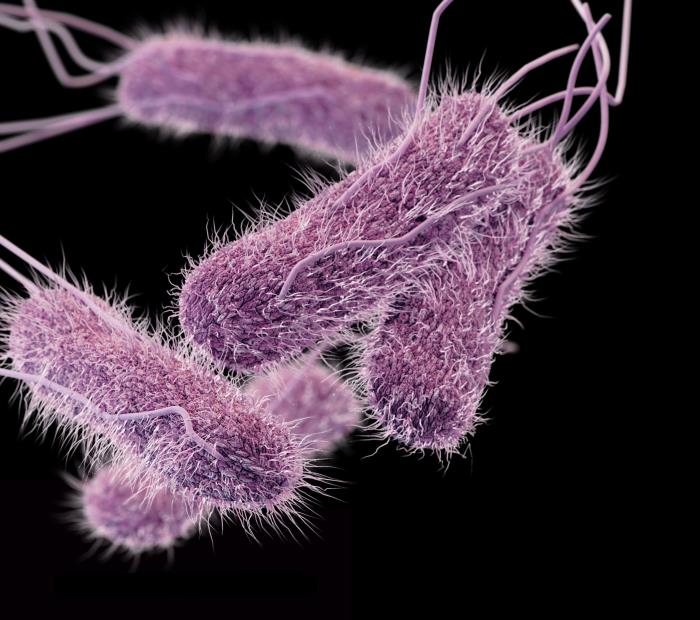
Salmonellosis is the second most commonly reported gastrointestinal infection in humans after campylobacteriosis, and an important cause of foodborne outbreaks in the EU/EEA. The vast majority (72.4%) of the salmonellosis foodborne outbreaks reported in EU in 2019 were caused by Salmonella enteritidis, even if their total number due to this serovar decreased. In spring 2020, a foodborne outbreak of S. enteritidis occurred in the Marche region (Central Italy), involving 85 people. The common exposure source was a cheese, pecorino “primo sale”, produced with raw sheep milk. The cheese batches were produced by two local dairies, with a livestock production facility, also including a sheep farm, being part of one dairy. Bacteriological analysis of samples collected allowed the detection of S. enteritidis in animal faeces, environmental samples, raw-milk bulk tanks and milk taken from single animals. These data confirm that, despite the scarce scientific evidence, S. enteritidis can infect sheep and be shed into the animals’ milk. Hence, this is a real risk for public health when unpasteurized milk is used in production of such cheese. The present paper describes the results of the investigations conducted to clarify this outbreak. View Full-Text

USA – Core Outbreak Table Update

FDA

Date Ref Pathogen Product(s) Total Investigation Status
11/24/2021 1044 Salmonella     Javiana Not Yet Identified 19 Active
11/17/2021 1043 E. coli O157:H7 Spinach See Outbreak Advisory Active
9/15/2021 1031 Salmonella Oranienburg Red, Yellow, and White Onions See Outbreak Advisory Active
9/15/2021 1025 Salmonella Thompson Seafood See Outbreak Advisory Active


USA – Preparing Your Holiday Turkey Safely

CDC

Are you preparing a turkey for your holiday meal? Turkey and its juice can be contaminated with germs that can make you and your family sick. For example, turkey can contain SalmonellaClostridium perfringensCampylobacter, and other germs. Whether you’re cooking a whole bird or a part of it, such as the breast, you should take special care. Follow the steps below to safely store, thaw, handle, and cook your turkey.

1. Store Turkey Properly

  • Frozen raw turkey should be stored in the freezer until you are ready to thaw it. Make sure your freezer is at 0˚F or below. Don’t store a turkey in a place where you can’t closely monitor the temperature, such as in a car trunk, a basement, the back porch, or in snow.
  • Fresh raw turkey can be stored in the refrigerator 1 to 2 days before cooking.

2. Thaw Turkey Safely

Use one of these methods to thaw your turkey.

  • Thaw your turkey in the refrigerator.
    • Keep your turkey in its original wrapping and place it in a container before putting it in the refrigerator. The container will prevent the turkey’s juice from dripping on other food.
    • Allow about 24 hours of thawing for each 4 to5 pounds of turkey.
    • A turkey thawed in the refrigerator can remain in the refrigerator for 1 to 2 days before cooking.
  • Thaw your turkey in cold water.
    • Be sure your turkey is in a leak-proof plastic bag before you place it in the sink. The bag will prevent the turkey’s juice from spreading in the kitchen. It will also prevent the turkey from absorbing water, which can make your cooked turkey runny.
    • Make sure your turkey is fully covered with the cold tap water.
    • Change the water every 30 minutes.
    • Allow about 30 minutes of thawing for each pound of turkey.
    • A turkey thawed in cold water must be cooked immediately after thawing.
  • Thaw your turkey in the microwave.
    • Follow the microwave manufacturer’s instructions for thawing turkeys.
    • A turkey thawed in the microwave must be cooked immediately after thawing.

Never thaw your turkey by leaving it out on the counter. A turkey must thaw at a safe temperature. When a turkey stays out at room temperature for more than 2 hours, its temperature becomes unsafe even if the center is still frozen. Germs can grow rapidly in the “danger zone” between 40°F and 140°F.

Get more information about thawing turkeys.external icon

3. Handle Turkey Correctly to Prevent the Spread of Germs

Raw turkey and its juice can contaminate anything they touch. Be sure to handle your turkey correctly to prevent harmful germs from spreading to your food, family, and friends.

  • Wash your hands with soap and water for 20 seconds before and after handling turkey.
  • Use a separate cutting board for raw turkey.
  • Never place cooked food or fresh produce on a plate, cutting board, or other surface that held raw turkey.
  • Wash cutting boards, utensils, dishes, and countertops with hot soapy water after preparing raw turkey and before you prepare the next item.

Learn more about the four steps to food safety: clean, separate, cook, and chill.

Do not wash or rinse raw turkey. Federal food safety advice has recommended against washing turkey or chicken since 2005, but some habits are hard to break. A 2020 survey* found that 78% of participants reported washing or rinsing turkey before cooking. Old recipes and family cooking traditions may tempt you to keep this practice going, but it can make you and your family sick. Poultry juices can spread in the kitchen and contaminate other foods, utensils, and countertops.

∗Source: 2020 Porter Novelli Consumer Stylesexternal icon Survey of 3,625 U.S. adults

4. Cook Stuffing Thoroughly

It’s safest to cook stuffingexternal icon in a casserole dish instead of inside your turkey. Cooking stuffing in a casserole dish makes it easy to be sure the stuffing is thoroughly cooked. If you do cook stuffing in the turkey, put the stuffing in the turkey just before cooking.

With either cooking method, use a food thermometer to make sure the stuffing’s center reaches 165°F. Germs can survive in stuffing that has not reached 165°F. If you cooked the stuffing in your turkey, wait 20 minutes after taking the bird out of the oven before removing the stuffing. This allows the stuffing to cook a little longer.

5. Cook Turkey Thoroughly

To roast a turkey in your oven, set the oven temperature to at least 325°F. Place the completely thawed turkey in a roasting pan that is 2 to 2-1/2 inches deep. Cooking timesexternal icon depend on the weight of the turkey and whether it is stuffed.

Use a food thermometer to make sure the turkey has reached a safe minimum cooking temperature of 165°F. Check by inserting a food thermometer into the center of the stuffing and the thickest part of the breast, thigh, and wing. Even if your turkey has a pop-up timer, you should still use a food thermometer to check that it is safely cooked. Let the turkey stand 20 minutes before removing all stuffing from the cavity and carving the meat. This will let the stuffing cook a little longer and make the turkey easier to carveexternal icon.

If you are cooking your turkey using another method, such as smoking or frying it, or roasting a turkey that is not fully thawed, follow these guidelinesexternal icon for cooking your bird safely.

Learn more about safe minimum cooking temperaturesexternal icon for other foods and how to use a food thermometerexternal icon.

6. Take Care of Leftovers

Refrigerate leftoversexternal icon at 40°F or colder within 2 hours of cooking to prevent food poisoning. Slice or divide big cuts of meat, such as a roast turkey, into small quantities for refrigeration so they can cool quickly. Reheat all leftovers to at least 165°F before serving.

Cooked turkey and dishes made with turkey, such as a casserole, can be stored in the refrigerator for 3 to 4 days or can be frozen to store longer.

Always refrigerate leftovers within 2 hours, or 1 hour if exposed to temperatures above 90°F (like a hot car or picnic).

The bacteria Clostridium perfringens grows in cooked foods left at room temperature. It is the second most common bacterial cause of food poisoning. The major symptoms are vomiting and abdominal cramps within 6 to 24 hours after eating.

  • Clostridium perfringens outbreaks occur most often in November and December.
  • Many of these outbreaks have been linked to foods commonly served during the holidays, such as turkey and roast beef.

India – Operation Vibrio launched in Kozhikode to tackle waterborne diseases

The Hindu

Operation Vibrio, an action plan to tackle the recurring incidents of food poisoning and waterborne diseases, has been launched in Kozhikode. The Health Department has also issued an alert against cholera in the district.

District Medical Officer Ummer Farooque said on Tuesday that the effort was to detect diseases such as cholera, shigella, amoebiasis, typhoid and jaundice that spread through contaminated food and water. As many as 17 cases of food poisoning had been reported in the district between February and November this year. As many as 257 people were infected and two died. Family events and wedding receptions and the food supplied in shops and hostels were reported to be the source of the infection. Some others took ill through having ice cream and fruit juices. The presence of bacteria such as vibrio cholerae, coliform, and e-coli had been found in water sources in some parts of the district as well.

USA – Tainted oysters sicken more than 20 after warning lapse

The Washington Post

CALIFORNIA, Md. — A water utility warned last month that an overwhelmed sewage system sent more than 25,000 gallons of waste into a Potomac River tributary. But the Maryland Department of the Environment said it wasn’t until Virginia officials investigating a foodborne illness outbreak reached out two weeks later that officials closed an affected part of the St. Mary’s River, The Baltimore Sun reported.

Usually officials alert the public before shellfish are harvested or eaten. It’s not clear how it managed to occur, department spokesman Jay Apperson said, but the department is building redundancies into its process to keep it from happening again.

The illnesses were linked to a winery where Maryland oysters were served, Loudoun County Health Department environmental health manager George Khan said.

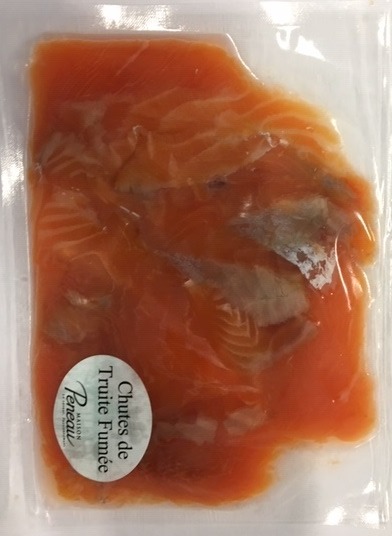
France- Smoked trout scraps 150g – Listeria monocytogenes

Gov france

Identifying information for the recalled product

  • Product category Food
  • Product sub-category Fishery and aquaculture products
  • Product brand name Peneau House
  • Names of models or references Smoked trout scraps 150g
  • Product identification
    GTIN Lot Dated
    3389400341591 217065 Use-by date 11/26/2021
  • Start date / End of marketing Since 11/13/2021
  • Storage temperature Product to be stored in the refrigerator
  • Health mark FR 17.421.007 CE
  • Geographical sales area Whole France
  • Distributors SCACHAP

Practical information regarding the recall

  • Reason for recall Presence of monocytogenic listeria <10 CFU / g
  • Risks incurred by the consumer Listeria monocytogenes (causative agent of listeriosis)