Category Archives: Food Microbiology Research

USA – Video – How CDC Investigates Foodborne Outbreaks

You Tube

Have you ever wondered how CDC investigates foodborne outbreaks such as Salmonella? PulseNet USA is a nationwide network used to identify the bacteria making people sick and track it back to the source. In this video you will learn how the general public and CDC scientists can work together to identify foodborne illnesses. This video can also be viewed at https://www.cdc.gov/wcms/video/low-re…

Research – Introduction to the Special Issue: Microbiological Safety and Quality of Foods

MDPI

Recent shifts in food production, processing and distribution, linked to the globalization of the food trade and the need to meet new consumers habits, are continuously challenging global food systems. Every effort is being made to ensure healthy and safe, food that is crucial to guarantee public health and wellbeing.
Despite the advancements in food safety management, foodborne diseases (FBD) still remain an important problem worldwide, with a significant negative impact on human health and countries’ economies and development. It has been determined that food unsafe for consumption causes 600 million cases of FBD every year, and 25% of all foods produced globally are lost due to microbial spoilage. Serious outbreaks have occurred, involving both developing and industrialized countries, showing how food safety is a transnational challenge and that a strong joint commitment between food safety authorities is needed.
Despite this awareness, the full extent of the impact of food contamination is still unknown. Foodborne contaminants are numerous, including viruses and bacteria, parasites, chemicals, toxins and allergens that cause a wide range of conditions. Globally, FBD caused by bacteria are more common than those caused by viruses and parasites. [1]. Moreover, between one-third and one-half of all human infectious diseases have a zoonotic origin. Among bacteria, Campylobacter, followed by Salmonella, are the major etiological agents of FBD, while, among viruses, norovirus is the foremost enteric pathogen of foodborne disease worldwide [2].
The most common foodborne parasites instead are protozoa such as Cryptosporidium spp., Giardia intestinalis and Toxoplasma gondii; roundworms such as Trichinella spp. and Anisakis spp.; and tapeworms such as Diphyllobothrium spp. and Taenia spp. [3]. In particular, Anisakiasis is an emerging zoonosis caused by the fish parasitic nematode Anisakis. Humans are accidental hosts that become infected by eating raw or undercooked fish that contain viable Anisakis spp. larvae.
The major determinants for the incidence of FBD are unsafe raw food, abused temperature, inadequate storage, improper handling, undercooking and cross contamination [4]. Food from animal sources, fresh produce and ready-to-eat (RTE) foods are the most at risk. In particular, RTE foods are an emerging issue concerning food safety. Furthermore, they have been demonstrated to contain antimicrobial-resistant strains. Since these products are consumed without any further treatment, they could serve as a vector for the spread of antibiotic-resistant microorganisms, posing a significant threat to public health [5].
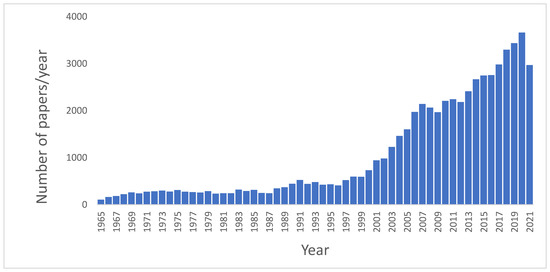
The importance of these topics is documented by the increasing number of papers published related to Food Safety. In a basic search using PubMed database, from 1945 to 2021, selecting as the search topic “Microbiological food safety”, a total of 54,210 results were obtained.
Although the first articles concerning microbiological food safety date from 1946, and since then a dozen articles appear in the following years, it is not until 1965 that a significant number of articles are published every year. Figure 1 shows the evolution of the number of papers per year (from 1965 to 2021) published regarding Microbiological food safety. As can be seen in this figure, approximately 80% of these papers have been published in the last 20 years, and the number continues to rise, revealing an increasing and ever-present interest towards the topic addressed in this Special Issue.
Foods 11 00673 g001 550

Research – Ireland – Overview of 2019 Zoonois Data

Zoonoses are diseases and infections naturally transmissible between animals and humans. Transmission may occur via direct contact with an animal or indirect contact with animal excreta (e.g. faeces) present in contaminated food, water or the environment.
Foodborne zoonotic diseases are caused by consuming food or drinking water contaminated by zoonotic pathogenic (disease-causing) microorganisms such as bacteria and their toxins, viruses and parasites. They enter the body through the gastrointestinal tract where the first symptoms often occur. Many of these microorganisms are commonly found in the intestines of healthy food-producing animals.
The risks of contamination are present from farm to fork and require prevention and control throughout the food chain. While it is possible for anybody to become infected with a zoonotic pathogen, certain population groups such as the very young, the elderly and immunocompromised are particularly vulnerable and at greater risk of more serious consequences. The eradication of zoonoses in humans and animals is very challenging.
The impact of zoonoses on the health of humans and animals can however be limited, by (i) monitoring the reservoirs of infectious zoonotic pathogens with a view to understanding and controlling their modes of transfer; (ii) by businesses controlling the hazard along the food chain and; (iii) by educating the public about how to avoid or limit the risk of infection.
The Irish zoonoses report is published annually by the FSAI, in collaboration with the Department of Agriculture, Food and the Marine (DAFM), the Health Service Executive(HSE),the Local Authority Veterinary Service (LAVS), the Sea-Fisheries Protection Authority(SFPA) and the Health Protection Surveillance Centre (HPSC).
The report brings together the results of thousands of tests carried out on samples of food and feed, as well as tests on material of animal or human origin, in an effort to determine the pattern and extent of infection by zoonotic pathogens transmitted to humans from animals. Zoonoses data collected by EU Member States serve as a basis for the EU to set targets for the reduction of these microorganisms in food-producing animals and foodstuffs.
The impact of the reduction programmes on the actual prevalence of zoonoses in animals and foods and related human health cases are then monitored and analysed in the annual EU summary reports published by the European Food Safety Authority and the European Centre for Disease Control and Prevention (EFSA and ECDC, 2020).
The data in the 2019 tables for the results of Irish testing carried out in food, animal and animal feed samples are presented in four categories (routine, census, objective and suspect sampling) depending on the sampling context. Routine sampling is planned sampling but does not involve statistically random sampling. Census sampling is when the totality of a population, on which the data are reported, is controlled.
Objective sampling is the planned selection of a random sample, which is statistically representative of the population to be analysed (EFSA, 2020). Suspect sampling is the unplanned selection of a sample whereby the individual units are selected based on the recent judgement and experience regarding the population, lot or sampling frame, e.g., earlier positive samples (EFSA, 2020).
The samples obtained from suspect sampling may have a higher likelihood of having pathogens present.

Ireland – EPA – Drinking Water Quality in Private Group Schemes and Small Private Supplies in 2020 – E.coli

EPA

Click to access DWQinPrivateGroupWaterSupplies-2022-02-21.pdf

Key Findings for 2020

➤The quality of drinking water in private supplies was not as good as it should be: one in 20 private water supplies were contaminated with E. coli.

➤93% of Private Group Schemes complied with the Trihalomethanes standard. However, 13 supplies are cited on EU infringement proceedings against Ireland for failing to take the measures necessary to ensure compliance.

➤Over a quarter of Small Private Supplies were not monitored by Local Authorities.

USA – FDA Core Investigation Table

FDA

Date
Posted
Ref
#
Pathogen
Product(s)
Linked to
Illnesses

(if any)
Total
Case Count
Investigation
Status
2/17/

2022

1056 Cronobacter
sakazakii

&
Salmonella
Newport
Powdered
Infant
Formula
Active
2/9/

2022

1040 Listeria
monocytogenes
Not Yet
Identified
14 Active
2/2/

2022

1054 Enteroinvasive
E. coli
O143:H26
Not Yet
Identified
16 Closed
1/10/

2022

1050 E. coli
O121:H19
Romaine 4 Closed
12/29/

2021

1052 E. coli
O157:H7
Packaged
Salad
12/20/

2021

1039 Listeria
monocytogenes
Packaged
Salad
Active
12/15/

2021

1048 Listeria
monocytogenes
Packaged
Salad
Active

Singapore – New microbiological criteria for the export of meat and offal to Singapore

ACSA

The latest version of the Singapore Export Authorization Procedure specifies the microbiological criteria to be followed only for ready-to-eat foods, not specifically considering meat and offal.

Recently, the Export Area of ​​the Ministry of Health has learned that the microbiological criteria followed by the Singapore authorities to control the import of fresh meat, meat preparations and offal are different from the criteria contained in the current Export Procedure. Therefore, work will begin on a new version of the document in order to incorporate this new information.  

We make available to exporting establishments the document that describes the microbiological criteria for meat and offal in Singapore so that they can take them into account when defining self-control procedures.

Click to access sfa—microbiological-criteria-for-imported-meat.pdf

Click to access SingapurProcedEspEnero21.pdf

Singapore – Recall of Abbott Alimentum powdered infant formula from USA due to possible presence of Cronobacter sakazakii and Salmonella Newport

Click to access sfa-media-release—20220223-recall-of-abbott-alimentum-and-similac-hmf.pdf

Updated media release:

Update on 19Feb 2022:Further to the media release on 19 Feb 2022, SFA has directed the recall of an additional affected product –Similac Human Milk Fortifier (HMF).The recall for both affected products have been completed. Parents or caregivers who are concerned should stop using these products. They should seek medical assistance should their infants feel unwell after consuming the affected products.

Consumers may reach out to the importer, Abbott Laboratories (S) Pte Ltd, at 6278 6220 or email to family.sg@abbott.com for any clarification.

Research – Evaluation of liquid and dry chemical treatments to reduce Salmonella typhimurium contamination on animal food manufacturing surfaces

Journal of Food Protection

Salmonella can be isolated from animal food, ingredients, and animal food manufacturing surfaces. There is limited data regarding the sanitation of animal food manufacturing surfaces. The objective of this experiment was to evaluate the effects of nine chemical treatments to reduce Salmonella Typhimurium contamination on various manufacturing surfaces. This experiment was a 9 × 5 factorial with nine chemical treatments and five surfaces. The nine chemical treatments included: 1) no inoculation or sanitation treatment (negative control), and those inoculated with Salmonella Typhimurium and treated with 2) no sanitation treatment (positive control), 3) ground corn, 4) liquid commercial formaldehyde, 5) liquid food-grade sanitizer, 6) liquid medium chain fatty acid blend of caprylic, capronic and capric acids (MCFA), 7) dry commercial calcium propionate, 8) dry commercial acidulant, and 9) dry commercial benzoic acid. The five surfaces included 1) stainless steel, 2) plastic, 3) polypropylene tote bag, 4) rubber belt, and 5) rubber tire. Plastic had greater Salmonella in the positive control than the polypropylene tote bag, with other surfaces being intermediate ( P < 0.05). Surfaces treated with formaldehyde had no detectable Salmonella after treatment, and surfaces treated MCFA had at least a 4-log reduction compared to the control ( P < 0.05). The dry acidulant was the most effective dry sanitizer tested, but had no impact on Salmonella concentration on rubber tires ( P < 0.05). While most effective in this experiment, liquid sanitizers have limitations in a dry, bulk systems. In summary, formaldehyde, food-grade sanitizer and MCFA, were the most effective chemical treatments to reduce Salmonella surface contamination. Surface type can also influence Salmonella mitigation strategies specifically stainless steel and plastic which can be more challenging sanitation within animal food facilities.

Research – Mineral and Microbiological Analysis of Spices and Aromatic Herbs

MDPI

Spices and aromatic herbs have always had great historical importance in human nutrition. Their use has been documented for centuries as a rich source of bioactive compounds; they have been used for their health benefits and also for flavoring or coloring food. However, despite the many health properties linked to the use of spices and aromatic herbs, these can represent biological hazards and can contain chemical substances of concern. Certainly, monitoring potential health hazards in spices and aromatic herbs includes microbiological safety and also the content of inorganic substances: both represent a key step. This research aims at monitoring the compliance of various spices and aromatic herbs from a non-European country market (namely: black cumin seeds, Iranian Tokhme Sharbati, clove buds, Shahjeera, Abbaszadeh saffron, organic fenugreek, whole black pepper, cinnamon, Abthul Ahmar (Asario), Ajwan seeds, whole coriander seeds, black sesame seeds, Sabja seeds) with the current European Union (EU) and WHO regulations, when available, regarding mineral and microbiological parameters. In particular, microbiological assays using rapid and conventional methods, and trace mineral determination by inductively coupled plasma mass spectrometry (ICP-MS) were performed. Results show the safety of the tested spices, given that the microbiological parameters were within the legal microbiological criteria set by the European Commission Regulation (EC) No. 2073/2005 and its amendment Regulation (EC) No. 1441/2007. With reference to potentially toxic Cd, Pb, As, Hg, these were within the limits set by the European Commission Regulation (EC) No. 1881/2006 and its amendments, Regulation (EU) No. 1317/2021 and Regulation (EU) No. 1323/2021, and WHO. According to EU regulations, for Pb content, 2 samples out of 16 showed values different from the set limits. View Full-Text

Research – The Efficacy of Conventional Spray, Electrostatic Spray, and Dip with a Combination of Hydrogen Peroxide and Peroxyacetic Acid to Inactivate Listeria monocytogenes on Apples

Journal of Food Protection

This study aimed to evaluate the efficacy of a and hydrogen peroxide (H 2 O 2 ) and peroxyacetic-acid (PAA) mixer delivered by conventional garden sprayer (GS), electrostatic sprayer (ES) and dip methods to inactivate Listeria monocytogenes on apples. Organic Honey Crisp ( HC ), Fuji ( FJ ), and Pink Lady ( PL ) were dip-inoculated with Listeria monocytogenes (2-strain, serotype 1/2b), which were then kept untreated (control), sprayed with water only, or treated with the H 2 O 2 -PAA mixer (0.0064, 0.1, 0.25 and 0.50%) for 20 s via GS, ES, or dip, followed by draining (2 min) on aluminum foil. Surviving bacteria were recovered on Modified Oxford agar. Atomic force microcopy was used to detect the structural changes of inactivation of L. monocytogenes in broth medium by the H 2 O 2 -PAA mixer solution. Data (2 replicates/6 samples/replicate) were analyzed using the Mixed Model Procedure of SAS ( P =0.05). Initial counts of L. monocytogenes on untreated apples were 6.80 to 6.90 log CFU/apple. The dip method was the most effective treatment (P<0.05) on pathogen reductions (2.31-2.41 log CFU/apple) followed by GS (1.44-1.70 log CFU/apple) and then ES (0.84-1.20 log CFU/apples). Reductions of L. monocytogenes were greatest ( P < 0.05) when apples were treated with H 2 O 2 -PAA mixer -0.25 and -0.50%. Atomic force microscopy analyses indicated that inactivation of L. monocytogenes cells in H2O2-PAA mixer solutions resulted from disruption of the outer membrane. The H 2 O 2 -PAA mixer treated cells had increased width, height and decreased roughness when compared to the untreated cells. Results suggested that applying a H 2 O 2 -PAA mixer by dip or GS methods is better for pathogen reduction than ES on apples.