Category Archives: Food Microbiology Research

Research – Protective Bacterial Culture Could Target Foodborne Superbugs

Laboratory Equipment

Key points:

  • Researchers examined the ability of a protective culture—Hafnia alvei B16—in the prevention of infection by Salmonella.
  • According to the findings, Hafnia alvei B16 reduced Salmonella’s ability to invade human intestinal cells by nearly 90%.
  • The study also found differences in gene expression and how the two serovars responded to the protective culture in milk.

A new study published by University of Connecticut researchers builds upon our understanding of the ability of a protective culture called Hafnia alvei B16 to prevent infection by two Salmonella serovars, a grouping within the Salmonella enterica species. The serovars studied are common culprits in foodborne illness outbreaks and are resistant to multiple antibiotics.

Presently, most of the protective cultures on the market target gram-positive bacteria rather than gram-negative ones. gram-positive protective cultures are most effective against gram-positive pathogens, meaning there is a need for effective protective cultures against gram-negative pathogens, like E.coli and Salmonella.

In the study, published in Food Microbiology, the team found the Hafnia alvei worked differently than other protective cultures. Most cultures produce antimicrobial metabolites that stop the growth of competing bacteria. Meanwhile, when Hafnia alvei’s metabolites were added to a pathogenic culture, it didn’t stop their growth as expected. But, when the entire Hafnia alvei bacterium was in the presence of E. coli or Salmonella, it did. This told the team it was inhibiting the pathogen’s growth through some other mechanism.

D’Amico’s lab found that growth in the presence of Hafnia alvei decreased the expression of virulence genes in Salmonella and reduced the pathogen’s ability to invade human intestinal cells by nearly 90%.

The same study found differences in how the serovars responded to the protective culture in milk, which may impede the culture’s ability on a global level.
New Zealand – Check your freezer if you bought Pams frozen berries in the South Island

MPI

Anyone who bought Pams frozen Mixed Berries from 4 specific stores in the South Island is urged to check whether they are part of a batch that has been recalled due to a possible risk of hepatitis A associated with frozen berries sourced from Serbia.

New Zealand Food Safety is supporting Foodstuffs South Island in the recall of a specific batch of Pams brand Mixed Berries with a best before date of 14/08/2024. The product was only available for sale from these stores on Saturday, 14 January 2023.

“Foodstuffs South Island Hornby Distribution Centre, in error, released 478 bags of Pams Mixed Berries following the previous recall on 4 October 2022,” said New Zealand Food Safety (NZFS) deputy director-general Vincent Arbuckle.

Frozen berries recalled as a precaution while investigation into source of Hepatitis A continues

“Foodstuffs South Island has identified and removed most of those bags before consumers were able to buy them. However six bags have already been sold and another four are unaccounted for. So we are urging consumers who bought frozen berries from New World Ashburton, Three Parks New World in Wanaka, Pak‘nSave Hornby and Pak‘nSave Wainoni in Christchurch to check their freezers for the recalled product.

“Consumers, especially those with chronic liver damage, the elderly and pregnant people, should not eat frozen berries raw. Bringing them to the boil will make them safe to eat, or they can be returned to the place of purchase for a full refund.”

If you have consumed any of this product and are concerned for your health, contact your health professional, or call Healthline on 0800 611 116.

Today’s recall affects the following product released in error following the recall on 4 October 2022:

  • pams brand Mixed Berries (500g) with a Best Before of 14/08/2024

The product was potentially available in the following South Island stores:

  • ashburton New World
  • hornby Pak’nSave
  • 3 Parks New World, Wanaka
  • wainoni Pak’nSave, Christchurch

“In the current hepatitis A outbreak, case numbers have steadily declined, and the Ministry of Health reported on 12 January 2023 that there were 3 new cases, bringing the total cases to 35,” Mr Arbuckle said.

“New Zealand Food Safety is disappointed to be informed of this error given the hepatitis A outbreak was under control.  We will investigate this error and ensure Foodstuffs South Island put in place appropriate measures to prevent a reoccurrence.”

Up-to-date details of the recall are available on our food recall page.

Research – Countrywide multi-serotype outbreak of Salmonella Bovismorbificans ST142 and monophasic Salmonella Typhimurium ST34 associated with dried pork sausages in France, September to January 2021 

Eurosurveillance

 is a major cause of gastroenteritis, with 180 million cases globally per year (9% of all infectious gastroenteritis cases) and is responsible for almost half (41%) of the deaths associated to the diarrhoeal disease.  shows the highest rates of demonstrated association to food-borne infection, i.e. 52% for non-typhoidal salmonellosis [1]. In 2019, 87,923 confirmed cases of salmonellosis in humans were reported in Europe, with a European Union (EU) notification rate of 20.0 cases per 100,000 population;  caused 26.6% of all food-borne outbreaks [2]. In France,  remains the main cause of food-borne illness–associated hospitalisation and death [3,4].

Three serotypes are responsible for the majority of  infections in Europe: Enteritidis, Typhimurium and its monophasic variant (,4,[5],12:i:-), together representing 70.3% of the 79,300 confirmed human cases with a known serotype in 2019. After poultry, pork is the most frequent source for salmonellosis in Europe (31%), and it has become the most frequent source for  serotype Typhimurium and its monophasic variant ,4,[5],12:i:-. In France, pork is suspected to be responsible for half of the salmonellosis cases reported every year [2,5,6].

 serotype Bovismorbificans is a relatively frequent food-borne pathogen (57 cases/year in France from 2012–20, and it was the 13th most frequently isolated serotype among human-identified  infections in Europe in 2019 [2]. Serotype Bovismorbificans is often identified in association with consumption of contaminated vegetables [711]. However, it has also been recently involved in outbreaks linked to horse and pork meat in Australia and France [12,13].

Research – Evaluation of pulsed light treatment for inactivation of Salmonella in packaged cherry tomato and impact on background microbiota and quality

Wiley Online

Abstract

The microbial safety of produce continues to be a real concern. The objective of this study was to investigate the efficacy of high intensity short time pulsed light (PL) application on survival of Salmonella in packaged cherry tomato. Treatment effects on reduction of native microbiota and quality were also evaluated. Stem scars of cherry tomatoes, inoculated with a three serotypes cocktail of Salmonella enterica, was treated with PL for up to 60 s. Polyethylene (PE) films of 25.4, 50.8 and 76.2 μm thickness were used for packaging treatment. A10 s treatment equivalent to a fluence dose of 10.5 J/cm2 was considered optimum. Both packaged and direct PL treatments provided >1 log reduction of the pathogen in 10 s (10.5 J/cm2). Direct treatment for 10 s resulted in 1.9 ± 0.17 log CFU/g reduction of Salmonella. For packaged tomatoes, log reductions decreased with increasing film thickness but not significantly (p < .05). Also, no significant difference in PL decontamination efficacy between packaged and unpackaged tomatoes was observed. Treatment significantly reduced the initial populations of aerobic mesophilic bacteria (3.6 ± 0.31 log), molds and yeast (2.43 ± 0.22 log) by >1 log, respectively. Packaged tomatoes were softer after treatment but not significantly. Storage time did not affect fruit firmness. No significant change in the visual appearance of fruits were observed after treatment and during 14 days of storage. Overall, the results of this study demonstrate that high intensity short time PL treatment may be used to enhance microbial safety and reduce postprocessing contamination of packaged cherry tomato.

Research – Study on bacterial infection in older individuals

News Medical

The older population is prone to microbial infections, which can lead to death. Hence, it is important to understand why this group is vulnerable to microbial infection, especially bacterial infection. A recent Scientific Reports study linked data from two sources to understand the determining factors for microbial infection in the older population in the UK.

The prevalence of bacterial infection significantly increases with age. According to English surveillance data, the incidence of Escherichia coli (E. coli) bacteria is around ten times more in men who are between 45 and 64 years of age and around 100 times more in men above 75 years of age, compared to the younger age group, i.e., those between 15 and 44 years of age. Similar trends were observed with Staphylococcus aureusStreptococcus pneumoniae, and Streptococcus pyogenes bacteria.

Currently, there is no clear explanation for why older individuals are more vulnerable to microbial infections. Nevertheless, environmental risk factors, such as nutrition, lifestyle, and housing, have been deemed possible contributing factors. In addition, the levels of C reactive proteins (CRP) could contribute to individual infection risk.

Serological studies have indicated that aging is associated with a gradual decrease in adaptive immunity, i.e., T-cell responses and antibody levels, which leads to an increase in pneumococcal pneumonia and herpes zoster infections.

In addition to radiological imaging, microbiological sampling (e.g., blood, urine, sputum, peritoneal fluid, and cerebrospinal fluid) can also be used to diagnose an infection by identifying the causal organism of the infection. In England, microbiological specimens are typically processed in hospital laboratories under the National Health Service.

About the Study

The current study used a large-scale population cohort, namely the UK Biobank (UKB), to understand the determining factors of bacterial infection and how it influences subsequent health-related problems.

UKB is a prospective cohort that contains information on around 500,000 men and women aged between 40 and 69 between 2006 and 2010. Initially, this cohort was designed to evaluate the environmental and genetic determinants that lead to common life-threatening diseases.

Public Health England (PHE) has established a second-generation surveillance system (SGSS) to monitor and improve public health. The SGSS dataset contains regularly updated information on human pathogens, such as Campylobacter, Salmonella, and other foodborne pathogens. Additionally, it contains antimicrobial test reports against important pathogens.

The current study demonstrated the possibility of linking UKB prospective cohort data with a national dataset containing information on microbial culture in England (SGSS).

Research – Studies Aim to Improve Detection, Control Methods for Cyclospora

Food Safety.Com

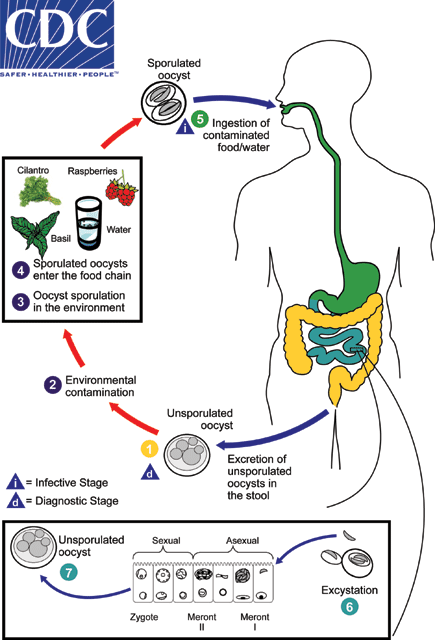
Two ongoing studies funded by the Center for Produce Safety (CPS) are looking to improve detection and control methods for Cyclospora cayetanensis. A complex protozoan parasite, C. cayetanensis is extremely challenging to culture in a laboratory setting, and requires complicated microscopy for detection in samples.

The first project, led by Purdue University’s Lia Stanciu, Ph.D., seeks to use “aptamers”—or short strands of synthesized DNA—to bind to C. cayetanensis. The aptamers would then be used to create a paper-based, low-cost, and easy-to-use water test for the parasite, similar to rapid COVID-19 or pregnancy tests.

The second study is exploring the use of zero-valent iron (ZVI) sand filters to remove C. cayetanensis from water, evaluating the basic principle that physical exclusion might be an option to reduce parasite burdens.

USA – Investigated Illnesses and Outbreaks Table Update for Seafood Related Natural Toxin and Scombrotoxin Fish Poisoning

FDA

January 12, 2023

Table 1: Closed Illness and Outbreak Incidents is a list of investigations that were managed by FDA’s Seafood-Related Natural Toxin and Scombrotoxin Fish Poisoning Team for Fish Other Than Molluscan Shellfish. The listed incidents have been completed at this time.

The table is managed and updated when a significant number of illnesses have been investigated in a specific period of time or at least quarterly.

The table has been updated to illustrate additional information such as

  • Pending analytical results;
  • Confirmed fish/fishery product species identifications; and
  • Completed analytical results are listed in their own column.

The following FDA tracking numbers, and illness type have been added to the table:

  • 20-09-08: CFP;
  • 22-08-15: SFP;
  • 22-08-17: SFP;
  • 22-09-18: SFP;
  • 22-09-20: CFP/SFP;
  • 22-10-21: Unknown;
  • 22-11-22: SFP; and
  • 22-12-23: SFP.

The table may be found at: How to Report Seafood-Related Toxin and Scombrotoxin Fish Poisoning Illnesses | FDA

USA – FDA Closes Mystery Salmonella Outbreak With 274 Sickened

Food Poisoning Bulletin

The FDA has closed another mystery Salmonella outbreak with no resolution. The Salmonella outbreak that sickened at least 274 people has ended, and the investigation has been closed; no food source was identified. This is the 14th outbreak in the last year that has been unsolved by the FDA.

It’s unusual that with so many people sick, a food source could not be found. The pathogen responsible for those illnesses was Salmonella Typhimurium. The FDA did initiate traceback, and conducted sample collection and analysis, but couldn’t solve this mystery Salmonella outbreak.

USA – FDA Core Outbreak Table Update

FDA

What’s New

  • For the outbreak of Salmonella Typhimurium (reference # 1113) in a not identified food, the investigation status has now closed.

Research – Report on surveillance of Campylobacter infections in France in 2021.

Sante Publique

CDC Campy

Key points

In 2021, surveillance of Campylobacter infections confirmed the epidemiological and biological trends already observed in recent years. Specifically, the data shows:

  • a predominance of the species C. jejuni ;
  • a higher number of cases and incidence in children with a maximum incidence in 0-9 year olds (27 cases/100,000 inhabitants);
  • a predominance of infections in men 15 cases per 100,000 inhabitants versus 11 cases per 100,000 for women (less marked trend in people aged 20 to 39);
  • a seasonal peak during the summer period;
  • high resistance to fluoroquinolones and tetracyclines, which has remained stable in recent years;
  • no notable increase in the resistance rates of the six antibiotics tested routinely;
  • consumption of poultry products as the first food (incriminated or suspected) identified as a source of contamination in episodes of collective food poisoning.

The number of Campylobacter strains listed by the CNR has been increasing since 2013, the year in which the network’s laboratories introduced online data entry. By way of comparison, at European level, the trend in the number of Campylobacter infection notifications remained stable over the 2016-2020 period. This increase observed in France could be a reflection of a real increase in Campylobacter infections. However, several factors, such as the grouping of laboratories into technical platforms and the increasingly systematic use of multiplex PCR (diagnostic tests that allow the presence of several targeted pathogens to be tested at the same time from the same sample) , facilitating the detection of Campylobacter sp , could have contributed to the increase in the number of strain isolations and therefore of the notification by the laboratories of the network over time.