Category Archives: Food Microbiology Blog

France – Raspberry Tartlet, Strawberries made on site – Salmonella

Gov france

Identification information of the recalled product

  • Product category Feed
  • Product subcategory Others
  • Product brand name TARLETTES MADE BY OUR WORKSHOPS
  • Model names or references HAFNER BRAND FINGER TARTLET
  • Identification of products
    GTIN Batch Date
    3068220269000 250322 Use-by date 03/31/2023
  • Packaging UNWRAPPED INDIVIDUAL TARTLET IN THE TRADITIONAL RAY
  • Marketing start/end date From 06/03/2022 to 06/08/2022
  • Storage temperature Product to be stored in the refrigerator
  • Health mark SALMONELLOSIS CONTAMINATION
  • Further information RECTANGULAR TARTLET
  • Geographic area of ​​sale INTERMARCHE AGEN
  • Distributors INTERMARCHE HYPERMARCHE AGEN

Practical information regarding the recall

  • Reason for recall SALMONELLOSIS CONTAMINATION
  • Risks incurred by the consumer Other risk

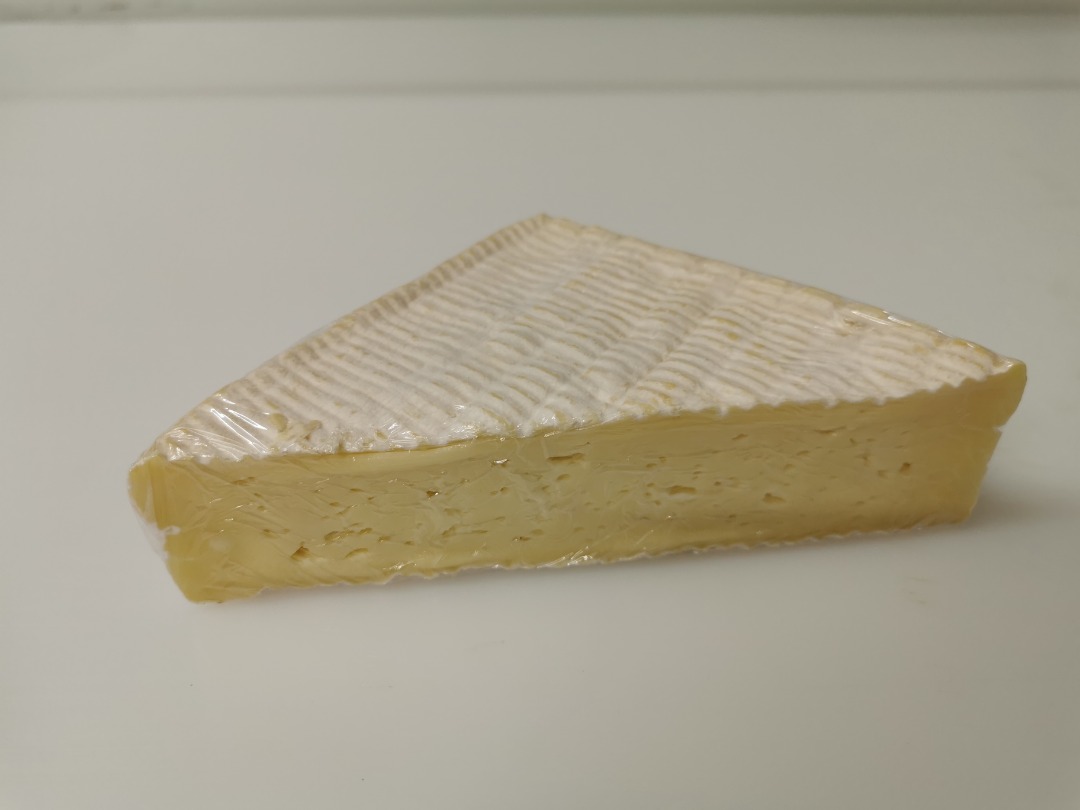
France – PONT L’EVEQUE AOP – E.coli

Gov france

Identification information of the recalled product

  • Product category Feed
  • Product subcategory Milk and dairy products
  • Product brand name Unbranded
  • Model names or references400G
  • Identification of products
    GTIN Lot Date
    3252950041603 250422LI3 Date of minimum durability 07/09/2022
  • Marketing start/end date From 27/05/2022 to 15/06/2022
  • Storage temperature Product to be stored in the refrigerator
  • Health markFR.14.371.001.CE
  • Geographic area of ​​sale LECLERC SAND ON SARTHE
  • Distributors LECLERC SAND ON SARTHE

Practical information regarding the recall

  • Reason for recall Presence of Escherichia coli
  • Risks incurred by the consumer Escherichia coli

RASFF Alerts – Aflatoxin – Peanuts – Peanut Butter – Red Chilli – Pistachios – Brown Basmati Rice – Dates

RASFF

Aflatoxins in Brazilian peanuts in the Netherlands

RASFF

Aflatoxins in peanut butter from Ghana in Italy

RASFF

Aflatoxin B1 in red chili powder from India in Italy

RASFF

Aflatoxins in pistachio kernels from Islamic Republic of Iran in Germany

RASFF

Aflatoxins beyond the legal limits in brown Basmati rice from Pakistan in Slovenia and Hungary

RASFF

Aflatoxin in dates from Tunisia in Belgium

RASFF Alert – Salmonella – Polish Chicken – Meat Preparation, Chicken Breast Fillets – Fresh Thyme – Tahini -Tahini Sesame Paste

RASFF

Salmonella Typhimurium in meat preparation from Poland, via Hungary in Slovakia and Hungary

RASFF

Salmonella Infantis in chicken breast fillets from Poland in the Czech Republic

RASFF

Salmonella enterica ser. Napoli in fresh thyme from Italy, packaged in the Netherlands in Finland

RASFF

Hind quarter chicken – Salmonella enteritidis from Poland in Belgium and Germany

RASFF

Salmonella spp (Group O Salmonella: 13,22,23 (G) in chicken kebab from Poland in France

RASFF

Salmonella Typhimurium in turkey products from Poland in Belgium and Netherlands

RASFF

Salmonella spp. in tahini from the Syrian Arab Republic in Germany

RASFF

Salmonella in frozen raw meat products from Poland in Spain, France and Germany

RASFF

Salmonella spp. in tahina sesame juice from Syria in Germany

RASFF

Salmonella spp. in tahini from Syria in Germany

RASFF

Salmonella spp. (serogroup CO) in poultry kebab from Poland in Czech Republic

RASFF

Salmonella spp. in tahini from Syria, via the Netherlands in Germany

RASFF

Salmonella Enteritidis, Salmonella Newport, Salmonella Infantis in chicken neck skin samples from carcasses produced in Poland in Belgium, Germany, Czech Republic, Latvia, Spain and Latvia

RASFF

Salmonella enterica subsp. enterica in chilled chicken meat from Poland in Czech Republic

RASFF

Salmonella spp. in black pepper from Brazil in Germany

RASFF Alerts – Ochratoxin A – Flour – Dried Figs

RASFF

Exceeded Ochratoxin A in flour from the Czech Republic in Slovakia

RASFF

Ochratoxin A in dried figs from Turkey in Germany

RASFF Alerts – Listeria monocytogenes – Smoked Salmon – Salads – Cream Cheese

RASFF

Listeria monocytogenes detected in smoked salmon from Ireland in the UK

RASFF

Listeria monocytogenes in salads “Mediterranean mixture” from Sweden in Latvia

RASFF

Listeria monocytogenes in cream cheese from Spain in Germany and Spain

India – Two dozen students fall sick due to food poisoning

Daily Pioneer

In a shocking incident of negligence, about two dozen students of Kaushal Vikash Kendra, Mango fell victim to food poisoning at their hostel on Tuesday. The students fell sick after eating egg curry and ‘puri’ for breakfast this morning.

One of the victims said she fell sick after consuming egg curry and puri this morning. “ Though a section of girls have other versions but I must say all the girls fell sick after almost an hour of consuming breakfast only,” she said.

Significantly, none of the people from the Kaushal Vikash Kendra management was available for comment on the issue.

Another section of the students claimed that they fell sick due to eating food brought online during a birthday party on Monday night. “It was my friend’s birthday on Monday. We celebrated the occasion by throwing a party at the hostel. She had bought cake, fast food from Mango. In the morning, all those who enjoyed the party had started suffering from loose motion and vomiting. Then we were brought to the MGM medical college hospital by the management,” informed a student.

However, one of the five ailing students who were admitted to the medical college hospital’s emergency ward, could not say anything about five other girls from the same centre found undergoing treatment lying in the corridor of the emergency block.

Arun Kumar, superintendent, MGM Medical College Hospital said that in all two dozen girls were brought for the treatment at noon. “The girls were down due to food poisoning. Six of the girls were sent back after first-aid, but the rest of them were admitted for treatment,” said Kumar, adding that the condition of all the girls is stable.

France – Sliced ​​cooked pork shoulder – Listeria monocytogenes

Gov france

Identification information of the recalled product

  • Product category Feed
  • Product subcategory Meats
  • Product brand name Father Anselm
  • Model names or references SHOULDER DD COOKED S/V LS
  • Identification of products
    GTIN Date
    24334250 Use-by date 07/28/2022
  • Products List List_of_products_concerned.pdf Attachment
  • Packaging1 slice vacuum bag
  • Marketing start/end date From 06/17/2022 to 06/23/2022
  • Storage temperature Product to be stored in the refrigerator
  • Health mark EN 69.259.002 EC
  • Further information Distributed by LCS listed on product label
  • Geographic area of ​​sale Departments: ISERE (38), SAVOIE (73)
  • Distributors Spar and Carrefour Express brands

Practical information regarding the recall

  • Reason for recall alert Presence of Listeria monocytogenes
  • Risks incurred by the consumer Listeria monocytogenes (causative agent of listeriosis)

France – CHAMPENOIS LIVER PASTE sold in the delicatessen section – Listeria monocytogenes

Gov france

Identification information of the recalled product

  • Product category Feed
  • Product subcategory Meats
  • Product brand name unbranded
  • Model names or references Champagne liver pâté
  • Identification of products
    GTIN Batch
    0259422000000 All lots
  • Products List reminder_sheet.pdf Attachment
  • Marketing start/end date From 06/10/2022 to 06/14/2022
  • Storage temperature Product to be stored in the refrigerator
  • Geographic area of ​​sale SEZANNE
  • Distributors E.LECLERC SEZANNE CENTER

Practical information regarding the recall

  • Reason for recall presence of Listeria monocytogenes
  • Risks incurred by the consumer Listeria monocytogenes (causative agent of listeriosis)

Research – Manuscript type: Research Paper Development of a modelling tool to assess and reduce regulatory and recall risks for cold-smoked salmon due to Listeria monocytogenes contamination

Journal of Food Protection

While public health risk assessments for Listeria monocytogenes (Lm) have been published for different foods, firm-level decision making on interventions targeting Lm involves considerations of both public health and enterprise risks. Smoked seafood is a ready-to-eat product with a high incidence of Lm contamination and associated with several recalls. We thus used cold-smoked salmon as a model product to develop a decision support tool (the Regulatory and Recall Risk [3R] Model) to estimate (i) baseline regulatory and recall (RR) risks (i.e., overall risks of a lot sampled and tested positive [e.g., by food regulatory agencies]) due to Lm contamination and (ii) the RR risk reduction that can be achieved through interventions with different underlying mechanisms: (i) reducing the prevalence and/or level of Lm and (ii) retarding or preventing Lm growth. Given that a set number of samples (e.g., 10) are tested for a given lot, the RR risk equals the likelihood of detecting Lm in at least one sample. Under the baseline scenario, which assumes a 4% Lm prevalence and no interventions, the median predicted RR risk for a given production lot was 0.333 (95% credible interval: 0.288, 0.384) when 10 25-g samples were collected. Nisin treatments, which reduce both the prevalence and initial level of Lm, reduced RR risks in a concentration-dependent manner to 0.109 (0.074, 0.146; 5 ppm), 0.049 (0.024, 0.083; 10 ppm), and 0.017 (0.007, 0.033; 20 ppm). In general, more effective reduction in RR risks can be achieved by reducing Lm prevalence, compared to retarding Lm growth, as the RR risk was reduced to 0.182 [0.153, 0.213] by a 50% prevalence reduction, while only to 0.313 [0.268, 0.367] by bacteriostatic growth inhibitors. In addition, sensitivity analysis indicates that prevalence and initial level of Lm, as well as storage temperature have the largest impact on predicting RR risks, suggesting that reliable data for these parameters will improve model performance.