Category Archives: Food Microbiology Blog

Czech Republic – Gothai – Mold/Mould

Potravinynapranyri

Illustrative photo #1

Place of inspection:
Medlov ( Medlov 169, 783 91 Medlov )
ID: 43612563
Invalid parameter:

fungi visible to the eye

There were visible mold colonies on the surface of the food. Food is not considered safe if it shows signs of spoilage.

Quantity of the product in the package: 0.4 kg
Date of sample collection: 8/17/2022
Reference number: 22-000563-SZPI-CZ
The sample was detected by the official control of the State Agricultural and Food Inspection.

RASFF Alerts – Aflatoxin- Dried Figs – Pistachios – Basmati Rice

RASFF

Level of aflatoxins exceeding limits in dried figs from Turkey in France

RASFF

Aflatoxins in pistachios from USA via Turkey in Italy

RASFF

Aflatoxin in Basmati rice from the Netherlands in the UK and Germany

RASFF Alerts – Salmonella – Polish Chicken Products – Dry Sausage – Organic Tahini – Chicken Fillets – Pork Ribs – Rosemary – Raw Beef Patties – Poultry Wings

RASFF

Salmonella in dry sausages from France in Denmark, French Polynesia and Germany

RASFF

Salmonella spp. in organic tahini (sesame paste) from Germany, made with raw material from Uganda in Austria, Germany, Ireland, Luxembourg, Spain

RASFF

Detection of salmonella enteritidis on chicken fillets from Spain in France

RASFF

Salmonella spp. (in 9 out of 10 samples) in fresh wings of broiler chickens from Poland in Lithuania

RASFF

Salmonella Typhimurium (in 1 out of 5 units) in pork ribs from Poland in Latvia

RASFF

Salmonella in rosemary from Egypt in Poland

RASFF

Salmonella typhimurium in raw beef patties from Italy in Denmark

RASFF

Salmonella group B in chilled chicken legs from Poland in the Czech Republic

RASFF

Salmonella spp. in poultry wings from Slovenia in Croatia

RASFF Alert – Mycotoxin – Ochratoxin A – Pistachios – Dried Figs

RASFF

Ochratoxin A (OTA) in pistachio from Germany in Austria, Belgium, Czech Republic, Moldova, Netherlands, Romania

RASFF

Ochratoxin A in dried figs from Turkey in Italy

RASFF

Ochratoxin A in dried figs from Turkey in Italy

RASFF Alert – Norovirus – Clams

RASFF

Norovirus genogroup II in clams (Chamelea gallina) from Italy in Spain

RASFF Alert- Mycotoxins – Ergot Alkaloids – Rye Flour

RASFF

Ergot alkaloids in rye flour from Belgium in the Netherlands

RASFF Alerts – Listeria monocytogenes – Cantonese Rice – Fried Fish Fillets – Sliced Smoked Marlin – Duck Meat – Smoked Salmon

RASFF

Listeria monocytogenes in ready meal Cantonese rice from Spain in Italy

RASFF

Listeria monocytogenes in fried fish fillets from Poland in Denmark

RASFF

Listeria monocytogenes in slices smoked marlin from Spain in Italy

RASFF

Duck meat with Listeria monocytogenes from France in Belgium and the Netherlands

RASFF

Listeria monocytogenes in smoked salmon from Poland in Germany

RASFF

High levels of Listeria monocytogenes in smoked salmon from Denmark in Italy

RASFF Alerts – Animal Feed – Salmonella – Rapeseed Extract – Meat Product

RASFF

Salmonella in post-extraction rapeseed meal from Ukraine in Poland and Lithuania

RASFF

Salmonella in meat product from Belgium in France

Research – Prevalence and Implications of Shiga Toxin-Producing E. coli in Farm and Wild Ruminants

MDPI

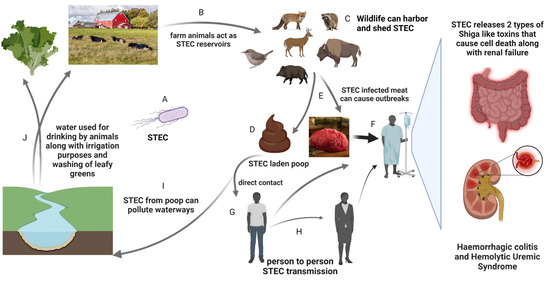
Shiga-toxin-producing Escherichia coli (STEC) is a food-borne pathogen that causes human gastrointestinal infections across the globe, leading to kidney failure or even death in severe cases. E. coli are commensal members of humans and animals’ (cattle, bison, and pigs) guts, however, may acquire Shiga-toxin-encoded phages. This acquisition or colonization by STEC may lead to dysbiosis in the intestinal microbial community of the host. Wildlife and livestock animals can be asymptomatically colonized by STEC, leading to pathogen shedding and transmission. Furthermore, there has been a steady uptick in new STEC variants representing various serotypes. These, along with hybrids of other pathogenic E. coli (UPEC and ExPEC), are of serious concern, especially when they possess enhanced antimicrobial resistance, biofilm formation, etc. Recent studies have reported these in the livestock and food industry with minimal focus on wildlife. Disturbed natural habitats and changing climates are increasingly creating wildlife reservoirs of these pathogens, leading to a rise in zoonotic infections. Therefore, this review comprehensively surveyed studies on STEC prevalence in livestock and wildlife hosts. We further present important microbial and environmental factors contributing to STEC spread as well as infections. Finally, we delve into potential strategies for limiting STEC shedding and transmission. View Full-Text

Research – Low levels of E. coli found in Norwegian produce testing

Food Safety News

Testing of fresh produce in Norway has found a low level of E. coli contamination.

The Norwegian Food Safety Authority (Mattilsynet) commissioned the Veterinary Institute to examine ready-to-eat lettuce and sugar snap peas in 2021.

A total of 118 samples, of which 37 were sugar snap peas and 81 ready-to-eat leafy greens, were analyzed. Salmonella was not detected, while E. coli was found in 11 samples, one of sugar snap peas and 10 of lettuce. E. coli, as a hygiene indicator, at levels above the guideline values was only detected in one sample of lettuce.

Results were considered unsatisfactory if three or more samples contained more than 100 colony forming units per gram or one sample contained above 1,000 CFU/g.

Officials said finding high levels of E. coli in lettuce may indicate the production process is not working optimally. Good raw material control and management of the washing and rinsing process are important, so microorganisms do not build-up and cross-contamination via water is minimized.