Category Archives: Food Microbiology Blog

Research – The underestimated risk of mycotoxins in dairy cows

All About Feed

It is a myth that rumen microbial activity allows dairy cows to handle mycotoxin toxicity completely. A closer look at rumen degradation capability shows that this is not the case. Therefore, a mitigation strategy should be holistic, practical and beyond binding.

Risk, impact, and diagnostics

A complex and diverse Total Mixed Ration (TMR) poses multiple mycotoxin toxicity challenges. Although rumen microbes can reduce the toxicity of some mycotoxins, not all mycotoxins are equally degraded in the rumen. In high-yielding dairy cows high-starch diets can compromise the detoxification capacity of rumen microbes. For some mycotoxins, such as zearalenone (ZEN), rumen degradation may increase the toxicity. Furthermore, extended periods of exposure to low levels of multiple mycotoxins may lead to chronic toxicity, an increasing issue that is notoriously difficult to diagnose at an early stage.

Mycotoxins can threaten dairy cows’ health, rumen function, feed intake, milk yield, milk quality, lameness, and reproductive abilities. Many “mouldy silage syndrome” cases in the field have shown incidences of increased somatic cell counts, undigested faecal feed particles, laminitis, mastitis and ruminitis cases. Cases of reproductive challenges and vaccination failures have been reported with multiple mycotoxins in TMR.

Read more at the link above

Research – Bacterial Pathogens in the Food Industry: Antibiotic Resistance and Virulence Factors of Salmonella enterica Strains Isolated from Food Chain Links

MDPI

kswfoodworld salmonella

Salmonella is one of the most important foodborne pathogens. Fifty-three strains of Salmonella deposited in the Culture Collection of Industrial Microorganisms—Microbiological Resources Center (IAFB) were identified using molecular and proteomic analyses. Moreover, the genetic similarity of the tested strains was determined using the PFGE method. Main virulence genes were identified, and phenotypical antibiotic susceptibility profiles and prevalence of resistance genes were analyzed. Subsequently, the occurrence of the main mechanisms of β-lactam resistance was determined. Virulence genes, invA, fimA, and stn were identified in all tested strains. Phenotypic tests, including 28 antibiotics, showed that 50.9% of the strains were MDR. The tet genes associated with tetracyclines resistance were the most frequently identified genes. Concerning the genes associated with ESBL-producing Salmonella, no resistance to the TEM and CTX-M type was identified, and only two strains (KKP 1597 and KKP 1610) showed resistance to SHV. No strains exhibited AmpC-type resistance but for six Salmonella strains, the efflux-related resistance of PSE-1 was presented. The high number of resistant strains in combination with multiple ARGs in Salmonella indicates the possible overuse of antibiotics. Our results showed that it is necessary to monitor antimicrobial resistance profiles in all food chain links constantly and to implement a policy of proper antibiotic stewardship to contain or at least significantly limit the further acquisition of antibiotic resistance among Salmonella strains.

USA – Turkey Day Myths

USDA

Quit food safety confusion cold turkey this Thanksgiving! While this holiday is a great time to spend with family and friends, it’s also time to bust some myths.

Myth 1:  Refrigerating a whole cooked turkey is safe

False! Always carve your turkey after cooking. A whole cooked turkey will not cool quickly enough, thus putting it at risk for bacterial growth. Carve the turkey into smaller pieces so it cools faster in the refrigerator.

Myth 2: Thawing a turkey on the counter is safe.

Never thaw a turkey on the kitchen counter. Once a turkey has sat at room temperature beyond two hours, it enters the Danger Zone, where bacteria grow rapidly. Thawing a turkey in a refrigerator is safe. Allow approximately 24 hours of thawing time for every four to five pounds of turkey. Turkeys are also safely thawed in a microwave and cold water. When using the cold-water method, allow 30 minutes per pound of turkey and keep it in the original wrapping. Change the water every 30 minutes and cook immediately after thawing.

Myth 3: My pop-up timer is enough to know if my turkey is fully cooked.

Pop-up timers are disposable thermometers used to measure a turkey’s temperature. These timers are a great tool. However, don’t forget to check in the three recommended places as well. The turkey’s internal temperature must reach 165 F in the following locations: the thickest part of the breast, the innermost part of the thigh, and the innermost part of the wing. Use a food thermometer in addition to a pop-up timer to check the turkey’s internal temperature.

Remember the four steps to food safety:

  • Clean: Wash hands before touching food.
  • Separate: Keep raw meats and poultry away from fruits and vegetables.
  • Cook: Turkey is safe to eat once it reaches an internal temperature of 165 F.
  • Chill: Refrigerate any leftovers within two hours.

For more information, call the USDA Meat and Poultry Hotline at 1-888-MPHotline (1-888-674-6854) or email MPHotline@usda.gov to reach a food safety expert or chat live at ask.usda.gov from 10 a.m. to 6 p.m. Eastern Time, Monday through Friday. The Meat and Poultry Hotline is also open on Thanksgiving Day from 8 a.m. to 2 p.m. Eastern Time.

Research – Fatal Listeria outbreak linked to Scottish fish processor

Food Safety News

A deadly Listeria outbreak in the United Kingdom has been linked to one company but product testing has only found low levels of contamination.

Food Standards Scotland (FSS) and the Food Standards Agency (FSA) suspect the source of contamination to be a salmon-smoking processing factory in Scotland.

Food Standards Scotland wouldn’t name the company or answer questions about the incident from Food Safety News.

Instead, a spokesperson said: “This is an ongoing outbreak of Listeria monocytogenes and, as yet, no definitive source of contamination has been found. Investigations to determine the root cause continue. Investigations of any outbreaks of foodborne illness will comprise both patient questionnaires and sampling of products.

“Local authorities are responsible for working on mitigations with any implicated businesses, and FSS, alongside partners the UK Health Security Agency, Public Health Scotland, and the Food Standards Agency, have been involved in raising awareness of the outbreak with consumers, most recently with targeted messaging to vulnerable groups.”

There have been 14 confirmed Listeria monocytogenes cases in just under two years. At least 10 sick people are above 65 years old, and one was a pregnant woman.

Three people older than 65 have died and for two Listeria monocytogenes was a contributory cause of death. All cases had underlying health conditions.

Of the linked cases of listeriosis since October 2020, eight have been identified since January 2022. The majority of them reported eating ready-to-eat smoked fish.

Italy – FRESH EGGS CATEGORY A – LARGE L – Salmonella

Salute

Brand : UOVA PAZZAGLIA

Name : FRESH EGGS CATEGORY A – LARGE L

Reason for reporting : Recall for microbiological risk

Date of publication : 15 November 2022

Documentation

Documentation

Canada – Loop Mission brand Sparkling Strawberry Probiotic Soda recalled due to possible spoilage

CFIA

Summary

Product
Sparkling Strawberry Probiotic Soda
Issue
Food – Microbial Contamination – Non harmful (quality or spoilage)
What to do

Do not use, sell, serve or distribute the affected product

Audience
Retail

Affected products

Issue

Loop Mission brand Sparkling Strawberry Probiotic Soda recalled due to possible spoilage.

The recalled product was sold in Ontario and Quebec.

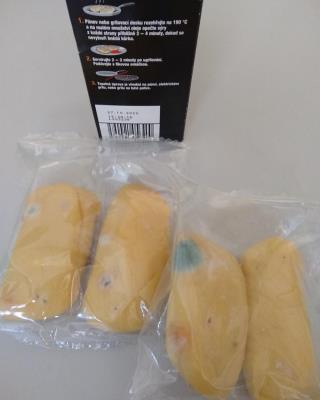
Czech Republic – Albert Grill SMOKED HALF CHIPS WITH SPICY FIG SAUCE – Mould/Mold

Potravinynapranyri

Illustrative photo #2

Place of inspection:
Jablonec nad Nisou ( Želivského 5050/2, 466 05 Jablonec nad Nisou )
ID: 44012373
Food group: Milk and milk products / Cheese

albert Grill SMOKED HALF CHIPS WITH SPICY FIG SAUCE
Category: Dangerous foods
Invalid parameter:

fungi visible to the eye

Fungal colonies of different colors were found on the surface of the cheese in all the checked packages. Food is not considered safe if it shows signs of spoilage.

Unsuitable storage temperatures of this product were not detected during the inspection, the food did not have an expired use-by date.

Batch: L203238
Expiration date: 27/10/2022
Packaging: Weld-sealed PP foil enclosed in a PAP box
Quantity of the product in the package: 240 g
Producer: Syráreň Havran, as, Priemyselná 1339, 90527 Senica
Country of origin:  Slovakia
Date of sample collection: 30/09/2022
Reference number: 22-000556-SZPI-CZ
The sample was detected by the official control of the State Agricultural and Food Inspection.

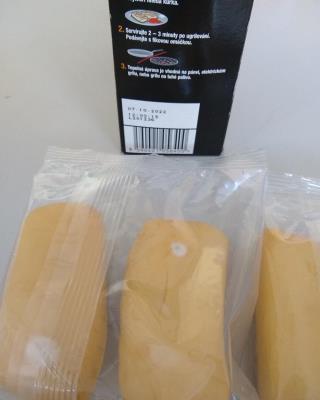
Czech Republic – Albert Grill SMOKED HALF CHIPS WITH SPICY FIG SAUCE – Mold/Mould

Potravinynapranyri

Illustrative photo #1

Place of inspection:
Jablonec nad Nisou ( Želivského 5050/2, 466 05 Jablonec nad Nisou )
ID: 44012373
Food group: Milk and milk products / Cheese

albert Grill SMOKED HALF CHIPS WITH SPICY FIG SAUCE
Category: Dangerous foods
Invalid parameter:

fungi visible to the eye

Fungal colonies of different colors were found on the surface of the cheese in all the checked packages. Food is not considered safe if it shows signs of spoilage.

Unsuitable storage temperatures of this product were not detected during the inspection, the food did not have an expired use-by date.

Batch: L201236
Expiration date: 07.10.2022
Packaging: Weld-sealed PP foil enclosed in a PAP box
Quantity of the product in the package: 240 g
Producer: Syráreň Havran, as, Priemyselná 1339, 90527 Senica
Country of origin:  Slovakia
Date of sample collection: 30/09/2022
Reference number: 22-000555-SZPI-CZ
The sample was detected by the official control of the State Agricultural and Food Inspection.

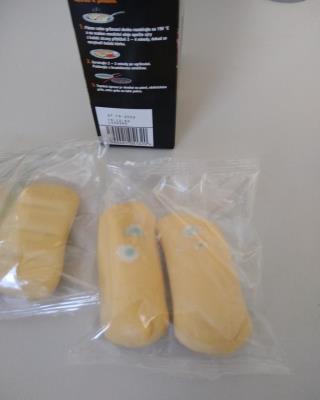
Czech Republic – Albert Grill SMOKED HALF CHIP WITH CRANBERRY SAUCE – Mold/Mould

Potravinynapranyri

Illustrative photo #1

Place of inspection:
Jablonec nad Nisou ( Želivského 5050/2, 466 05 Jablonec nad Nisou )
ID: 44012373
Food group: Milk and milk products / Cheese

albert Grill SMOKED HALF CHIP WITH CRANBERRY SAUCE
Category: Dangerous foods
Invalid parameter:

fungi visible to the eye

Fungal colonies of different colors were found on the surface of the cheese in all the checked packages. Food is not considered safe if it shows signs of spoilage.

Unsuitable storage temperatures of this product were not detected during the inspection, the food did not have an expired use-by date.

Batch: L202243
Expiration date: 27/10/2022
Packaging: Weld-sealed PP foil enclosed in a PAP box
Quantity of the product in the package: 240 g
Producer: Syráreň Havran, as, Priemyselná 1339, 90527 Senica
Country of origin:  Slovakia
Date of sample collection: 30/09/2022
Reference number: 22-000554-SZPI-CZ
The sample was detected by the official control of the State Agricultural and Food Inspection.

Germany – Taste of Asia – Basmati Rice 1kg – Aflatoxin B1

LMW

Alert type: Food
Date of first publication: 11/15/2022
Product name:

Taste of Asia – Basmati Rice 1kg

Product images:

5417_Marktaushang_Taste_of_Asia_-_Basmati_Reis_1kg(17).jpg

Market notice PENNY Markt GmbH

Manufacturer (distributor):

Van Sillevoldt Rijst BV Distribution via branches of PENNY Markt GmbH

Reason for warning:

The article may contain an increased level of aflatoxin B1.

Packaging Unit: 1 kg
Durability: 01/11/2023 – 01/14/2023
Further information:

Reference is made to the attached customer information from the food company.

Click to access 5417_Marktaushang_Taste_of_Asia_-_Basmati_Reis_1kg(17).pdf