Category Archives: Food Microbiology Blog

RASFF Alert – Staphylococcal Toxins – Cold Cuts

RASFF

Detection of staphylococcal enterotoxins in a assortment of Italian cold cuts from Italy in France

RASFF Alerts – Salmonella – Polish Chicken Products – Sesame Seeds – Tahini – Chicken Burger Patties – Pork Meat – Chicken Fillet – Fruit Salad – Minced Turkey Meat

RASFF

Salmonella CO in chicken kebab from Poland in Austria

RASFF

Salmonella sp. serogroup E in tahini from the Arab Republic of Syria in Germany

RASFF

Salmonella spp. in chicken burger patties from Germany in Luxembourg and the Netherlands

RASFF

Salmonella Infantis in fresh poultry meat from Poland in the Czech Republic

RASFF

Presence of Salmonella Typhimurium in frozen pork meat from Spain in Italy

RASFF

Salmonella and Campylobacter in chicken fillet from Hungary in Austria

RASFF

Salmonella spp in poultry meat from Poland in Germany

RASFF

Salmonella spp. in fruit salad from Germany with raw materials from Germany, Poland and the Netherlands

RASFF

Salmonella (in 1 out of 5 samples /25g) in frozen minced turkey meat from Slovenia in Croatia

RASFF

SESAME SEEDS FROM NIGERIA WITH SALMONELLA in Greece

RASFF Alert – Animal Feed – Salmonella – PAT

RASFF

Salmonella Spp in PAT from Czech Republic in Italy

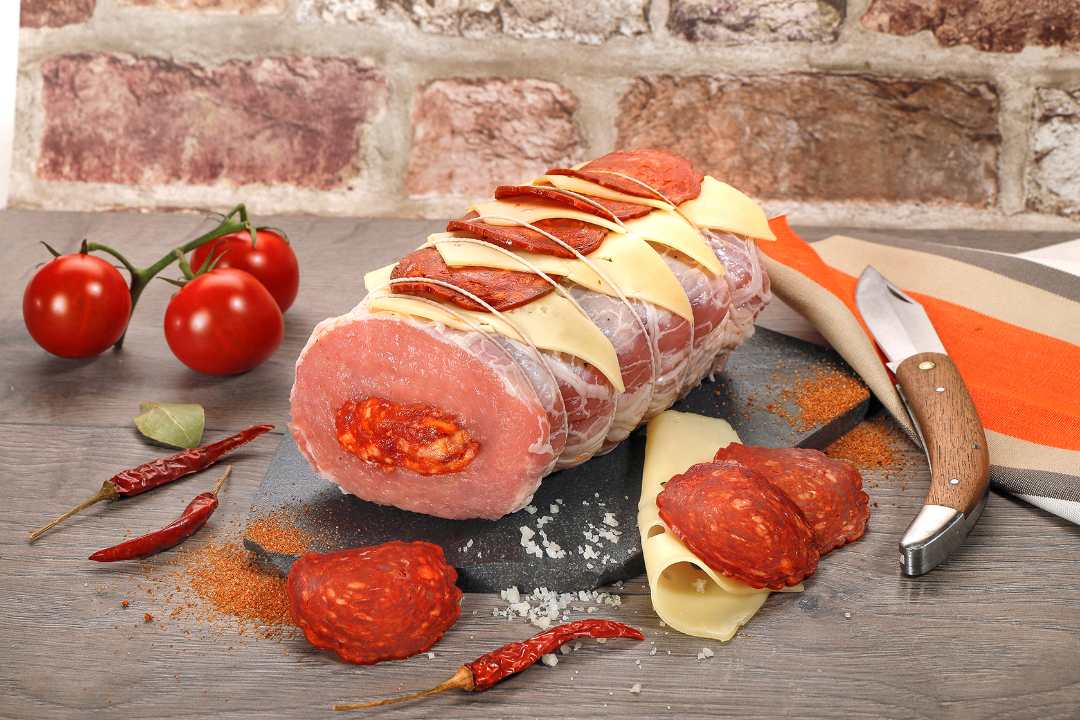
France – Roast Chorizo – Salmonella

Gov france

Identification information of the recalled product

  • Product category Feed
  • Product subcategory Meats
  • Product brand name Vallegrain
  • Model names or references Roast Chorizo
  • Identification of products
    GTIN Batch Date
    3467980061181 2232105601 Use-by date 27/11/2022
    3467980061082 2232105601 Use-by date 27/11/2022
  • Packaging Tray under modified atmosphere of about 4kg or 3x4kg.
  • Marketing start/end date From 17/11/2022 to 18/11/2022
  • Storage temperature Product to be stored in the refrigerator
  • Health mark FR-28-111-020-CE
  • Further information Roast pork elaborated about 4kg. Roast stuffed with a pork merguez stuffing, covered with slices of Emmental and Chorizo, all wrapped in strainer.
  • Geographic area of ​​saleDepartments: EURE-ET-LOIR (28), ORNE (61), VAL-D’OISE (95)
  • Distributors SUPER U and LECLERC
  • List of points of saleDHQUALCP_-_Roti_chorizo.pdf

Practical information regarding the recall

  • Reason for recall Presence of Salmonella detected
  • Risks incurred by the consumer Salmonella spp (causative agent of salmonellosis)

Research – Effect of Probiotic Lactic Acid Bacteria (LAB) on the Quality and Safety of Greek Yogurt

MDPI

Abstract

Greek yogurt is a strained yogurt with a high protein content that brings nutritional benefits. To enhance the functional benefits of Greek yogurt, Greek yogurt was prepared with various combinations of probiotic lactic acid bacteria (LAB) (Streptococcus thermophilus, Lactobacillus bulgaricus, Lactobacillus gasseri BNR17, and Lactobacillus plantarum HY7714). Effects of probiotic LAB on quality, sensory, and microbiological characteristics of Greek yogurt were then compared. Among samples, Greek yogurt fermented by S. thermophilus and L. bulgaricus showed the highest changes of pH and titratable acidity during 21 d of storage at 4 °C. Greek yogurt fermented with L. plantarum HY7714 had a higher viscosity than other samples. Greek yogurt fermented with S. thermophilus, L. bulgaricus, L. gasseri BNR17, and L. plantarum HY7714 showed superior physicochemical properties and received the highest preference score from sensory evaluation among samples. Overall, the population of enterohaemorrhagic Escherichia coli (EHEC) was more effectively reduced in Greek yogurt fermented with probiotic LAB than in commercial Greek yogurt during storage at 4, 10, and 25 °C. Thus, the addition of L. gasseri BNR17 and L. plantarum HY7714 as starter cultures could enhance the microbial safety of Greek yogurt and sensory acceptance by consumers.

Research – Salmonella recall cost Cranswick £3 million

Food Safety News

Cranswick has revealed that a Salmonella incident earlier this year cost the company more than £3 million ($3.6 million).

In a half-year results statement, which covers up to Sept. 24, 2022, the food producer said adjusted group operating profit was 1.7 percent lower at £68.4 million ($81.4 million).

This included a charge of £3.1 million ($3.7 million) due to costs associated with the product recall in May after Salmonella was found at the Hull cooked poultry facility in England.

Viet Nam – Salmonella, Bacillus cereus, E.coli detected in food samples in Nha Trang school outbreak

Outbreak News Today

In a follow-up on the food poisoning outbreak that affected hundreds of schoolchildren at the Ischool Nha Trang in Khanh Hoa province, Vietnam, health officials now report test results from the Pasteur Institute Nha Trang show pathogenic bacteria were found in the fried chicken wings of the meal, causing the outbreak which sickened students at a Ischool Nha Trang.

Specifically, Salmonella sp., Bacillus cereus and Escherichia coli were detected in food samples. In addition, Bacillus cereus was also detected in fish sauce samples.

According to our previous report, some 400 students were sickened including more than 200 hospitalizations and one death was reported in a first grade student after eating a school lunch.

Israel – After Recall in April Over Salmonella Concerns, Elite Chocolate Brands Return to Shelves in Israel

Haaretz

Israel’s top chocolate manufacturer announced on Tuesday that it is reintroducing several lines of candy to the Israeli market following a nationwide recall earlier this year due to salmonella contamination.

In a statement, the Strauss Group said that products from its Elite chocolate line, including the Parra brand, Pesek Zman and Kif Kef candy bars, would “gradually return to the shelves.” The move follows the reopening of its factory in Nof Hagalil in Israel’s north, where the salmonella was discovered. The company said that it has made “significant investments … to ensure the quality and safety of the products at the highest level.”

What is Sapovirus?

Fukushihoken Metro

Sapovirus - Wikipedia

Photo – Graham Beards at English Wikipedia

Like norovirus, Sapovirus is a virus belonging to the Caliciviridae family which multiplies in the mucous membranes of the human small intestine.
In 2002, the International Committee on Taxonomy of Viruses officially gave this virus the name of “Sapovirus; prior to that time it was known as the “Sapporo virus.”
The “Sapo” in “Sapovirus” is derived from Sapporo, Japan, where the virus was discovered.
Previously, Sapovirus was believed to be the cause of sporadic gastroenteritis mainly in children, but in recent years reports have been on the rise of mass outbreaks such as food poisoning..

Like norovirus, Sapovirus causes gastroenteritis throughout the year.
Epidemiological studies have strongly identified the eating of raw bivalves such as oysters and food prep workers carrying the virus as being part of the virus’ transmission route. In addition, as there have been cases of mass outbreaks at facilities such as schools and day cares where no raw oysters were eaten, person to person secondary infection is suspected to exist.
In recent years, the development and popularization of a new testing method (real-time PCR) has clarified the relationship between Sapovirus and food poisoning.

Read more at the link above and below

CHP

Research – Why throwing out food isn’t enough to stop the spread of Listeria

FOX 10

If you have contaminated food in your fridge, throwing it away isn’t enough to stop the spread of listeria and other food-borne illnesses.

That’s the message the Centers for Disease Control and Prevention is reiterating amid recent listeria and other food-borne outbreaks.

Earlier this month, the CDC announced one person died and 13 were hospitalized across six states in a listeria outbreak linked to contaminated deli meat and cheese. Illnesses were reported in Illinois, New York, New Jersey, Massachusetts, California and Maryland, where one person died.

Listeria outbreaks have also been linked to soft cheeses, mushrooms, hard-boiled eggs and a wide range of other foods.

The CDC says foods and surfaces become cross-contaminated. From there, the germs spread to shelves and drawers, then to other foods and the human hands that touch them.

But health experts say there’s a simple solution for stopping the spread of listeria: clean your fridge.

Take out all removable parts and wash them with hot, soapy water. After you clean the inside of the fridge, the CDC recommends adding a tablespoon of bleach to one gallon of water and using that water to wipe down the fridge one more time.