What’s New
- An outbreak advisory has been issued for the outbreak of Listeria monocytogenes linked to enoki mushrooms (reference #1127).

Posted in FDA, food bourne outbreak, Food Illness, Food Micro Blog, Food Microbiology, Food Microbiology Blog, Food Microbiology Research, Food Microbiology Testing, Foodborne Illness, foodborne outbreak, foodbourne outbreak, Illness, Listeria, Listeria monocytogenes, microbial contamination, Microbial growth, Microbiological Risk Assessment, Microbiology, Microbiology Investigations, Microbiology Risk, outbreak
While purchasing or preparing new year foods, purchase them from reputable retail outlets. Buy sweetened lotus seeds and pistachio with natural colour and avoid those looking extraordinarily white because they may have been bleached with chemicals. Avoid buying melon seeds that are too glossy as they may contain mineral oil, which may cause gastrointestinal discomfort.
You should check the expiry date before buying any prepackaged festive items like puddings, sesame balls and sweets, and make sure the packaging is intact. Note the hygienic condition of the shop and the food containers and the hygiene practices of the staff, when buying unpackaged items like crispy triangles, sweetened dried fruits and melon seeds.
After purchase, pre-cooked foods like puddings should be stored in the refrigerator as soon as possible and be consumed before the “use by” date shown on the package. Fried festive foods such as sesame balls and crispy triangles should be kept in air-tight containers and stored in the refrigerator or in a cool, dry place.
Melon seeds and nuts are often served during the Chines Year. However, these foods contain hard hulls. Cracking melon seeds and nuts with your own teeth can result in tooth damage. Use a seed or nut cracker instead. Nut are also often used in making Chinese New Year foods. Should you be allergic to nuts or have other food allergy , read food allergen information on food labels to identify if any food or food ingredients of your allergic concern are present in the food. Avoid the food or food ingredients which you are allergic to.
Chinese New Year is a great time of year to have ‘winter warmers’ such as poon choi when we host large gatherings. These dishes are often prepared through bulk cooking ahead of time, due to the large number of portions required. Poon choi contains various food ingredients and requires complicated and long preparation procedures such as cutting, marinating, precooking and cooling and finally re-heating. If the food is left at room temperature for too long after precooking, foodborne pathogens can multiply and some can even produce heat-stable toxins which are not readily eliminable by reheating.
Therefore, it is important to store food properly by storing precooked ingredients at 4°C or below to prevent the formation of toxins, cool down the precooked ingredients by dividing into small portions, placing in shallow containers or placing in ice bath. Reheating foods thoroughly to the core temperature of at least 75°C or above. Keep hot food above 60°C if it is not consumed immediately. Do not leave reheated food at room temperature for long, and discard it if held at room temperature for more than four hours. Of note, heat from the heat source may not be evenly distributed in a large poon choi during reheating, therefore requiring more time to bring poon choi to a boil before eating.
Large holiday meals could leave you with leftovers, such as rice cake and puddings, to dig in for days. For the sake of food safety, all perishables should be refrigerated within two hours of being cooked or cooled, and discard items that have been left out for longer than four hours. To minimise spoilage, leftovers should be kept in clean and airtight containers, and refrigerated within two hours of finishing preparation. All leftovers should be reheated thoroughly with the core temperature of food reaching at least 75°C, and they should only be reheated once. Take note of the expiry dates of the food items before consumption. Food beyond its “use by” date should be discarded while be wary of the quality of food beyond the “best before” date.
Stop eating and discard puddings or other food that are found mouldy or with an abnormal taste. Abnormal taste indicates that the puddings have perished due to improper or prolonged storage. Remember, a “sniff test” is not an appropriate method for testing if food is safe to eat, as food can look and smell fine even after the “use by” date has passed. Any leftovers that have been kept in the refrigerator for more than three days should be disposed.
Posted in Food Micro Blog, Food Microbiology, Food Microbiology Blog, Food Microbiology Testing, Food Safety, Food Safety Alert, Food Safety Management, food safety training, microbial contamination, Microbial growth, Microbiological Risk Assessment, Microbiology, Microbiology Investigations, Microbiology Risk
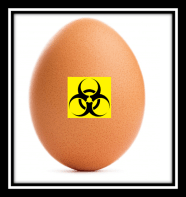
Since the beginning of December 2022, 22 cases of illness infected with one and the same strain of Salmonella Enteritidis have been reported to the Public Health Authority. The infection is suspected to originate from eggs that have now been recalled.
At the end of December 2022, Salmonella Enteritidis was identified at a major Swedish egg producer, which has led to several recalls of fresh eggs.
Recalls of eggs – January 2023 (livsmedelsverket.se)
An outbreak of Salmonella Enteritidis involving 22 people from eleven different regions has now been identified and is being investigated. Since several of the sick have eaten dishes containing raw eggs from the now recalled batches, there are strong reasons to suspect a connection to the earlier Salmonella finding at the egg producer. The disease cases are aged 7-90 years (median=40 years), twelve of the cases are women and the illnesses occurred between December 7, 2022 and January 6, 2023 (see Figure 2023-01-18).
During the past ten days, a larger number of people with salmonella infection than usual have been reported. The Salmonella isolates from these disease cases have not yet been typed to determine the specific strain, but since several have stated consumption of products with raw eggs from suspected contaminated batches, there is a risk that the number of people identified as infected in the outbreak will increase.
Although because of the recalls there should be no contaminated eggs left in stores or in restaurants, it is possible that you may have eggs left at home from the recalled batches. Via the Swedish Food Agency’s website, you can find out who these lots are and what you should do with these eggs.
The outbreak is being investigated in collaboration between the Swedish Agency for Agriculture, the Swedish Food Agency, SVA, the Public Health Agency, regional infection control and other regional and local authorities.
Posted in food bourne outbreak, food contamination, food handler, Food Hazard, Food Hygiene, Food Illness, Food Micro Blog, Food Microbiology, Food Microbiology Blog, Food Pathogen, food recall, Food Safety, Food Safety Alert, Food Safety Management, Food Safety Regulations, Food Testing, Foodborne Illness, foodborne outbreak, foodbourne outbreak, Illness, outbreak, Salmonella, Salmonella in Eggs
QUEBEC CITY , Jan. 18, 2023 The Ministry of Agriculture, Fisheries and Food (MAPAQ), in collaboration with Poissonnerie La Moulière, located at 102, boulevard des Bois-Francs Nord, in Victoriaville , advises the population not to consume the products indicated in the table below if they have not been kept in the freezer at all times since the time of purchase. In fact, product labels do not include the information necessary for their safe consumption, namely the statement “Keep frozen until use” which is required.
|
Name of products |
Format |
Affected lot |
|
“SMOKED EEL” |
Variable |
Units sold until January 17, 2023 |
|
“CAJUN SMOKED MACKEREL” |
Variable |
Units sold until January 17, 2023 |
|
“SMOKED PEPPER MACKEREL” |
Variable |
Units sold until January 17, 2023 |
|
“SMOKED COD” |
Variable |
Units sold until January 17, 2023 |
|
“SMOKED SALMON TRIMURE” |
Variable |
Units sold until January 17, 2023 |
|
“TURBOT SMOKED PIECES” |
Variable |
Units sold until January 17, 2023 |
The products that are the subject of this warning were offered for sale until January 17, 2023 inclusive, only at the establishment designated above. They were vacuum-packed in a transparent plastic wrapper and sold frozen. The label of the products included, in addition to their name, the words “Poissonnerie La Moulière inc. “.
The operator is voluntarily recalling the products in question. It has agreed with MAPAQ to issue this warning as a precautionary measure. People who have one of these products in their possession and have not kept it in the freezer at all times since the time of purchase are advised not to consume it. They must return it to the establishment where they bought it or throw it away. Even if the affected products show no signs of tampering or suspicious odors, their consumption may represent a health risk.
It should be noted that no case of illness associated with the consumption of these foods has been reported to MAPAQ to date.
LDC is recalling the following product in Luxembourg:

| Last name | duck sleeve |
| Mark | Gallic |
| bar code | 3266980006587 |
| Use-by date (DLC) | 30/12/2022 |
| Batch | 0252031462 |
Danger : Presence of Listeria monocytogenes
Listeria monocytogenes can cause fever, headache and gastroenteritis. Vulnerable people such as immunocompromised and elderly people and young children may present with neurological symptoms due to meningitis. Pregnant women should also be especially alert to these symptoms. Gastroenteritis can appear between a few hours and 3 days after consumption, while neurological symptoms can only appear after 3 months. People who have consumed these products and have these symptoms are invited to consult a doctor and report this consumption to him.
Click to access 20230117-affichette-de-rappel-manchons-de-canard.pdf
Posted in food contamination, food handler, Food Hazard, Food Hygiene, Food Inspections, Food Micro Blog, Food Microbiology, Food Microbiology Blog, Food Microbiology Testing, Food Pathogen, food recall, Food Safety, Food Safety Alert, Food Safety Management, Food Safety Regulations, Food Testing, Listeria, Listeria monocytogenes
Abstract
The impact of dry-ageing of beef and wet-ageing of beef, pork and lamb on microbiological hazards and spoilage bacteria was examined and current practices are described. As ‘standard fresh’ and wet-aged meat use similar processes these were differentiated based on duration. In addition to a description of the different stages, data were collated on key parameters (time, temperature, pH and aw) using a literature survey and questionnaires.
The microbiological hazards that may be present in all aged meats included Shiga toxin-producing Escherichia coli(STEC),Salmonella spp., Staphylococcus aureus, Listeria monocytogenes, enterotoxigenic Yersinia spp., Campylobacter spp. and Clostridium spp. Moulds, such as Aspergillus spp. and Penicillium spp., may produce mycotoxins when conditions are favourable but may be prevented by ensuring a meat surface temperature of−0.5 to 3.0°C, with a relative humidity (RH) of 75–85% and an airflow of 0.2–0.5 m/s for up to 35 days.
The main meat spoilage bacteria include Pseudomonas spp., Lactobacillus spp. Enterococcus spp., Weissella spp., Brochothrix spp., Leuconostoc spp. Lactobacillus spp., Shewanella spp. and Clostridium spp. Undercurrent practices, the ageing of meat may have an impact on the load of microbiological hazards and spoilage bacteria as compared to standard fresh meat preparation. Ageing under defined and controlled conditions can achieve the same or lower loads of microbiological hazards and spoilage bacteria than the variable log10increases predicted during standard fresh meat preparation. An approach was used to establish the conditions of time and temperature that would achieve similar or lower levels of L. monocytogenes and Yersinia enterocolitica (pork only) and lactic acid bacteria(representing spoilage bacteria) as compared to standard fresh meat. Finally, additional control activities were identified that would further assure the microbial safety of dry-aged beef, based on recommended best practice and the outputs of the equivalence assessment.
Posted in Brochothrix thermosphacta, Clostridium, Decontamination Microbial, Enterococcus, Food Micro Blog, Food Microbiology, Food Microbiology Blog, Food Microbiology Research, Food Microbiology Testing, Leuconostoc mesenteroides, microbial contamination, Microbial growth, Microbiological Risk Assessment, Microbiology, Microbiology Investigations, Microbiology Risk, Shigatoxin, Shigella, Staphylococcus aureus, STEC, STEC E.coli
The recall applies to Gäsene Rivost 500 grams with a best before date of 14/3-2023, Batch 23000, as a safety measure when Listeria monocytogenes is suspected.
Posted in food contamination, food handler, Food Hazard, Food Hygiene, Food Inspections, Food Micro Blog, Food Microbiology, Food Microbiology Blog, Food Microbiology Testing, Food Pathogen, food recall, Food Safety, Food Safety Alert, Food Safety Management, Food Safety Regulations, Food Testing, Listeria, Listeria monocytogenes
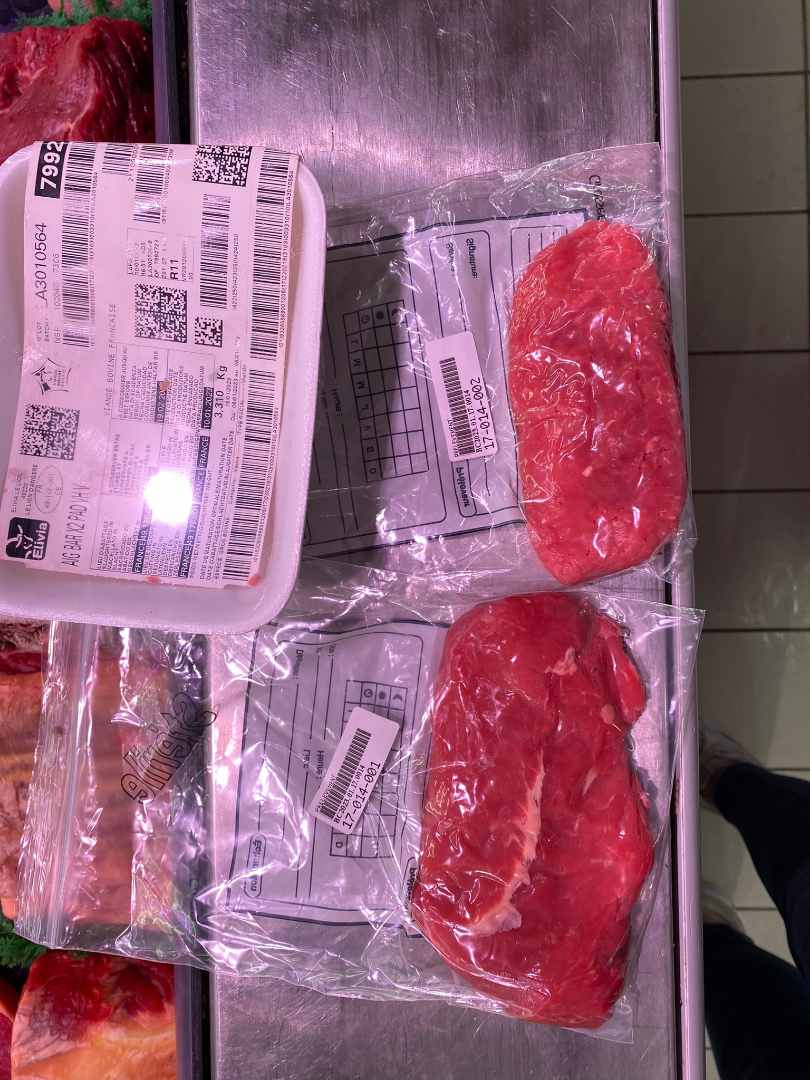
| GTIN | Batch | Date |
|---|---|---|
| 288988019358 | 919360068003 | Use-by date 10/01/2023 |
Posted in food contamination, food handler, Food Hazard, Food Hygiene, Food Inspections, Food Micro Blog, Food Microbiology, Food Microbiology Blog, Food Microbiology Testing, Food Pathogen, food recall, Food Safety, Food Safety Alert, Food Safety Management, Food Safety Regulations, Food Testing, Listeria, Listeria monocytogenes
The Yummy Company recall
Product: Yummy brand Protein Boost/Pistachios.
Problem: too high aflatoxin content.

In agreement with the FASFC, The Yummy Company withdraws the product
Protein Boost/Pistachios of the Yummy brand from the sale and the
recalled from consumers due to a content too high in aflatoxins.
The Yummy Company asks its customers not to consume this product and to return it to the point of sale in which it was purchased.
Each 3 pack of Yummy Protein Boost/Pistachios from the set listed below will be refunded in full.
Product Description
– Product name: Protein Boost / Pistachios
– Brand: Yummy
– Dates of minimum durability (BDD) : 01/19/2023, 01/26/2023, 02/03/2023 –
Batch numbers: 190123, 260123 and 030223
– Sale period: from 04/14/2022 to 08/31/2022
– Type of packaging: Food paper
– Weight: 105g
The product was distributed by various points of sale including:
Albinète Waremme SPRL Chaussée Romaine 244a 4300 Waremme
Albinète Liège SCRL Place Cockerill 18 4000 Liège
Albinète Les Halles Boulevard Jean de Wilde 71a 4000 Liège
Albinète Haccourt SPRL Avenue Reine Elisabeth 17 4684 Haccourt
For any additional information , contact Mrs Sylvie VANDERBORGHT: svanderborght@albinete.be
Posted in Aflatoxin, Aspergillus Toxin, food contamination, food handler, Food Hazard, Food Hygiene, Food Inspections, Food Micro Blog, Food Microbiology, Food Microbiology Blog, Food Microbiology Testing, Food Poisoning, food recall, Food Safety, Food Safety Alert, Food Safety Management, Food Safety Regulations, Food Testing, Food Toxin, Mold Toxin, Mould Toxin, Mycotoxin, Toxin
Nearly 140,000 people sought medical treatment for diarrhea last week, as 64 clusters of diarrhea cases were reported over the past four weeks, the Centers for Disease Control (CDC) said in a news release on Monday, advising people to maintain good hand hygiene and food safety practices during the Lunar New Year holiday.
From Jan. 8 to Saturday last week, 139,728 people went to see a doctor for diarrhea — higher than the 104,114 and 116,497 cases reported in the same period last year and in 2021 respectively, the CDC’s surveillance data showed.
A total of 64 clusters of diarrhea cases were also reported in the past four weeks, higher than the 54 clusters reported in the same period last year, it said.
Posted in Decontamination Microbial, food bourne outbreak, Food Micro Blog, Food Microbiology, Food Microbiology Blog, Food Microbiology Research, Food Microbiology Testing, foodborne outbreak, foodbourne outbreak, microbial contamination, Microbial growth, Microbiological Risk Assessment, Microbiology, Microbiology Investigations, Microbiology Risk, Norovirus, outbreak


