Category Archives: Food Microbiology Blog

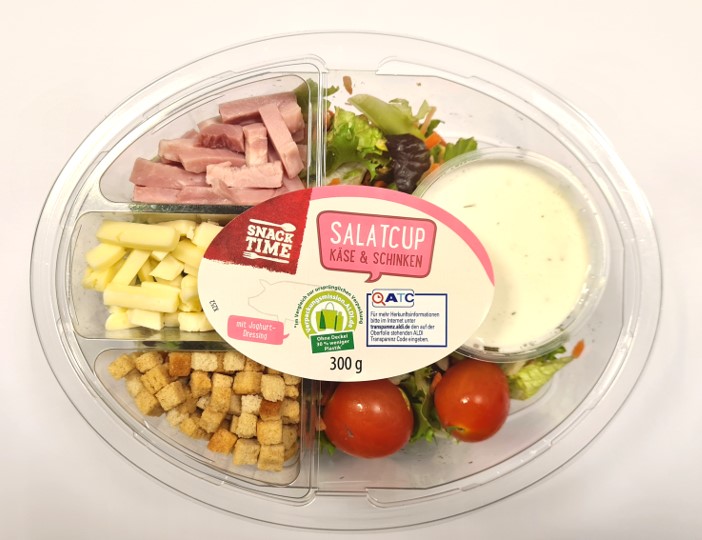
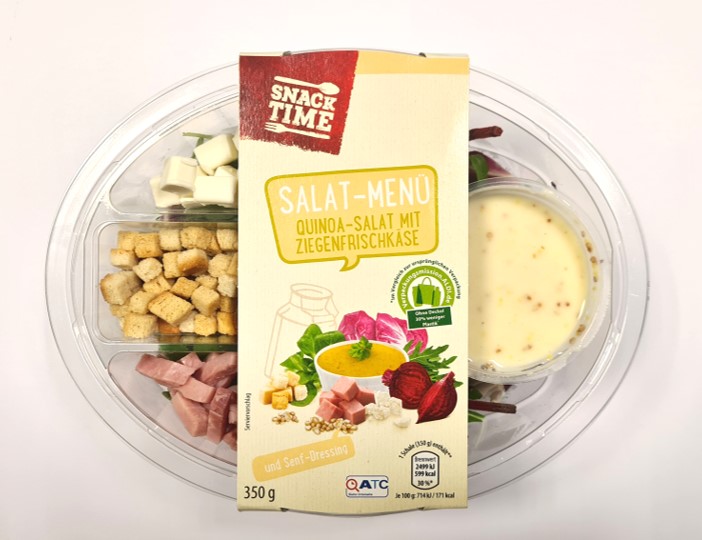
Germany – “Snack Time Salad Cup Cheese & Ham 300g” and “Snack Time Salad Menu Quinoa Salad with Goat Cream Cheese 350g” – Listeria monocytogenes

LMW

Alert type: Food
Date of first publication: 02/02/2023
Product name:

“Snack Time Salad Cup Cheese & Ham 300g” and “Snack Time Salad Menu Quinoa Salad with Goat Cream Cheese 350g”

Product images:

Salad cup cheese & ham.jpg
Salad menu Quinoa salad with goat's cream cheese.jpg
Manufacturer (distributor):

GARTENFRISCH Jung GmbH Distribution by ALDI Süd and ALDI Nord

Reason for warning:

The reason for the precautionary recall is that Listeria monocytogenes was found in the ham strips contained in the sample when a sample was examined.

Packaging Unit: 300g, 350g
Durability: Use by date up to and including 02/08/2023
Further information:

Reference is made to the attached press release from the food company.

RASFF Alerts – Aflatoxin – Groundnuts- Melon Seeds – Pistachios – Dried Figs

RASFF

Aflatoxin in Argentine groundnuts in the Netherlands

RASFF

Aflatoxins and Salmonella group E in ground melon seeds from Ghana, via the Netherlands in Austria, Belgium, Cyprus, Czech Republic, Denmark, Finland, France, Germany, Hungary, Iceland, Italy, Luxembourg, Netherlands, Poland Romania, Sweden

RASFF

Aflatoxin B1 and Total in Pistachio nuts from Turkey in Germany, Italy, Netherlands, Poland and Romania

RASFF

Aflatoxin in Brazilian groundnuts in the Netherlands, Poland and Ukraine

RASFF

Aflatoxins in dried figs from Turkey in Sweden

RASFF

Aflatoxins beyond the maximum permitted limits in Pistachios in shell from Iran in Italy

RASFF Alert – Salmonella – Polish Chicken Products – Melon Seeds – Sesame Seeds – Annatto Seeds – Black Pepper – Sesame Paste – Irish Chicken Products – Eggs

RASFF

Salmonella spp., Listeria monocytogenes and Campylobacter spp. in frozen chicken mid wings from Poland in Lithuania

RASFF

Aflatoxins and Salmonella group E in ground melon seeds from Ghana, via the Netherlands in Austria, Belgium, Cyprus, Czech Republic, Denmark, Finland, France, Germany, Hungary, Iceland, Italy, Luxembourg, Netherlands, Poland Romania, Sweden

RASFF

Salmonella in annatto seeds from Côte d’Ivoire in Spain

RASFF

Salmonella spp. in black pepper from Brazil in Germany

RASFF

Salmonella spp. in sesame paste “Tahin” from the Republic of Sudan, via Turkey in Germany

RASFF

Detection of Salmonella ENTERITIDIS on chicken meat from Poland in France

RASFF

Salmonella Typhimurium Detected in Chicken Products from Ireland in the Netherlands

RASFF

Salmonella in sesame seeds from Nigeria in Greece

RASFF

Salmonella in sesame seeds from Nigeria in Turkey and Greece

RASFF

Salmonella in sesame seeds from Nigeria in Greece

RASFF

Salmonella entritidis in eggs from the Netherlands in Germany and Belgium

RASFF

SALMONELLA SPP IN SESAME PASTE FROM EGYPT in Cyprus

RASFF Alert – Campylobacter – Polish Chicken

RASFF

Salmonella spp., Listeria monocytogenes and Campylobacter spp. in frozen chicken mid wings from Poland in Lithuania

RASFF Alert – Histamine – Tuna Loins

RASFF

Histamine in Tuna loins from Sri Lanka in Austria, Germany, Lithuania and Netherlands

RASFF Alerts – Listeria monocytogenes – French Cheese – Crumbled Blue Cheese – Leverkaas – Polish Chicken

RASFF

Listeria monocytogenes in cheeses from France in Belgium

RASFF

Listeria monocytogenes in crumbled blue cheese from Denmark in Portugal and Spain

RASFF

Listeria Monocytogenes in leverkaas from Belgium in the Netherlands and Spain

RASFF

Salmonella spp., Listeria monocytogenes and Campylobacter spp. in frozen chicken mid wings from Poland in Lithuania

RASFF Alert – STEC E.coli – Frozen Organic Herb mix

RASFF

Verotoxin-producing Escherichia coli (VTEC/STEC) in frozen organic herb mix from France

RASFF Alert – Ochratoxin A – Nutmeg – Shelled sunflower Seeds – Chopped Dried Figs

RASFF

Ochratoxin A in nutmeg from Indonesia in the Netherlands

RASFF

Ochratoxin A in shelled sunflower seeds from China, packaged in Denmark in Poland

RASFF

Ochratoxin A in Turkish chopped dried figs in the Netherlands

RASFF

Ochratoxin A in dried figs from Turkey in Germany

Research – Use of a phage cocktail to reduce the numbers of seven Escherichia coli strains belonging to different STEC serogroups applied to fresh produce and seeds

Wiley Online

Abstract

The aims of this research were to evaluate the effectiveness of a phage cocktail at reducing seven Shiga toxigenic Escherichia coli (STEC) serogroups on different food matrixes: mung bean sprouts (MBP), lettuce, and mung bean seeds (MBS) and to test the phage cocktail effectiveness to reduce E. coli O157 on Romaine and iceberg lettuce. To study the effect of the type of food matrix on the STEC phage cocktail effectiveness, a mixture of seven highly sensitive STEC strains designated as phage propagation strains (PPS) were used to adulterate Romaine lettuce, MBP, and MBS matrixes at a concentration of 105 logs CFU/g. A subsample of the treated MBS was germinated to assess STEC survival. Recovered STEC strains were confirmed using latex agglutination and PCR. To test the phage cocktail effectiveness to reduce E. coli O157:H7 on Romaine and iceberg lettuce, a mixture of four STEC strains (different than phage propagation strains, non-PPS) at both low (103 CFU/g) and high (105 CFU/g) concentrations were used to spike the samples in scaled up trials for the purpose of potential commercialization. Phage treatments including a combination of STEC phage cocktail and chlorinated water treatment were then applied to lettuce in a simulated scaled-up trial. STEC was assessed on the treated samples at different storage time and temperatures (0, 24, 48, and 72 hr at 2, 10 and 25°C). In the food matrix trial, the combination of STEC phage cocktail and chlorinated water-reduced PPS (p < 0.001) STEC on lettuce by 2.1 log10 CFU/g and on MBP by 2.2 log10 CFU/g. However, isolates from all 7 STEC serogroups remained viable after phage treatment in both lettuce and MBP; particularly those associated with serogroup O111, O121, O103, and O145, while only a few colonies of serogroup O26, O45, and O157 were detected. Lettuce adulterated with low levels of 4 non-PPS E. coli O157:H7 (103 CFU/g) achieved a reduction of 2.6–3.2 logs. While a reduction 1.7–2.3 logs was achieved by the phage cocktail when lettuce was inoculated with 105 CFU/g. Overall phage performance was more effective at 2 and 10°C and improved over storage time up to 72 hr. However, for MBS, the phage cocktail was not able to kill any of the STEC populations as all of them recovered during germination.

Belgium – Sesame cream – EXTRA Tahine from the Mira brand – Salmonella

AFSCA

Communication from the FASFC
Product: Sesame cream – EXTRA Tahine from the Mira brand.
Problem: Possible presence of Salmonella.

The FASFC is today recalling consumers of the product “sesame cream – EXTRA Tahine” from the Mira brand.

This recall follows a notification via the RASFF system (European Food and Feed Rapid Alert System) due to the possible presence of Salmonella.

The AFSCA asks not to consume this product and to bring it back to the point of sale where it was purchased.


Product description:

Name: sesame cream – EXTRA Tahine
Brand: Mira
Expiry date (BDD): 16/12/2023
Batch number: 003
Weight: 18kg

The product was sold via various points of sale in Belgium.

For further information, you can contact the FASFC contact point for consumers: 0800/13.550 or pointdecontact@afsca.be .