Archives
-
Join 347 other subscribers
KSWFoodWorld
Blog Stats
- 479,846 Views
Category Archives: Food Microbiology Blog
Research – Inactivation of Escherichia coli in an Orange Juice Beverage by Combined Ultrasonic and Microwave Treatment
The inactivation of Escherichia coli is one of the major issues in the food industry. The present study focuses on the application of a combined microwave-ultrasound system for the optimization of the inactivation of Escherichia coli ATCC 25922 in an orange juice drink. Using response surface methodology (RSM), trials were planned with a Box–Behnken Design (BBD) to maximize the impact of microwave power (A: 300–900 W), microwave treatment time (B: 15–35 s), and time of ultrasound (C: 10–30 min) on E. coli inactivation. Analysis of variance (ANOVA) was carried out and E. coli inactivation was expressed with a mathematical equation depending on the factors. The results showed that both the microwave treatment time and the time of ultrasound were effective as independent variables in eliminating the E. coli strain. However, the effect of these two variables, ultrasound and microwave exposure time, in combination was significantly greater than when examined separately. RSM modeling determined that optimal treatment conditions include 900 W microwave power, 33 s microwave treatment time, and 20 min time of ultrasound to achieve an 8-log reduction of E. coli, constituting total inactivation. The results of this study showed that ultrasound-microwave treatment is a potential alternative processing method for an orange juice beverage.
Finland joins countries with travel-related Shigella cases
Finland is the latest country to report Shigella infections in people returning from Cape Verde.
The Finnish Institute of Health and Welfare (THL) recorded eight patients with shigellosis in November and December 2022, with a history of travel to Cape Verde.
Based on typing, the strains in five of these cases match those found in other European countries. Almost all Shigella infections found in Finland originate from abroad.
During 2022, more travel-related shigellosis cases than usual were recorded in several European countries. Patients are linked by trips to Cape Verde.
Related cases have been reported by the United Kingdom, the Netherlands, France, Germany, Denmark, and Portugal.
Posted in Decontamination Microbial, food bourne outbreak, Food Illness, Food Micro Blog, Food Microbiology, Food Microbiology Blog, Food Microbiology Research, Food Microbiology Testing, Foodborne Illness, foodborne outbreak, foodbourne outbreak, Illness, microbial contamination, Microbial growth, Microbiological Risk Assessment, Microbiology, Microbiology Investigations, Microbiology Risk, outbreak, Shigatoxin, Shigella, Shigella flexneri, Shigella Sonnei
India – Maha: 137 Warkaris take ill due to suspected food poisoning in Pandharpur
Pune, Feb 2 (PTI) A total of 137 Warkaris (devotees of Lord Vitthal) fell sick due to suspected food poisoning in the temple town of Pandharpur in Maharashtra, officials said on Thursday. All the devotees are stable, they said.
According to health officials from Solapur district, several worshippers on Wednesday consumed ‘varai rice’, a barnyard millet preparation, at a local monastery on the occasion of Maghi Ekadashi.
Posted in Food Illness, Food Micro Blog, Food Microbiology, Food Microbiology Blog, Food Microbiology Research, Food Microbiology Testing, Food Poisoning, Foodborne Illness, Illness, microbial contamination, Microbial growth, Microbiological Risk Assessment, Microbiology, Microbiology Investigations, Microbiology Risk, Poisoning
Abu Dhabi shuts down cafeteria over food poisoning
Abu Dhabi: Abu Dhabi has ordered the temporary closure of the Arab Burger Cafeteria for food hygiene and safety breaches that have resulted in multiple cases of poisoning.
In a statement, the Abu Dhabi Agriculture and Food Safety Authority (Adafsa) said it had ordered the eatery in Musaffah to shut down after the poisoning cases were traced back to the individuals consuming contaminated grilled chicken meals from the restaurant. The chicken had been handled and prepared by the restaurant in an unsafe manner, which had resulted in salmonella contamination.
The Adafsa said the outlet will remain shut until it corrects unsafe practices and conditions.
Posted in food bourne outbreak, Food Illness, Food Micro Blog, Food Microbiology, Food Microbiology Blog, Food Microbiology Research, Food Microbiology Testing, Food Poisoning, Foodborne Illness, foodborne outbreak, foodbourne outbreak, Illness, microbial contamination, Microbial growth, Microbiological Risk Assessment, Microbiology, Microbiology Investigations, Microbiology Risk, outbreak
AFSCA – Belgium – Listeria Information
5 things to know about Listeria |
| Listeria is a bacterium found everywhere in our natural environment: in the air, soil, water… and sometimes in food. There are several types of Listeria, but only Listeria monocytogenes is primarily transmitted to humans through food . In some cases, this can lead to a foodborne infection: listeriosis.
Is the bacterium dangerous, how many people fall ill each year and what about the FASFC checks? These 5 questions and answers about Listeria monocytogenes will allow you to learn more about this type of Listeria bacteria and give you advice on how to avoid infections at home. 1. Listeria is mainly present in chilled ready-to-eat products Listeria can be present in both animal products and plant products. The products at risk are mainly chilled products consumed without being heated, such as cheeses made from raw milk, cold cuts, raw vegetables and smoked fish. Indeed, the bacterium can still survive and grow in cold and humid climates. 2. More than 2,000 cases of listeriosis in Europe each year In the European Union, the bacterium Listeria monocytogenes is responsible for more than 2,000 cases of listeriosis each year. Listeriosis is one of the most serious foodborne infections. The latest report from EFSA (the European Food Safety Authority) indicates that listeriosis is the fifth most frequently reported zoonosis (disease transmitted from animals to humans) in humans in the world. EU. In healthy people with normal defenses, the disease can develop without symptoms or mild flu-like symptoms (fever, muscle pain, headache, gastrointestinal problems). But there are also high-risk groups for whom listeria can cause a serious infection. 3. Not all people who eat food contaminated with listeria get sick The group of risk profiles is called YOPI. This English term stands for Young (babies and young children up to 5 years old), Old (those over 65), Pregnant (pregnant women) and immunocompromised (these are people whose immunity is reduced, as is the case for people with chronic illnesses). For these people, it is recommended to avoid certain foods because they are more likely to be contaminated with listeria. For example, it is recommended not to eat raw meat or fish, to replace mayonnaise-based spreads such as chicken curry with homemade salads, and not to thaw frozen foods in the refrigerator but to reheat them immediately in the microwave. The nutritional recommendations for vulnerable people can be found in the table via this link (source: FPS Public Health, Environment and Food chain safety) . 4. The FASFC examines some 8,000 samples every year to detect the presence of Listeria monocytogenes In 2021, the FASFC took some 8,000 samples which were analyzed for Listeria monocytogenes. This means an average of 20 samples per day for 365 days! The results are reassuring, since 9 out of 10 samples passed the listeria test Moreover, these are only samples taken by the FASFC itself. Did you know that food companies must also test their products for pathogenic bacteria, such as listeria monocytogenes? If a sample is non-compliant, all necessary measures are taken by the company and/or the FASFC to protect the health of the consumer. This may result in the withdrawal of products from the market or a recall from consumers. To stay informed of any product recalls, you can subscribe to our newsletter , or keep an eye on our website and social media . 5. Follow these 3 golden rules to avoid Listeria contamination Despite all these precautions, contaminated products can end up in your home. Fortunately, there are simple things you can do to get rid of this bacteria: – Turn on the tap : rinse vegetables and herbs well, wash your hands while cooking, soak your used cooking utensils in soapy water… It seems obvious but making sure everything stays clean in the kitchen , you can significantly reduce the risk of contamination! – Store at 4°C : the temperature of your refrigerator must be set between 0 and 4°C. After shopping or lunch, it is better to put chilled products in the refrigerator as soon as possible. On very hot days, use a cooler bag with possibly ice packs to do your shopping. – Read the label : refrigerated products have an expiry date – use by, which means that these foods should not be consumed after this date. The label also tells you how long you can keep the product after opening the package. |
Spain – UPDATE: Six hospitalised after 59 get food poisoning from famous Madrid tortilla restaurant
According to local health authorities, the number of cases of food poisoning had risen to 59 by Wednesday, February 1 with at least six hospitalised, one of whom is said to be in intensive care. That patient is said to be very ill but their condition remains stable.
The owners of the restaurant have said the results of the inspection of the premises and the tests carried out are still awaited, with the cause still unknown.
In the meantime, they have asked anyone who has been affected to get in touch via email to enable them to respond to individual cases. The email address to write to is reclamacionescasadani@gmail.com.
Posted in Decontamination Microbial, food bourne outbreak, Food Illness, Food Micro Blog, Food Microbiology, Food Microbiology Blog, Food Microbiology Testing, Food Poisoning, Foodborne Illness, foodborne outbreak, foodbourne outbreak, Illness, microbial contamination, Microbial growth, Microbiological Risk Assessment, Microbiology, Microbiology Investigations, Microbiology Risk, outbreak, Poisoning
Israel – Health Ministry suspects food poisoning in northern Israel children’s daycare
Israel’s Health Ministry opened an epidemiological investigation of a daycare in a northern Israel moshav after 11 children suffered symptoms of food poisoning, it announced on Wednesday.
One of the children, who was reported to be suffering from symptoms that included fever and diarrhea, was hospitalized and later released in good condition.
Posted in Food Illness, Food Micro Blog, Food Microbiology, Food Microbiology Blog, Food Microbiology Research, Food Microbiology Testing, Food Poisoning, Foodborne Illness, Illness, microbial contamination, Microbial growth, Microbiological Risk Assessment, Microbiology, Microbiology Investigations, Microbiology Risk
Research – Evaluating the food safety risk of online food delivery during the pandemic
World Universities Network researchers have investigated the food safety risk of online food delivery platforms against the backdrop of the COVID-19 pandemic in Taiwan
The COVID-19 pandemic has seen a dramatic increase in demand for online food delivery services for everything, from groceries to cooked meals around the world, including in the United States. The food safety risk of so much food being delivered this way has gone largely unexplored.
Researchers in Taiwan, however, have investigated the food safety literacy of both consumers and proprietors of online food delivery services during the pandemic in Taiwan.
The COVID-19 pandemic has seen the enforcement of lockdowns and shelter-in-place policies across the world. As a consequence, there was also an increase in the use of online shopping and online food delivery services.
The use of online food delivery services was so widespread, that in Taiwan, about 56 percent of the population has used these services during the pandemic. From fruits and vegetables to snacks and cooked meals, food delivery services offer a wide range of foods to consumers. But along with the improved convenience and access to food, these foods can also prove a risk in case they are undercooked, or if appropriate hygiene and temperature control is not maintained during their transport and preparation.
Posted in COVID-19, Food Micro Blog, Food Microbiology, Food Microbiology Blog, Food Microbiology Research, Food Microbiology Testing, Food Safety, Food Safety Management, Food Safety Regulations, food safety training, microbial contamination, Microbial growth, Microbiological Risk Assessment, Microbiology, Microbiology Investigations, Microbiology Risk, Online Food Safety
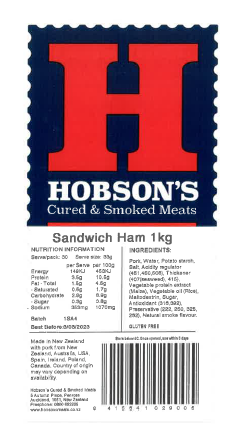
New Zealand – Source and Supply Co Limited is recalling a specific batch of Hobson’s brand Sandwich Ham due to the possible presence of Listeria

| Product identification | |
|---|---|
| Product type | Processed Meat |
| Name of product (size) | Hobson’s brand Sandwich Ham (1kg) |
| Batch marking | 1SA4 |
| Date marking | 3/03/2023 |
| Package size and description | The product is sold in a 1kg vacuum plastic packaging |
| Distribution |
|
| Notes | This recall does not affect any other Hobsons’s brand products. |
Point of sale notice for retailers
If you are a retailer of the product in this recall notice, you need to download a copy of the below Point of sale notice and display it in your store for one month.
Point of sale notice – Hobson’s brand Sandwich Ham [PDF, 75 KB]
Consumer advice
Customers are asked to check the batch and date mark located under the nutrition information panel.
Affected product should not be consumed. There have been no reports of illness, however, if you have consumed any of this product and have any concerns about your health, seek medical advice.
Customers should return the product to their retailer for a full refund.
Who to contact
If you have questions, contact Source and Supply Food Co Limited
- Phone: 09 570 1912
- Address: 5 Autumn Place, Penrose Auckland, 1642
Posted in food contamination, food handler, Food Hazard, Food Hygiene, Food Micro Blog, Food Microbiology, Food Microbiology Blog, Food Microbiology Testing, Food Pathogen, food recall, Food Safety, Food Safety Alert, Food Safety Management, Food Safety Regulations, Food Testing, Listeria, Listeria monocytogenes, MPI
Canada – Fiber Plus Powder: Affected lots may contain the presence of Cronobacter contamination
Summary
Product
Fiber Plus Powder
Issue
Health products – Contamination
Health products – Product quality
What to do
Consult your health care professional if you have any health concerns.
Affected products
Issue
Affected lots may contain the presence of Cronobacter contamination.
What you should do
- Verify if your product is affected.
- Consult your healthcare provider prior to discontinuing use of the affected product(s), or for any health concerns.
- Contact the recalling firm if you have any questions about the recall.
- Report any health product related side effects to Health Canada.
- Report any other health product safety complaints to Health Canada.
Posted in CFIA, Cronobacter sakazakii, food contamination, food handler, Food Hazard, Food Hygiene, Food Inspections, Food Micro Blog, Food Microbiology, Food Microbiology Blog, Food Microbiology Testing, Food Pathogen, food recall, Food Safety, Food Safety Alert, Food Safety Management, Food Safety Regulations, Food Testing, Food Toxin

.