Category Archives: Food Illness

USA – Health Department Probing Possible Foodborne Illness Outbreak In Brooklyn

Patch

Campylobacter kswfoodworld

City health officials are investigating a potential outbreak of campylobacter, a bacterial infection that causes flu-like stomach symptoms.

City health officials are investigating a potential outbreak in Brooklyn of campylobacter, a bacterial infection that causes flu-like stomach symptoms.

Campylobacter is a gastrointestinal bug that can come from eating raw or undercooked poultry or something that comes in contact with it, according to the Centers for Disease Control and Prevention. People can also get it from contact with animals that carry the bacteria and by drinking contaminated water.

In Brooklyn, health officials said approximately 50 cases have been reported in the borough since the start of the month. A spokesperson for the city’s Department of Health and Mental Hygiene (DOHMH) declined to detail which neighborhoods have seen the spike.

USA – 30 cases of Salmonella infection reported in Tahoka

KCBD

TAHOKA, Texas (KCBD) – Thirty cases of Salmonella have been reported in Tahoka as of Oct. 25, 2022, according to Lynn County Judge Mike Braddock. Officials believe they’re all related and could have come from a community fundraiser.

Judge Braddock and the Emergency Management Coordinator for Lynn County believe the bacteria could be from a K9 fundraiser held on Oct. 16, 2022, however, they’re still investigating.

Officials say they do not believe the bacteria is from a restaurant.

During the investigation into the cause, the City of Tahoka tested the water to rule out the possibility the bacteria was in the water system.

USA – Core Outbreak Table – Investigations of Foodborne Illness Outbreaks

FDA

What’s New

  • A new outbreak of E. coli O157:H7 (reference #1121) in a not yet identified product has been added to the table and traceback has been initiated.
  • For the outbreak of Salmonella Litchfield in seafood, (reference #1105), FDA issued an Outbreak Advisory on 10/19/2022.
  • Based on CDC’s epidemiological investigation of two large multistate outbreaks of Cyclospora cayetanensis (reference #1080 and #1084), ill people reported eating a variety of leafy greens before becoming sick. For both investigations, CDC, FDA, and state and local partners conducted epidemiologic and traceback investigations and collected and analyzed product and environmental samples. All samples collected were reported as negative for Cyclospora. Due to the lack of additional detail in the epidemiological data and the absence of supporting evidence collected from traceback and sample collection, FDA could not identify a specific product as the source of either outbreak.
  • For the outbreak of Salmonella Senftenberg (reference #1087) in a not identified product, one additional case was reported, the outbreak has ended, and FDA’s investigation has closed.
  • For the adverse illness event series in frozen food (reference #1076), the outbreak has ended, and the FDA investigation has closed.

Australia – Outbreak of gastro at Canberra doughnut shop believed to be caused by sick worker and poor hand hygiene practices – Norovirus

ABC News

The investigation found the illness was caused by the spread of norovirus, a virus that often causes gastro and is spread through direct contact with an infected person or ingestion of faeces or vomit particles from an infected person.

It found no reports of gastro symptoms from customers in the store, making it unlikely a sick patron was the cause of the outbreak, and also noted food handlers on site did not provide stool samples for testing.

The report stated there was evidence collected on-site “suggestive of faecal contamination”, and the spread of the virus was most likely a result of a worker carrying the virus.

Research -Food Safety Issues Related to Eating In and Eating Out

MDPI

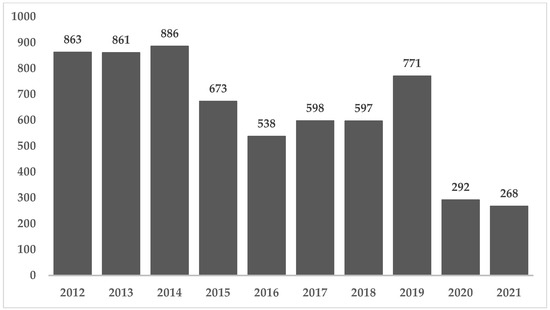
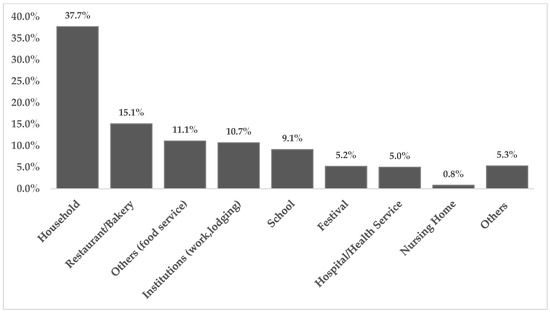
Because of growing urbanization and lack of time to prepare meals at home, eating out or getting food delivered have become common trends for many people. The consumption of food from unknown sources may impose an increased chance of contamination with microbiological hazards, especially if sanitary conditions are not met. We evaluated data from health surveillance agencies and scientific articles on foodborne diseases (FBD) reported internationally according to the exposure sites. We observed that the data are influenced by cultural, political, and socioeconomic differences. For instance, in New Zealand, Australia, United States, Denmark and India, the occurrence of FBD outbreaks was greater from foods prepared in commercial establishments and street vendors than from households. Conversely, in China, countries of the European Union and Brazil, the results are the opposite. Additionally, the pandemic imposed new eating behaviour patterns, increasing delivery services and foods prepared in so-called “Dark Kitchens”. The underreporting and heterogeneity of data among countries prevented a precise conclusion to the question of whether homemade foods are inherently safer than foods prepared out. Nevertheless, a lower level of development in a country influences its sanitation conditions, as well as the number of street food vendors, the search for cheaper foods, and insufficient knowledge of the population on good hygiene practices, which can all increase the chances of FBD cases.

Research – Illnesses Linked to Harmful Algal Blooms

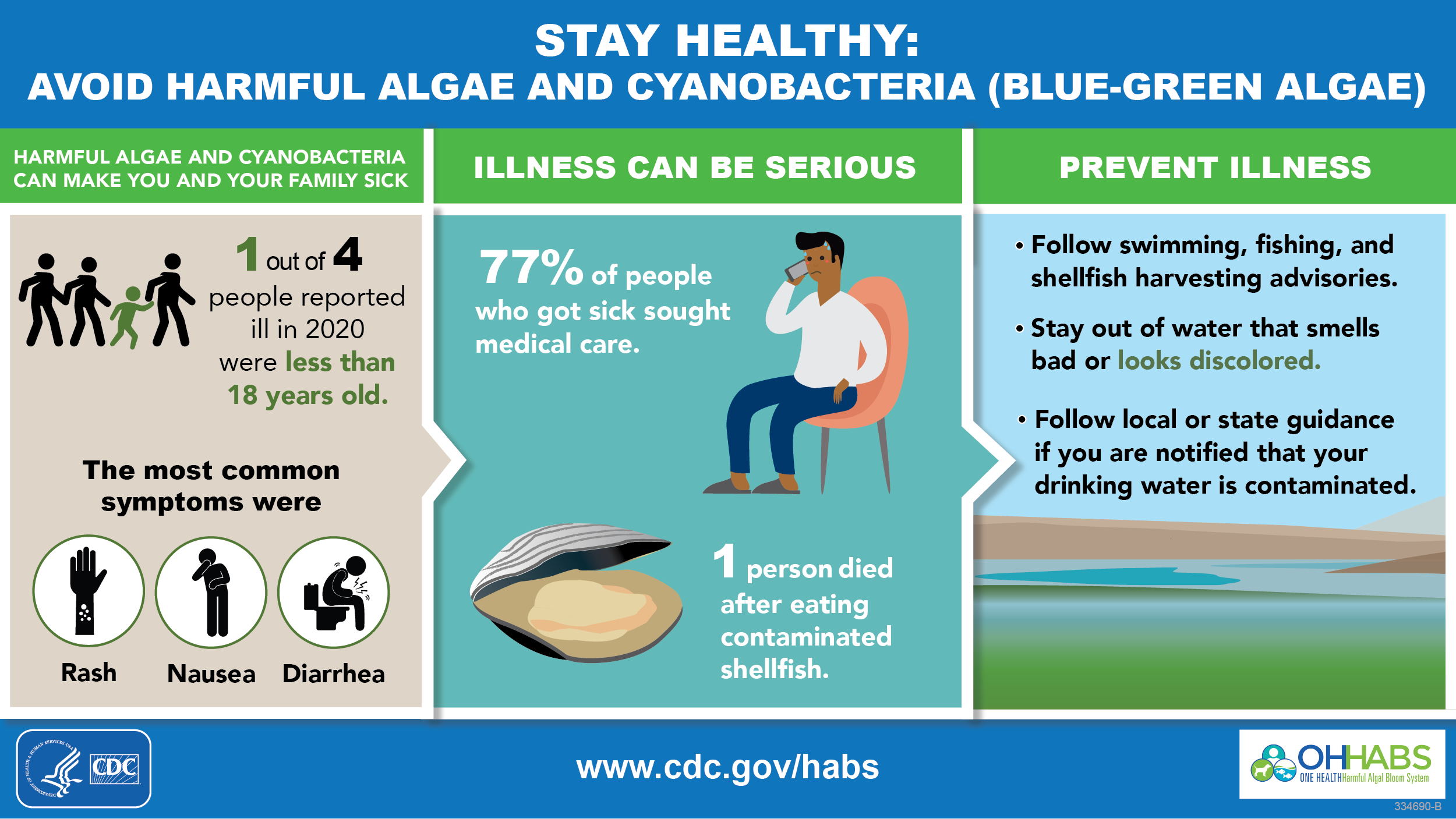
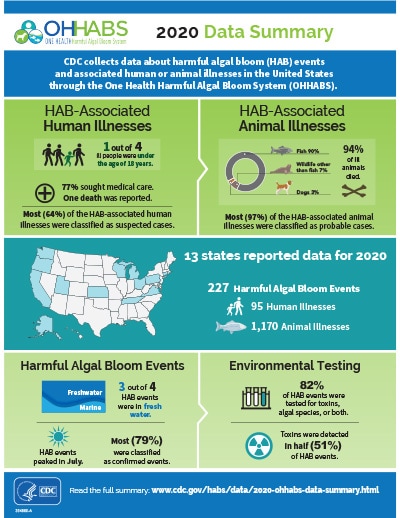
Graphic showing 2020 data about illnesses in people caused by harmful algal blooms

Highlight

  • Thirteen states reported 227 harmful algal blooms (HABs) that resulted in a total of 95 human illnesses and at least 1,170 animal illnesses.
  • The first human death reported in OHHABS was associated with paralytic shellfish poisoning.
  • A HAB event in September killed at least 1,000 fish (carp).
  • 22 human illnesses (23%) were associated with national parks, with 21 illnesses attributed to a single HAB event.

Background

Harmful algal blooms (HABs) that result from the rapid growth of algae or cyanobacteria (sometimes referred to as blue-green algae) in natural waterbodies can harm people, animals, or the environment. HAB events of public health concern are primarily caused by microalgae called diatoms and dinoflagellates, cyanobacteria, and the toxins they can produce. HAB events, which can be intensified by factors such as nutrient pollution and warmer water temperature, can have public health, environmental, and economic impacts.

HABs are a One Health issue—they affect the health of people, animals, and our shared environment. One Health is a collaborative and multi-sectoral approach that involves engagement across disciplines including public health, animal health, and environmental health. Using a One Health approach, CDC collects data about HAB events and associated human or animal illnesses through the One Health Harmful Algal Bloom System (OHHABS) to inform public health prevention efforts.

Within the context of OHHABS, the term HAB event describes the identification of a bloom or the detection of HAB toxins in water or food (i.e., absent a visual bloom). Human illnesses are reported individually. Animal illnesses are reported as single cases of illness or in groups, such as flocks of birds. The reporting system can link HAB event data with human or animal illness data. OHHABS uses standard definitions [PDF – 3 pages] to classify HAB events as suspected or confirmed and human or animal illness as suspected, probable, or confirmed.

OHHABS is available for voluntary reporting by public health agencies and their designated environmental health or animal health partners in the United States, District of Columbia, Federated States of Micronesia, Guam, Marshall Islands, Northern Mariana Islands, Palau, Puerto Rico, and U.S. Virgin Islands. Public health agencies use standard forms to report HAB events, human cases of illness, and animal cases of illness to OHHABS. Public health agencies do not need to submit all three types of forms to participate.

Data collected for HAB events include general information (e.g., observation date), geographic information, water body characteristics (e.g., salinity), observational characteristics (e.g., water color, scum), and laboratory testing. Data collected for cases of illness include general demographic characteristics, exposure information, signs and symptoms, medical care, and health outcomes. OHHABS is a dynamic electronic reporting system; data within individual reports are subject to change over time. Data included in this report are from a specific point in time.


New Zealand – Hepatitis A Outbreak linked to frozen berries jumps to 18.

Food Poison Journal

The Ministry of Health said on Thursday afternoon that the number of confirmed cases linked to the outbreak had grown to 18 in total. Of these, nine (50%) have been hospitalized.

As of Thursday, 14 of the 18 cases have been sequenced to date – all 14 have an identical sequence profile, indicating they likely came from the same source.

Hepatitis A is spread by contact with feces of an infected person. It can be passed on through poor personal hygiene (such as when people don’t wash their hands properly), contaminated food and close personal contact.

All 18 cases reported “significant” consumption of uncooked, imported frozen berries.

Food safety officials have advised that Pams – a New Zealand division of supermarket giant Foodstuffs – was recalling various imported frozen berry products as a precaution, over a possible link to recent cases of the contagious virus in fruit from Serbia.

USA – Outbreak Investigation of Salmonella: Seafood (October 2022)

FDA

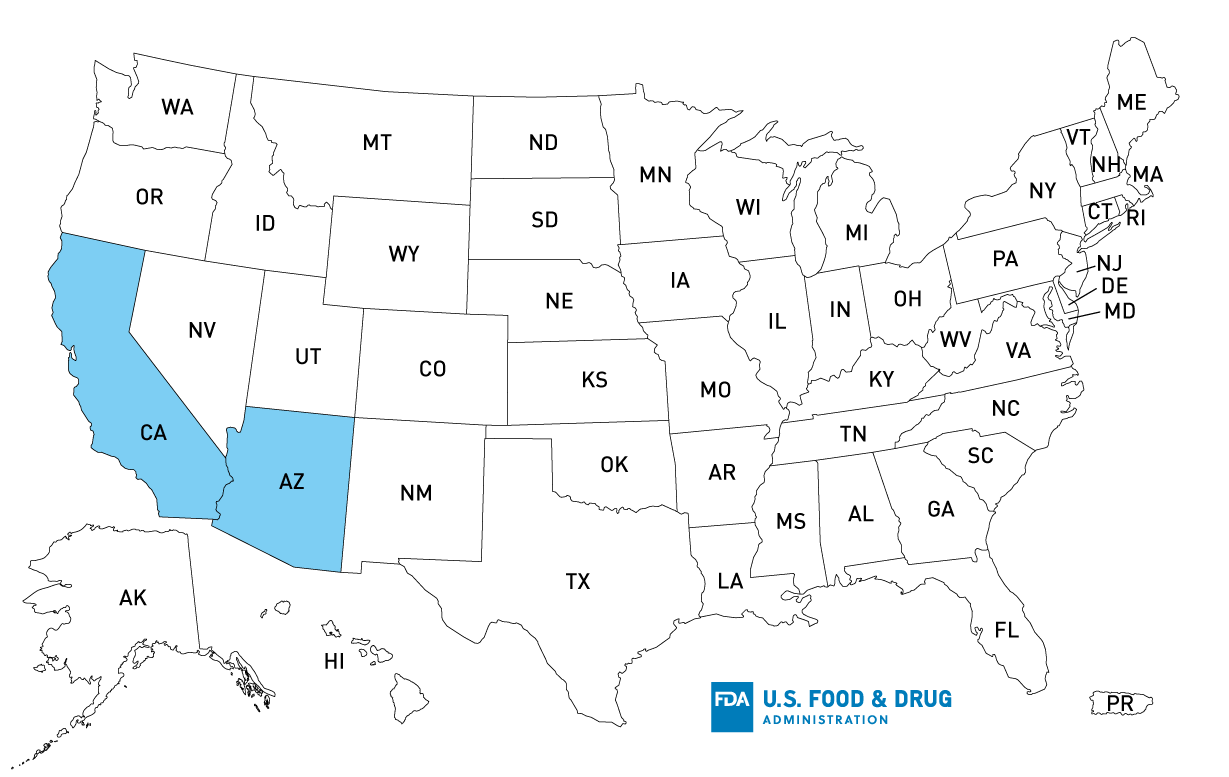
The FDA, along with CDC and state and local partners, is investigating a multistate outbreak of Salmonella Litchfield infections linked to fresh, raw salmon supplied to restaurants in California and Arizona by Mariscos Bahia, Inc.

Based on epidemiologic information provided by CDC and interviews conducted by state and local public health officials, of 16 people interviewed, 12 reported eating sushi, sashimi, or poke. Of those interviewed, 11 people remembered details about the type of fish consumed and 9 report eating raw salmon before getting sick. The FDA’s investigation traced the distribution of fresh, raw salmon back to Mariscos Bahia, Inc.

In addition, the FDA collected an environmental sample that included multiple swabs at Mariscos Bahia, Inc. (Pico Rivera, CA). Multiple environmental swabs collected at the facility are positive for Salmonella and subsequent Whole Genome Sequencing (WGS) analysis is ongoing. The WGS completed to date indicates the Salmonella detected in at least one of the swabs from the facility matches the outbreak strain. While epidemiological evidence indicates that ill people consumed fresh, raw salmon processed at this firm, the presence of Salmonella in the processing environment indicates that additional types of fish processed in the same area of the facility could also be contaminated which includes fresh, raw halibut, Chilean seabass, tuna, and swordfish. Salmon, halibut, Chilean seabass, tuna, or swordfish processed in Marisco Bahia Inc.’s Pico Rivera, CA, facility could have also been sent to the Mariscos Bahia, Inc. facilities in Phoenix, AZ and then sent to restaurants.

The firm initiated a voluntary recall on October 20, 2022. As a result, the firm has contacted direct customers who received recalled product. A full list of recalled products is below.

The FDA’s investigation is ongoing. Updates to this advisory will be provided as they become available.

Recommendation

According to Mariscos Bahia, Inc., seafood was only sold directly to restaurants in California and Arizona and would not be available for purchase by consumers in stores.

Restaurants should check with their suppliers and not sell or serve recalled salmon, halibut, Chilean seabass, tuna, or swordfish received fresh, not frozen, from Mariscos Bahia, Inc. (Pico Rivera, CA, and Phoenix, AZ) on or after June 14, 2022. If restaurants received these fish and then froze it, they should not sell or serve it. Restaurants should also be sure to wash and sanitize locations where these fish from Mariscos Bahia, Inc. were stored or prepared.


Recalled Products

Mariscos Bahia, Inc. voluntarily recalled the following list of fresh (not frozen) fish. The firm began shipping recalled product on June 14, 2022:

  • Fresh Salmon Fillet
  • Fresh Deep Skin Salmon Fillet
  • Fresh Salmon Portions
  • Chilean Seabass (Fillet and Portions)
  • Halibut (Fillet and Portions)
  • Tuna (Fillet and Loin)
  • Swordfish (Loin, Fillet, and Wheel)

Map of U.S. Distribution

Map of U.S. Distribution

Case Count Map Provided by CDC

Salmon Outbreak of Salmonella - CDC Case Count Map as of October 19, 2022

Case Counts

Total Illnesses: 33
Hospitalizations: 13
Deaths: 0
Last illness onset: September 18, 2022
States with Cases: AZ (11), CA (21), IL (1)
Product Distribution*:  AZ, CA
*Distribution has been confirmed for states listed, but product could have been distributed further, reaching additional states

USA – Kerry’s former quality assurance director pleads guilty to Honey Smack outbreak – Salmonella

Food Safety News

A fast-moving, but somewhat secretive federal prosecution has extracted guilty pleas for three misdemeanors from the quality assurance director for a food manufacturer working for the Kellogg Company.

The former quality assurance director pleaded guilty on Oct. 21 to three misdemeanor counts of Introducing adulterated food into Interstate Commerce. It was part of a plea deal that is among a half dozen documents in the case that are sealed, and therefore not available for public viewing. The federal Magistrate for the Central District of Illinois, Jonathan P. Hawley, has scheduled sentencing for Jan. 30. 2023.

The charges stem from the multistate outbreak of Salmonella Mbandaka infections from Kellogg’s Honey Smacks cereal, which sickened 135 people in 35 states in 2018. The infections required hospitalizations for 34 patients. The Kellogg Company recalled Honey Smacks cereal on June 14, 2018.

USA – Salmonella outbreak linked to Chili’s South Indian Cuisine in Seattle

Food Poison Journal

Food Poisoning Salmonella

Summary

Public Health is investigating an outbreak of salmonellosis (caused by Salmonella bacteria) associated with Chili’s South Indian Cuisine in Seattle. The investigation is ongoing. At this time, we have not identified how Salmonella was spread within the restaurant. This is not uncommon because Salmonella can spread through contaminated food items, environmental surfaces, and from person to person.

Illnesses

Since October 6, 2022, three people from two separate meal parties reported becoming ill after consuming food from Chili’s South Indian Cuisine in Seattle on September 17, 2022 and September 23, 2022. All the people developed one or more symptoms consistent with salmonellosis, including diarrhea, abdominal cramping, nausea, and vomiting. We have not identified any ill employees.

Public Health actions

Public Health conducted interviews with the people ill with salmonellosis to identify potential common exposures and found that they all became ill after eating food from Chili’s South Indian Cuisine.

Environmental Health Investigators visited the restaurant on October 19, 2022. Investigators identified sanitizing issues, potential cross contamination, inadequate hand washing, and lack of proper access to handwashing stations. Corrective actions were taken during the inspection. Environmental Health Investigators will revisit the facility within 2 weeks to ensure proper compliance with food handling practices.

No ill employees were identified at the time of inspection. Investigators reviewed with restaurant management the requirement that ill staff are not allowed to work until they are symptom-free. Investigators provided education about preventing the spread of Salmonella – including preventing cross contamination, proper cooling methods, sanitizing procedures and handwashing.

Laboratory testing

Two of the cases have confirmatory testing indicating infections with Salmonella via culture. Both cases have the same strain of Salmonella, based on genetic fingerprinting (whole genome sequencing or WGS) at the Washington State Public Health Laboratory. The third case did not have confirmatory testing but had symptoms consistent with Salmonellosis and is epidemiologically linked.