Category Archives: Food Hygiene

Sweden – Yersinia (Sweden, January 2021–) – Increase in cases of yersinia infection.

Folkhalsomyndigheten#

kswfoodworld.com

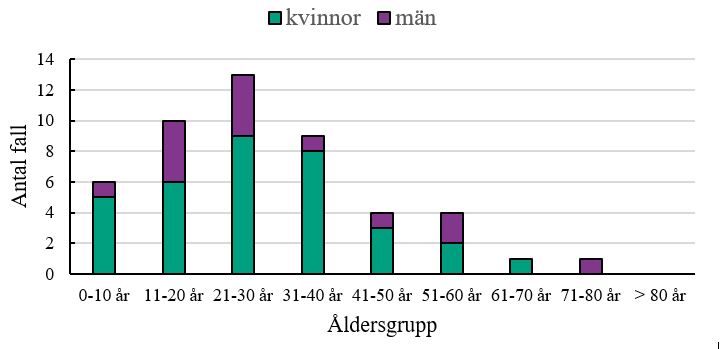
Since the second week of January, more than twice as many people have contracted yersinia infection as during the same period in the immediately preceding years. An increased number of patients has mainly been observed in the regions of Stockholm, Västra Götaland and Halland, which together account for 33 of the total of 48 disease cases reported since 11 January. Of the patients, a majority are aged 11-40 and most are women (figure). In the ongoing investigation, the Swedish Public Health Agency collaborates with the infection control units in the affected regions to try to identify the source of the infection through interviews of the cases and surveys.

As part of the outbreak investigation, the Swedish Public Health Agency also collects yersinia isolates from disease cases in the affected regions. The isolates are typed using whole genome sequencing (analysis of the genome of the bacterium) to clarify who has been affected by a common source of infection.

Figure. Distribution by age and sex of persons reported to be infected with yersinia infection 11 January – 2 February 2021.

Figure.  Distribution by age and sex of persons reported to be infected with yersinia infection 11 January – 2 February 2021.

USA – J&J Distributing Recalls Ready-to-Eat Meat and Poultry Salads and Wrap Products Due to Possible Listeria Contamination

FSIS USDA

WASHINGTON, Feb. 26, 2021 – J&J Distributing, a St. Paul, Minn., establishment, is recalling approximately 33 pounds of ready-to-eat meat and poultry salads and wrap products that may be adulterated with Listeria monocytogenes (Lm), the U.S. Department of Agriculture’s Food Safety and Inspection Service (FSIS) announced today.

The fully cooked, not shelf stable salads and wraps were produced and packaged on Feb. 23, 2021 and list a “Sell-by” date of Feb. 28, 2021 on the packaging label. The following products are subject to recall: [View Labels (PDF Only)]:

  • 9-oz. plastic container of “COBB SALAD” on the product label.
  • 10-oz. plastic container of “Because life is delicious. tastebuds Bacon Lettuce Avocado Tomato Wrap” on the label.
  • 10-oz. plastic container of “Because life is delicious. tastebuds Turkey Ranch Club Wrap” on the label.
  • 10-oz. plastic container of “Because life is delicious. tastebuds Chicken Caesar Wrap” on the label.
  • 12-oz. plastic container of “Because life is delicious. tastebuds Southwest Style Chicken Salad” on the label.
  • 12-oz. plastic container of “Southwest Style Chicken Salad” on the label.

The products subject to recall bear establishment number “EST. 38450” inside the USDA mark of inspection. These items were shipped to retail locations in Minnesota and Wisconsin.

The problem was discovered when the firm received confirmation from their third-party lab that a product contact surface sample returned positive for Lm.

There have been no confirmed reports of adverse reactions due to consumption of these products. Anyone concerned about an injury or illness should contact a healthcare provider.

Consumption of food contaminated with Lm can cause listeriosis, a serious infection that primarily affects older adults, persons with weakened immune systems, and pregnant women and their newborns. Less commonly, persons outside these risk groups are affected.

Listeriosis can cause fever, muscle aches, headache, stiff neck, confusion, loss of balance and convulsions sometimes preceded by diarrhea or other gastrointestinal symptoms. An invasive infection spreads beyond the gastrointestinal tract. In pregnant women, the infection can cause miscarriages, stillbirths, premature delivery, or life-threatening infection of the newborn. In addition, serious and sometimes fatal infections in older adults and persons with weakened immune systems. Listeriosis is treated with antibiotics. Persons in the higher-risk categories who experience flu-like symptoms within two months after eating contaminated food should seek medical care and tell the health care provider about eating the contaminated food.

FSIS is concerned that some product may be in consumers’ refrigerators. Consumers who have purchased these products are urged not to consume them. These products should be thrown away or returned to the place of purchase.

FSIS routinely conducts recall effectiveness checks to verify recalling firms notify their customers of the recall and that steps are taken to make certain that the product is no longer available to consumers. When available, the retail distribution list(s) will be posted on the FSIS website at www.fsis.usda.gov/recalls.

Media and consumers with questions regarding the recall can contact Jason Jaynes, J&J Distributing Owner, at (651) 292-3822.

Consumers with food safety questions can call the toll-free USDA Meat and Poultry Hotline at 1-888-MPHotline (1-888-674-6854) or live chat via Ask USDA from 10 a.m. to 6 p.m. (Eastern Time) Monday through Friday. Consumers can also browse food safety messages at Ask USDA or send a question via email to MPHotline@usda.gov. For consumers that need to report a problem with a meat, poultry, or egg product, the online Electronic Consumer Complaint Monitoring System can be accessed 24 hours a day at https://foodcomplaint.fsis.usda.gov/eCCF/

USA – Outbreak Investigation of Listeria monocytogenes – Hispanic-style Fresh and Soft Cheeses (February 2021)

FDA

The FDA, along with CDC and state and local partners, are investigating a multistate outbreak of Listeria monocytogenes infections linked to queso fresco cheeses made by El Abuelito Cheese, Inc.

As part of this outbreak investigation, the Connecticut Department of Public Health collected product samples of El Abuelito-brand Hispanic-style fresh and soft cheeses from a store where a sick person bought cheeses. On 2/19/2021, Whole Genome Sequencing (WGS) analysis conducted by the Connecticut State Laboratory determined that the Listeria monocytogenes found in the samples is a match to the outbreak strain. At this time, El Abuelito Cheese, Inc. has ceased production and distribution of all products processed or handled in the same facility as the Queso Fresco.

The FDA has initiated an on-site inspection of the facility. On 2/24/2021, the firm notified customers via letter that it was expanding the recall announced on 2/19/2021. The expanded recall includes El Abuelito, Rio Grande, and Rio Lindo brand queso frescos. It also includes El Abuelito-brand Quesillo (Oaxaca, string cheese), and Requeson (Ricotta) cheeses that are manufactured or handled in the same facility as the Queso Fresco products linked to this outbreak.

At this time, FDA is recommending that in addition to the recalled queso fresco cheeses, consumers, restaurants, and retailers should not eat, sell, or serve any El Abuelito-brand Quesillo (Oaxaca, string cheese) or Requeson (Ricotta) cheeses.

The FDA’s recommendation does not include any additional products with the El Abuelito Cheese, Inc. label because they are not manufactured or handled in the same facility; this includes El Abuelito Meat, Inc., Panela cheese, cotija cheese, mole, crema centroamericana, and crema mexicana. Updates will be provided as they become available.

Recommendation

Consumers, restaurants, and retailers should not eat, sell, or serve any recalled El Abuelito, Rio Grande, or Rio Lindo brand queso fresco cheeses. Additionally, they should not eat, sell, or serve any El Abuelito brand Quesillo (Oaxaca, string cheese) or Requeson (Ricotta) cheeses.

FDA recommends that anyone who purchased or received any El Abuelito brand Quesillo, Requeson, or recalled Queso Fresco cheeses use extra vigilance in cleaning and sanitizing any surfaces and containers that may have come in contact with these products to reduce the risk of cross-contamination. Listeria can survive in refrigerated temperatures and can easily spread to other foods and surfaces.

If you are at higher risk for severe Listeria illness (if you are pregnant, aged 65 or older, or have a weakened immune system due to certain medical conditions or treatments) do not eat any recalled El Abuelito, Rio Grande, or Rio Lindo brand Queso Fresco cheeses and do not eat any brand of quesillo or requeson cheeses until we learn more about whether other brands of cheeses may be affected.

  • Ask your retailer if any queso fresco cheese you buy is supplied by El Abuelito. If you are unable to obtain an answer, do not buy it and throw away the queso fresco cheese you have at home.
  • Call your healthcare provider right away if you have these symptoms after eating any queso fresco, quesillo, or requeson cheeses:
    • Pregnant people typically experience only fever, fatigue, and muscle aches. However, Listeria infection during pregnancy can lead to miscarriage, stillbirth, premature delivery, or life-threatening infection of the newborn.
    • People who are not pregnant may experience headache, stiff neck, confusion, loss of balance, and convulsions, in addition to fever and muscle aches.
  • Follow these five steps to clean your refrigerator, containers, and surfaces that may have touched the cheeses. Listeria can survive in the refrigerator and can easily spread to other foods and surfaces.

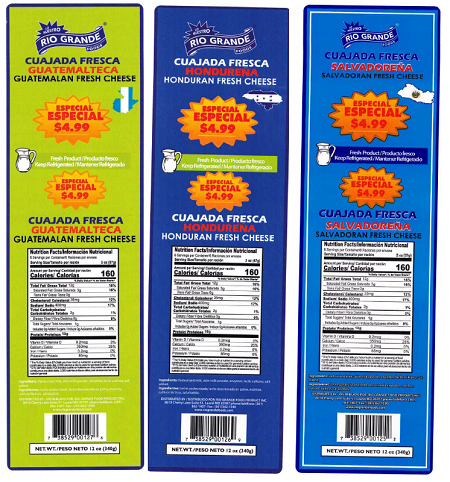
Product Images

Sample Product Label from the Outbreak Investigation of Listeria monocytogenes in Hispanic-style Fresh and Soft Cheeses (February 2021) - Rio Grande
Sample Product Label from the Outbreak Investigation of Listeria monocytogenes in Hispanic-style Fresh and Soft Cheeses (February 2021) - Rio Lindo
Sample Product Label from the Outbreak Investigation of Listeria monocytogenes in Hispanic-style Fresh and Soft Cheeses (February 2021) - El Abuelito
Sample Product Label from the Outbreak Investigation of Listeria monocytogenes in Hispanic-style Fresh and Soft Cheeses (February 2021) - Chirilagua, Yorito

Recall Information

On 2/24/2021, the firm notified customers via letter that it was expanding the recall of El Abuelito, Rio Grande, and Rio Lindo brand queso frescos, which was announced on 2/19/2021, to include El Abuelito-brand Quesillo (Oaxaca, string cheese) and Requeson (Ricotta) cheeses. These additional products were manufactured or handled in the same facility as the contaminated Queso Fresco products linked to this outbreak.

At this time, FDA is recommending that in addition to the recalled queso fresco cheeses, consumers, restaurants, and retailers should not eat, sell, or serve any El Abuelito-brand Quesillo (Oaxaca, string cheese) or Requeson (Ricotta) cheeses.

The FDA’s recommendation does not include any additional products with the El Abuelito Cheese, Inc. label because they are not manufactured or handled in the same facility; this includes El Abuelito Meat, Inc., Panela cheese, cotija cheese, mole, crema centroamericana, and crema mexicana. Updates will be provided as they become available.

FDA has posted a list of retailers that may have received Hispanic-styles cheeses from the El Abuelito Cheese, Inc. facility in Paterson N.J.  It is possible that this list may not include all retailers who have received these cheeses, however, this list represents the best information currently available to the FDA.

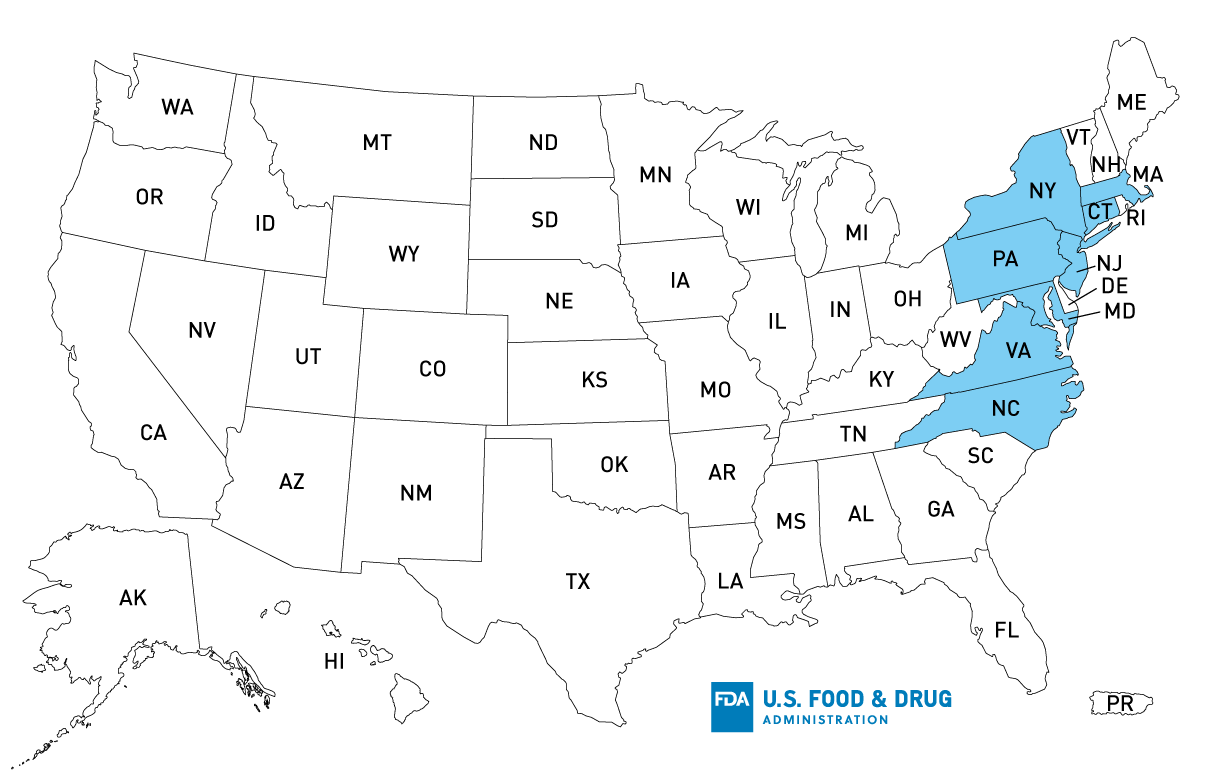
Map of U.S. Distribution of Recalled El Abuelito Queso Fresco

U.S. Distribution of Recalled El Abuelito Queso Fresco

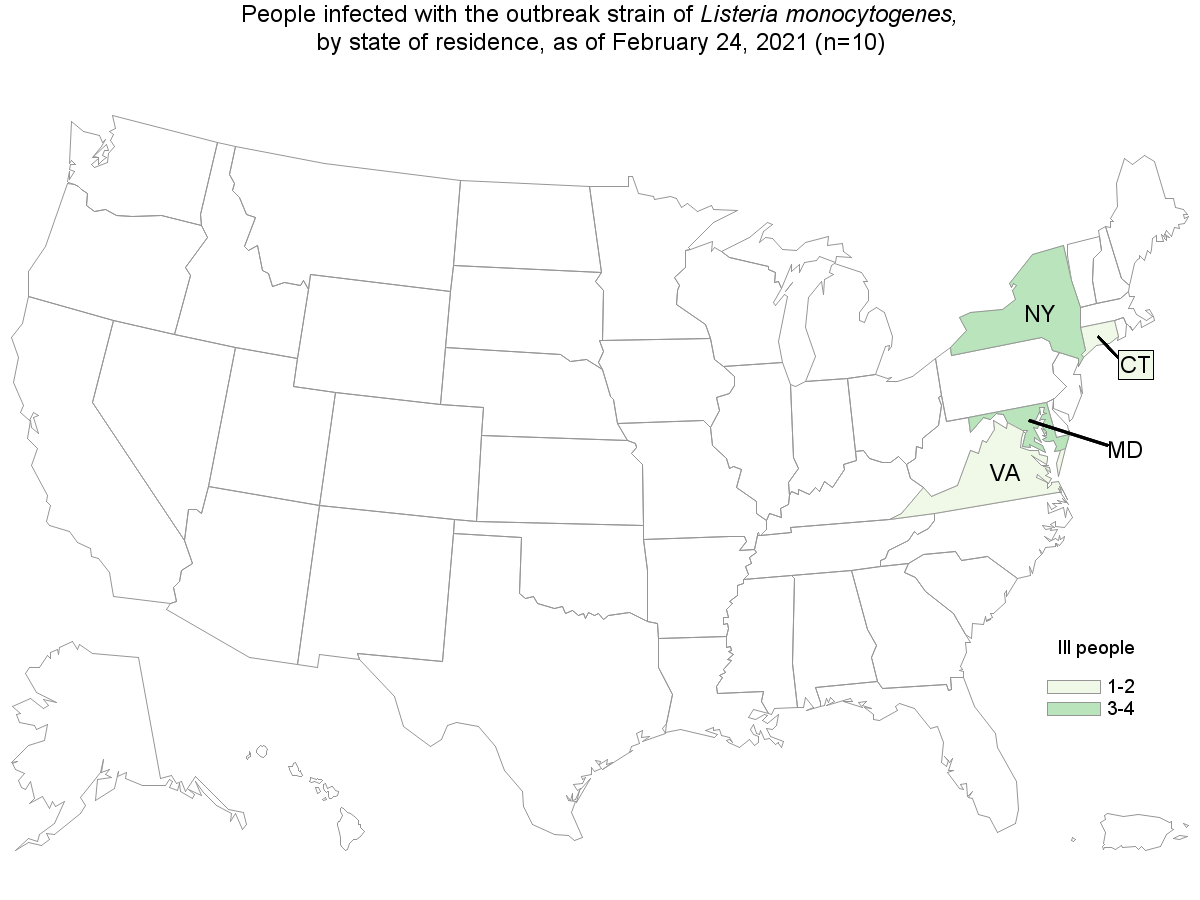
Case Count Map Provided by CDC

CDC Case Count Map for the Outbreak Investigation of Listeria monocytogenes in Hispanic-style Fresh and Soft Cheeses - 2/24/2021

Case Counts

Total Illnesses: 10
Hospitalizations: 9
Deaths: 0
Last Illness Date: 2/9/2021
States with Cases: CT (1), MD (4), NY (4), and VA (1)
Product Distribution*: CT, MA, MD, NC, NJ, NY, PA, VA
*States with confirmed distribution; product could have been distributed further

France – Product recall: Grated Comté from Les Croisés brand – Listeria monocytogenes

Oulah

Product recall: Grated Comté from Les Croisés brand

ENCOUNTERED PROBLEM

Presence of Listeria monocytogens

PROPOSED SOLUTION

People who may have this product are asked not to consume it and to return it to the point of sale where it was purchased.

People who have consumed this product and who present with fever, isolated or accompanied by headaches, are invited to consult their attending physician, notifying him of this consumption.
Pregnant women should pay special attention to these symptoms, as well as immunocompromised people and the elderly. These symptoms may suggest listeriosis, a disease that can be serious and can take up to eight weeks to incubate.

FURTHER INFORMATION

▸ Barcode
3564706619692

▸ Packaging
130g

▸ DDM
04/16/21

▸ Stamp
FR 25 601 003 CE

▸ Marketing
This product was marketed in the Self-Service department from 02/23/21.

▸ Consumer service contact
0 800 86 52 86 Service and free call

▸ Source
https://www.e.leclerc/

Research – Outbreak of ceftriaxone-resistant Salmonella enterica serotype Typhi attributed to eating chicken at hotel X, Tiruchirappalli, India, 2018

IJID Online

Background: Third-generation cephalosporin is widely used for typhoid treatment. In May 2018, India’s National Centre for Disease Control based Antimicrobial resistance surveillance network notified through Tamil Nadu State Surveillance Unit about clustering of ceftriaxone-resistant Salmonella enterica serotype Typhi cases in Tiruchirappalli city, Central Tamil Nadu. Team led by State public health department investigated to identify risk factors.

Conclusion: The cluster of ceftriaxone-resistant Salmonella Typhi was due to eating chicken gravy at hotel X in central Tamil Nadu. We recommended proper processing of chicken and continuing surveillance for ceftriaxone-resistant.

Research – Case–control study of gastro-intestinal outbreak in a rural village, Philippines – 2017

IJID Online

On March 21, 2017, field investigating team was sent to Cayapa Village, Abra, Philippines due to an increasing cases of foodborne illness. An epidemiologic investigation was conducted to verify the diagnosis, establish existence of outbreak, identify risk factors, and recommend control and prevention measures.

The epidemic curve indicates a point source outbreak of gastrointestinal Anthrax. We found valid statistical and temporal association of eating by-product of dead water buffalo and gastrointestinal Anthrax. Though, bacterial isolation were both negative for human specimen and environmental sample, all clinical manifestations were consistent with Bacillus anthracis rather than other foodborne bacterial pathogens. Hence, we conducted massive information education campaign sick or dead animal by-product should not be sold or eaten and properly handled and disposed.

India – Uttar Pradesh: Over 40 hospitalised due to food poisoning after having meal at event in Sitapur

Times Now News

Lucknow: Over 40 people took ill after consuming food at an event in Sitapur district of Uttar Pradesh. Subsequently, they were taken to a hospital for treatment.

“Around 40-50 people are admitted to the hospital after they had a meal at an event in Mahmudabad,” an official said.

After having food at the event in Sitapur’s Mahmudabad town, the health of the people worsened, following which they were rushed to a hospital for food poisoning treatment.

Belgium – Apple juice (3l) of the Dupigny brand – Patulin

AFSCA

Aflatoxin

Image CDC

Farm of Assonleville recalled
Product: Apple juice (3l) of the Dupigny brand.
Problem: too high patulin content.

In agreement with the AFSCA, the Ferme d’Assonleville is withdrawing the product Apple juice (3l) of the Dupigny brand from sale and is recalling it to consumers. The product contains too high a patulin content.

The Ferme d’Assonleville asks its customers not to consume this product and to contact the farm of Assonleville at info@pressoir.net mentioning the quantity purchased and attaching a photo of the products.

Despite our vigilance and the steps taken, 6 pouch-ups of 3L were sold to consumers in 1 point of sale.

Product description

– Product name: Apple juice
– Brand: DUPIGNY
– Date of minimum durability (DDM) (“
Best before (or end)”) : 07/26/2022 – Lot number: 04B21JOP – 00
– Sales period: from 02/15/2021 to 23 / 02/2021
– Type of packaging: Pouch Up 3l
– Weight: 3l

The product has been distributed by the Proxy Ferrières store (Rue Pré du Fa 6a, 4190 Ferrières).

For any further information , contact:
La ferme d’Assonleville with email: info@pressoir.net

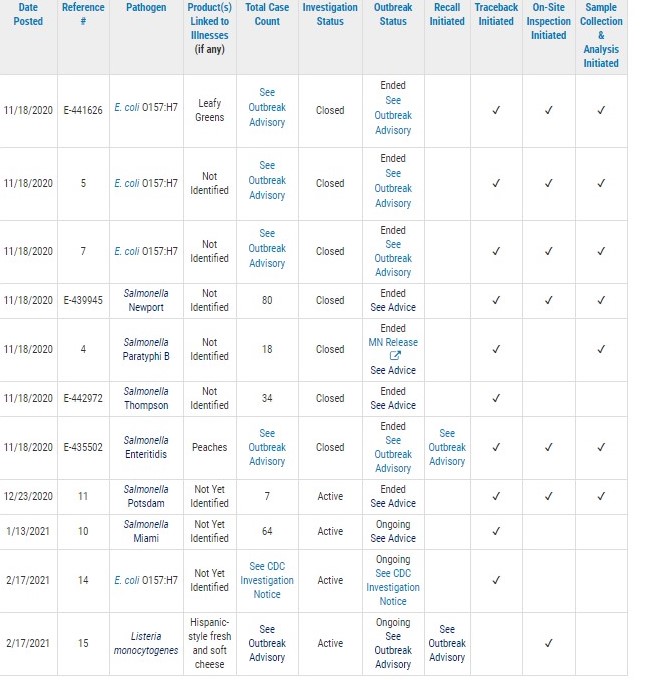
USA – CORE Response Teams – Update

FDA

000

Ireland – Recall of a Batch of SFC Chicken Poppets Due to Presence of Salmonella

FSAI

Recall of a Batch of SFC Chicken Poppets Due to Presence of Salmonella

Friday, 26 February 2021

Summary
Category 1: For Action
Alert Notification: 2021.20
Product: The Original SFC Chicken Poppets, pack size:190g
Batch Code: Best before date: 28.02.2022
Country Of Origin: United Kingdom

Message:

SFC is recalling the above batch of its Chicken Poppets due to the detection of Salmonella. Point-of-sale recall notices will be displayed in Tesco stores.

Nature Of Danger:

People infected with Salmonella typically develop symptoms between 12 and 36 hours after infection, but this can range between 6 and 72 hours.  The most common symptom is diarrhoea, which can sometimes be bloody.  Other symptoms may include fever, headache and abdominal cramps.  The illness usually lasts 4 to 7 days. Diarrhoea can occasionally be severe enough to require hospital admission. The elderly, infants, and those with impaired immune systems are more likely to have a severe illness.

Action Required:

Consumers:

Consumers are advised not to eat the implicated batch.

SFC Chicken Poppets