Category Archives: Food Hygiene

Luxembourg – REMINDER: DELIFIN BRAND FINE SLICED ​​SAUSAGE 150 G – Salmonella

SAP

The Luxembourg food safety authorities recall the following product:

Source: Aldi

Last name

Thin sliced ​​sausage

Mark

Delifin

Unit

150 g

Use by date (DLC)

03/14/2021; 03/17/2021

Lot

 GUS1647021027; GUS1647021032

Danger  : Presence of Salmonella

Salmonella can cause symptoms such as nausea, vomiting, abdominal cramps, diarrhea, fever and headache within 6 to 72 hours after consumption. These symptoms may be aggravated in young children, immunocompromised individuals and the elderly. People who have consumed these products and who have these symptoms are advised to consult a doctor and notify him of this consumption.


Sale in Luxembourg by: Aldi


Switzerland – Public warning: Listerias detected in Anna’s Best Farmer salad, on sale at Migros

BLV

Bern, 02.03.2021 – Internal controls have revealed the presence of listerias in corn used in the composition of Anna’s Best Saladbowl Farmer. As a health risk cannot be excluded, the Federal Office for Food Safety and Veterinary Affairs (FSVO) recommends that the population not consume this product. Migros immediately removed it from its shelves and ordered a recall.

How can this product be dangerous?

An infection with the bacteria Listeria monocytogenes most often causes mild symptoms, or even no symptoms at all, in people with an intact immune system. People who are immunocompromised can experience a variety of serious symptoms, the outcome of which can be fatal in certain circumstances. During pregnancy, an infection with listerias can lead to miscarriage or cause sepsis or meningitis in the child when it is born.

What is the affected product?

Anna’s Best Saladbowl Farmer

  •  Article No: 130331100000 
  • Use-by dates and batch number: 02.03.2021 (L11 / 26.02.21) and 04.03.2021 (L11 / 28.02.21)
  • On sale in Migros Vaud, Migros Valais, Migros Geneva cooperatives

What should affected consumers do?

FSVO recommends not to consume this product.


Address for sending questions

Consumers:
Federal Office for Food Safety and Veterinary Affairs (
FSVO ) Infodesk
Tel. 058 463 30 33
info@blv.admin.ch

Journalists:
Federal Office for Food Safety and Veterinary Affairs (FSVO)
Media Service
Tel. 058 463 78 98
media@blv.admin.ch


Lebanon – Lebanon Is Experiencing A Foodborne Salmonella Outbreak

The 961

Zouhair Berro, head of the Consumer Protection Association, revealed to the public through VDL radio (100.5) that, due to Lebanon‘s inadequate implementation of the food safety law, salmonella bacteria has increased tremendously in the food services.

In 2016, the national food safety authority law was approved by the parliament. It came at a time when the Lebanese public and the international community began questioning how the country is operating without ensuring a law that covers food safety.

However, Lebanese agricultural producers and merchants continue to benefit from the loose enforcement of the law and regulations to seek the highest profit possible, while risking the health of the consumers.

Meanwhile, a program or a policy dealing with food safety in Lebanon is barely addressed by Lebanese officials, even though multiple warehouses have been raided for selling expired food.

USA – Outbreak Investigation of Listeria monocytogenes – Hispanic-style Fresh and Soft Cheeses (February 2021) – Update

FDA

Case Counts

Total Illnesses: 11
Hospitalizations: 10
Deaths: 1
Last Illness Date: 2/14/2021
States with Cases: CT (1), MD (4), NY (4), and VA (2)
Product Distribution*: CT, GA, IL, IN, MA, MD, NC, NJ, NY, PA, VA
*States with confirmed distribution; product could have been distributed further

Canada – Notice not to consume minced meat sold by Supermarché Perrier et Martel inc. (Metro Plus) – STEC E.coli

MAPAQ

MAPAQ, in collaboration with Supermarché Perrier et Martel inc. (Metro Plus), located at 6155, boulevard Arthur-Sauvé, in Laval , is warning the population not to consume the products indicated in the table below, as these foods are likely to contain the bacterium E. coli which produces shigatoxins .

Product name Formats Targeted lot
“Lean ground grain veal. “
Variable weight
All formats

Units sold bearing the following packaging date: 2021FE15

“Lean ax pork”
“Minced beef / pork / veal”

The products that are the subject of this advisory were only offered for sale on February 15, 2021 , and only at the location identified above. They were placed on a polystyrene tray and covered with plastic wrap. They were sold refrigerated.

The operator is voluntarily recalling the products in question. He agreed with MAPAQ to disseminate this warning as a precautionary measure. People who have any of these products in their possession are advised not to consume it. They must return it to the establishment where they bought it or throw it away.

It should be noted that proper cooking of meat destroys the E. coli bacteria in all cases. Preparing ready-made meals, such as spaghetti sauce, shepherd’s pie, or meat pie, requires a fairly long cooking time and a temperature high enough to destroy the bacteria.

It should be noted that no case of illness associated with the consumption of these foods has been reported to MAPAQ so far.

Food contaminated with the shigatoxin- producing E. coli bacteria may not look or smell spoiled, but eating these foods can cause serious illness or death. They are manifested by diarrhea and abdominal pain, often accompanied by blood in the stool. These symptoms usually appear two to ten days after eating a contaminated food. Nausea, vomiting and sometimes fever can be associated with it. When these symptoms appear, it is strongly recommended to consult a doctor without delay. Most symptoms go away within five to ten days.

Additional information

Media relations
Communications
Department Ministry of Agriculture, Fisheries
and Food
Tel. : 418 380-2100, extension 3512
www.mapaq.gouv.qc.ca

Product labels

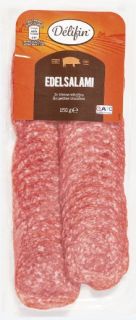
Belgium – Fine sliced ​​sausage 150g – Salmonella – Update of the product recall of 02/25/2021

AFSCA

03/02/2021 (Update of the product recall of 02/25/2021)
Recall of Aldi
Product: Fine sliced ​​sausage 150g.
Problem: possible presence of Salmonella.

PRODUCT DESCRIPTION

Name: Fine sliced ​​sausage 150g
EAN code: 270 6001 8
Brand: Délifin
Type of packaging: plastic
Batch codes and expiration dates: (update)

Lot codes Expiration dates
GUS164702 (1) 027 03/14/2021
GUS164702 (1) 029 03/14/2021
GUS164702 (1) 032 03/17/2021
GUS164702 (1) 034 03/17/2021
GUS164702 (1) 035 03/17/2021
GUS164702 (1) 039 03/20/2021
GUS164702 (1) 040 03/20/2021
GUS164702 (1) 041 03/20/2021
GUS164702 (1) 042 03/20/2021
GUS164702 (1) 043 21.03.2021

Points of sale: ALDI stores

NATURE OF THE PROBLEM

Salmonella has been detected in the product mentioned above.

ALDI has therefore decided, in consultation with the AFSCA, to withdraw this product from the market and to recall it to consumers.

Other ALDI products are not affected by this product recall.

DESCRIPTION OF THE RISK

Possible symptoms of salmonella poisoning are fever, abdominal cramps and diarrhea, within 12 to 48 hours of consuming the contaminated food. The risk of infection is higher in the elderly, children, pregnant women and people with weakened immune systems.

People who have consumed these products and who present this type of symptoms are invited to consult their doctor without delay, notifying him of this consumption.

ADVICE FOR CONSUMERS

Please do not consume these products and bring them back to the store.
The returned products will be reimbursed (also without receipt).
For any further information, you can contact ALDI via serviceclients@aldi.be .

USA – Washington State dairy warns consumers over E. coli in retail raw milk

Food Safety News

Tenino, WA’s Cozy Vale Creamery is advising consumers to discontinue consumption of their retail raw milk and cream products with the best by dates of 3-1 through 3-9 and dispose of or return it to the place of purchase for a full refund. These products, which were bottled in one gallon, half-gallon, quart, and pint containers, were sold to customers, including retail stores, in Western Washington.
The advisory was initiated after routine sampling conducted by the Washington State Department of Agriculture (WSDA) revealed the presence of toxin-producing E. coli in retail raw whole milk and cream dated 3-1 (March 1). Cozy Vale Creamery and WSDA continue to work jointly to address the source of the problem.

Germany – Resurgence of an international hepatitis A outbreak linked to imported frozen strawberries, Germany, 2018 to 2020

Eurosurveillance

Hepatitis A virus (HAV) causes acute inflammatory hepatic infections in humans. Transmission occurs primarily via the faecal-oral route through contaminated food or water or person-to-person spread [1]. While the disease is often asymptomatic or mild in younger children, it can cause debilitating symptoms and fulminant hepatitis in adults. After an abrupt onset with fever, malaise and abdominal discomfort, jaundice is the predominant symptom. The average incubation period is 28 to 30 days (range: 15–50) with maximum infectivity during the latter half of the incubation period, i.e. while being asymptomatic [1]. HAV retains infectivity after freezing and can persist in the environment, being able to withstand food-production processes routinely used to inactivate bacterial pathogens [2].

Direct or indirect detection of HAV infection in humans is notifiable in Germany to local public health authorities (LPHA), which transmit case reports electronically via the state level to the national public health institute (Robert Koch Institute, RKI). The case definition of hepatitis A in place for surveillance purposes in Germany is: a symptomatic disease (defined as one or more of the following: fever, abdominal discomfort, increase of serum transaminases, jaundice), plus laboratory confirmation (i.e. detection of HAV nucleic acid or HAV-specific IgM or a distinct increase of HAV-IgG concentrations). Symptomatic cases with an epidemiological link to a laboratory-confirmed hepatitis A case also fulfil the case definition. Forwarding of HAV-reactive serum or stool samples from diagnosing laboratories to the National Consultant Laboratory for HAV for sequencing is voluntary, and is intensified during outbreaks.

In 2016, the European Union/European Economic Area (EU/EEA) incidence of hepatitis A was 2.4 cases per 100,000 population; the highest incidences were in eastern EU countries, while HAV infections in other EU/EAA regions were mostly associated with infections acquired abroad [3]. Like most high-income countries, Germany is a low-incidence country with a median hepatitis A incidence of 1.02 per 100,000 inhabitants between 2010 and 2018. The median hepatitis A incidence in Berlin, Germany is slightly higher (1.79/100,000 in 2010–2018). European outbreaks of hepatitis A among men who have sex with men caused higher case numbers in Berlin and the EU/EEA in 2017 [4,5]. Recently, several hepatitis A outbreaks associated with frozen berries have been described in Europe [6,7].

This HAV subgenotype IB strain has previously caused outbreaks in Sweden (June–July 2018) and Austria (July–September 2018) [8], comprising a total of 34 reported cases. Combined epidemiological and microbiological outbreak investigations identified imported frozen strawberries produced in Poland as the vehicle. In Sweden, the HAV outbreak strain was detected in frozen strawberries and the contaminated batch was withdrawn from the Swedish market. Trace-back investigations from both Sweden and Austria identified Polish producer Y as the source for the implicated frozen strawberries.

Shortly after outbreak control in both countries, cases with the identical virus sequence started to appear in Germany in October 2018. The Federal Office of Consumer Protection and Food Safety (BVL) and all federal public health authorities were informed about this by the RKI and sequencing of samples of autochthonous hepatitis A cases was intensified.

Here we describe the results of the epidemiological investigation of an outbreak of hepatitis A in Germany presenting in two waves, one in 2018 and another in 2019.

Research – Initial reports of foodborne illness drive more public attention than food recall announcements

Journal of Food Protection

Recall announcements by the Food and Drug Administration (FDA) and Food Safety Inspection and Service (FSIS) are important communication tools. Nonetheless, previous studies found that effects of recalls on consumer demand are small. Social media analytics can provide insights into public awareness about food safety related incidents. Using the social listening data this study analyzes how the public, in social and online media space, responds to, interacts with, and references food safety recalls and/or initial announcements of foodborne illness outbreaks as reported by Centers for Disease Control and Prevention (CDC). Analysis suggests that mentions quantified in the social and online media searches conducted moved closer in-step with the CDC’s initial reports of foodborne illness outbreaks than FDA and FSIS recall announcements. Issuance of recalls may not necessarily be a popular source of food risk information in social media space when compared with reactions to the CDC’s initial illness reports. This relative popularity reflects people more often sharing/posting about illness risk regardless of whether a recall occurs. This suggests that recall announcements by FDA and FSIS may not induce wanted changes in consumers’ behavior, while initial illness reports by CDC may. Although recalls by FDA and FSIS may not generate social media posts, their primary role is to take potentially unsafe food items off grocery shelves. Online media analytics provides policy makers with implications for effective food risk communication planning; initial CDC reports drive immediate attention more than FDA and FSIS recalls.

India – At least 42 students of PTU fall sick after eating mess food; hospitalised

Hindustan Times

While the students undergoing treatment at the hospital stated that at least 80 students had consumed the food at the mess and suffered food poisoning, PTU registrar Sandeep Kazal said that 28 students were hospitalised. He added that there may be more students who got treated, but only 28 were admitted to the hospital.

Food supply inspector Harjot Singh said a team had visited the hostel mess and found that the quality of food products was good but there was no cleanliness in the mess. “We have issued a notice to the varsity to clean the mess within two days,” said Singh.