Category Archives: escherichia coli

Research – Lowest number of recorded Hepatitis A cases, five other food and waterborne diseases rising towards pre-pandemic levels

ECDC

Hepatitis A cases in 2021 were at their lowest levels since EU-level hepatitis A surveillance began in 2007, while five other food and waterborne diseases are rising towards pre-pandemic levels. The information is revealed in the Annual Epidemiological Report 2021, of which six chapters are published today by ECDC.

The chapters cover diseases causing  the highest number of  food- and waterborne infections in the EU/EEA, namely campylobacteriosis, salmonellosis, yersiniosis, shigatoxigenic Escherichia coli infection, listeriosis, and hepatitis A.  

In the EU/EEA, the hepatitis A notification rate was exceptionally low in 2021, with 0.92 cases per 100 000 population, compared to 2.2 in 2019. This can be attributed primarily to the COVID-19 pandemic and restrictions, including reduced international travel.  

However, a sharp decline in the trend of hepatitis A cases has also been evident in the EU/EEA over the last five years. Additional factors contributing to this may be the heightened awareness of hepatitis A transmission, increased preventive measures such as practising good hygiene and increased vaccine uptake among at-risk groups. Increased natural immunity in at-risk groups following a large multi-country outbreak occurring in 2017 and 2018 may also be of importance.  

In 2020, the number of cases of campylobacteriosis and salmonellosis, the two most commonly reported gastrointestinal infections in the EU/EEA, decreased notably due to the COVID-19 pandemic. Unlike hepatitis A, these appeared to increase in 2021, but the levels are still well below those of the pre-pandemic years. This could partly be an effect of reduced travel as travel-related infections were at their lowest in 2021. 

Listeriosis, shigatoxigenic Escherichia coli infections and yersiniosis trends decreased less notably in 2020 and the number of cases returned to the pre-pandemic levels in 2021. This might be due to the more severe symptoms caused particularly by listeriosis and shigatoxigenic Escherichia coli infections, which are then more likely to be diagnosed and reported. Additionally, many of the cases are acquired  within the EU/EEA, and the numbers are not as affected by international travel restrictions.  

In 2021, although the COVID-19 pandemic was still ongoing, the gradual reduction of COVID-19 restriction measures, along with the return to normal daily life (social events, doctor’s visits, travel), the reopening of bars, restaurants and catering facilities (i.e. schools, workplaces), may explain the increase in cases of the five food- and waterborne diseases.   
Viet Nam – Salmonella, Bacillus cereus, E.coli detected in food samples in Nha Trang school outbreak

Outbreak News Today

In a follow-up on the food poisoning outbreak that affected hundreds of schoolchildren at the Ischool Nha Trang in Khanh Hoa province, Vietnam, health officials now report test results from the Pasteur Institute Nha Trang show pathogenic bacteria were found in the fried chicken wings of the meal, causing the outbreak which sickened students at a Ischool Nha Trang.

Specifically, Salmonella sp., Bacillus cereus and Escherichia coli were detected in food samples. In addition, Bacillus cereus was also detected in fish sauce samples.

According to our previous report, some 400 students were sickened including more than 200 hospitalizations and one death was reported in a first grade student after eating a school lunch.

Research – Prevalence and Implications of Shiga Toxin-Producing E. coli in Farm and Wild Ruminants

MDPI

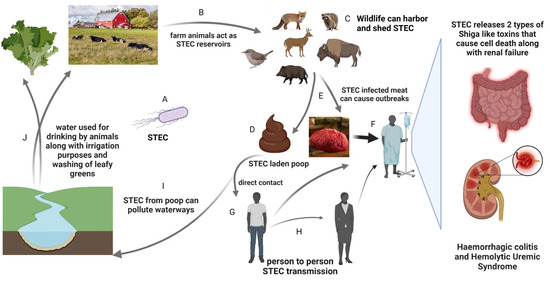
Shiga-toxin-producing Escherichia coli (STEC) is a food-borne pathogen that causes human gastrointestinal infections across the globe, leading to kidney failure or even death in severe cases. E. coli are commensal members of humans and animals’ (cattle, bison, and pigs) guts, however, may acquire Shiga-toxin-encoded phages. This acquisition or colonization by STEC may lead to dysbiosis in the intestinal microbial community of the host. Wildlife and livestock animals can be asymptomatically colonized by STEC, leading to pathogen shedding and transmission. Furthermore, there has been a steady uptick in new STEC variants representing various serotypes. These, along with hybrids of other pathogenic E. coli (UPEC and ExPEC), are of serious concern, especially when they possess enhanced antimicrobial resistance, biofilm formation, etc. Recent studies have reported these in the livestock and food industry with minimal focus on wildlife. Disturbed natural habitats and changing climates are increasingly creating wildlife reservoirs of these pathogens, leading to a rise in zoonotic infections. Therefore, this review comprehensively surveyed studies on STEC prevalence in livestock and wildlife hosts. We further present important microbial and environmental factors contributing to STEC spread as well as infections. Finally, we delve into potential strategies for limiting STEC shedding and transmission. View Full-Text

RASFF Alert- E.coli – EPEC – Sheep Fillet

RASFF

Detection of EPEC in sheep fillet from Australia in Germany

RASFF Alert – E.coli – Cockles

RASFF

Escherichia coli in cockles from France via The Netherlands in Spain

Research – Quantitative Microbial Risk Assessment of Listeria monocytogenes and Enterohemorrhagic Escherichia coli in Yogurt

MDPI

Listeria monocytogenes can survive in yogurt stored at a refrigeration temperature. Enterohemorrhagic Escherichia coli (EHEC) has a strong acid resistance that can survive in the yogurt with a low pH. We estimated the risk of L. monocytogenes and EHEC due to yogurt consumption with @Risk. Predictive survival models for L. monocytogenes and EHEC in drinking and regular yogurt were developed at 4, 10, 17, 25, and 36 °C, and the survival of both pathogens in yogurt was predicted during distribution and storage at home. The average initial contamination level in drinking and regular yogurt was calculated to be −3.941 log CFU/g and −3.608 log CFU/g, respectively, and the contamination level of both LM and EHEC decreased in yogurt from the market to home. Mean values of the possibility of illness caused by EHEC were higher (drinking: 1.44 × 10⁻⁸; regular: 5.09 × 10⁻⁹) than L. monocytogenes (drinking: 1.91 × 10⁻¹⁵; regular: 2.87 × 10⁻¹⁶) in the susceptible population. Both pathogens had a positive correlation with the initial contamination level and consumption. These results show that the foodborne illness risk from L. monocytogenes and EHEC due to yogurt consumption is very low. However, controlling the initial contamination level of EHEC during yogurt manufacture should be emphasized.

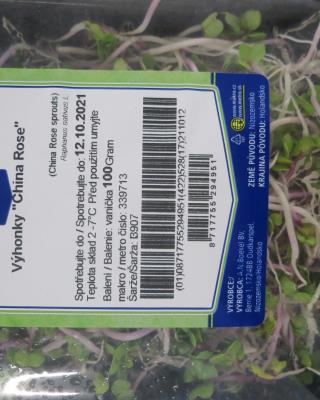
Czech Republic – Shoots “China Rose”- Sprouted Seeds – EPEC E.coli

Potravinynapranyri

Illustration photo no. 1

Place of inspection:
Brno ( Kaštanová 506/50, 620 00 Brno )
ID: 26450691
Food group: Sprouted seeds and sprouts Sprouted seeds and sprouts

Shoots “China Rose”
Category: Dangerous food
Unsatisfactory parameter:

Escherichia coli enteropathogenic (EPEC)

The product has been found to contain the pathogenic bacterium Escherichia coli enteropathogenic (EPEC), which causes diarrheal diseases.

Lots: L3907
Expiration date: 10/12/2021
Packaging: PP tray with label
Quantity of product in package: 0.1 kg
Producer: AN BOEKEL BV, Berrie 1, 1724BB Oudkarspel, The Netherlands
Country of origin:  Netherlands
Sampling date: 4. 10. 2021
Reference number: 22-000095-CAFIA-CZ

Research – Hygiene indicators and Salmonella sp. on swine carcass surfaces from two slaughterhouses in northern Portugal.

Journal of Food Protection

The monitorization of carcass surfaces contamination along the slaughter lines enables the verification of the slaughter operations hygiene and the good manufacturing practices. Pork meat is a common source of human non-typhoidal salmonellosis, one of the most frequently reported foodborne illnesses worldwide. This study aimed to gather data on microbial loads in carcass surfaces in two slaughterhouses, before and after evisceration. Salmonella enterica search was made after evisceration, due to the frequent reference to pork as being a common carrier of this microorganism. The contamination of carcass surfaces was evaluated by delimitation of surface area with sterilized templates (100 cm2), and sampled by gauze swabs. Enumeration of total aerobic mesophilic microorganisms, Enterobacteriaceae, and Escherichia coli was performed. The detection of Salmonella was performed for carcass surfaces after evisceration, and from animal liver and floor drains (environmental). Significant differences (p < 0.05) were observed for mesophilic microorganisms, Enterobacteriaceae, and E. coli counts on the external surfaces, with higher counts after evisceration. The neck and abdominal area presented higher levels for mesophilic microorganisms, Enterobacteriaceae and E. coli, and a high prevalence of Salmonella. Salmonella was detected only in one of the studied slaughterhouses; 19 out of 259 analysed carcass samples were positive for Salmonella (7.3%). Salmonella was also detected in two livers and in two floor drains. A collection of 52 Salmonella isolates (44 from carcasses, 5 from livers, 3 from drains) was gathered. Three serovars of Salmonella were identified (Typhimurium 4,5:i- , Wernigerone and Derby), and 53.8% of isolates were multidrug-resistant. The results demonstrate the need for continuous improvement of slaughtering operations and good manufacturing practices, to ensure food safety of pork produced in Portugal.

Research – Microbial Diversity and Safety in Fermented Beverages

MDPI

For thousands of years, humans have exploited the natural process of fermentation of various foods to preserve them, and to enjoy the changes in the sensory characteristics that could be produced. Recently, the world of fermented beverages has gone through a rapid transformation linked to deep changes in consumer preferences, consumption habits, climate, new regulations and entry of emerging countries, accompanied by safety concerns and an important reduction in economic resources available to people. As with all food handling and preparation, we need to be sure the fermented food produced is safe. Fermentation is a complex biological process where microbial diversity takes place and the environment created inside of the fermented food provides the conditions to reduce the risk of pathogenic bacteria growth, thus providing safe food. In addition, food manufacturers fermenting food carefully control their processing and must comply with the National Food Standards Codes. Although these products have a generally good food safety record, sometimes inadequate manufacturing practices or the presence of acidophilic pathogens could compromise food safety. In fact, fermented beverages may adversely become contaminated with pathogens or microbial toxins and thereby transform into vehicles that can transmit diseases to the consumers. Moreover, many microorganisms can deteriorate the physical-chemical and sensory properties as well as the flavor of the final products. In this editorial, we present an overview of a review and six original research papers published in the Special Issue “Fermentation Process and Microbial Safety of Beverages” of the Beverages journal.

Research – Multidrug resistance of Escherichia coli in fish supply chain: A preliminary investigation

Wiley Online

Abstract

Ninety-five Escherichia coli isolates recovered from different supply points of freshwater fish namely fish pond (W1, n = 16), wholesale fish market (W2, n = 14), retail fish market (R1, n = 29), street fish vending unit (R2, n = 30), and modern fish vending unit (R3, n = 6) were investigated for antimicrobial-resistant profile and prevalence of antibiotic-resistant genes. Overall, multidrug-resistant (MDR) E. coli in the fish supply chain was 21% with higher MDR incidence in the downstream fish supply points. MDR was relatively higher in the tertiary fish supply points viz., retail fish market (45%), street fish vending unit (30%), and modern fish vending unit (15%) compared to the secondary fish supply point, that is, wholesale fish market (5%) and primary fish supply point, that is, fish pond (5%). All the ampicillin-resistant isolates carried ampC gene, whereas only 21% of the β-lactam resistant isolates carried blaCTX-M-gp1. The tetracycline resistance determinant, tetA (89%) was predominant in the tetracycline-resistant isolates compared to tetB and tetD (11%). The trimethoprim resistance gene, dfrA and sulfonamide-resistance gene, Sul1 were detected in 9% of the trimethoprim-resistant isolates and 9% of the sulfonamide-resistant isolates, respectively. Enterobacterial repetitive intergeneric consensus-PCR has delineated the MDR isolates from the different fish supply points into three major clusters but all the MDR isolates from the street fish vending point are grouped into a single cluster. The results indicate an increase in the proportion of MDR E. coli and the occurrence of diverse MDR profiles in the downstream points of the fish supply chain that needs to be addressed to avoid fish-food-borne antimicrobial resistance.