Category Archives: E.coli O157:H7

Research – A bacteriological survey of fresh minced beef on sale at retail outlets in Scotland in 2019: three food-borne pathogens, hygiene process indicators and phenotypic antimicrobial resistance.

Journal of Food Protection

The health and economic burden of foodborne illness is high, with approximately 2.4 million cases occurring annually in the United Kingdom. A survey to understand the baseline microbial quality and prevalence of food-related hazards of fresh beef mince on retail sale could inform risk assessment, management and communication to ensure the safety of this commodity. In such a survey, a two-stage sampling design was used to reflect variations in population density and the market share of five categories of retail outlets in Scotland.  From January to December 2019, 1009 fresh minced beef samples were collected from 15 Geographic Areas. The microbial quality of each sample was assessed using Aerobic Colony Count (ACC) and generic E. coli count. Samples were cultured for Campylobacter and Salmonella and PCR was used to detect target genes (stx1 all variants, stx2 a-g, and rfbO157) for Shiga toxin-producing Escherichia coli (STEC). The presence of viable E. coli O157 and STEC in samples with a positive PCR signal was confirmed via culture and isolation. Phenotypic antimicrobial sensitivity patterns of cultured pathogens and 100 generic E. coli isolates were determined, mostly via disc diffusion. The median ACC and generic E. coli counts were 6.4 x 10⁵ (Inter-quartile range (IQR):6.9 x 10⁴ to 9.6 x 10⁶) and <10 cfu per gram (IQR:<10 to 10) of minced beef respectively. The prevalence was 0.1% (95% confidence interval C.I. 0 to 0.7%) for Campylobacter, 0.3% (95% C.I. 0 to 1%) for Salmonella, 22% (95% C.I. 20% to 25%) for PCR positive STEC and 4% (95% C.I. 2 to 5%) for culture positive STEC. The evidence for phenotypic antimicrobial resistance (AMR) detected did not give cause for concern, mainly occurring in a few generic E. coli isolates as single non-susceptibilities to first-line active substances. The low prevalence of pathogens and phenotypic AMR is encouraging but ongoing consumer food-safety education is necessary to mitigate the residual public health risk.
USA – New E. coli O157:H7 Outbreak Added to FDA CORE Investigation Table

Food Poisoning Bulletin

A new E. coli O157:H7 outbreak has been added to the FDA’s CORE Outbreak Investigation Table. At least 10 people are sick. We do not know the states where the ill persons live, their age range, illness onset dates, or if anyone has been hospitalized. Traceback has been initiated, but no recall has been issued, there has been no on-site inspection or sample collection, and no analysis of any product has started. This new E. coli O157:H7 outbreak is probably associated with an FDA-regulated food.

USA – FDA Core Outbreak Tabel Update

FDA

Date
Posted
Ref Pathogen
Product Total
Case Count

Status
6/8/

2022

1068 E. coli
O157:H7
Not Yet Identified 10 Active
6/1/

2022

1066 Hepatitis A Virus Strawberries See Outbreak
Advisory
Active
5/25/

2022

1067 Salmonella 
Senftenberg
Peanut Butter See Outbreak Advisory Active
4/20/

2022

1064 Not Yet
Identified
Dry Cereal 558 adverse
event reports
Active
4/13/

2022

1057 Listeria
monocytogenes
Not Yet
Identified
21 Active
3/30/

2022

1060 Not Yet
Identified
Meal Replacement
Drink
6 adverse
event reports
Closed
3/16/

2022

1055 Salmonella
Saintpaul
Not Identified 60 Closed
2/17/

2022

1056 Cronobacter
sakazakii
Powdered
Infant
Formula
See
Advisory
Active (IMG)
2/9/

2022

1040 Listeria
monocytogenes
Not Identified 20 Closed
2/2/

2022

1054 Enteroinvasive
E. coli
O143:H26
Not
Identified
16 Closed
1/10/

2022

1050 E. coli
O121:H19
Romaine 4 Closed

Research – Foodborne Illness Outbreaks Reported to National Surveillance, United States, 2009–2018

CDC

Abstract

Foodborne outbreaks reported to national surveillance systems represent a subset of all outbreaks in the United States; not all outbreaks are detected, investigated, and reported. We described the structural factors and outbreak characteristics of outbreaks reported during 2009–2018. We categorized states (plus DC) as high (highest quintile), middle (middle 3 quintiles), or low (lowest quintile) reporters on the basis of the number of reported outbreaks per 10 million population. Analysis revealed considerable variation across states in the number and types of foodborne outbreaks reported. High-reporting states reported 4 times more outbreaks than low reporters. Low reporters were more likely than high reporters to report larger outbreaks and less likely to implicate a setting or food vehicle; however, we did not observe a significant difference in the types of food vehicles identified. Per capita funding was strongly associated with increased reporting. Investments in public health programming have a measurable effect on outbreak reporting.

Foodborne diseases remain a major public health challenge in the United States, where 31 known pathogens cause an estimated 9 million illnesses, 56,000 hospitalizations, and 1,300 deaths annually (1). Efforts to improve food safety and reduce the burden of foodborne disease rely on data from foodborne disease surveillance and outbreak investigations to help prioritize food safety interventions, policies, and practices. Data from foodborne illness outbreaks reported to the Centers for Disease Control and Prevention (CDC) provide vital information on the foods causing illness and common food–pathogen pairs. Those data are used by the Interagency Food Safety Analytics Collaboration (IFSAC) to inform outbreak-based attribution models that attribute illnesses to specific food categories (2,3).

Foodborne illness outbreaks are investigated by local, state, and territorial health departments, CDC, the US Food and Drug Administration (FDA), and the Food Safety and Inspection Service of the United States Department of Agriculture and are reported to CDC’s Foodborne Disease Outbreak Reporting Surveillance System (FDOSS) through the web-based National Outbreak Reporting System (NORS). Although reported outbreaks are a rich data source, they represent a subset of all outbreaks occurring in the United States; not all outbreaks will be detected, investigated, and reported. Factors influencing which outbreaks are detected, investigated, and reported to CDC include both structural factors associated with the jurisdiction in which the outbreak occurred (e.g., infrastructure and capacity) and characteristics of the outbreak (e.g., size, geographic location, pathogen).

We integrated data from a variety of sources to examine structural factors and describe outbreak characteristics of foodborne outbreaks involving Salmonella, Shiga toxin–producing Escherichia coli (STEC) O157, norovirus, and bacterial toxins that were reported to national surveillance. In addition, we assessed the effects of state variation in outbreak reporting on the types of food vehicles identified.

Research – Evaluation of Potential for Butyl and Heptyl Para-Hydroxybenzoate Enhancement of Thermal Inactivation of Cronobacter sakazakii during Rehydration of Powdered Infant Powdered Infant Formula and Non-Fat Dry Milk.

Journal of Food Protection

Prior studies have demonstrated that parabens enhanced the thermal inactivation of foodborne pathogens including Cronobacter sakazakii , Salmonella enterica serotype Typhimurium, Escherichia coli O157:H7 and Listeria monocytogenes in model systems. However, there have been few studies looking at this phenomenon in actual food systems. The current study evaluated the potential enhancement of thermal inactivation of C. sakazakii by butyl para-hydroxybenzoate (BPB) in powdered infant formula (PIF) and non-fat dry milk (NFDM) before and after rehydration. When PIF was rehydrated with water at designated temperatures (65 – 80 ºC) in baby bottles, BPB did not enhance thermal inactivation. Rehydrated NFDM and lactose solutions with BPB were inoculated and heated at 58 ºC, BPB enhancement of thermal inactivation was negatively associated with NFDM levels in a dose-dependent manner, whereas presence of lactose retained thermal enhancement regardless of its concentration, suggesting an interaction between proteins and BPB. Fluorescence tests further indicated an interaction between BPB and the proteins in PIF and NFDM. Inoculated dry NFDM with and without BPB stored at 24 ºC and 55 ºC for 14 days did not substantially enhance inactivation in the dry state. This study suggests that BPB is not likely to enhance mild thermal inactivation treatments in foods that have appreciable amounts of protein.

Research – Microbiome of Lettuce Might Hold Secret to Better Food Safety

Growing Produce

Eurofins Food Testing UK

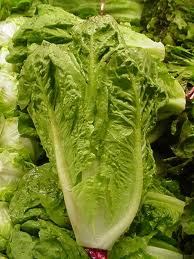
Researchers at the University of Georgia Center for Food Safety are preparing to launch a study on E. coli colonization from a new angle: the microbiome of lettuce.

By studying the interactions between EcO157 and the lettuce microbiome — the entire community of microorganisms like bacteria that live on the surface of lettuce — researchers hope to better understand how the microbiome may affect the pathogen’s fate during produce processing.

Center for Food Safety Professor Xiangyu Deng, lead researcher on the project, says, “We want to really figure out the interactions between the pathogen and potential biocontrol organisms indigenous to lettuce.”

In other words, how does E. coli interact with other microorganisms on lettuce, and how can we use those interactions to control foodborne outbreaks?

The focus of the research, to start this year, will be how the microbiome interacts with EcO157. The team will use a new microscopic approach to create a biogeographic map of the microbiome.

“Clearly the microbiome interacts with EcO157, and that interaction has an implication for food safety,” Deng adds. “We want to understand the mechanism behind this interaction.”

Research – Inactivation of Foodborne Pathogens on Inshell Walnuts by UV-C Radiation

Journal of Food Protection

Inshell walnuts could be contaminated with pathogens through direct contact or cross-contamination during harvesting and postharvest hulling, drying, or storage. This study aimed to assess the efficacy of ultraviolet–C (UV–C) radiation in inactivating foodborne pathogens on inshell walnut surfaces. Intact inshell walnut surfaces were inoculated separately with Salmonella spp., Escherichia coli O157:H7, Listeria monocytogenes , and Staphylococcus aureus , and then subjected to UV–C radiation at doses of 29.4, 147.0, 294.0, 588.0, and 882.0 mJ/cm 2 . UV–C radiation inactivated the inoculated pathogens in a dose-dependent manner, and a tailing effect was observed for the inactivation of pathogens. UV–C radiation at 29.4 mJ/cm 2 and 882.0 mJ/cm 2 reduced the populations of  S . Enteritidis PT 30, S . Typhimurium, E. coli O157:H7, L. monocytogenes , and S. aureus on inshell walnut surfaces by 0.82–1.25 and 1.76–2.41 log CFU/walnut, respectively. Scanning electron photomicrographs showed pathogenic bacterial cells in the cracks and crevices of the inshell walnut surface, and the shielding of microorganisms by the cracks and crevices may have contributed to the tailing effect observed during UV–C inactivation. No significant changes ( p  > 0.05) were found in walnut lipid oxidation following UV–C radiation at doses up to 882.0 mJ/cm 2 . Together, the results indicate that UV–C radiation could be a potential technology for reducing the populations of various foodborne pathogens on inshell walnut surfaces while maintaining the quality of walnuts.

USA – FDA Core Investigation Table – Update

FDA

Date
Ref Pathogen or
Cause of Illness

Product(s)
Linked to
Illnesses

(if any)
Total
Case Count

Status
4/20/22 1064 Not Yet
Identified
Dry Cereal 555 adverse
event reports
Active
4/13/22 1057 Listeria
monocytogenes
Not Yet
Identified
18 Active
4/6/22 NA Norovirus* Raw Oysters See
CDC Alert
Active
3/30/22 1060 Not Yet
Identified
Meal Replacement
Drink
6 adverse
event reports
Active
3/16/22 1055 Salmonella
Saintpaul
Not Identified 60 Closed
2/17/22 1056 Cronobacter
sakazakii
Powdered
Infant
Formula
See
Advisory
Active (IMG)
2/9/22 1040 Listeria
monocytogenes
Not Yet
Identified
20 Active
2/2/22 1054 Enteroinvasive
E. coli
O143:H26
Not
Identified
16 Closed
1/10/22 1050 E. coli
O121:H19
Romaine 4 Closed
12/29/21 1052 E. coli
O157:H7
Packaged
Salad
See Outbreak
Advisory
Closed
12/20/21 1039 Listeria
monocytogenes
Packaged
Salad
See Outbreak
Advisory
Closed
12/15/21 1048 Listeria
monocytogenes
Packaged
Salad
See Outbreak
Advisory
Closed

Research – Possible explanation for limited reduction of pathogens on radish microgreens after spray application of chlorinated water during growth with disperse contamination spread of abiotic surrogate on leaves

Wiley Online

The purpose of this study was to determine the efficacy of spray application of chlorinated water before harvest on the population of Salmonella enterica Typhimurium and Escherichia coli O157:H7 on radish microgreens. The transfer of abiotic surrogate to radish microgreens was also evaluated to track possible pathogen contamination spread by inoculating seed and growth media. During growth, microgreens inoculated with strains of pathogens were sprayed with chlorinated water at three different concentrations (0.50, 1.00, and 2.00 ± 0.05 ppm free chlorine). Spray application of chlorinated water was performed on microgreens once (day 9), twice (day 8 and 9), three (day 7, 8, and 9), and four times (day 6, 7, 8, and 9). Microgreens were harvested 12 hr after the last application of chlorinated water. Salmonella and E. coli O157:H7 populations were reduced with the increase in chlorine concentration. Chlorinated water reduced Salmonella and E. coli O157:H7 populations up to 1.1 log CFU/g (p < .05) and 0.9 log CFU/g (p > .05), respectively. Images taken under UV illumination provided the visualization of abiotic surrogate spread on cotyledon and upper hypocotyl (all edible parts) of radish microgreen plants regardless of seed or growth media inoculation. Scanning Electron Microscopy showed the presence of abiotic surrogate and generic E. coli on microgreen leaves. Spray application of chlorinated water during microgreen growth may help to reduce microbial load but cannot be used as the only control measure.

USA – FDA Core Investigation Table Update

FDA

Date
Posted
Ref Pathogen or
Cause of Illness

Product(s)
Linked to
Illnesses

(if any)
Total
Case Count

Status
4/20/

2022

1064 Not Yet
Identified
Dry Cereal 529 adverse
event reports
Active
4/13/

2022

1057 Listeria
monocytogenes
Not Yet
Identified
18 Active
4/6/

2022

NA Norovirus* Raw Oysters See
CDC Alert
Active
3/30/

2022

1060 Not Yet
Identified
Meal

Replacement
Drink

6 adverse
event reports
Active
3/16/

2022

1055 Salmonella
Saintpaul
Not Identified 60 Closed
2/17/

2022

1056 Cronobacter
sakazakii
Powdered
Infant
Formula
See
Advisory
Active
2/9/

2022

1040 Listeria
monocytogenes
Not Yet
Identified
19 Active
2/2/

2022

1054 Enteroinvasive
E. coli
O143:H26
Not
Identified
16 Closed
1/10/

2022

1050 E. coli
O121:H19
Romaine 4 Closed
12/29/

2021

1052 E. coli
O157:H7
Packaged
Salad
See Outbreak
Advisory
Closed
12/20/

2021

1039 Listeria
monocytogenes
Packaged
Salad
See Outbreak
Advisory
Closed
12/15/

2021

1048 Listeria
monocytogenes
Packaged
Salad
See Outbreak
Advisory
Closed