Category Archives: Clostridium botulinum

Food Safety – Another record quarter for international food safety network

Food Safety News

A global food safety network was involved in 65 incidents from July to September, which is more than earlier this year.

It is the third successive quarter that events involving the International Food Safety Authorities Network (INFOSAN) have gone up, with 63 from April to June and 56 in the first quarter of this year.

Salmonella was part of 46 incidents involving a biological hazard followed by Listeria with 11. Next was E. coli with four, a couple each for Bacillus cereus, Hepatitis A, Norovirus and Vibrio parahaemolyticus and one each for Clostridium botulinum and Staphylococcus aureus.

Research – Clostridial Neurotoxins: Structure, Function and Implications to Other Bacterial Toxins

MDPI

Gram-positive bacteria are ancient organisms. Many bacteria, including Gram-positive bacteria, produce toxins to manipulate the host, leading to various diseases. While the targets of Gram-positive bacterial toxins are diverse, many of those toxins use a similar mechanism to invade host cells and exert their functions. Clostridial neurotoxins produced by Clostridial tetani and Clostridial botulinum provide a classical example to illustrate the structure–function relationship of bacterial toxins. Here, we critically review the recent progress of the structure–function relationship of clostridial neurotoxins, including the diversity of the clostridial neurotoxins, the mode of actions, and the flexible structures required for the activation of toxins. The mechanism clostridial neurotoxins use for triggering their activity is shared with many other Gram-positive bacterial toxins, especially molten globule-type structures. This review also summarizes the implications of the molten globule-type flexible structures to other Gram-positive bacterial toxins. Understanding these highly dynamic flexible structures in solution and their role in the function of bacterial toxins not only fills in the missing link of the high-resolution structures from X-ray crystallography but also provides vital information for better designing antidotes against those toxins. View Full-Text

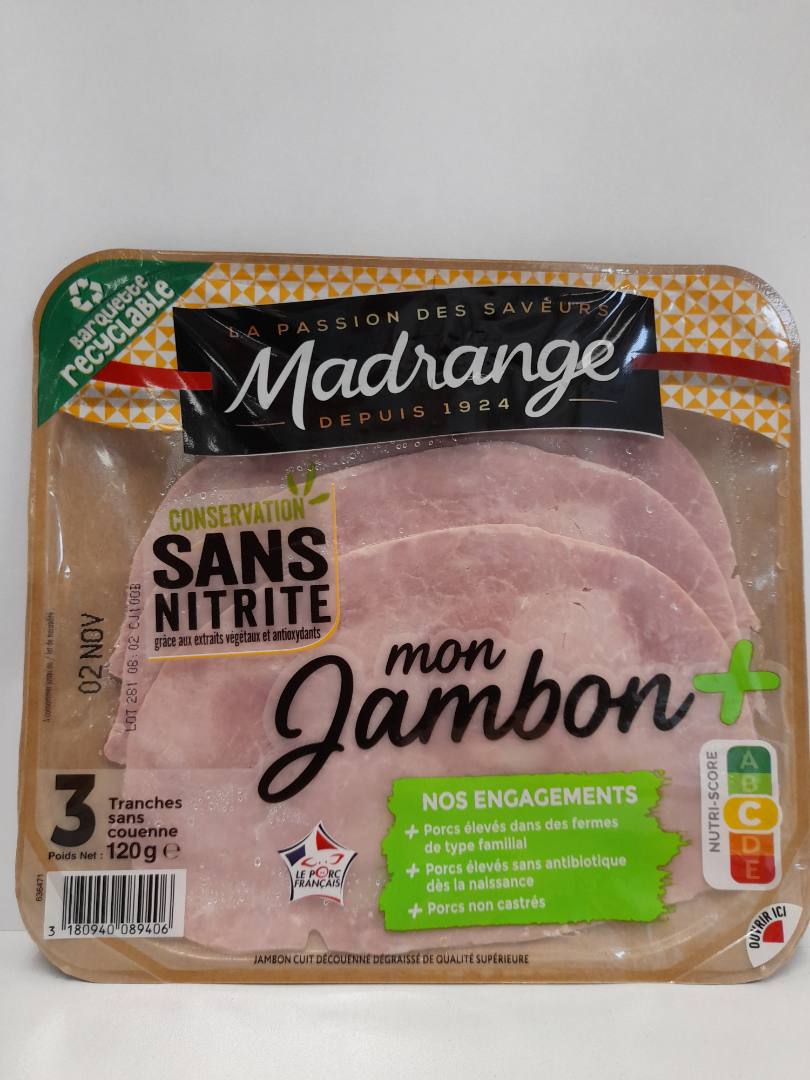
France – Superior cooked ham, skinned and defatted 3 slices conservation without nitrite – Clostridium

Gov france

Identifying information for the recalled product

  • Product category Food
  • Product sub-category Meats
  • Product brand name Madrange
  • Names of models or references Superior cooked ham 3 slices (120 g) conservation without nitrite Madrange
  • Product identification
    GTIN Lot Dated
    3180940089406 281 08:02 CJ10OB Use-by date 02/11/2021
  • Products Listtracing_aval_JB_cuit_DD3_CSN _-. pdf Enclosed
  • PackagingPackaged in modified atmosphere
  • Start date / End of marketing From 10/13/2021 to 10/24/2021
  • Storage temperature Product to be stored in the refrigerator
  • Health mark FR 87.065.001 CE
  • Geographical sales area Whole France
  • Distributors INTERMACHE
  • List of points of saletracing_aval_JB_cuit_DD3_CSN _-. pdf

Practical information regarding the recall

  • Reason for recall Non-compliant salt level. Product preservation risk
  • Risks incurred by the consumer Clostridium botulinum (causative agent of botulism)
    Clostridium perfringens

Botulism Symptoms.

CDC

kswfoodworld

Signs and symptoms might include:

  • Difficulty swallowing
  • Muscle weakness
  • Double vision
  • Drooping eyelids
  • Blurry vision
  • Slurred speech
  • Difficulty breathing
  • Difficulty moving the eyes

Possible signs and symptoms in foodborne botulism might also include:

  • Vomiting
  • Nausea
  • Stomach pain
  • Diarrhea

Signs and symptoms in an infant might include:

  • Constipation
  • Poor feeding
  • Drooping eyelids
  • Pupils that are slow to react to light
  • Face showing less expression than usual
  • Weak cry that sounds different than usual
  • Difficulty breathing

People with botulism might not have all of these symptoms at the same time.

The symptoms all result from muscle paralysis caused by the toxin. If untreated, the disease may progress and symptoms may worsen to cause full paralysis of some muscles, including those used in breathing and those in the arms, legs, and trunk (part of the body from the neck to the pelvis area, also called the torso).

In foodborne botulism, symptoms generally begin 18 to 36 hours after eating a contaminated food.

If you or someone you know has symptoms of botulism, immediately see your doctor or go to the emergency room.

Canada – Olivera brand sliced olives may be unsafe due to potential presence of dangerous bacteria – Clostridium botulinum

CFIA

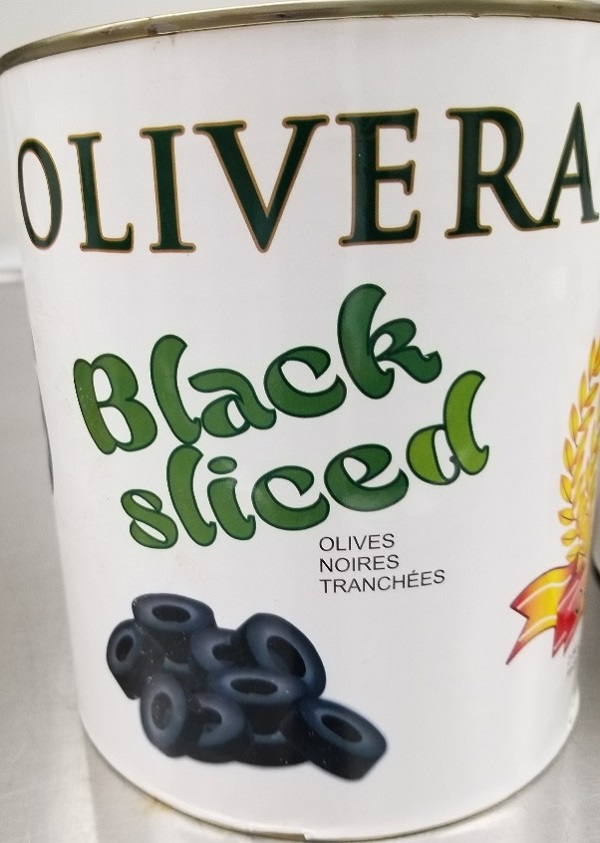
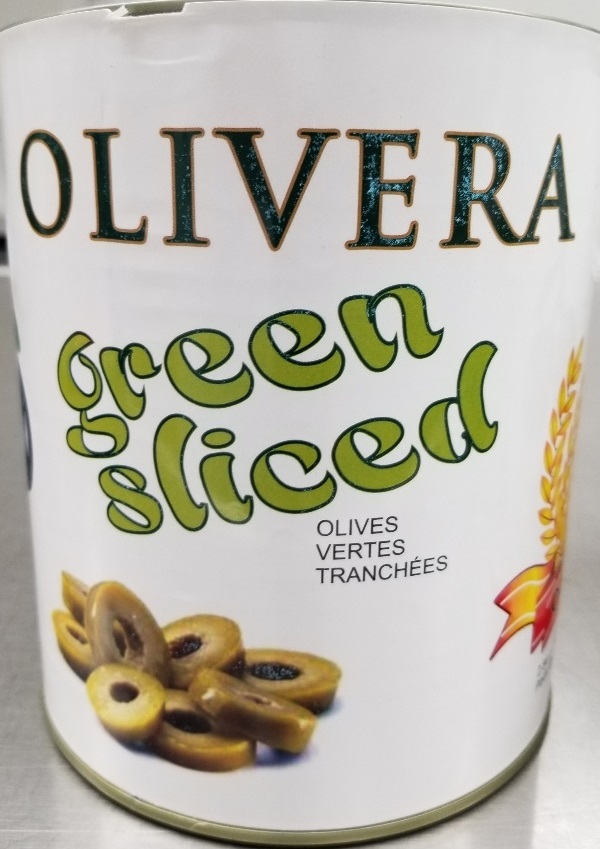
Olivera – Black Sliced Olives – 2.84 Litres    Olivera – Green Sliced Olives – 2.84 Litres  Olivera – Sliced olives – 2.84 Litres

Recall details

Ottawa, October 5, 2021 – Distribution Alimentaire Tony is recalling Olivera brand sliced olives from the marketplace because they may permit the growth of Clostridium botulinum. Consumers should not consume and distributors, retailers and food service establishments such as hotels, restaurants, cafeterias, hospitals and nursing homes should not sell or use the recalled products described below.

Recalled products

Brand Product Size UPC Codes
Olivera Black Sliced Olives 2.84 L None PRO : 08/03/2021
EXP : 07/03/2023
LOT NO: 09SB260
Olivera Green Sliced Olives 2.84 L None Pro date: 8/3/2021
EXP date: 7/3/2023
PN: 09sG260

What you should do

If you think you became sick from consuming a recalled product, call your doctor.

Check to see if you have the recalled products in your home or establishment. Recalled products should be thrown out or returned to the location where they were purchased.

Food contaminated with Clostridium botulinum toxin may not look or smell spoiled but can still make you sick.

Symptoms in adults can include facial paralysis or loss of facial expression, unreactive or fixed pupils, difficulty swallowing, drooping eyelids, blurred or double vision, difficulty speaking, including slurred speech, and a change in sound of voice, including hoarseness.

Symptoms of foodborne botulism in children can include difficulty swallowing, slurred speech, generalized weakness and paralysis. In all cases, botulism does not cause a fever. In severe cases of illness, people may die.

Background

This recall was triggered by Canadian Food Inspection Agency (CFIA) test results. The CFIA is conducting a food safety investigation, which may lead to the recall of other products. If other high-risk products are recalled, the CFIA will notify the public through updated Food Recall Warnings.

The CFIA is verifying that industry is removing the recalled products from the marketplace.

Illnesses

There have been no reported illnesses associated with the consumption of these products.

Research – Foodborne Botulism in Western Romania: Ten Years’ Experience at a Tertiary Infectious Disease Hospital

MDPI

Objectives: The purpose of this study was to analyze epidemiological data concerning foodborne botulism in Western Romania over the last decade. Botulism, the toxin formed by the bacterium Clostridium botulinum, results in a neuroparalytic disorder capable of severe clinical progression that begins in the cranial nerves and progressively descends. Preventing progression to a severe case entails timely diagnosis since curative assets are restricted. Ingesting food containing a preformed toxin (foodborne botulism) is the most typical form. Methods: Medical records were retrospectively analyzed from 2010 to 2020 for all food botulism cases. A seroneutralization test was performed with type A, B and E anti-botulinum sera to establish the kind of toxin involved. Results: Overall, 18 cases of foodborne botulism were admitted to the hospital during this period and confirmed by laboratory analysis. Most of the participants in our study were men (61.1%), and 77.8% of the total lived in rural areas. All the participants showed classic symptoms of botulism, and dysphagia was present in all cases. The trivalent ABE antitoxin was administered by the hospital, and toxin type B was isolated in all patients. The main sources of the toxin were pork, ham and canned pork meat. Conclusions: Stronger efforts are needed to foster community awareness of foodborne botulism, particularly in home-preserved food. View Full-Text

Russia – Botulism increase reported in Tatarstan

Outbreak News Today

kswfoodworld

The head of the territorial department of the Rospotrebnadzor Administration for the Republic of Tatarstan, Irina Khairullina said twelve botulism cases have been reported this year in the districts of Almetyevsky, Zainsky, Leninogorsky and Sarmanovsky. This compares with two botulism cases reported in the previous two years.

Khairullina notes, 10 people got sick while eating homemade smoked fish, while 2 people associate their disease with the consumption of smoked goose meat, bought from unknown persons in places of unauthorized trade.

Research – Foodborne Botulism in Ukraine from 1955 to 2018

Mary Anne Liebert

kswfoodworld

We aim to identify possible biological, social, and economic factors that could influence the prevalence of foodborne botulism (FB). The objective of this article is to assess epidemiological peculiarities of FB in Ukraine from 1955 to 2018 using national epidemiological surveillance data. This article presents an epidemiological descriptive population-based study of the epidemiology of FB using correlation analysis. From 1955 to 2018, 8614 cases of botulism were recorded in Ukraine causing 659 deaths. The distribution of types of botulism toxins is represented by type A (7.97%), B (59.64%), suspected as C (0.56%), E (25.47%), others (5.33%), and unidentified (1.04%). From 1990 to 2015, the rate correlation between Human Development Index (HDI) and incidence of botulism was −0.75 ± 0.20. Homemade canned meat and fish continue to be the leading causes of botulism in Ukraine. Cases related to commercial food were rare or absent, but in recent years (2017–2018), their percentage has increased to 32.56%. The HDI and botulism have an inverse mathematical correlation and predictable logical relationship: with an HDI increase, the incidence of FB decreased. In general, food botulism in Ukraine is related to traditional socioeconomic factors related to cultural food habits. In the face of declining living standards and uncertainty that food products will be physically or economically available, homemade preservation increases. Home food preservation is a major cause of botulism in Ukraine. The elimination of FB is possible in Ukraine only with the complete cessation of home canning and state control over the manufacture and sale of commercial canned products.

Romania – Botulism cases reported in Romania; homemade ham implicated

Food Safety News

CDC Clost Spore

Two people in Romania have been diagnosed with botulism, according to Agerpres, the country’s news agency.

This past weekend, a man went to hospital in the city of Arad and his wife was later diagnosed as being infected. They are believed to have eaten homemade ham.

The news agency reported that there was no antitoxin available so health officials had to get some from Moldova. Both patients remain under observation in hospital.

Botulism poisoning is a rare illness caused by toxins produced by Clostridium botulinum bacteria.

A recent study analyzed the clinical and epidemiological data of patients diagnosed with botulism and hospitalized at one facility in Romania. Findings were published in the journal Environmental Science and Pollution Research.

Australia Research – Monitoring the incidence and causes of diseases potentially transmitted by food in Australia: Annual report of the OzFoodNet network, 2013–2015

Au Gov

This report summarises the incidence of diseases potentially transmitted by food in Australia, and details outbreaks associated with food that occurred during 2013–2015.
OzFoodNet sites reported an increasing number of notifications of 12 diseases or conditions that may be transmitted by food (botulism; campylobacteriosis; cholera; hepatitis A; hepatitis E; haemolytic uraemic syndrome (HUS); listeriosis; Salmonella Paratyphi (paratyphoid fever) infection; salmonellosis; shigellosis; Shiga toxin-producing Escherichia coli(STEC) infection; and Salmonella Typhi (typhoid fever) infection), with a total of 28,676 notifications received in 2013; 37,958 in 2014; and 41,226 in 2015.
The most commonly-notified conditions were campylobacteriosis (a mean of 19,061 notifications per year over 2013–2015) and salmonellosis (a mean of 15,336 notifications per year over 2013–2015). Over these three years, OzFoodNet sites also reported 512 outbreaks of gastrointestinal illness caused by foodborne, animal-to-person or waterborne disease, affecting 7,877 people, and resulting in 735 hospitalisations and 18 associated deaths.
The majority of outbreaks (452/512; 88%) were due to foodborne or suspected foodborne transmission. The remaining 12% of outbreaks were due to waterborne or suspected waterborne transmission (57 outbreaks) and animal-to-human trans-mission (three outbreaks). Foodborne and suspected foodborne outbreaks affected 7,361 people, resulting in 705 hospitalisations and 18 deaths.
Salmonella was the most common aetiological agent identified in foodborne outbreaks (239/452; 53%), and restaurants were the most frequently-reported food preparation setting (211/452; 47%). There were 213 foodborne outbreaks (47%) attributed to a single food commodity during 2013–2015, with 58% (124/213) associated with the consumption of eggs and egg-based dishes.