Author Archives: KSW

USA – Cut Fruit Express Recalls “Fresh Cut Fruit Mix Containing Cantaloupe” Because of Possible Health Risk -Salmonella

FDA

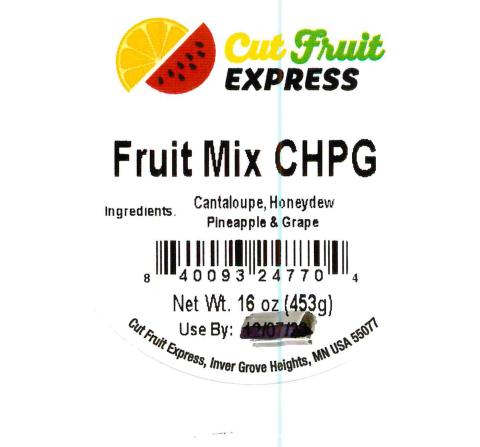
Image 1: “Individual cup container label for Cut Fruit Express Fruit Mix CHPG, 16 oz.”

Cut Fruit Express Inc. of Inver Grove Heights, MN, is recalling Caribou Coffee Fruit Mix CHPG 6.5oz, and Cut Fruit Express Brand of 6.5oz, 15oz, 16oz, 32oz packages of Fruit Mix contains Cantaloupes and Food service packages of 5lb tray, 10lb bag, 25lb Pail, because it has the potential to be contaminated with Salmonella.

Caribou Coffee Fruit Mix CHPG 6.5oz was distributed from Caribou Stores at the MSP Airport Caribou locations in the MSP Airport, Minnesota. The product comes in a clear plastic package. The USE BY DATE was 11/4/23. The remainder of the recalled “Fresh Cut Fruit Mix containing Cantaloupes” under Cut Fruit Express and food service packaging was distributed through in MN, WI and IL via retail and food service delivery. The USE BY DATES were 11/4/23, 11/5/23 and 11/6/23.

The retail product comes in with Use by Date 11/4/23, 11/5/23, 11/6/23 on the top label and food service product comes with a date label of 11/3/23 on the bag, tray or a label with use by date on the pail.

No illnesses have been reported to date in connection with this problem with our products.

Cut Fruit Express learned that their supplier is issuing a recall on Cantaloupes for potential contamination of Salmonella. Cut Fruit Express is initiating a recall on the affected product that contains the recalled Cantaloupe. The affected products were shipped between October 24th through October 26th, 2023.

  • Consumers, restaurants, retailers, and wholesalers should not eat, sell, or serve recalled cantaloupe or recalled products containing cantaloupe.
  • Some consumers freeze cantaloupe for later use. Consumers should check their freezers and throw away recalled fresh or cut cantaloupe that was frozen for later use.
  • If you cannot tell if your cantaloupe is part of the recall, do not eat or use it, throw it away.

Consumers who have purchased these products are urged to return them to the place of purchase for a full refund.

Any questions or concerns please contact Shelley Ryan at 952-746-2705.


Company Contact Information

Consumers:
Shelley Ryan
 952-746-2705

Quebec – Notice not to consume various products prepared and sold by the company Rémy L’artisan des meats inc. – Clostridium botulinum

Quebec

he Ministry of Agriculture, Fisheries and Food (MAPAQ), in collaboration with the company Rémy L’artisan des meats inc., located at 13020, boulevard Henri-Bourassa, in Quebec, advises the population not to consume the products indicated in the table below, because they have not been prepared and packaged to ensure their safety. In fact, these products could promote the proliferation of the bacteria  Clostridium botulinum . 

Product name

Format

Target lot

“Country Terrine”

180g _

Units sold until November 29, 2023

” Headcheese “

“Abomasum terrine”

“Pork rillette”

The products which are the subject of this warning were offered for sale until November 29, 2023, at the establishment designated above and on the company’s website. The products were packaged in glass jars with a metal lid and sold at room temperature.

The operator is recalling the products in question. He agreed with MAPAQ to broadcast this warning as a precautionary measure. Additionally, people who have one of these products in their possession are advised not to consume it. They must return it to the establishment where they purchased it or throw it away.

Even if the affected products do not show signs of spoilage or suspicious odor, they could be contaminated with the bacteria Clostridium botulinum . Foods contaminated with the toxin of this bacteria can cause, when ingested, the following symptoms: facial paralysis, unresponsive or fixed pupils, difficulty swallowing, drooping eyelids, vision and speech problems. In severe cases, the disease can cause death.

It should be noted that no cases of illness associated with the consumption of these foods have been reported to MAPAQ to date.

Additional information

The Ministry publishes various information documents concerning food safety. Interested people can consult the Food This hyperlink will open in a new window. section  of the Quebec government website. They also have the option of registering online to receive, by email, food  recall This hyperlink will open in a new window. releases published by the Ministry. Finally, it is possible to follow “MAPAQaliment” on Twitter at the following address: www.twitter.com/MAPAQaliment This hyperlink will open in a new window. .

Research – High-Pressure Inactivation of Bacillus cereus in Human Breast Milk

MDPI

Abstract

Although Holder pasteurization is the recommended method for processing breast milk, it does affect some of its nutritional and biological properties and is ineffective at inactivating spores. The aim of this study was to find and validate an alternative methodology for processing breast milk to increase its availability for newborn babies and reduce the financial loss associated with discarding milk that has become microbiologically positive. We prepared two series of breast milk samples inoculated with the Bacillus cereus (B. cereus) strain to verify the effectiveness of two high-pressure treatments: (1) 350 MPa/5 min/38 °C in four cycles and (2) cumulative pressure of 350 MPa/20 min/38 °C. We found that the use of pressure in cycles was statistically more effective than cumulative pressure. It reduced the number of spores by three to four orders of magnitude. We verified that the method was reproducible. The routine use of this method could lead to an increased availability of milk for newborn babies, and at the same time, reduce the amount of wasted milk. In addition, high-pressure treatment preserves the nutritional quality of milk.

USA – Pelleh Poultry Corp. Recalls Ready-To-Eat Beef and Poultry Products Due to Possible Listeria Contamination

FSIS USDA

Pelleh Poultry Corp., a Swan Lake, N.Y. establishment, is recalling approximately 708 pounds of ready-to-eat (RTE) beef and poultry products that may be adulterated with Listeria monocytogenes, the U.S. Department of Agriculture’s Food Safety and Inspection Service (FSIS) announced today.

The RTE beef and poultry products were packaged on various dates from October 25, 2023, through November 20, 2023. The list of products that are subject to the recall can be found here. The labels for the products subject to recall are available on the FSIS website [view labels]. Additional labels may be added as they are obtained.

The products subject to recall bear establishment number “EST. P44121” inside the USDA mark of inspection. These items were shipped to retail and institutional locations in New Jersey, New York, and Pennsylvania.

The problem was discovered when the establishement notified FSIS that its laboratory testing indicated the product may be contaminated with Listeria monocytogenes.

There have been no confirmed reports of adverse reactions due to consumption of these products. Anyone concerned about an illness should contact a healthcare provider.

Australia – Capital 555 Bean Sprouts – Salmonella

FSANZ

Product information

Capital​ 555 is conducting a recall of Bean Sprouts 5kg. The product has been available for sale at Asian Food Stores in WA.

Date markings

Products affected have either red or green tags

capital 555 bean sprouts

Problem

The recall is due to microbial (Salmonella) contamination .

Food safety hazard

Food products contaminated with Salmonella may cause illness if consumed.

What to do​

Any consumers concerned about their health should seek medical advice and should return the product to the place of purchase for a full refund.

For further information please contact:

Capital 555
0413968599​

​​​Related links:

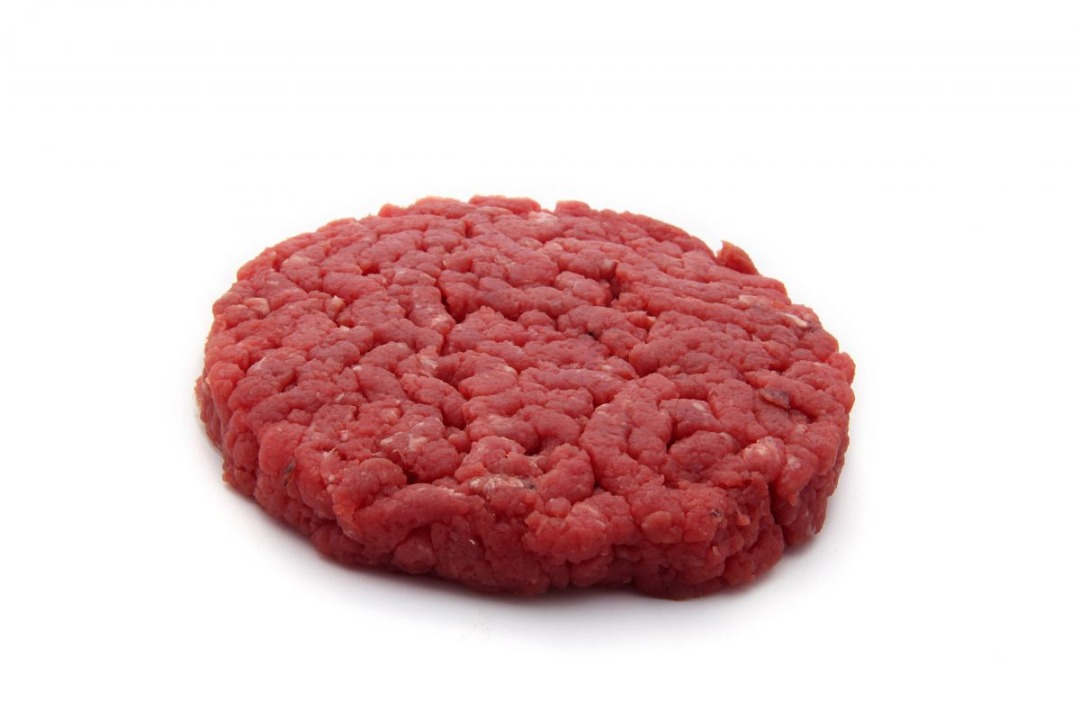
France – chopped steak – Listeria monocytogenes

Gov France

Product category
Food
Product subcategory
Meats
Product brand name
E. Leclerc center in Gouesnou
Model names or references
minced steak to order at the butcher’s stand
Product identification
GTIN Batch Date
0200089000000 All lots Use-by date between 11/21/2023 and 11/30/2023
Products List
poster_de_reminder_-_boucherie_2023_12_01.pdfAttachment
Packaging
sold at the butcher’s stand on demand
Storage temperature
Product to keep in the refrigerator
Further information
sold at the butcher’s stand on demand
Geographical sales area
catchment area: Brest region
Distributors
Center E Leclerc de Gouesnou only

France – RAW SHRIMP TAILS 28-33 pieces – Vibrio vulnificus

Gov France

Product category
Food
Product subcategory
Fishing and aquaculture products
Product brand name
Carrefour SIMPL
Model names or references
Raw shrimp tails with shell 450g
Product identification
GTIN Batch Date
3560070422067 AI/22184 (2M23) Minimum durability date 12/22/2024
Packaging
450g bag
Start/end date of marketing
From 04/13/2023 to 11/30/2023
Storage temperature
Product to keep in the freezer
Geographical sales area
Whole France
Distributors
Crossroads

Research – Fungal and Toxin Contaminants in Cereal Grains and Flours: Systematic Review and Meta-Analysis

MDPI

Abstract

Cereal grains serve as the cornerstone of global nutrition, providing a significant portion of humanity’s caloric requirements. However, the presence of fungal genera, such FusariumPenicilliumAspergillus, and Alternaria, known for their mycotoxin-producing abilities, presents a significant threat to human health due to the adverse effects of these toxins. The primary objective of this study was to identify the predominant fungal contaminants in cereal grains utilized in breadmaking, as well as in flour and bread. Moreover, a systematic review, including meta-analysis, was conducted on the occurrence and levels of mycotoxins in wheat flour from the years 2013 to 2023. The genera most frequently reported were Fusarium, followed by PenicilliumAspergillus, and Alternaria. Among the published reports, the majority focused on the analysis of Deoxynivalenol (DON), which garnered twice as many reports compared to those focusing on Aflatoxins, Zearalenone, and Ochratoxin A. The concentration of these toxins, in most cases determined by HPLC-MS/MS or HPLC coupled with a fluorescence detector (FLD), was occasionally observed to exceed the maximum limits established by national and/or international authorities. The prevalence of mycotoxins in flour samples from the European Union (EU) and China, as well as in foods intended for infants, exhibited a significant reduction compared to other commercial flours assessed by a meta-analysis investigation.

Research – Validation of a Bacteriophage Hide Application to Reduce STEC in the Lairage Area of Commercial Beef Cattle Operations

MDPI

Abstract

Finalyse, a T4 bacteriophage, is a pre-harvest intervention that utilizes a combination of bacteriophages to reduce incoming Escherichia coli O157:H7 prevalence by destroying the bacteria on the hides of harvest-ready cattle entering commercial abattoirs. The objective of this study was to evaluate the efficacy of Finalyse, as a pre-harvest intervention, on the reduction in pathogens, specifically E. coli O157:H7, on the cattle hides and lairage environment to overall reduce incoming pathogen loads. Over 5 sampling events, a total of 300 composite hide samples were taken using 25 mL pre-hydrated Buffered Peptone Water (BPW) swabs, collected before and after the hide wash intervention, throughout the beginning, middle, and end of the production day (n = 10 swabs/sampling point/timepoint). A total of 171 boot swab samples were also simultaneously taken at the end of the production day by walking from the front to the back of the pen in a pre-determined ‘Z’ pattern to monitor the pen floor environment from 3 different locations in the lairage area. The prevalence of pathogens was analyzed using the BAX® System Real-Time PCR Assay. There were no significant reductions observed for Salmonella and/or any Shiga toxin-producing E. coli (STEC) on the hides after the bacteriophage application (p > 0.05). Escherichia coli O157:H7 and O111 hide prevalence was very low throughout the study; therefore, no further analysis was conducted. However, boot swab monitoring showed a significant reduction in E. coli O157:H7, O26, and O45 in the pen floor environment (p < 0.05). While using Finalyse as a pre-harvest intervention in the lairage areas of commercial beef processing facilities, this bacteriophage failed to reduce E. coli O157:H7 on the hides of beef cattle, as prevalence was low; however, some STECs were reduced in the lairage environment, where the bacteriophage was applied. Overall, an absolute conclusion was not formed on the effectiveness of Finalyse and its ability to reduce E. coli O157:H7 on the hides of beef cattle, as prevalence on the hides was low.

Research – Occurrence of Mycotoxins in Foods: Unravelling the Knowledge Gaps on Their Persistence in Food Production Systems

MDPI

Abstract

In this review, the intricate issue about the occurrence levels of mycotoxins in foods is discussed aiming to underline the main knowledge gaps on the persistence of these toxicants in the food production system. Mycotoxins have been a key challenge to the food industry, economic growth, and consumers’ health. Despite a breadth of studies over the past decades, the persistence of mycotoxins in foods remain an overlooked concern that urges exploration. Therefore, we aimed to concisely underline the matter and provide possible biochemical and metabolic details that can be relevant to the food sector and overall public health. We also stress the application of computational modeling, high-throughput omics, and high-resolution imaging approaches, which can provide insights into the structural and physicochemical characteristics and the metabolic activities which occur in a stored cereal grain’s embryo and endosperm and their relationship with storage fungi and mycotoxins on a cellular level. In addition, there is a need for extensive collaborative network and funding, which will play a key role in finding effective solutions against the persistence of mycotoxins at the genetic and molecular to metabolic levels in the food system.