Author Archives: KSW

Research – How to deal with feed ingredients prone to Aflatoxin contamination

Pet Food Industry

Find out which animal feed ingredients are more prone to aflatoxin contamination, when the risk of contamination is higher and strategies to mitigate its effects on animals.

Aflatoxins are naturally occurring mycotoxins produced by certain molds, primarily Aspergillus flavus and Aspergillus parasiticus. These toxic compounds can contaminate animal feed, posing significant health risks to livestock and poultry. In this article, we will discuss which animal feed ingredients are more prone to aflatoxin contamination, when the risk of contamination is higher and strategies to mitigate its effects on animals.

Research – Chemical Composition and Antimicrobial Activity against the Listeria monocytogenes of Essential Oils from Seven Salvia Species

MDPI

Abstract

In recent years, essential oils (EOs) have received interest due to their antibacterial properties. Accordingly, the present study aimed to investigate the effectiveness of the EOs obtained from seven species of Salvia on three strains of Listeria monocytogenes (two serotyped wild strains and one ATCC strain), a bacterium able to contaminate food products and cause foodborne disease in humans. The Salvia species analysed in the present study were cultivated at the Botanic Garden and Museum of the University of Pisa, and their air-dried aerial parts were subjected to hydrodistillation using a Clevenger apparatus. The obtained EOs were analysed via gas chromatography coupled with mass spectrometry for the evaluation of their chemical composition, and they were tested for their inhibitory and bactericidal activities by means of MIC and MBC. The tested Eos showed promising results, and the best outcomes were reached by S. chamaedryoides EO, showing an MIC of 1:256 and an MBC of 1:64. The predominant compounds of this EO were the sesquiterpenes caryophyllene oxide and β-caryophyllene, together with the monoterpenes bornyl acetate and borneol. These results suggest that these EOs may possibly be used in the food industry as preservatives of natural origins.

Research – Effect of Different Pre-Growth Temperatures on the Survival Kinetics of Salmonella enterica and Listeria monocytogenes in Fresh-Cut Salad during Refrigerated Storage

MDPI

Abstract

The effect of the pre-growth temperature of bacterial cultures on their subsequent survival kinetics in fresh-cut produce during refrigerated storage was investigated in this study. Three-strain cocktails of Listeria monocytogenes and Salmonella enterica, cultured at different growth temperatures (4, 21, and 37 °C) were inoculated on fresh-cut mixed salad and on individual produce in the mixed salad. The inoculated samples were stored at 4 °C and 80 ± 2% relative humidity (RH) for up to 72 h and the growth, survival, or death kinetics were determined at regular intervals. The results indicate that depending upon the type of pathogen tested, the pre-growth temperature(s) and the type of produce showed a significant (p ≤ 0.05) effect on the survival kinetics. Among the tested produce, mixed salad showed the highest reduction in L. monocytogenes pre-grown at 37 °C (1.33 log CFU/g) followed by red cabbage (0.56 log CFU/g), iceberg lettuce (0.52 log CFU/g), and carrot (−0.62 log CFU/g), after 72 h, respectively. In the case of Salmonella, carrot showed the highest reduction (1.07 log CFU/g for 37 °C pre-grown culture) followed by mixed salad (0.78 log CFU/g for 37 °C pre-grown culture), cabbage (0.76 log CFU/g for 21 °C pre-grown culture), and lettuce (0.65 log CFU/g for 4 °C pre-grown culture), respectively. Among the tested ComBase predictive models, the Baranyi–Roberts model better fitted the experimental data. These findings indicate that the appropriate selection of pre-growth environmental conditions is critical to better understand the kinetics of foodborne pathogens.

Research -Prevalence of Salmonella in Eggs from Conventional and Cage-Free Egg Production Systems and the Role of Consumers in Reducing Household Contamination

MDPI

Abstract

Salmonella is one of the leading causes of foodborne disease worldwide, usually related to contaminated poultry or poultry products, such as eggs. Since egg contamination with Salmonella depends on multiple factors that make it challenging to control, consumers’ knowledge about food safety and the proper handling of eggs is crucial. The aims of the study were (1) to determine the prevalence of Salmonella in eggs from conventional and alternative production systems, (2) to characterize the Salmonella isolates according to phenotypic-genotypic and antimicrobial-resistant traits, and (3) to understand how consumers manage the hazards related to egg contamination in the household. A total of 426 egg samples were analyzed (conventional systems = 240; alternative systems = 186). Culture-based and molecular microbiological methods were used to identify Salmonella and bioinformatics analysis of whole genome sequences was used to determine the serotype and antimicrobial-resistant genes. Salmonella enterica serotype Enteritidis was detected only in eggs from alternative systems (1.1%, 2/186). Isolates showed resistance to nalidixic acid (100%, 2/2), and the aac(6′)-Iaa gene and a mutation in the gyrA gene were identified in both isolates. Overall, consumers demonstrated knowledge regarding food safety; however, many still engage in practices that pose a risk of acquiring foodborne illnesses.

Research – Use of Human Intestinal Enteroids for Recovery of Infectious Human Norovirus from Berries and Lettuce

MDPI

Abstract

Norovirus (NoV) is the leading cause of viral foodborne gastroenteritis globally. Currently, the gold standard for detecting NoV in clinical, food, and environmental samples is via molecular-based methods, primarily RT-PCR. Nevertheless, there is a great need for confirmatory assays that can determine the infectivity of viral particles recovered from contaminated matrices. The use of the human intestinal enteroids system (HIEs) has allowed for the expansion of norovirus replication, although it still suffers from limitations of strain preferences and the requirement of high titre stocks for infection. In this study, we wanted to explore the feasibility of using the HIEs to support the replication of NoV that had been recovered from representative food matrices that have been associated with foodborne illness. We first confirmed that HIEs can support the replication of several strains of NoV as measured by RT-qPCR. We subsequently chose two of those strains that reproducibly replicated, GII.4 and GII.6, to evaluate in a TCID50 assay and for future experiments. Infectious NoV could be recovered and quantified in the HIEs from lettuce, frozen raspberries, or frozen strawberries seeded with high titres of either of these strains. While many experimental challenges still remain to be overcome, the results of this study represent an important step toward the detection of infectious norovirus from representative produce items.

Research – The Impact of High Temperature on Microbial Communities in Pork and Duck Skin

MDPI

Abstract

Pork skin and duck skin are highly favored by consumers in China, and high-temperature processing methods are widely employed in cooking and food preparation. However, the influence of high-temperature treatment on the microbial communities within pork skin and duck skin remains unclear. In this study, a high-temperature treatment method simulating the cooking process was utilized to treat samples of pork skin and duck skin at temperatures ranging from 60 °C to 120 °C. The findings revealed that high-temperature treatment significantly altered the microbial communities in both pork skin and duck skin. Heat exposure resulted in a decrease in microbial diversity and induced changes in the relative abundance of specific microbial groups. In pork skin, high-temperature treatment led to a reduction in bacterial diversity and a decline in the relative abundance of specific bacterial taxa. Similarly, the relative abundance of microbial communities in duck skin also decreased. Furthermore, potential pathogenic bacteria, including Gram-positive and Gram-negative bacteria, as well as aerobic, anaerobic, and facultative anaerobic bacteria, exhibited different responses to high-temperature treatment in pork skin and duck skin. These findings highlighted the substantial impact of high-temperature processing on the composition and structure of microbial communities in pork skin and duck skin, potentially influencing food safety and quality. This study contributed to an enhanced understanding of the microbial mechanisms underlying the alterations in microbial communities during high-temperature processing of pork skin and duck skin, with significant implications for ensuring food safety and developing effective cooking techniques.

Japan – 12 hit by food poisoning after tasting apples at east Japan orchard; STEC E. coli detected

Mainichi

MITO — A total of 12 people became ill after tasting apples at an east Japan orchard, the Ibaraki Prefectural Government announced on Nov. 29.

The prefecture concluded it was a food poisoning case after the pathogenic O157 strain of the E. coli bacteria was detected in the victim’s excrement.

Germany – Deer crackers with pork – STEC E.coli

Lebensmittelwarnung

Product name:

Deer crackers with pork

Manufacturer (distributor):

Bauer Regional Meat Specialties GmbH Uthleber Str. 25 99734 Nordhausen

Reason for warning:

Detection of verotoxin-producing Escherichia coli bacteria (VTEC).

Packaging Unit: loose
Durability: 12/11/2023
Production date: November 3, 2023
Additional Information:

The goods were only sold within Thuringia in the Sömmerda district and in Erfurt (sales period November 20th, 2023 – November 30th, 2023) and in the Nordhausen district (sales period November 7th, 2023 – November 28th, 2023). 

The food business operator voluntarily recalls the goods.

Manufacturer’s homepage:

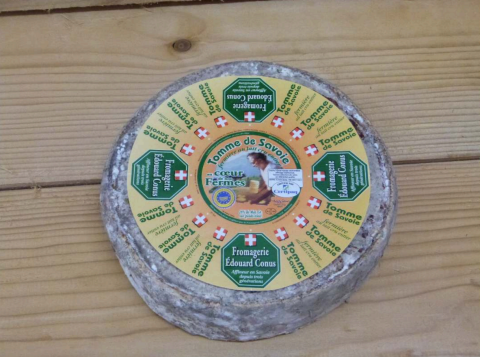
Luxembourg – Tomme Savoie Fermière IGP from the Conus brand sold in bulk – STEC E.coli O26:H11

SAP

Name Tomme Savoie Fermière IGP 29.1% fat
Brand Conus
Product appearance Bulk sale
Barcode 3389190132232
Use-by date (DLC) 12/20/2023
Batch 40031023
Sales period 10/20/2023 to 11/29/2023

Danger: Presence of E. coli STEC O26:H11

Escherichia coli O26 can cause, in the week following consumption, possibly hemorrhagic gastroenteritis, accompanied or not by fever, and which may be followed by severe renal complications in young children. People who have consumed the products mentioned above and who present this type of symptoms are invited to consult a doctor and report this consumption.

Sale confirmed in Luxembourg by: Match. A sale by other operators cannot be excluded.

Information Source: Recall Notification

Communicated by: Luxembourg Veterinary and Food Administration.

Outbreak Investigation of Salmonella: Cantaloupes (November 2023) Updated 11/30/2023

FDA

Products and Stores Affected (Expanded and Updated on 11/30/2023)

Recalled whole cantaloupe from the following brands:

  • Whole fresh cantaloupes with a label on the cantaloupe that says “Malichita” or “Rudy”, “4050”, and “Product of Mexico/produit du Mexique”.
  • Retailers and wholesalers would have received recalled whole melons from Crown Jewels Produce in boxes labeled “Malichita/Z Farms” or from Sofia Produce doing business as TruFresh in boxes labeled “Malichita” or “Rudy”, or from Pacific Trellis in corrugated cartons with certain lot codes.

Recalled pre-cut cantaloupe and products containing pre-cut cantaloupes (these products are made from recalled whole cantaloupes):

  • ALDIExternal Link Disclaimer cantaloupe, cut cantaloupe, and pineapple spears in clamshell packaging with Best-by dates between October 27 and October 31 and sold in IL, IN, IA, KY, MI, and WI.
  • Vinyard cantaloupe chunks and cubes, fruit mixes, melon medleys, and fruit cups containing cantaloupe. Most have a “Vinyard” label, and some have a red label with “Fresh” sold between October 30 and November 10 in Oklahoma stores.
  • Freshness Guaranteed (sold at select WalmartExternal Link Disclaimer stores) seasonal blend, melon trio, melon mix, fruit blend, fruit bowl, seasonal fruit tray, fruit mix, and cantaloupe chunks; and RaceTrac fruit medley sold in clear square or round plastic containers. Recalled products were sold at select retail stores in IN, MI, OH, KY, NC, TN, VA, IL, TX, and LA (see recall announcement for lot codes and “best by” dates).
  • KwikTrip 6-oz mixed fruit cup, 6-oz cantaloupe cup, and 16-oz fruit tray distributed to Kwik Trip, Kwik Star, Stop-N-Go, Tobacco Outlet Plus Grocery, and Tobacco Outlet Plus convenience stores in WI, MN, IA, MI, IL, and SD.
  • Bix ProduceExternal Link Disclaimer 5.75-oz Created Fresh! cantaloupe Grab N’ Go fruit cups, Created Fresh! Grab N’ Go mixed fruit cups, and Jack & Olive mixed fruit cups sold in MN, ND, SD, and WI.
  • GHGA pre-cut products containing cantaloupe branded as Sprouts Farmers Market, Trader Joes, and unbranded products sold at Kroger. Recalled products were distributed to Kroger stores in AL and GA, Sprout’s Farmers Market stores in AL, GA, NC, and SC, and Trader Joe’s stores in AL, FL, GA, SC, and TN (see recall for lot codes and “sell-by” dates).

FDA has compiled a list of recalls being conducted by companies that received and used recalled melons to make pre-cut cantaloupe or products containing pre-cut cantaloupes. This list will be updated as the agency receives notifications of new recalls.

FDA’s investigation is ongoing. Updates to this advisory will be provided as they become available.

Symptoms of Salmonella Infection

Illness usually occurs within 12 to 72 hours after eating contaminated food and usually lasts four to seven days. Symptoms include diarrhea, fever, and abdominal cramps. Children younger than five, the elderly, and people with weakened immune systems are more likely to have severe infections.

Status

Ongoing: updates to this advisory will be provided as they become available.

Recommendation

  • Consumers, restaurants, retailers, and wholesalers should not eat, sell, or serve recalled cantaloupe or recalled products containing cantaloupe.
  • Some consumers freeze cantaloupe for later use. Consumers, restaurants, and retailers should check their freezers and throw away recalled fresh or cut cantaloupe that was frozen for later use.
  • If you cannot tell if your cantaloupe, including pre-cut cantaloupe or products containing pre-cut cantaloupe is part of the recall, do not eat or use it and throw it away.
  • Retailers and wholesalers would have received recalled whole melons from Crown Jewels Produce in boxes labeled “Malichita/Z Farms” or from Sofia Produce doing business as TruFresh in boxes labeled “Malichita” or “Rudy”, or from Pacific Trellis in corrugated cartons with certain lot codes.
  • Anyone who purchased or received recalled cantaloupes should follow FDA’s safe handling and cleaning advice and use extra vigilance in cleaning and sanitizing any surfaces and containers that may have come in contact with recalled products to reduce the risk of cross-contamination.
    • Pre-cut fruit manufacturers should ensure proper cleaning and sanitizing of food contact surfaces and evaluate the need to recall additional product due to the potential for cross-contamination in the processing facility.
  • Contact your healthcare provider if you think you may have symptoms of a Salmonella infection after eating recalled cantaloupe.