Author Archives: KSW

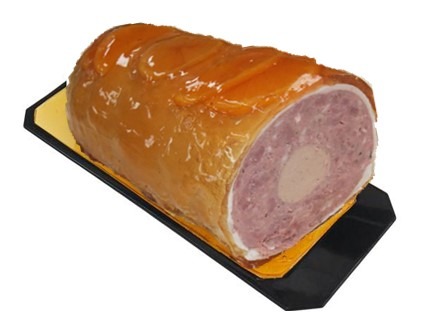
France – Duck and Port Ballotine – Listeria monocytogenes

Gov France

Product category
Food
Product subcategory
Meats
Product brand name
CARREFOUR product
Model names or references
Code 151966
Product identification
Batch Date
02333532 Use-by date 01/21/2024
Packaging
1 ballotine = 1 package of 2.5 kg to 2.9 kg
Start/end date of marketing
From 12/15/2023 to 12/29/2023
Storage temperature
Product to keep in the refrigerator
Health mark
FR-29.004.023 CE
Further information
Product sold in the cutting department
Geographical sales area
Whole France
Distributors
CROSSROADS

France – VDA Special Hollow Oysters – Norovirus

Gov France

Product category
Food
Product subcategory
Fishing and aquaculture products
Product brand name
The Beauty of Audierne
Model names or references
Special Hollow Oyster n° 2 and n° 3
Product identification
GTIN Batch Date
3445570009386 All lots Use-by date between 01/18/2024 and 01/23/2024
3445570009379 All lots Use-by date between 01/18/2024 and 01/23/2024
Packaging
wooden hamper of 12 pcs – 1Kg, 24 pcs – 2kg, 3kg and 6kg
Start/end date of marketing
From 01/18/2024 to 01/23/2024
Storage temperature
Product to keep in the refrigerator
Health mark
FR 29.003.501 CE
Further information
hamper with personalized lid “LA BELLE D’AUDIERNE”
Geographical sales area
Whole France
Distributors
Brillat

Italy – American giant blueberries – frozen product – Norovirus

Salute

Brand : Freshona

Name : American giant blueberries – frozen product

Reason for reporting : Recall due to microbiological risk

Publication date : 2 February 2024

Documentation

Documentation

Research – Characteristics of Gastroenteritis Outbreaks Investigated in Singapore: 2018–2021

MDPI

Abstract

There is a need to study the characteristics of outbreaks via Singapore’s outbreak surveillance system to understand and identify the gaps in food safety for targeted policy interventions due to the increasing trend in gastroenteritis outbreaks and consequential increase in foodborne-related deaths and economic burden on public health systems worldwide. A total of 171 gastroenteritis outbreaks were investigated in Singapore from January 2018 to December 2021. This study analyzed the annual trend of investigated gastroenteritis outbreaks, the proportion of outbreaks by implicated sources of food, and the proportion of the type of pathogens identified from human cases, food samples, and environmental swabs collected from outbreak investigations. Among the foodborne gastroenteritis outbreaks (n = 121) investigated in Singapore, approximately 42.1% of the outbreaks had food prepared by caterers, 14.9% by restaurants, and 12.4% had food prepared by in-house kitchens. Clostridium perfringens and Salmonella were the most common causative pathogens in foodborne outbreaks throughout the analysis period. The food samples and environmental swabs collected were mostly detected for Bacillus cereus. Norovirus was the most common causative pathogen in non-foodborne outbreaks and was mainly attributable to preschools. This highlights the importance of monitoring and educating the catering industry and preschools to prevent future outbreaks.

Research – Editorial for the Special Issue Cyclospora cayetanensis and Cyclosporiasis

MDPI

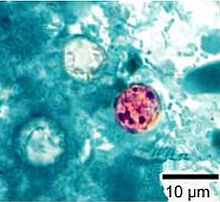
This Special Issue presents important advances, particularly regarding the better detection methods now available, and reviews important aspects of C. cayetanensis and cyclosporiasis. It includes two publications about the epidemiology of the parasite in humans, one in Ghana and another in Colombia. The study in Ghana, one of the few studies of this parasite in Africa, confirmed that immunosuppressed patients are more prone and vulnerable to C. cayetanensis infection. In endemic countries, the most susceptible populations are children, foreign people, and immunocompromised patients, while in industrialized countries, C. cayetanensis affects people of any age [2]. The study in Colombia showed the high endemicity of C. cayetanensis in the Colombian Wiwa indigenous people and observed a higher prevalence of C. cayetanensis in the rainy season (July–November) compared to a previous study performed in the same area during the dry season (January–April) [4]. C. cayetanensis infection is remarkably seasonal, although it varies by geographical region most likely due to human activities, environmental contamination, and the optimal sporulation conditions in each area

Research – Tomato juice’s antimicrobial properties can kill Salmonella

Science Daily

Tomato juice can kill Salmonella Typhi and other bacteria that can harm people’s digestive and urinary tract health, according to research published this week in Microbiology Spectrum, a journal of the American Society for Microbiology. Salmonella Typhi is a deadly human-specific pathogen that causes typhoid fever.

“Our main goal in this study was to find out if tomato and tomato juice can kill enteric pathogens, including Salmonella Typhi, and if so, what qualities they have that make them work,” said principal study investigator Jeongmin Song, Ph.D., Associate Professor, Department of Microbiology & Immunology, Cornell University.

EFSA – Zoonoses, foodborne outbreaks and antimicrobial resistance guidance for reporting 2023 data

EFSA

This technical report provides guidance for reporting countries on how to submit their isolate‐based quantitative antimicrobial resistance data, and data on the prevalence of zoonoses and microbiological agents and contaminants in food, food‐borne outbreaks, animal populations and disease status. To collect these data, EFSA has created the Data Collection Framework (DCF) application. This report includes data dictionaries to guide the reporting of information derived from 2023 under Directive 2003/99/EC, Regulation (EU) 2017/625, Commission Implementing Regulation (EU) 2019/627 and Commission Implementing Decision (EU) 2020/1729. The objective is to explain in detail the individual data elements of the EFSA data models that are to be used for XML data submission through the DCF. In particular, it explains the data elements to be reported, including information about the data type, a reference to the list of permitted terms and any additional business rules or requirements that may apply.

Research – Risks for animal health related to the presence of ergot alkaloids in feed

EFSA

The European Commission requested EFSA to provide an update of the 2012 Scientific Opinion of the Panel on Contaminants in the Food Chain (CONTAM) on the risks for animal health related to the presence of ergot alkaloids (EAs) in feed. EAs are produced by several fungi of the Claviceps and Epichloë genera. This Opinion focussed on the 14 EAs produced by C. purpurea (ergocristine, ergotamine, ergocornine, α‐ and β‐ergocryptine, ergometrine, ergosine and their corresponding ‘inine’ epimers). Effects observed with EAs from C. africana (mainly dihydroergosine) and Epichloë (ergovaline/−inine) were also evaluated. There is limited information on toxicokinetics in food and non‐food producing animals. However, transfer from feed to food of animal origin is negligible. The major effects of EAs are related to vasoconstriction and are exaggerated during extreme temperatures. In addition, EAs cause a decrease in prolactin, resulting in a reduced milk production. Based on the sum of the EAs, the Panel considered the following as Reference Points (RPs) in complete feed for adverse animal health effects: for pigs and piglets 0.6 mg/kg, for chickens for fattening and hens 2.1 and 3.7 mg/kg, respectively, for ducks 0.2 mg/kg, bovines 0.1 mg/kg and sheep 0.3 mg/kg. A total of 19,023 analytical results on EAs (only from C. purpurea) in feed materials and compound feeds were available for the exposure assessment (1580 samples). Dietary exposure was assessed using two feeding scenarios (model diets and compound feeds). Risk characterisation was done for the animals for which an RP could be identified. The CONTAM Panel considers that, based on exposure from model diets, the presence of EAs in feed raises a health concern in piglets, pigs for fattening, sows and bovines, while for chickens for fattening, laying hens, ducks, ovines and caprines, the health concern related to EAs in feed is low.

Research – The antimicrobial effect of eugenol against Campylobacter jejuni on experimental raw chicken breast meat model

Wiley Online

Campylobacter jejuni is the predominant bacterial cause of gastroenteritis, the main cause of foodborne deaths. Currently, Campylobacter is a common foodborne pathogen found in poultry; thus, there is a need for the development of novel intervention strategies. The aim of the study was to examine the effect of eugenol on C. jejuni load in an experimental chicken meat model. We observed that eugenol was effective in reducing C. jejuni load for 7 days of storage. Eugenol treatment at all concentrations (1.28, 5.12, and 10.24 mg mL−1) decreased Campylobacter load more significantly in the reference strain, and this decrease was dose-dependent throughout the storage period. Compared to the control group, eugenol reduced the counts of chicken isolate and the reference strain of C. jejuni by approximately 1.5 and 4.5 log/CFU, respectively, after 7 days of storage. Eugenol is a promising agent for improving the safety of poultry.

Research – The Investigation of Changes in Bacterial Community of Pasteurized Milk during Cold Storage

MDPI

Abstract

The quality of pasteurized milk is commonly assessed through microbiological analysis, with variations in storage conditions significantly impacting the suppression of bacterial growth throughout the milk’s shelf life. This study investigated the dynamics of total bacterial counts (TBCs) and bacterial community shifts in milk that underwent pasteurization at 80 °C for 15 s. The milk was subsequently stored at 4 °C for varying intervals of 1, 4, 7, 10, 13, and 16 days. Culture-based testing revealed a significant TBC increase during the storage period spanning 1 to 16 days (up to −log10 4.2 CFU/mL at day 16). The TBC in pasteurized milk exhibited accelerated microbial growth from day 13 onwards, ultimately peaking on day 16. Bacillus was detected through 16S rRNA identification. Principal component analysis demonstrated a significant impact of storage time on bacterial communities in pasteurized milk. Analysis of bacterial diversity revealed a negative correlation between the Shannon index and the duration of pasteurized milk storage. Using high-throughput sequencing, Streptococcus and Acinetobacter were detected as prevalent bacterial genera, with Streptococcus dysgalactiae and Streptococcus uberis showing as dominant taxa. The presence of Streptococcus dysgalactiae and Streptococcus uberis in pasteurized milk might be attributed to the initial contamination from raw milk with mastitis. This study offers new evidence of the prevalence of bacterial community in pasteurized milk, thereby adding value to the enhancement of quality control and the development of strategies for reducing microbial risks.