Monthly Archives: May 2023

RASFF Alert – E.coli – Clams

RASFF

E. Coli above 230 MPN in clams (Chamelea gallina) harvested in the type A production area from Italy in Spain

RASFF Alert- Campylobacter – Besos Fuet

RASFF

Campylobacter in Besos Fuet from Spain in the Netherlands

RASFF Alerts – Listeria monocytogenes – Nem – Lambs Lettuce – Salad – Pasteurised Sheep Milk Cheese – Natamycin

RASFF

Listeria monocytogenes (310 CFU/g) in Lamb’s lettuce from France in The Netherlands and Belgium

RASFF

Presence of Listeria monocytogenes in salad from Netherlands in Belgium

RASFF

Listeria monocytogenes in pasteurized milk sheep’s cheese from France in Finland

RASFF

Listeria monocytogenes in Nem in  Belgium, France, Ireland, Luxembourg, United Kingdom

RASFF

Listeria monocytogenes in natamycin from China in Belgium and the USA

RASFF Alerts – Animal Feed – Wheat Bran Pellets – Beet Pulp – Post Extraction Sunflower Meal – Sunflower Meal

RASFF

Wheat bran pellets for feed with molds and moisture from Angola in Portugal

RASFF

Wheat bran pellets for feed with molds and moisture from Angola in Portugal

RASFF

Mould in feed – post-extraction sunflower meal from Ukraine in Poland

RASFF

Mold in post-extraction sunflower meal from Ukraine in Poland and Lithuania

RASFF

Mold in post-extraction sunflower meal from Ukraine in Poland and Lithuania

RASFF

Mold in post-extraction sunflower meal from Ukraine in Poland

RASFF

Mould in sunflower meal from Ukraine in Poland and Lithuania

RASFF

Wheat bran pellets for animal feed with molds and moisture -Angola in Portugal

RASFF

Wheat bran pellets for animal feed with molds and moisture -Angola in Portugal

RASFF

Wheat bran pellets for animal feed – Angola in Portugal

RASFF

Wheat bran pellets for animal feed with molds and moisture from Angola in Portugal

RASFF

Mold in beet-pulp from Ukraine in Poland

RASFF Alert – Animal Feed – Salmonella – Rapeseed Expeller

RASFF

Salmonella in rapeseed expeller from Russia in Belgium, France and the Netherlands

Hong Kong – Food Safety Focus – Bacteria in Raw Meat vs Cooked Meat

CFS

Recently, bacterial contamination of meat has attracted public attention. According to the World Health Organization, contamination of food by microbiological agents is a worldwide public health concern; and most countries have documented significant increases over the past few decades in the incidence of diseases caused by microorganisms in food. In this article, we will introduce some factors that determine the growth of bacteria in food, and discuss the different food safety considerations for bacteria in raw meat and cooked meat and the measures to reduce risks of food poisoning caused by bacteria.

Factors Determining the Growth of Bacteria in Food

Bacteria grow best when intrinsic and extrinsic properties are optimal for their growth. Intrinsic properties are the properties that are inherent parts of the food, such as pH and water activity, while extrinsic properties are the properties of the environment in which the food is stored, such as temperature. Water activity is not the same as the moisture content of the food but is a measure, ranging from 0 to 1, of the availability of water in food which determines the growth and survival of bacteria. By controlling these factors (e.g. controlling the storage temperature of the food), bacterial overgrowth can be prevented.

USA – Cyclospora outbreak in Georgia prompts public health alert

Food Safety News

Officials in Georgia are investigating an outbreak of cyclospora infections in the northwest part of the state.

The Georgia Department of Public Health Northwest Health District has not released any numbers, but it is urging people with symptoms of cyclospora infection to seek medical treatment and report any confirmed infections to local public health officials.

Georgia public health officials say their investigation is ongoing and the number of cases is expected to increase.

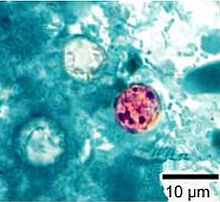
Cyclosporiasis causes an illness that can result in prolonged gastrointestinal distress, including watery diarrhea with frequent, sometimes explosive, bowel movements that can last for weeks. In severe cases, cyclospora infection can require hospitalization.220px-Cyclospora_cayetanensis_stained

Hong Kong – Bacteria and viruses that cause food poisoning

CFS

In a nutshell: Bacteria and viruses are the most common causative agents of foodborne illnesses. Bacteria grow rapidly in foods that are warm, rich in moisture or protein and low in acidity. Milk, shell eggs, poultry, fish, meat and shellfish are common foods susceptible to bacteria growth. Although viruses cannot grow in food or water, a small number of viral particles can cause sickness when consuming the contaminated food.

Information on some of the most common bacteria and viruses that cause foodborne illnesses is provided below:

USA – FDA – Core Outbreak Table – Investigations of Foodborne Illness Outbreaks

FDA

What’s New

Date
Posted
Ref Pathogen
or
Cause of
Illness
Product(s)
Linked to
Illnesses

(if any)
Total
Case
Count

Status
4/26/2023 1152 Not Yet Identified Morel Mushroom
(suspect)
41 Active
3/29/2023 1141 Salmonella Infantis Raw Flour See
Outbreak
Advisory
Active
3/1/2023 1143 Hepatitis A Virus Frozen Organic
Strawberries
See
Outbreak
Advisory
Active
2/15/2023 1123 Listeria
monocytogenes
Not Yet
Identified
See
CDC
Investigation
Notice
Active

Norway tests flour for STEC; issues warning about Prime beverages

Food Safety News

Norwegian surveillance has found a low level of flour samples positive for Shiga toxin-producing E. coli (STEC).

The Norwegian Food Safety Authority (Mattilsynet) commissioned a survey of STEC in wheat flour to gather data on the problem.

A total of 151 samples of flour were collected from retailers in 2021 and analyzed in 2022. Enriched samples were examined for the presence of selected genetic markers. Attempts to isolate STEC were carried out from samples that were positive for Shiga toxin (stx) 1 and/or stx2. Isolates identified as STEC were further characterized using whole genome sequencing.