RASFF Alert – Animal Feed – Salmonella – Cat 3 Animal Proteins – Pet Food

RASFF

Salmonella Spp in processed animal proteins (ABP cat.3) for pet food from Spain in Italy

Research – Phenotypic and Genotypic Characteristics of Non-Hemolytic L. monocytogenes Isolated from Food and Processing Environments

MDPI

Abstract

Increasingly, Listeria monocytogenes (LM) with atypical phenotypic and genotypic characteristics are being isolated from food, causing problems with their classification and testing.
From 2495 soil, food, and swab samples from the food industry, 262 LM isolates were found. A total of 30 isolates were isolated, mainly from soil and plant food, and were classified as atypical LM (aLM) because they lacked the ability to move (30/11.4%) and perform hemolysis (25/9.5%). The isolation environment affected aLM incidence, cell size, sugar fermentation capacity, antibiotic sensitivity, and the number of virulence genes.
Therefore, despite several characteristics differentiating all aLMs/non-hemolytic isolates from reference LMs, the remaining phenotypic characteristics were specific to each aLM isolate (like a fingerprint). The aLM/non-hemolytic isolates, particularly those from the soil and meat industries, showed more variability in their sugar fermentation capacity and were less sensitive to antibiotics than LMs. As many as 11 (36.7%) aLM isolates had resistance to four different antibiotics or simultaneously to two antibiotics. The aLM isolates possessed 3–7 of the 12 virulence genes: prfA and hly in all aLMs, while iap was not present.
Only five (16.7%) isolates were classified into serogroups 1/2c-3c or 4a-4c. The aLM/non-hemolytic isolates differed by many traits from L. immobilis and atypical L. innocua. The reference method of reviving and isolating LM required optimization of aLM. Statistical analyses of clustering, correlation, and PCA showed similarities and differences between LM and aLM/non-hemolytic isolates due to individual phenotypic traits and genes.
Correlations were found between biochemical traits, antibiotic resistance, and virulence genes. The increase in the incidence of atypical non-hemolytic LM may pose a risk to humans, as they may not be detected by ISO methods and have greater antibiotic resistance than LM. aLM from LM can be distinguished based on lack of hemolysis, motility, growth at 4 °C, ability to ferment D-arabitol, and lack of six specific genes.

Research – EU audits investigate Egypt and India’s Aflatoxin problem

Food Safety News

The European Commission’s health and safety unit has published findings from two assessments looking at controls on aflatoxins in nuts in Egypt and India.

A DG Sante audit in Egypt in September 2022 was due to continuing Rapid Alert System for Food and Feed (RASFF) notifications for aflatoxins in peanuts. There were 41 in 2021 and at least 34 in 2022. A few operators are behind the majority of rejections, said auditors. Local officials said the rise in alerts was related to increased exports.

Each consignment of peanuts originating in or coming from Egypt must be accompanied by a health certificate and results of official sampling and analysis verifying compliance with EU aflatoxin limits. Imports are also subject to checks at a frequency of 30 percent.

Research – Bacillus subtilis Bacteremia from Gastrointestinal Perforation after Natto Ingestion, Japan

CDC

We report a case of Bacillus subtilis variant natto bacteremia from a gastrointestinal perforation in a patient who ingested natto. Genotypic methods showed the bacteria in a blood sample and the ingested natto were the same strains. Older or immunocompromised patients could be at risk for bacteremia from ingesting natto.

Bacillus subtilis is a gram-positive, rod-shaped, spore-forming bacterium with low pathogenicity (1). B. subtilis isolated from clinical specimens is sometimes considered a contaminant (2). However, a few cases of bacteremia caused by B. subtilis have been reported in Japan (3–6). We report a case of B. subtilis variant natto bacteremia and peritonitis caused by ingestion of natto, a traditional fermented food in Japan that is prepared by adding B. subtilis var. natto culture to soybeans and fermenting them.

A 65-year-old man with metastatic colorectal cancer was admitted to Oita University Hospital (Oita, Japan) with fever and perianal pain. Approximately 2 months before admission, he began chemotherapy with bevacizumab and modified oxaliplatin plus leucovorin plus 5-fluorouracilm (FOLFOX6). Six days before admission, on day 4 after the third course of chemotherapy, he experienced perianal pain. He had a history of diabetes mellitus and a custom of eating natto.

Research – Combining High-Pressure Processing and Supercritical Carbon Dioxide for Inactivation of Listeria innocua

MDPI

Abstract

The effect of high-pressure treatment with supercritical CO2 on the inactivation of Listeria innocua in a fish soup was investigated. The soup was inoculated with L. innocua, packaged in modified atmosphere with 50:50 or 95:5 CO2:N2, high-pressure processed (300, 350, 400 and 600 MPa, 2 min) under subcritical (T < 304 K) or supercritical conditions (T > 304 K) and stored at 4 °C for up to 53 days. Treatment at 400 and 600 MPa had a significant (p < 0.05) effect on L. innocua under both supercritical and subcritical conditions. In contrast, pressurization at 350 MPa and supercritical conditions were needed to significantly (p < 0.05) inactive L. innocua. Increased levels of CO2 in the headspace significantly (p < 0.05) reduced the bacterial load during processing, and supercritical conditions had a significant (p < 0.01) interaction with both CO2 levels and pressure. Increased storage time gave significantly increased levels of L. innocua at 400 and 600 MPa. In addition, high levels of CO2 significantly decreased (p < 0.001) growth. However, 350 MPa under supercritical conditions seemed to set the L. innocua in a permanent lag phase, with slow and steadily decreasing numbers of bacteria during storage. All the design variables resulted in significant inactivation of L. innocua, and supercritical conditions combined with high levels of CO2 inhibited the recovery of L. innocua to a large degree.

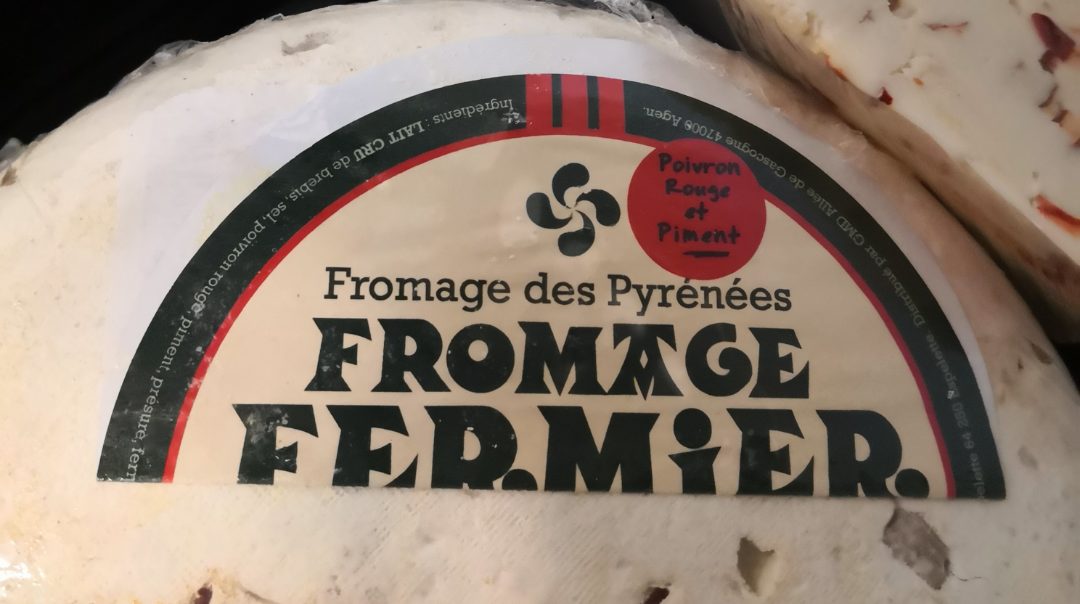
France – ETXEAN PUR EMBIS FARM. ANTONIN – Listeria monocytogenes

Gov france

  • Product category Food
  • Product subcategory Milk and dairy products
  • Product brand name KUKULU
  • Model names or references ETXEAN PUR EMBIS FARM. ANTONIN
  • Product identification
    GTIN Batch Date
    0205498000000 BP61323 Minimum durability date 02/04/2024
  • Start/end date of marketing From 09/07/2023 to 09/25/2023
  • Storage temperature Product to keep in the refrigerator
  • Health mark FR 64 213 100
  • Further information Pyrenees farm cheese from sheep’s raw milk Chili and red pepper
  • Geographical sales area Whole France
  • Distributors E. Leclerc Tulle

USA – Organic toddler grain, veggies and fruit bars recalled over mold/mould

Food Safety News

Cerebelly Inc of Los Gatos, CA, is recalling certain Cerebelly Smart Bars because of visible surface mold on product.

According to details posted online by the FDA, the recall was initiated on Sept. 11, 2023, and is ongoing.

The recalled products were distributed in the U.S. to all 50 states and territories.

USA -Frozen octopus recalled after testing finds Salmonella

Food Safety News

CenSea Inc of Northbrook, IL is recalling Central Seafoods IQF (individual quick freezing) whole octopus after product tested positive for Salmonella.

According to the details posted online by the FDA, the recall was initiated on Sept. 1, 2023, and is ongoing.

The recalled products were distributed in Ohio, Florida, Georgia and Illinois.

Netherlands – Jumbo Penny Waffles – Salmonella

NVWA

Safety Warning Jumbo Penny Waffles

Jumbo warns against Jumbo Penny Waffles. The bacteria Salmonella may be present in Jumbo Penny Waffles. Eating it can pose a health risk, especially in pregnant women, young children, the elderly and people with a weakened immune system. Do not eat the product.

See the Jumbo website

Which product is it?

  • Jumbo Penny Waffles
  • Barcode: 8718452584406
  • Best before (THT): 01-06-2024

 Italy – CHIANINA BEEF HAMBURGHER – STEC E.coli

Salute

Brand : ///

Name : CHIANINA BEEF HAMBURGHER

Reason for reporting : Recall due to microbiological risk

Publication date : 4 October 2023

Documentation

Documentation