Brand : Heart of choice
Name : Berries
Reason for reporting : Recall due to microbiological risk
Publication date : 7 April 2024


Brand : Heart of choice
Name : Berries
Reason for reporting : Recall due to microbiological risk
Publication date : 7 April 2024
Posted in food contamination, food handler, Food Hazard, Food Hygiene, Food Inspections, Food Micro Blog, Food Microbiology, Food Microbiology Blog, Food Microbiology Testing, Food Pathogen, Food Quality, food recall, Food Safety, Food Safety Alert, Food Safety Management, Food Safety Regulations, Food Testing, Norovirus Soft Fruits
April 5, 2024
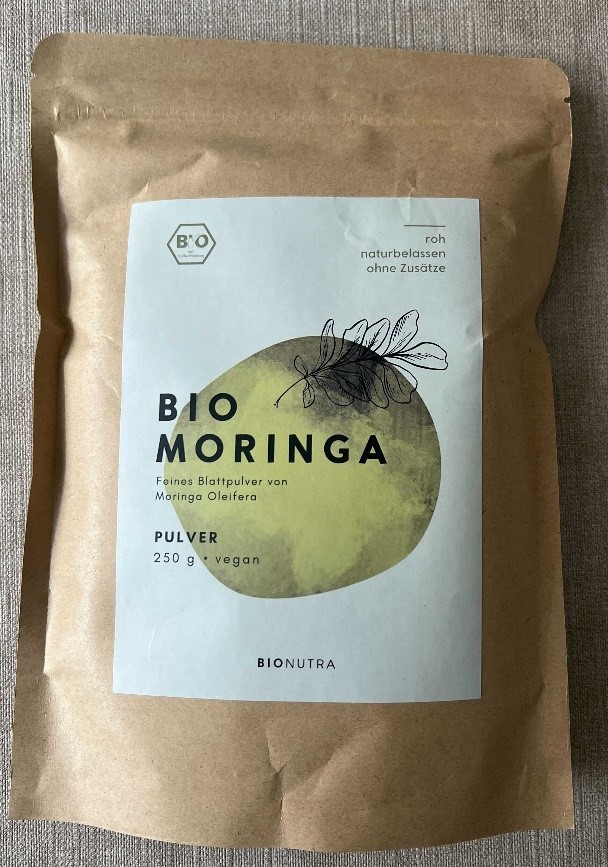
closed beige paper bag with yellow circle on white label
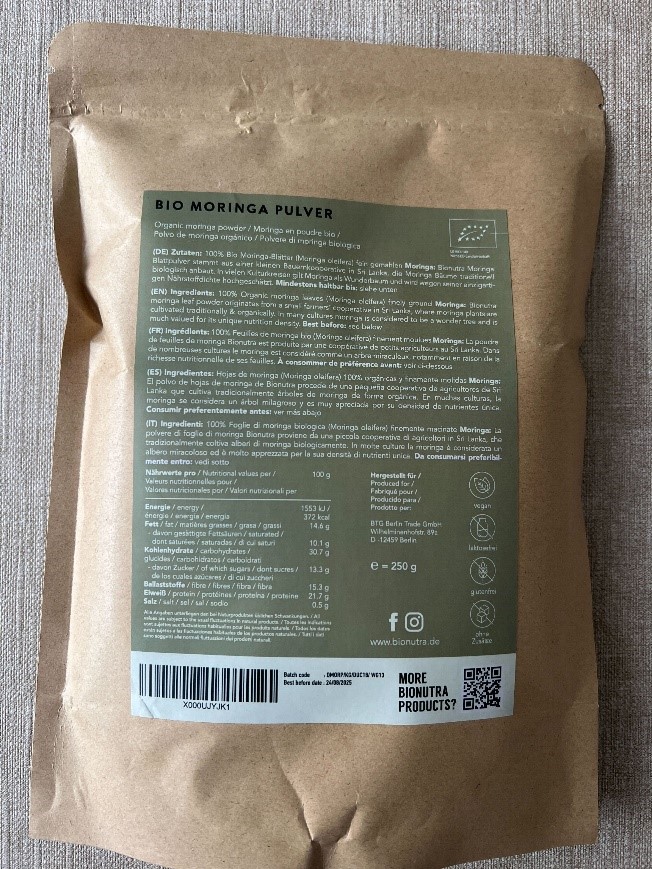
sealed beige paper bag with gray and white label
BTG Berlin Trade GmbH, Wilhelminenhofstraße 89a in 12459 Berlin
Salmonella 25 g in Moringa powder, which is ready to eat without further heating
OMORP/KG/DUC18/WG13
Salmonella infection manifests itself within a few days of infection with diarrhea, abdominal pain and occasionally vomiting and a slight fever. The symptoms usually go away on their own after several days. In particular, infants, small children, seniors and people with weakened immune systems can develop more severe illnesses. People who have eaten this food and develop severe or persistent symptoms should seek medical attention and report a possible salmonella infection. Seeking preventive medical treatment without symptoms does not make sense.
Further information about the pathogen can be found here:
http://www.kritiksschutz.de/erregersteckbriefe/salmonellen
Reference is made to the company’s attached recall information.
Posted in food contamination, food handler, Food Hazard, Food Hygiene, Food Inspections, Food Micro Blog, Food Microbiology, Food Microbiology Blog, Food Microbiology Testing, Food Pathogen, Food Quality, food recall, Food Safety, Food Safety Alert, Food Safety Management, Food Safety Regulations, Food Testing, Lebensmittelwarnung, Salmonella
Brand : Alborghetti
Name : Salame Tronchetto
Reason for reporting : Recall due to microbiological risk
Publication date : 5 April 2024
Posted in food contamination, food handler, Food Hazard, Food Hygiene, Food Inspections, Food Micro Blog, Food Microbiology, Food Microbiology Blog, Food Microbiology Testing, Food Pathogen, Food Quality, food recall, Food Safety, Food Safety Alert, Food Safety Management, Food Safety Regulations, Salmonella
Brand : Azzocchi Roberto SRL
Name : Sweet salami
Reason for reporting : Recall due to microbiological risk
Publication date : 5 April 2024
Posted in food contamination, food handler, Food Hazard, Food Hygiene, Food Inspections, Food Micro Blog, Food Microbiology, Food Microbiology Blog, Food Microbiology Testing, Food Pathogen, Food Quality, food recall, Food Safety, Food Safety Alert, Food Safety Management, Food Safety Regulations, Food Testing, Salmonella
Dr. Keith Warriner will explain the gas-phase hydroxyl-radical process that offers intervention against Salmonella and other pathogens during his education session next month at Petfood Forum.
In recent years, the raw pet food industry has faced a series of challenges, with outbreaks and recalls linked to Salmonella contamination. This has led to a negative perception and concerns over the safety of raw pet foods.
Posted in Aflatoxin, Aflatoxin B1, Fumomisins, Fumonsins, mold, Mold Toxin, Mould/Mold, Mycotoxin, Ochratoxin, Ochratoxin A, Patulin, Zearalenone
In the May of 2023, a significant increase in Cyclospora cases associated with a Mexican-style restaurant in Limestone County, Alabama was investigated by the Alabama Department of Public Health. An outbreak investigation was initiated on June 7, 2023. A case control study was launched on June 12. Exposures were reported between May 20 and June 6, 2023.
To analyze the nationwide incidence of Salmonella infections in Denmark from 2013 to 2022.
Confirmed cases of Salmonella enterica subsp. enterica were examined using the National Register of Enteric Pathogens during 2013–2022. Proportions, incidence rates (IR), relative risk (RR), and 95% confidence intervals (CI) were calculated to assess differences in serotypes, invasiveness, age, sex, and travel exposure.
We identified 9,944 Danish Salmonella enterica subsp. enterica cases, with an average annual incidence rate of 16.9 per 100,000 inhabitants, declining during the COVID-19 pandemic. Typhoidal cases totaled 206, with an average annual IR of 0.35 per 100,000 inhabitants. Enteric fever patients had a median age of 24 years (IQR:17–36). Leading non-typhoid Salmonella (NTS) serotypes were S. Enteritidis (26.4%), monophasic S. Typhimurium (16.5%), and S. Typhimurium (13.5%). Median age for NTS cases was 42 (IQR: 18–62), with even sex distribution, and a third reported travel prior to onset of disease. The overall percentage of invasive NTS (iNTS) infection was 8.1% (CI: 7.6–8.7). Eleven serotypes were associated with higher invasiveness, with S. Dublin and S. Panama having the highest invasiveness with age and sex-adjusted RR of 7.31 (CI: 6.35–8.43) and 5.42 (CI: 3.42–8.60), respectively, compared to all other NTS serotypes. Increased age was associated with higher RR for iNTS infection.
During the decade, there was a limited number of typhoidal cases. The dominant NTS serotypes were S. Enteritidis and monophasic S. Typhimurium, whereas S. Dublin and S. Panama exhibited the highest invasive potential.
In food preparation and manufacturing environments, surfaces contaminated with Salmonella can lead to outbreaks of Salmonellosis. We hypothesise that Salmonella resides on dry surfaces in a biofilm form leading to potential environmental persistence and transfer following contact. This is the first study reporting that Salmonella Typhimurium can form dry surface biofilm (DSB). Six disinfectants commonly used in the food industry were evaluated for their efficacy against the DSB. The two most efficacious formulations reduced bacterial viability in DSB by >99.99% when combined with mechanical removal (5 sec wiping; 300 g weight). Five out of six formulations significantly reduced bacterial transfer when combined with wiping. Complete eradication of Salmonella Typhimurium DSB was challenging, and mechanical removal was essential to produce a >99.99% reduction in bacterial viability within DSB. This study highlights a potential mode of survival of Salmonella Typhimurium on food-contact surfaces and DSB challenges for disinfection.
Posted in Biofilm, Food Microbiology Research, Research, Salmonella
The number of broiler flocks positive for Campylobacter in Norway increased in 2023 but is still at low levels, according to the latest data.
Surveillance in 2023 showed that 128 flocks, or 6.1 percent, were positive for Campylobacter.
This is from tests on broiler flocks slaughtered before 51 days of age during May and October by the owner or keeper. There was no information shared on the levels of Campylobacter detected.

 FoodWorld