RASFF Alerts – Salmonella – Polish Chicken – Polish Turkey – Chicken Meat – Mussels –

RASFF

Salmonella group B (O:4) in chilled turkey meat from Poland in Belgium, Germany and Netherlands

RASFF

Salmonella enterica ser. Enteritidis in chilled chicken meat from the Netherlands in the Netherlands and Belgium

RASFF

Fishing mussels – salmonella spp from Denmark in France

RASFF

Frozen chicken legs – Salmonella Enteritidis from Poland in France

RASFF

Salmonella in chicken meat preparations from Poland in the Netherlands, Luxembourg and Belgium

RASFF

Salmonella Enteritidis in official samples of chicken neck skins from Poland in the UK, Lithuania, Belgium, 

RASFF

Salmonella Typhimurium in turkey meat from Poland in Belgium, Czech Republic, Germany, Ireland and Latvia

RASFF

Salmonella infantis in chicken meat from Spain in France

RASFF

Salmonella infantis in chicken breast from Poland in the Czech Republic


RASFF Alert – Animal Feed – Salmonella – Rapeseed Cake

RASFF

Salmonella in rapeseed cake from the Czech Republic in Germany and Austria

Research – Effect of UVC light-emitting diodes on pathogenic bacteria and quality attributes of chicken breast

Journal of Food Protection

This study aimed to investigate the inactivation of foodborne pathogens and the quality characteristics of fresh chicken breasts after Ultraviolet-C light-emitting diode (UVC-LED) treatment. Fresh chicken breasts were separately inoculated with Salmonella Typhimurium, Escherichia coli O157:H7, and Listeria monocytogenes at an initia population of 6.01, 5.80, and 6.22 log 10 CFU/cm 2 , respectively, then were treated by UVC-LED at 1000 to 4000 mJ/cm 2 . UVC-LED irradiation could inactivate the tested bacteria in a dose-dependent manner. After UVC-LED treatment at 4000 mJ/cm 2 , the populations of S . Typhimurium, E . coli O157:H7, and L . monocytogenes on chicken breasts were decreased by 1.90, 2.25, and 2.18 log 10 CFU/cm 2 , respectively. No significant ( P > 0.05) changes were found in the color, pH value, texture properties, and thiobarbituric acid reactive substances (TBARS) values of chicken breasts following the UVC-LED radiation at doses up to 4000 mJ/cm 2 . Overall, this study indicates that UVC-LED is a promising technology to reduce the number of microorganisms while maintaining the physico-chemical characteristics of poultry meat.

Research- Prevalence of Toxoplasma gondii, Hepatitis E Virus and Salmonella antibodies in meat juice samples from pigs at slaughter in Switzerland

Journal of Food Protection

Toxoplasma

Toxoplasma gondii , hepatitis E virus (HEV) and Salmonella are zoonotic foodborne pathogens that may be transmitted to humans through the consumption of raw or undercooked pork.  The aim of this study was to determine the seroprevalence of anti- Toxoplasma gondii , anti-HEV and anti- Salmonella antibodies from healthy pigs at slaughter in Switzerland. In the period of August to September 2020 diaphragm muscle of Swiss fattening pigs was collected in three Swiss abattoirs from a total of 188 farms. Two randomly chosen pig carcasses per farm were selected. On the basis of the slaughter data, the production system and the canton of origin were noted, comparing indoor (n=120) and free-range farming (n=68), and regional allocation. The meat juice of these samples was analyzed for pathogen-specific antibodies using commercial enzyme-linked immunosorbent assay (ELISA) kits. The seroprevalences were 1.3% for T. gondii , 71.8% for the HEV and 5.3% for Salmonella , respectively. Comparing the origins, the results of many cantons weren’t meaningful due to the low number of samples. No regional accumulations were found for T. gondii and the HEV. The results showed that 2.1% of the farms had least one T. gondii seropositive animal, 80.3% had at least one HEV seropositive animal, and 8.5% had at least one Salmonella seropositive animal, respectively. The seropositivity of T. gondi i was higher in free-range pigs than in indoor pigs, whereas anti- Salmonella antibodies were more common in pigs from indoor farming than in outdoor pigs. The seroprevalence of anti HEV-Abs was similar in free-range and indoor farming pigs. Compared to studies from 2012 the seroprevalence of T. gondii has decreased whereas the seroprevalence of the HEV has increased and is highly prevalent among fattening pigs in Switzerland. The low seroprevalence of Salmonella has remained stable in recent years.

USA – Thirteen sickened with Norovirus after eating at same restaurant

Food Safety News

Norwalk_Caspid

A norovirus outbreak among restaurant patrons in the Seattle-King County area of Washington has been reported.

The public health department reported on June 9 that 13 people from one meal party came down ill with symptoms of the virus after eating at Mazatlan Restaurant in Auburn, WA. The people dined at the restaurant on May 21.

“We have not identified how norovirus was spread within the restaurant. This is not uncommon for norovirus outbreaks because the virus can spread through multiple contaminated food items, environmental surfaces, and from person to person,” according to a statement from the public health department.

USA – Core Investigation Updated

FDA

The table includes the conclusion of an  E. coli O145:H28 outbreak. The FDA reports that 16 people were sickened in the outbreak for which a cause has not been detected.

A new Salmonella outbreak has also been added with little other information.

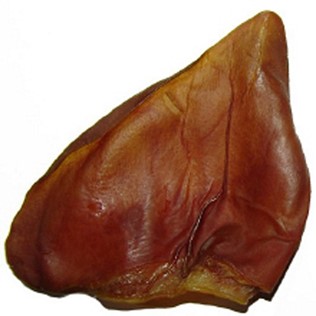
Iceland – Salmonella in pork ears for pets

MAST

The company Petmark ehf has, in consultation with the Food Administration, recalled pig semen for pets after salmonella was detected in a sample. These are unpacked pork ears that were sold by choice in the stores Gæludýr.is and Bendir for the past four weeks (1.5.2021-6.6.2021). 

Product information:

  • Product name: Pork ear
  • Importer: Petmark ehf, Völuteig 6, 270 Mosfellsbær.
  • Country of manufacture: Germany
  • Manufacturer: Be-So GmbH
  • Lot number / best for dates: 13.5.2022. NOTE no packaging. The recall applies to pig semen purchased at Gæludýr.is and Bendi last year. 4 weeks
  • Storage conditions: Ambient
  • Distribution: Points and stores Gæludýr.is

Ears

Those who have purchased the product are asked to return it to the point of sale or discard it.

Related material

France – Recall – FERME GINEAU – INVITATION A LA FERME brand Crèmes desserts vanille et crèmes desserts vanille sur lit de caramel / Vanilla cream pudding and vanilla cream pudding on a bed of caramel – Microbial Contamination

Recall Notice in French

FERME GINEAU recalls FERME GINEAU – INVITATION A LA FERME brand Crèmes desserts vanille et crèmes desserts vanille sur lit de caramel / Vanilla cream pudding and vanilla cream pudding on a bed of caramel (4 x 100g; Use by 30/06/2021)


France – Recall Les Vaches Heureuses brand Crème épaisse crue / Heavy cream, unpasteurized – E.coli

LA FERME DES VACHES HEUREUSES EURL recalls Les Vaches Heureuses brand Crème épaisse crue / Heavy cream, unpasteurized (25 cl; Use by 18/06/2021)

Recall Notice in French

Belgium – ITALIAN Chipolata X2 (+/- 250g) of the Louis brand ITALIAN SAUSAGE X3 (+/- 375g) of the Louis brand – Salmonella

AFSCA

Recall Delfood
Products: ITALIAN Chipolata X2 (+/- 250g) of the Louis brand ITALIAN SAUSAGE X3 (+/- 375g) of the Louis brand.
Problem: Possible presence of Salmonella.


In agreement with the AFSCA, Delfood SA withdraws from sale the products mentioned below and recalls them to consumers because of the presence of Salmonella.

Delfood SA asks its customers not to consume these products and to bring them back to the point of sale for a refund or exchange.

Products: ITALIAN CHIPOLATA FROM THE LOUIS BRAND, 2 pieces (+/- 250g)
Expiration date (
BBD): 06/11/2021 Lot number: 8412250

Products: ITALIAN SAUSAGE FROM THE LOUIS BRAND, 3 pieces (+/- 375g)
Expiry date (
BBD): 06/11/2021 Lot number: 8412250

The products were sold through the stores of the “Louis Delhaize” banner.

For any further information , contact: 071/204381

We apologize for any inconvenience.

DELFOOD