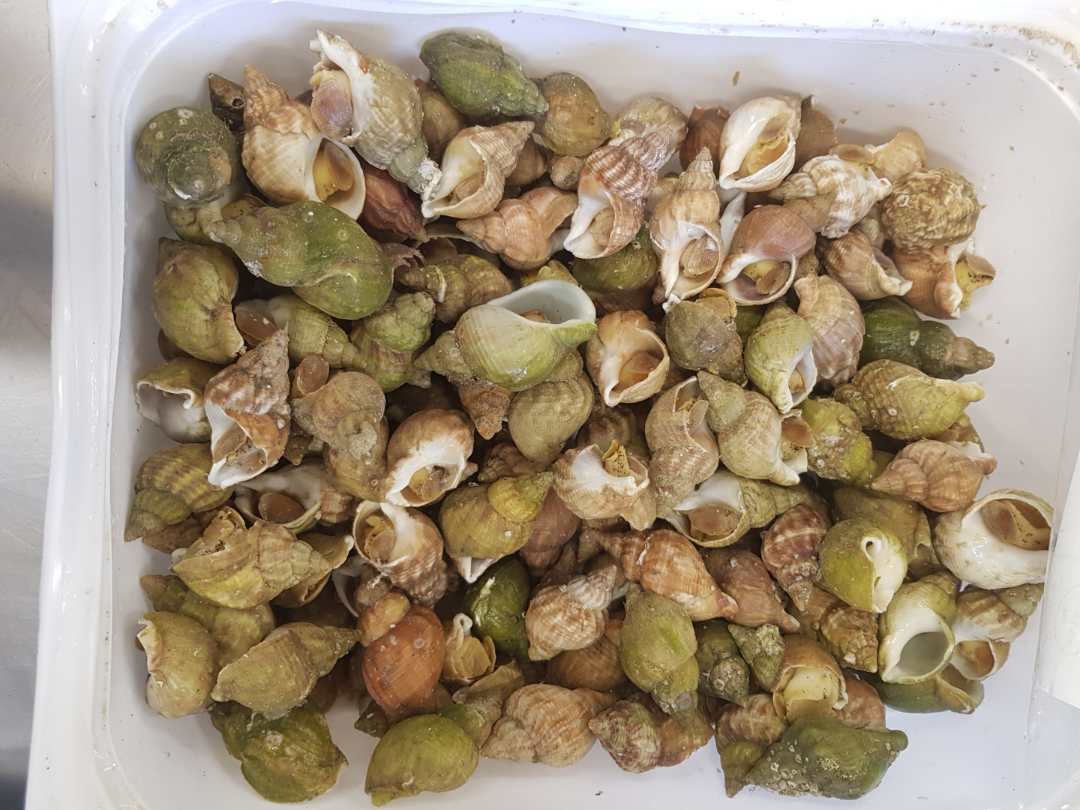
France – BULOT BAKED PASTEURIZED – Listeria monocytogenes

Gov france

Identifying information for the recalled product

  • Product category Food
  • Product sub-category Fishery and aquaculture products
  • Product brand name WITHOUT BRAND
  • Names of models or references NO MODEL
  • Product identification
    Lot
    sold in the tide department between 05/21/21 to 07/05/21
  • Start date / End of marketing From 05/21/2021 to 07/05/2021
  • Storage temperature Product to be stored in the refrigerator
  • Health mark56,098,005
  • Geographical sales area Whole France
  • Distributors INTERMARKET

Practical information regarding the recall

  • Reason for recall Presence of Listeria monocytogenes with DLC above the regulatory threshold.
  • Risks incurred by the consumer Listeria monocytogenes (causative agent of listeriosis)
  • Consumer behavior Stop consuming
    Return the product to the point of sale
    Destroy the product
  • Sanitary recommendation People who have consumed the “products” mentioned above and who have fever, isolated or accompanied by headaches, and muscle aches, are invited to consult their doctor, notifying him of this consumption. Serious forms with neurological complications and maternal or fetal damage in pregnant women can also sometimes occur. Pregnant women as well as immunocompromised people and the elderly should pay special attention to these symptoms. Listeriosis is a disease that can be serious and can take up to eight weeks to incubate.
  • Compensation modalities Refund
  • End date of the recall procedure Tuesday, July 27, 2021

USA – Montgomery Alabama Applebee’s tied to Hepatitis A scare

Food Poison Journal

The Alabama Department of Public Health (ADPH), in cooperation with Applebee’s Restaurant in Montgomery, is investigating a food handler who is infected with hepatitis A virus. As a preventative measure, ADPH is suggesting customers who consumed food, whether dine-in, pickup, or delivery, between the dates of July 8 through July 16, 2021, be identified. These patrons may need the hepatitis A vaccine or immune globulin to reduce their chance of illness.

Hepatitis A is a viral infection that can be transmitted person-to-person and by eating food or drinks prepared by an infected person. Hepatitis A vaccine can prevent infection, but only if given within 14 days of exposure to hepatitis A. The hepatitis A vaccine can be given to persons over 12 months of age who have not completed the two-dose hepatitis A vaccination series. Persons over 40 years old may also receive immune globulin.

Research – High Occurrence of Shiga Toxin-Producing Escherichia coli in Raw Meat-Based Diets for Companion Animals—A Public Health Issue

MDPI

Feeding pets raw meat-based diets (RMBDs) is becoming increasingly popular but comes with a risk of pathogenic bacteria, including Shiga toxin-producing Escherichia coli (STEC). In humans, STEC may cause gastrointestinal illnesses, including diarrhea, hemorrhagic colitis (HC), and the hemolytic uremic syndrome (HUS). The aim of this study was to evaluate commercially available RMBDs with regard to the occurrence of STEC. Of 59 RMBD samples, 59% tested positive by real-time PCR for the presence of Shiga toxin genes stx1 and/or stx2. STECs were recovered from 41% of the 59 samples, and strains were subjected to serotyping and virulence gene profiling, using whole genome sequencing (WGS)-based methods. Of 28 strains, 29% carried stx2a or stx2d, which are linked to STEC with high pathogenic potential. Twenty different serotypes were identified, including STEC O26:H11, O91:H10, O91:H14, O145:H28, O146:H21, and O146:H28, which are within the most common non-O157 serogroups associated with human STEC-related illnesses worldwide. Considering the low infectious dose and potential severity of disease manifestations, the high occurrence of STEC in RMBDs poses an important health risk for persons handling raw pet food and persons with close contact to pets fed on RMBDs, and is of concern in the field of public health. View Full-Text

Czech Republic – MEAT SAUSAGES POLIČKA Tartar from Czech farms – Beef tartare 250g – STEC E.coli

Potravinynapranyri

Illustration photo no. 1

Place of inspection:
Pilsen ( Americká 2186/47, 301 00 Pilsen )
Company ID: 26178541
Food group: Meat and meat products / Uncooked perishable products

MEAT SAUSAGES POLIČKA Tartar from Czech farms – Beef tartare 250g
Category: Dangerous food
Unsatisfactory parameter:

Escherichia coli producing shiga-toxin (STEC)

The product was found to have a type of Escherichia coli that is able to produce shiga-toxin.

Among other things, Shiga toxins cause diarrhea and can damage the kidneys.

The food cannot be considered safe.

Lots: L: 96382
Expiration date: 05/09/2021
Packaging: PE tray, PAP label
Quantity of product in package: 250 g
Producer: MASO UZENINY POLIČKA as, č.p.300, 572 01 Kamenec u Poličky, Czech Republic
Country of origin:  Czechia
Date of sampling: 5. 5. 2021
Reference number: 21-000206-CAFIA-CZ
The sample was found by an official inspection of the State Agricultural and Food Inspection Authority.

USA – Muffins recalled over Listeria monocytogenes

Food Poison Journal

Give and Go Prepared Foods (U.S.A.) Corp. announced today a voluntary nationwide recall of certain muffin products due to the potential for the products to be contaminated with Listeria monocytogenes, an organism which can cause serious and sometimes fatal infections in young children, frail or elderly people, and others with weakened immune systems.

Research – Yersinia enterocolitica Outbreak Associated with Pasteurized Milk

Mary Ann Liebert

In July 2019, we investigated a cluster of Yersinia enterocolitica cases affecting a youth summer camp and nearby community in northeastern Pennsylvania. After initial telephone interviews with camp owners and community members, we identified pasteurized milk from a small dairy conducting on-site pasteurization, Dairy A, as a shared exposure. We conducted site visits at the camp and Dairy A where we collected milk and other samples. Samples were cultured for Y. enterocolitica. Clinical and nonclinical isolates were compared using molecular subtyping. We performed case finding, conducted telephone interviews for community cases, and conducted a cohort study among adult camp staff by administering an online questionnaire. In total, we identified 109 Y. enterocolitica cases. Consumption of Dairy A milk was known for 37 (34%); of these, Dairy A milk was consumed by 31 (84%). Dairy A had shipped 214 gallons of pasteurized milk in 5 weekly shipments to the camp by mid-July. Dairy A milk was the only shared exposure identified between the camp and community. Y. enterocolitica was isolated from Dairy A unpasteurized milk samples. Five clinical isolates from camp members, two clinical isolates from community members, and nine isolates from unpasteurized milk were indistinguishable by whole-genome sequencing. The risk for yersinosis among camp staff who drank Dairy A milk was 5.3 times the risk for those who did not (95% confidence interval: 1.6–17.3). Because Dairy A only sold pasteurized milk, pasteurized milk was considered the outbreak source. We recommend governmental agencies and small dairies conducting on-site pasteurization collaborate to develop outbreak prevention strategies.

USA – Oysters recalled amid Washington’s largest ever Vibrio outbreak

Food Safety News

KSWFOODWORLD

Washington state has initiated a recall of live oysters harvested from the Samish Bay growing area in the Puget Sound area. The recall is in response to multiple cases of Vibrio parahaemolyticus illnesses associated with oysters harvested in the area. 

The outbreak has already surpassed the highest number of cases ever recorded by the state for the month of July, according to the state’s Health Department. Distribution details are incomplete but it is known that some of the oysters have gone to Asian and Canadian buyers as well as customers in the United States.

A recent heat wave, coupled with very low tides at mid-day, are likely to blame for the increased rate of illness, which is associated with eating raw or undercooked shellfish, especially oysters that are contaminated with Vibrio. 

The extremely low tides are part of an 18.6-year tide cycle, which means there will be more to come for a period of time during the cycle.

Canada – Notice not to consume smoked fish packaged and sold by Souk Michelet

MAPAQ

WARNING TO THE POPULATION

QUEBEC, July 20. 2021 / CNW Telbec / – The Ministry of Agriculture, Fisheries and Food (MAPAQ), in collaboration with the Food Inspection Department of the City of Montreal and the company Souk Michelet, located at 6450 , rue Beaubien Est, in Montreal, is warning the public not to consume the product indicated in the table below, because it has not been prepared and packaged in such a way as to ensure its safety.

Product name

Format

Targeted lot

“Souk Michelet, smoked fish”

Variable

Units sold until July 19, 2021

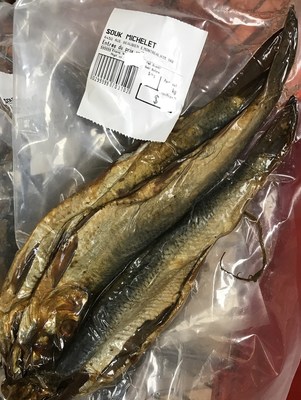
The product that is the subject of this warning was offered for sale until July 19, 2021 inclusive, and only at the establishment designated above. It was packaged in transparent bags, under vacuum, and sold refrigerated. The product label includes the words “Souk Michelet”.

The operator is voluntarily recalling the product in question. He agreed with the MAPAQ and the Food Inspection Department of the City of Montreal to disseminate this warning as a precautionary measure. People who have this product in their possession are advised not to consume it. They must either return it to the establishment where they bought it or throw it away. Even if the affected product does not show any signs of spoilage or a suspicious odor, consuming it may represent a health risk. It should be noted that no case of illness associated with the consumption of this food has been reported to MAPAQ so far.

Additional information

The Ministry publishes various information documents concerning food safety. Those interested can consult them in the “Food consumption” section of the MAPAQ website: www.mapaq.gouv.qc.ca/consommation . They also have the option of registering online, by visiting www.mapaq.gouv.qc.ca/rappelsaliments , to receive, by email, the food recall releases published by the Department. Finally, it is possible to follow “MAPAQaliments” on Twitter at the following address: www.twitter.com/MAPAQaliments .

Smoked fish (CNW Group / Ministry of Agriculture, Fisheries and Food) This link will open in a new window.

Smoked fish (CNW Group / Ministry of Agriculture, Fisheries and Food) This link will open in a new window.

Risk  classification : class 1

Item number:  4372

New Zealand – Recall to manage Listeria in selected LSG Sky Chefs Products

MPI

LSG Sky Chefs New Zealand Ltd is recalling specific batches of selected salads, sandwiches and wraps, products sold at selected supermarkets, retail outlets and petrol stations throughout New Zealand due to the possible presence of Listeria bacteria. 

Listeria can make people sick (listeriosis) if they consume contaminated food.

The listed products and brands with use by dates inclusive of 19/07/2021, 21/07/2021, 22/07/2021 and 23/07/2021 are affected by this recall:

  • Naturezone brand Sweet Chilli Chicken & Asian Slaw Premium Sandwich
  • Naturezone brand Chicken Schnitzel Premium Sandwich
  • Naturezone brand Chicken Schnitzel Salad Wrap
  • Sweet Chilli Chicken Sandwich
  • Chicken Schnitzel Sandwich
  • Wild Bean Café brand Chicken Schnitzel Sandwich
  • Wild Bean Café brand Chicken Peri Peri Sandwich
  • Wild Bean Café brand Chicken Teriyaki Sandwich
  • Wild Bean Café brand Chicken Noodle Salads
  • Wild Bean Café brand Raw Vegetable Salads
  • Starbucks brand Peri Peri Chicken Pide.

More information including the use by dates, affected products, retail outlets

New Zealand Food Safety national manager food compliance services, Melinda Sando, says customers should check the date marking printed on the packaging for the affected dates.

It is important for consumers to check the product names and use by dates as not all products are affected.

People who have purchased the affected product should throw it away or return it to the retailer for a full refund.

“Listeriosis infection can be serious among vulnerable groups such as pregnant women and their unborn babies, newborn babies, people with weakened immune systems, and the frail and elderly.

“For those in the high-risk groups, listeriosis typically has an incubation period of 2 to 3 weeks (or longer) before symptoms appear.

“Healthy adults are likely to experience only mild infection, causing diarrhoea and flu-like symptoms.

“If you have consumed any of these products and have any concerns about your health, seek medical advice,” says Ms Sando.

New Zealand Food Safety have not received any reports of illness.

No other products from these brands are affected by this recall. The products have not been exported.

New Zealand – Shellfish biotoxin alert for Hawke Bay has been removed

MPI

The Ministry for Primary Industries today removed the public health warning against collecting shellfish from the Hawke Bay. This warning was from the Mohaka River Mouth South to Cape Kidnappers. Further sampling of shellfish along this coastline has showed that PSP toxins are now at safe levels.

No other warnings remain in place.