France – FUET – Salmonella

Gov france

Identifying information for the recalled product

  • Product category Food
  • Product sub-category Meats
  • Product brand name CASA RAMÓN
  • Names of models or references FUET EXTRA FUET PEPPER FUET HERBS
  • Product identification
    GTIN Lot
    8436045041708 All lots
    8436045040862 All lots
    8436045040312 All lots
  • Packaging PACKAGE 20 CSU
  • Start date / End of marketing From 04/15/2021 to 06/24/2021
  • Storage temperature Product to be stored at room temperature
  • Health mark ES 10.01865 / GE CE
  • Geographical sales area Whole France
  • Distributors CASINO – FPLP – MONOPRIX – U – INTERMARCHE – CARREFOUR MARKET – AUCHAN SUPERMARCHE – G20 – LECLERC

Practical information regarding the recall

  • Reason for recall presence of salmonella
  • Risks incurred by the consumer Salmonella spp (causative agent of salmonellosis)
  • Consumer behavior Stop consuming
    Stop using the product
    Return the product to the point of sale
    Contact the point of sale
    Contact the consumer service
    Destroy the product
  • Sanitary recommendation Food poisoning caused by salmonella results in sudden onset gastrointestinal disorders (diarrhea, vomiting) often accompanied by fever and headaches which generally occur 6 to 72 hours after consumption of the contaminated products. These symptoms may be more pronounced in young children, pregnant women, immunocompromised individuals and the elderly. People who have consumed these products and who present these symptoms are invited to consult their doctor, notifying him of this consumption. In the absence of symptoms within 7 days after consuming the affected products, there is no need to worry and consult a doctor. If the product must be cooked before consumption:
  • Contact number0180917160
  • Compensation modalities Refund
  • End date of the recall procedure Tuesday, August 10, 2021

Research – FAO and the Republic of Korea join forces to reduce foodborne antimicrobial resistance

FAO

The Food and Agriculture Organization of the United Nations (FAO) and the Republic of Korea, through its Ministry of Food and Drug Safety (MFDS), today signed a new Framework Arrangement which establishes overarching terms and conditions that will govern the cooperation through voluntary contributions and facilitate future negotiations between MFDS and FAO.

The Arrangement focuses on food safety and standard setting, and contains a Contribution Arrangement which will help to simplify the implementation of individual projects.

The Republic of Korea will provide $10 million to help implement and monitor Codex Alimentarius international food standards, with the goal of containing and reducing foodborne antimicrobial resistance (AMR). AMR not only poses a major threat to human and animal health, but also has serious implications for food safety, food security and the economic wellbeing of millions of farming households.

The first project under the Arrangement will be implemented by the Joint FAO/WHO Centre on CODEX Food Standards and Zoonotic Diseases the FAO Division on Food Systems and Food Safety, and will focus on implementing Codex standards to support containment and reduction of foodborne AMR in six countries: Cambodia, Mongolia, Pakistan, Nepal, Bolivia and Colombia.

Signing on behalf of FAO, Deputy Director-General, Beth Bechdol, praised the Republic of Korea’s continuous interest and effort to increase cooperation with FAO and its deep commitment for the development of international food standards and to the Codex Alimentarius. “The COVID-19 pandemic has shown us how important it is to boost international food safety standards to ensure our food keeps travelling safely across borders, safeguarding food and nutritional security. We must transform our agri-food systems to make them more resilient and inclusive if we are to ensure a better food future for all.”

Since joining FAO as a recipient country in 1949, the Republic of Korea has transformed into a major G-20 economy and a dedicated FAO resource partner. The country is a long-standing Member and strong supporter of the Codex Alimentarius Commission, which sets international and regional standards, guidelines and codes of practice. The broad scope of Codex, which covers areas such as contaminants, nutrition, food hygiene, additives, antimicrobial resistance and pesticide and veterinary drug residues, makes it an essential tool to achieve food security and end hunger.

Jinseok Kim, Vice Minister of the MFDS welcomed the new Arrangement as a way to streamline and enhance the long-lasting cooperation between FAO and the Republic of Korea, and, in the years to come, as a basis for both parties to increase interventions within their joint areas of interest.

“Without global collaboration, we cannot overcome the difficulties due to the pandemic and I believe this is why we are here today: to work together,” Vice Minister Kim affirmed. “It is our responsibility to support other countries, and the most effective way to do this is through FAO, the key player in food safety in the UN.  It is essential to continue to move forward, and as of today Korea would like to play a leading role in world food safety.”

The Republic of Korea currently hosts the Codex ad hoc Intergovernmental Task Force on Antimicrobial Resistance (TFAMR), which is charged with developing science-based guidance on the management of foodborne antimicrobial resistance. The TFAMR is expected to complete its work in 2021.

In addition to hosting the TFAMR and supporting international standard development, the Republic of Korea leads by example in its own efforts to minimize and contain AMR in the food chain, and has expressed a desire to assist other countries in addressing AMR, by supporting the transition from standard-setting to the implementation of Codex guidance, with the collaboration and support of FAO.

USA – FSIS Industry Guideline for Minimizing the Risk of Shiga Toxin-Producing Escherichia coli (STEC) in Beef (including Veal) Processing Operations

FSIS USDA

GUIDELINE IDFSIS-GD-2021-0007
ISSUE DATEJuly 2021
Replaces: 2017 Version of the Guideline

This guideline helps establishments producing non-intact and intact cuts intended for raw non-intact beef products to understand the adulterant status of STEC in beef products; design supportable control measures for STEC; develop ongoing verification measures to ensure that STEC control measures are functioning as intended; and respond when the HACCP system fails to prevent or reduce STEC to below detectable levels. This guideline relates to 9 CFR 301.2, 9 CFR 303, 9 CFR 310.25, 9 CFR 314, 9 CFR 317.2, 9 CFR 320.1, 9 CFR 417.1 through 5, and 9 CFR 441.10.

USA – FSIS Industry Guideline for Minimizing the Risk of Shiga Toxin-Producing Escherichia coli (STEC) in Beef (including Veal) Slaughter Operations

FSIS USDA

GUIDELINE IDFSIS-GD-2021-0008
ISSUE DATEJuly 2021

Replaces: 2017 Version of the Guideline

This guideline helps establishments that slaughter beef (including veal) to implement effective sanitary dressing procedures designed to prevent carcass contamination; implement effective decontamination and antimicrobial interventions; properly assess microbial testing results; and use the results to assess the effectiveness of the overall HACCP system. This guideline relates to 9 CFR 310.18(a), 9 CFR 416.1 through 416.5, 9 CFR 417.2(a)(1), 9 CFR 417.2(c)(3), 9 CFR 417.4(a)(2), 9 CFR 417.5(a)(1), and 9 CFR 417.5(a)(2).

Czech Republic – Chicken quarters – Salmonella

Potravinynapranyri

Place of inspection:
Blatna ( K Jatkam 1504, 38801 Blatna )
Company ID: 03216489
Unsatisfactory parameter:

Salmonella enterica serum. enteritidis

Pathogenic bacteria Salmonella enterica sera were detected in chicken quarters . Enteritidis. This pathogenic bacterium can cause a disease called salmonellosis.

Lots: 51/270521 / C
Expiration date: 6/3/2021
Producer: RAMP TRADE Sp. Z oo, 54 Oswiecimska Street, 41-400 Myslovice
Country of origin:  Poland
Date of sampling: May 31, 2021
Reference number: 21-000034-SVS-CZ
The sample was found by official inspection of the State Veterinary Administration.

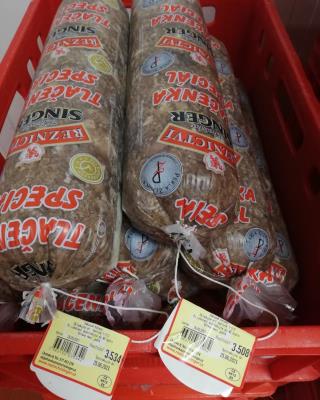
Czech Republic – Push special – Listeria monocytogenes

Potravinynapranyri

Illustration photo no. 1

Place of inspection:
Lhotsko ( Lhotsko No. 8, 76312 Lhotsko )
Company ID: 28300700
Unsatisfactory parameter:

Listeria monocytogenes

The presence of the pathogenic bacterium Listeria monocytogenes was detected in the product . This bacterium can cause a condition called listeriosis.

Expiration date: 6/27/2021
Packaging: Plastic foil
Producer: Řeznictví Singer sro
Country of origin:  Czechia
Date of sampling: May 28, 2021
Reference number: 21-000031-SVS-CZ
The sample was found by official inspection of the State Veterinary Administration.

Czech Republic – Smoked herring fillet VAC – Listeria monocytogenes

Potravinynapranyri

Place of inspection:
Benešov ( Konopiště No. 24, 25601 Benešov )
Company ID: 47534664
Food group: Fish, aquatic animals / Products from fish, smoked animals

Smoked herring fillet VAC
Category: Dangerous food
Unsatisfactory parameter:

Listeria monocytogenes

The pathogenic bacterium Listeria monocytogenes was detected in the product . This bacterium can cause a condition called listeriosis.

Expiration date: 7/4/2021
Packaging: vacuum packed in plastic wrap
Quantity of product in package: 150 g
Producer: LÍŠNO as Konopiště No. 24, Benešov
Date of sampling: 18. 6. 2021
Reference number: 21-000035-SVS-CZ
The sample was found by official inspection of the State Veterinary Administration.

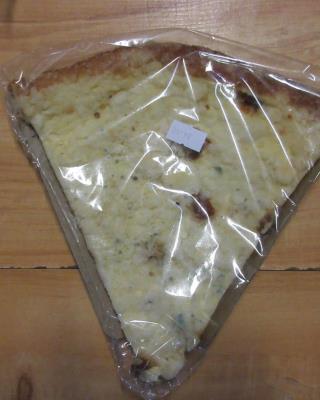
Czech Republic – Cottage cheese pie, apricot – pastry with filling – Mould

Potravinynapranyri

Illustration photo no. 1

Place of inspection:
Teplice ( Duchcovská 939/4, 415 01 Teplice )
Company ID: 67848176
Food group: Bakery products / Pastries

Cottage cheese pie, apricot – pastry with filling
Category: Dangerous food
Unsatisfactory parameter:

mold visible to the eye

Colonies of gray-green fungi appeared on the surface of the product. Food is not considered safe if it shows signs of spoilage.

The food had an expiration date.

Date of minimum durability: 6/10/2021
Packaging: paper tray + sealed transparent plastic
Quantity of product in package: 220 g
Date of sampling: 11. 6. 2021
Reference number: 21-000198-CAFIA-CZ
The sample was found by an official inspection of the State Agricultural and Food Inspection Authority.

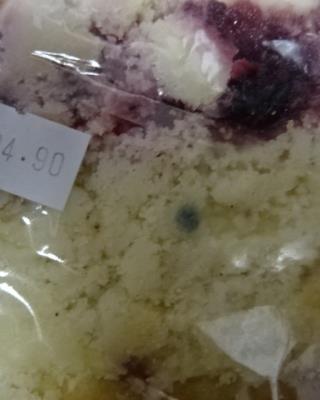
Czech Republic – Cottage cheese pie, forest fruits – Mould

Potravinynapranyri

Illustration photo no. 1

Place of inspection:
Decin – Decin XXXII-Boletice nad Labem ( Studnicni 415, 407 11 Decin – Decin XXXII-Boletice nad Labem )
Company ID: 27184790
Food group: Bakery products / Pastries

Cottage cheese pie, forest fruits
Category: Dangerous food
Unsatisfactory parameter:

mold visible to the eye

Green mold visible to the naked eye was found on the surface of the food. Food is not considered safe if it shows signs of spoilage.

The food had an expiration date.

Date of minimum durability: 05/27/2021
Packaging: PE bag
Quantity of product in package: 220 g
Date of sampling: May 31, 2021
Reference number: 21-000192-CAFIA-CZ
The sample was found by an official inspection of the State Agricultural and Food Inspection Authority.

Czech Republic – Cottage cheese pie, apricot – Mould

Potravinynapranyri

Place of inspection:
Decin – Decin XXXII-Boletice nad Labem ( Studnicni 415, 407 11 Decin – Decin XXXII-Boletice nad Labem )
Company ID: 27184790
Food group: Bakery products / Pastries

Cottage cheese pie, apricot
Category: Dangerous food
Unsatisfactory parameter:

mold visible to the eye

Green mold visible to the naked eye was found on the surface of the food. Food is not considered safe if it shows signs of spoilage.

The food had an expiration date.

Date of minimum durability: 05/27/2021
Packaging: PE bag
Quantity of product in package: 220 g
Date of sampling: May 31, 2021
Reference number: 21-000193-CAFIA-CZ
The sample was found by an official inspection of the State Agricultural and Food Inspection Authority.