Research – New NARMS report shows rising resistance in Salmonella, Campylobacter

CIDRAP

The findings come from the National Antimicrobial Resistance Monitoring Systems (NARMS) 2019 Integrated Summary, which combines data from the Centers for Disease Control and Prevention (CDC), the Food and Drug Administration (FDA), and the US Department of Agriculture (USDA). The report provides a snapshot of resistance patterns found in bacteria isolated from humans, animals, raw meats from retail outlets (chicken, ground turkey, ground beef, and pork chops), and meat and poultry product samples collected at slaughtering facilities.

In addition to Salmonella, which causes an estimated 1.35 million illnesses and 26,500 hospitalizations each year, the NARMS report also includes resistance data on Campylobacter (1.5 million illnesses and 19,500 hospitalizations), Escherichia coli, and Enterococcus. NARMS monitors these bacteria to detect emerging resistance patterns to the antibiotics that are most important to human medicine, multidrug resistance, and specific resistance genes.

Research – Risk factors of Shiga toxin-producing Escherichia coli in livestock raised on diversified small-scale farms in California

Cambridge Org

Abstract

The increasing number of diversified small-scale farms (DSSF) that raise outdoor-based livestock in the US reflects growing consumer demand for sustainably-produced food. Diversified farms are small-scale and raise a combination of multiple livestock species and numerous produce varieties.

This 2015-2016 cross-sectional study aimed to describe the unique characteristics of DSSF in California, estimate the prevalence of STEC in livestock and evaluate the association between risk factors and the presence of STEC in livestock, using generalized linear mixed models. STEC prevalence was 13.62% (76/558). Significant variables in the mixed effect logistic regression model included daily maximum temperature (OR = 0.95; CI95%: 0.91-0.98), livestock sample source (cattle (OR = 4.61; CI95%: 1.64-12.96) and sheep (OR = 5.29; CI95%: 1.80-15.51)), multiple species sharing the same barn (OR = 6.23; CI95%: 1.84-21.15) and livestock having contact with wild areas (OR = 3.63; CI95%: 1.37-9.62).

Identification of STEC serogroups of public health concern (e.g., O157:H7, O26, O103) in this study indicated the need for mitigation strategies to ensure food safety by evaluating risk factors and management practices that contribute to the spread and prevalence of foodborne pathogens in a pre-harvest environment on DSSF.

Research – A restatement of the natural science evidence base regarding the source, spread and control of Campylobacter species causing human disease

Royal Society Publishing

CDC Campy

Abstract

Food poisoning caused by Campylobacter (campylobacteriosis) is the most prevalent bacterial disease associated with the consumption of poultry, beef, lamb and pork meat and unpasteurized dairy products. A variety of livestock industry, food chain and public health interventions have been implemented or proposed to reduce disease prevalence, some of which entail costs for producers and retailers. This paper describes a project that set out to summarize the natural science evidence base relevant to campylobacteriosis control in as policy-neutral terms as possible. A series of evidence statements are listed and categorized according to the nature of the underlying information. The evidence summary forms the appendix to this paper and an annotated bibliography is provided in the electronic supplementary material.

Research – Occurrence and Multidrug Resistance of Campylobacter in Chicken Meat from Different Production Systems

MDPI

Campylobacter kswfoodworld

Campylobacter is the leading bacterial cause of diarrheal disease worldwide and poultry remains the primary vehicle of its transmission to humans. Due to the rapid increase in antibiotic resistance among Campylobacter strains, the World Health Organization (WHO) added Campylobacter fluoroquinolone resistance to the WHO list of antibiotic-resistant “priority pathogens”. This study aimed to investigate the occurrence and antibiotic resistance of Campylobacter spp. in meat samples from chickens reared in different production systems: (a) conventional, (b) free-range and (c) backyard farming. Campylobacter spp. was detected in all samples from conventionally reared and free-range broilers and in 72.7% of backyard chicken samples. Levels of contamination were on average 2.7 × 10³ colony forming units (CFU)/g, 4.4 × 10² CFU/g and 4.2 × 10⁴ CFU/g in conventionally reared, free-range and backyard chickens, respectively. Campylobacter jejuni and Campylobacter coli were the only species isolated. Distribution of these species does not seem to be affected by the production system. The overall prevalence of Campylobacter isolates exhibiting resistance to at least one antimicrobial was 98.4%. All the C. coli isolates showed resistance to ciprofloxacin and to nalidixic acid, and 79.5 and 97.4% to ampicillin and tetracycline, respectively. In total, 96.2% of C. jejuni isolates displayed a resistant phenotype to ciprofloxacin and to nalidixic acid, and 92.3% to ampicillin and tetracycline. Of the 130 Campylobacter isolates tested, 97.7% were classified as multidrug resistant (MDR).

France- Rosette with ham – Listeria monocytogenes

Gov france

Identification information of the recalled product

  • Product category Feed
  • Product subcategory Others
  • Product brand name Aosta
  • Model names or references AOSTA
  • Identification of products
    GTIN Batch Date
    2910133023600 8303082 Date of minimum durability 07/24/2022
  • Packaging Bulk
  • Marketing start/end date From 06/10/2022 to 06/20/2022
  • Storage temperature Product to be stored in the refrigerator
  • Geographic area of ​​sale Whole France
  • Distributors E.LECLERC Centers

Practical information regarding the recall

  • Reason for recall Presence of Listeria monocytogenes
  • Risks incurred by the consumer Listeria monocytogenes (causative agent of listeriosis)

France – MACKEREL FILLET – Histamine

Gov france

Identification information of the recalled product

  • Product category Feed
  • Product subcategory Fishery and aquaculture products
  • Product brand name BOULONNAIS TRAWLERS
  • Model names or references MACKEREL FILLETS 15969
  • Identification of products
    Batch
    15969
  • Products List Poster_Reminder_Product_TRAD_HISTAMINE.pdf Attachment
  • Marketing start/end date From 06/14/2022 to 06/17/2022
  • Storage temperature Product to be stored in the refrigerator
  • Geographic area of ​​sale Whole France
  • Distributors SUPER U COURVILLE SUR EURE

Practical information regarding the recall

  • Reason for recall HISTAMINE
  • Risks incurred by the consumer Undeclared allergenic substances
    Endogenous toxins: histamine (fish, cheese, alcoholic beverages, meats)
  • Conduct to be adopted by the consumer Stop consuming

USA -Fish and Fishery Products Hazards and Controls

FDA

This guidance represents the agency’s current thinking on the hazards associated with fish and fishery products and appropriate controls for those hazards. It does not create or confer any rights for or on any person and does not operate to bind FDA or the public. An alternative approach may be used if such approach satisfies the requirements of the applicable statute and regulations.

How to Report Seafood-Related Toxin and Scombrotoxin Fish Poisoning Illnesses

To help FDA effectively investigate, remove unsafe seafood products from the market, and develop new prevention strategies, the FDA relies on illness reporting from public health officials and healthcare providers.

U.S. Department of Health and Human Services
Food and Drug Administration
Center for Food Safety and Applied Nutrition
(240) 402-2300
SeafoodHACCP@fda.gov

This guidance is intended to assist processors of fish and fishery products in the development of their Hazard Analysis Critical Control Point (HACCP) plans. Processors of fish and fishery products will find information in this guidance that will help them identify hazards that are associated with their products, and help them formulate control strategies. The guidance will help consumers and the public generally to understand commercial seafood safety in terms of hazards and their controls. The guidance does not specifically address safe handling practices by consumers or by retail establishments, although many of the concepts contained in this guidance are applicable to both. This guidance is also intended to serve as a tool to be used by federal and state regulatory officials in the evaluation of HACCP plans for fish and fishery products.

Items Available


Introductory Video

Transcript of Video   |   Help with CaptionsExternal Link Disclaimer


Seafood HACCP Video Series

The FDA has developed a Seafood HACCP Video Series, designed to help the seafood industry and federal and state regulators better understand specific concepts described in FDA’s Fish and Fishery Products Hazards and Controls Guidance. The series consists of 6 videos covering the following topics: Time-Temperature Indicators, Time and Temperature Controls during Unrefrigerated Processing, Secondary Processor Receiving and Storage Controls, Heat Process Validation, Primary Processor Scombrotoxin Controls – Overview and Testing at Receiving, and Primary Processor Scombrotoxin Controls – Harvest Vessel Records.


Download the Guidance

June 2022

This guidance represents the agency’s current thinking on the hazards associated with fish and fishery products and appropriate controls for those hazards. It does not create or confer any rights for or on any person and does not operate to bind FDA or the public. An alternative approach may be used if such approach satisfies the requirements of the applicable statute and regulations.

Note: This document was corrected on August 3, 2011. The Agency corrected a typographical error appearing in the April 2011 version of this document. The Agency corrected “15%” to “1.5%” so that the sentence in “Chapter 11: Aquaculture Drugs” now reads “Sodium sulfite Used in a 1.5% solution for 5 to 8 minutes to treat eggs in order to improve their hatchability.”

Errata: Corrections and Omissions (PDF – 67KB)

Denmark – Denmark hit by a trio of Listeria outbreaks with unknown sources; eight deaths reported

Food Safety News

AdobeStock_195439963

Officials in Denmark are investigating three separate Listeria monocytogenes outbreaks that have affected almost 30 people with eight deaths reported.

The Statens Serum Institut, Danish Veterinary and Food Administration (Fødevarestyrelsen) and DTU Food Institute are trying to find the sources of these outbreaks.

One had already been reported but the Statens Serum Institut has updated the number of people sick. This incident has affected nine people, all of them have been hospitalized and four have died. Five cases are men and four are women.

Patients range from 33 to 93 years old and all had an underlying disease or other immune system issue prior to infection that made them particularly vulnerable, such as meningitis or sepsis. Eight are from the Hovedstaden region of the country. Sample dates range from May 13 to June 6, 2022.

Whole genome sequencing found the strains were closely related and of the sequence type (ST) 37.

Speaking earlier in June, Nikolas Hove from Fødevarestyrelsen said it was rare to see so many Listeria infections in such a short period of time and officials were working to find out which foods were the cause of illness, so the outbreak could be stopped.

Fødevarestyrelsen has written to a number of large industry organizations calling for their members to sharpen in-house monitoring of Listeria. If they find the bacterium in the environment or products, they can have it typed for free at Fødevarestyrelsen’s laboratory.

USA – FDA Investigating Another Infant Death Potentially Related to Abbott Baby Formula

Food Safety Tech

On Wednesday, June 22, the FDA announced that it was investigating the death of an infant that occurred in January 2022 and is potentially related to Abbott baby formula. In a statement, the FDA said that it was notified of the death through a consumer complaint received on June 10, 2022. “The agency has initiated an investigation, given that the complaint referenced that the infant had consumed an Abbott product. However, the investigation of this most recent consumer complaint is in its preliminary stages and the agency will provide an update as it learns more,” the statement read.

The FDA has previously reported its review of complaints related to nine infant deaths. Two were found to be associated with the Abbott Nutrition Sturgis plant investigation. However, the FDA notes that, despite extensive investigation, the evidence does not rule in or rule out a definitive link between these infant deaths and the product produced at Abbott Nutrition’s Sturgis, Michigan-based plant.

USA – Outbreak Investigation of Hepatitis A Virus: Strawberries (May 2022)

FDA

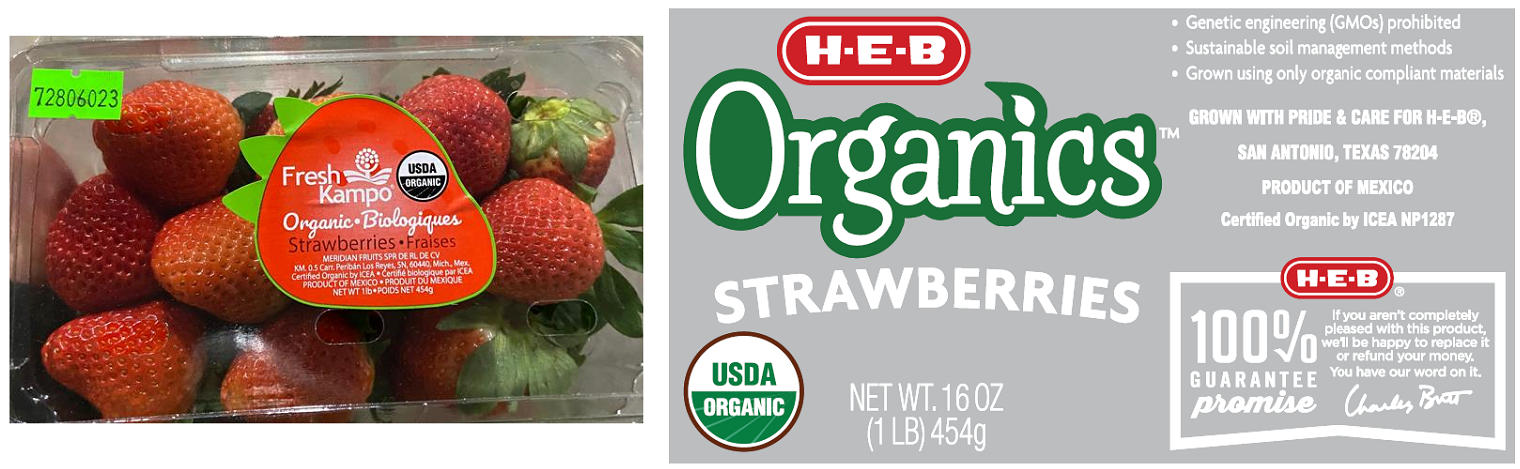
The FDA, along with CDC, and state and local partners, is investigating a multistate outbreak of hepatitis A infections in the United States linked to fresh organic strawberries. These potentially contaminated strawberries were imported from Baja California, a state in northern Mexico, and branded as FreshKampo and HEB by a common supplier; they were purchased between March 5, 2022, and April 15, 2022. The Public Health Agency of CanadaExternal Link Disclaimer and the Canadian Food Inspection AgencyExternal Link Disclaimer are also investigating an outbreak of hepatitis A. Imported FreshKampo brand fresh organic strawberries have been identified as the likely source of the outbreak in Canada.

Currently, these imported fresh organic strawberries are past shelf life and are not available for purchase in stores. People who purchased these fresh organic strawberries between March 5, 2022, and April 15, 2022, and then froze those strawberries for later consumption, should not eat them. If you are unsure of what brand you purchased, when you purchased your strawberries, or where you purchased them from prior to freezing them, the strawberries should be thrown away.

The downstream product removal conducted by Urban Remedy and reported on June 10, 2022, is now considered a market withdrawal. It has been determined that the product was not made using implicated strawberries.

This investigation is ongoing and this advisory will be updated as more information becomes available.

Recommendation

Consumers, restaurants, and retailers should not sell, serve, or eat any fresh organic strawberries branded as FreshKampo or HEB if purchased between March 5, 2022, and April 15, 2022. People who purchased the fresh strawberries and then froze those strawberries for later consumption should not eat them. They should be thrown away. Currently, the potentially contaminated product is past its shelf life. If you are unsure of what brand you purchased, when you purchased your strawberries, or where you purchased them from prior to freezing them, the strawberries should be thrown away.

If consumers purchased fresh organic strawberries branded as FreshKampo or HEB between March 5, 2022, and April 15, 2022, ate those berries in the last two weeks, and have not been vaccinated against hepatitis A, they should immediately consult with their healthcare professional to determine whether post exposure prophylaxis (PEP) is needed. PEP is recommended for unvaccinated people who have been exposed to hepatitis A virus in the last two weeks because vaccination can prevent a hepatitis A infection if given within 14 days of exposure. Those with evidence of previous hepatitis A vaccination or previous hepatitis A infection do not require PEP.

Contact your healthcare provider if you think you may have symptoms of a hepatitis A infection after eating these fresh organic strawberries, or if you believe that you have eaten these strawberries in the last two weeks.

Product Images

Outbreak Investigation of Hepatitis A Virus: Strawberries (May 2022) - Sample Product Images

Case Counts

Total U.S. Illnesses: 18 (including 1 probable case)
Hospitalizations: 13 (including 1 probable case)
Deaths: 0
Last illness onset: May 6, 2022
States with Cases: CA (16), MN (1), ND (1)
Product Distribution: Nationwide