Category Archives: Uncategorized

Research – Dodging antibiotic resistance by curbing bacterial evolution

Science Daily

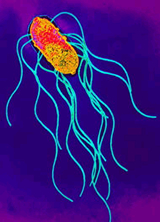
Lowering mutation rates in harmful bacteria might be an as yet untried way to hinder the emergence of antimicrobial pathogens. One target for drug development might be a protein factor, DNA translocase Mfd, that enables bacteria to evolve rapidly by promoting mutations in many different bacterial species. This action speeds antibiotic resistance, including multi-drug resistance. Working on drugs to block Mfd and similar factors could be a revolutionary strategy to address the worldwide crisis of treatment-resistant infectious diseases

Research – Resistant bacteria: Can raw vegetables and salad pose a health risk?

Science Daily 


Salad is popular with people who want to maintain a balanced and healthy diet. Salad varieties are often offered for sale ready-cut and film-packaged. It is known that these types of fresh produce may be contaminated with bacteria that are relevant from the point of view of hygiene. A working group led by Professor Dr. Kornelia Smalla from the Julius Kühn Institute (JKI) has now shown that these bacteria may also include bacteria that are resistant to antibiotics.

“We have to get to the bottom of these findings,” said Professor Dr Georg Backhaus, President of the Julius Kühn Institute. Antimicrobial-resistant bacteria are known to occur in manure, sewage sludge, soil and bodies of water. “This worrying detection of these kinds of bacteria on plants is in line with similar findings for other foods,” adds Professor Dr Dr Andreas Hensel, President of the German Federal Institute for Risk Assessment (BfR). “We are now assessing as a matter of urgency what this finding means with regard to the health risk for consumers.”

Research – Validation of a Simulated Commercial Frying Process to Control Salmonella in Donuts

Mary Anne Leibert

Salmonella kswfoodworld

This study validated a typical commercial donut frying process as an effective kill-step against a 7-serovar Salmonella cocktail (Newport, Typhimurium, Senftenberg, Tennessee, and three dry food isolates) when contamination was introduced through inoculated flour. The bread and pastry flour mix (3:1) was inoculated with the Salmonella cocktail, and subsequently dried back to original preinoculation moisture content, achieving a Salmonella population of 7.6 log CFU/g. Inoculated flour was used to prepare a typical commercial donut batter, which was fried using 375°F (190.6°C) oil temperature. No viable Salmonella was detected using an enrichment plating protocol in the donuts after 2 min of frying, resulting in >7-log reduction in Salmonella population. The internal donut temperature increased from ∼30°C to ∼119°C at the end of 2 min of frying. The water activities of the donut crumb and crust after 2 min of frying, followed by 30 min of ambient air cooling, were 0.944 and 0.852, respectively. The donut pH after ambient-air cooling was 5.51. The D- and z-values of the Salmonella cocktail in donut dough were determined using thermal-death-time disks and temperature-controlled water baths. The D-values of the cocktail were 8.6, 2.9, and 2.1 min at 55°C, 58°C, and 61°C, respectively, whereas the z-value was 10°C. This study validated that >7-log reduction could be achieved if donuts are fried for at least 2 min in the oil at 190.6°C, and calculated D- and z-values present the heat resistance of Salmonella in donut dough at the start of the frying processes. However, results from this study should not be extrapolated when donut composition and frying parameters are changed significantly.

USA – Norovirus outbreak reported on Holland America’s ‘Volendam’ by News Desk

Outbreak News Today Norovirus Food Safety kswfoodworld

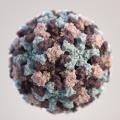
The Centers for Disease Control and Prevention (CDC) has reported a norovirus outbreak onboard a recent voyage of Holland America’s cruise ship, Volendam.

According to officials, 77 passenger and crew were sicked during the November 3-18 voyage.

Specimens have been collected, tested onboard, and found to be positive for norovirus. The specimens will be sent to CDC for genome sequencing.

Holland America Group and the crew aboard the ship took the following actions to limit the outbreak to include increased cleaning and disinfection, making announcements to notify onboard passengers and crew of the outbreak, encourage case reporting, and encourage good hand hygiene and sending a team to assist the onboard management with infection control response plans.

The vessel arrived in Ft Lauderdale on Nov. 18.

RASFF Alerts – Listeria monocytogenes -Raw Foie Gras – Enoki Mushrooms – Smoked Salmon -Black Angus Tartare – Beef Snippets – Smoked Bacon

RASFF-Logo

RASFF-Listeria monocytogenes (10 CFU/g) in frozen raw foie gras from Bulgaria in France

RASFF-Listeria monocytogenes (presence /25g) in chilled enoki mushrooms from South Korea in Belgium

RASFF-Listeria monocytogenes (100 to 440 CFU/g) in chilled smoked salmon from Latvia in Denmark

RASFF -Listeria monocytogenes (<100 CFU/g) in chilled smoked norvegian salmon from Poland in Italy

RASFF-Listeria monocytogenes (<10, <40 CFU/g) in chilled smoked norvegian salmon from Poland in Italy

RASFF-Listeria monocytogenes (presence /25g) in organic chilled beef snippets from Austria in the Netherlands

RASFF-Listeria monocytogenes (presence /25g) in black angus tartare meat from Ireland in the Netherlands

RASFF-Listeria monocytogenes (< 40 CFU/g) in chilled smoked bacon from Hungary in Italy


RASFF Alerts – Aflatoxin – Shelled Almonds – Apricot Kernels – Hazelnuts – Groundnuts – Figs- Dried Figs – Pistachios

RASFF-Logo

RASFF-aflatoxins (B1 = 11.43; Tot. = 13.48 µg/kg – ppb) in shelled almonds from the United States in Italy

RASFF-aflatoxins (B1 = 27; Tot. = 31 µg/kg – ppb) in apricot kernels from Turkey in the Netherlands

RASFF-aflatoxins (B1 = 76; Tot. = 81 µg/kg – ppb) in hazelnuts from Turkey, with raw material from the Netherlands, packaged in Slovenia in Slovenia

RASFF– aflatoxins (B1 = 30; Tot. = 33,2 µg/kg – ppb) in groundnut kernels from the United States in Spain

RASFF -aflatoxins (B1 = 13.7 µg/kg – ppb) in figs from Turkey in Denmark

RASFF-aflatoxins (B1 = 9.4 µg/kg – ppb) in pistachio kernels from Turkey in Greece

RASFF-aflatoxins (B1 = 63; Tot. = 73 µg/kg – ppb) in dried figs from Turkey in France

RASFF-aflatoxins (B1 = 19.8; Tot. = 30 µg/kg – ppb) in dried figs from Turkey in France

RASFF Alerts – Salmonella – Sesame Seeds – Chilled Goose Legs – Fenugreek

RASFF-Logo

RASFF-Salmonella (presence /25g) in sesame seeds from Burkina Faso in Poland

RASFF-Salmonella enterica ser. Typhimurium (in 2 out of 5 samples /25g) in chilled goose legs from Poland in the Czech Republic

RASFF-Salmonella (presence /25g) in fenugreek from Germany, with raw material from India in the Netherlands

RASFF-Salmonella (presence /25g) in sesame seeds from Sudan in Greece

RASFF Alert – STEC E.coli – Chilled Lamb Meat

RASFF-Logo

RASFF-enteropathogenic Escherichia coli (stx2- /25g) in chilled lamb meat from the United Kingdom in the Netherlands

RASFF Alert – Mycotoxin – Ergot – Whole Meal Rye Flour

RASFF-Logo

RASFF-rye ergot (Claviceps purpurea) (617 µg/kg – ppb rye alkaloids) in whole meal rye flour from Belgium in Belgium

RASFF Alert – Marine Biotoxin – Live Scallops

RASFF-Logo

RASFF-live scallops from the United Kingdom not tested for marine biotoxins in the UK