Category Archives: Uncategorized

Research -Synergistic effect of steam and lactic acid against Escherichia coli O157:H7, Salmonella Typhimurium, and Listeria monocytogenes biofilms on polyvinyl chloride and stainless steel

Science Direct

Abstract

This study was designed to investigate the individual and combined effects of steam and lactic acid (LA) on the inactivation of biofilms formed by Escherichia coli O157:H7, Salmonella Typhimurium, and Listeria monocytogenes on polyvinyl chloride (PVC) and stainless steel. Six day old biofilms were developed on PVC and stainless steel coupons by using a mixture of three strains each of three foodborne pathogens at 25 °C. After biofilm development, PVC and stainless steel coupons were treated with LA alone (immersed in 0.5% or 2% for 5 s, 15 s, and 30 s), steam alone (on both sides for 5, 10, and 20 s), and the combination of steam and LA. The numbers of biofilm cells of the three foodborne pathogens were significantly (p < 0.05) reduced as the amount of LA and duration of steam exposure increased. There was a synergistic effect of steam and LA on the viability of biofilm cells of the three pathogens. For all biofilm cells of the three foodborne pathogens, reduction levels of individual treatments ranged from 0.11 to 2.12 log CFU/coupon. The combination treatment of steam and LA achieved an additional 0.2 to 2.11 log reduction compared to the sum of individual treatments. After a combined treatment of immersion in 2% LA for 15 s or 30 s followed by exposure to steam for 20 s, biofilm cells of the three pathogens were reduced to below the detection limit (1.48 log). From the results of this study, bacterial populations of biofilms on PVC coupons did not receive the same thermal effect as on stainless steel coupons. Effectiveness of steam and LA may be attributed to the difference between Gram-negative and Gram-positive characteristics of the bacteria studied. The results of this study suggest that the combination of steam and LA has potential as a biofilm control intervention for food processing facilities.

 

Research – One-Step Analysis for Listeria monocytogenes Growth in Ready-to-Eat Braised Beef at Dynamic and Static Conditions

Journal of Food Protection

ABSTRACT

This study aimed to estimate the growth parameters of Listeria monocytogenes growth in ready-to-eat (RTE) braised beef by one-step dynamic and static kinetic analysis. The Baranyi model and cardinal parameters model were integrated into a dynamic and static model to estimate the kinetic parameters under one dynamic condition (−20 to 40.0°C) and eight static conditions (4, 8, 15, 20, 30, 35, 37, and 40°C). Based on the dynamic and static methods, the respective dynamic and static results for estimated growth boundaries of L. monocytogenes in RTE braised beef were from −2.5 and −2.7°C to 40.5 and 40.7°C with optimal specific growth rates of 1.078 and 0.913 per h at temperatures of 35.7 and 35.0°C. Temperature effects on the specific growth rate and lag period were developed and used to simulate the change of the physiological state of inocula during the bacterial growth. Subsequently, three additional dynamic temperature profiles were implemented for external validation. The root mean square error of the model developed by dynamic regression (0.19 log CFU/g) is slightly better than that of the model developed by static regression (0.23 log CFU/g). Comparing the validation results, one-step dynamic analysis might be a preferable method for prediction, especially when the growth approaches the stationary phase. Generally, both one-step dynamic and static analyses could be used to accurately predict L. monocytogenes growth in RTE braised beef under fluctuating temperatures.

HIGHLIGHTS
  • Growth of L. monocytogenes in RTE beef under dynamic and static conditions was studied.

  • L. monocytogenes growth parameters were obtained by different one-step analyses.

  • Secondary models were developed and used to simulate the physiological state.

  • External validations were applied in additional dynamic conditions.

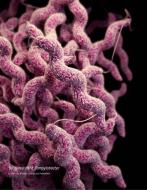
USA – Wild Ginger in Cortland New York link in Campylobacter Outbreak

Food Poison Journal

campy2

Image CDC

The Cortland County Health Department is alerting residents of an outbreak of Campylobacteriosis among people who ate at Wild Ginger, Main St., Cortland, between 10/18/2019 and 10/31/2019. To date, seven patrons have tested positive for this bacterial infection.

USA – Poke Pop in Fircrest Washington liked to Norovirus Outbreak

Food Poison Journal

Food Borne Illness - Norovirus -CDC Photo

Image CDC

Update—Nov. 7, 2019

We received new reports from people who said they got sick with norovirus-like illness after they ate at Poke Pop in Fircrest. Since yesterday’s update, we received 9 more illness reports for a total of 26.

The illness reports fall into 2 categories:

  • Primary—22 report they got ill after they ate at Poke Pop.
  • Secondary—4 got ill away from Poke Pop from exposure to customers who reported illness after they ate there.

The exposure dates range from Oct. 30-Nov. 4 for everyone who got sick. People got ill about a day and a half after exposure. Their illness lasted about 2 days.

Reports of illness have decreased so this will be our last regular update on the suspected norovirus outbreak. Read our previous posts in the link above and go to www.tpchd.org/norovirus to learn more.

USA – Elmira Legionnaires Outbreak

Outbreak News Today

CDC legionella

Image CDC

13 Elmira residents are recovering from Legionnaires’ disease.  The Chemung County Department of Health and the New York State Department of Health are investigating the Elmira Legionnaires Outbreak.  Legionnaires disease is a serious and often deadly lung disease.  Overall, 10% of Americans who develop Legionnaires disease die.

A cooling tower at Elmira Heat Treating may be the source of this Legionnaires outbreak.  Cooling towers are a common source of Legionnaires disease outbreaks. Elmira Heat Treating has three cooling towers.  One cooling tower tested positive for Legionnaires disease.

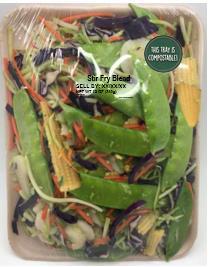
USA – Ghnw, LLC Voluntarily Recalls Mushroom Stir Fry Blend and Stir Fry Blend Because of Possible Health Risk in Oregon and Washington States

FDA

GHNW, LLC of Clackamas, OR is voluntarily recalling Mushroom Stir Fry Blend 10 oz. tray and Stir Fry Blend 16 oz. tray that were produced using Broccoli Slaw that is being recalled by Mann Packing Co., Inc. due to the potential to be contaminated with Listeria monocytogenes.

At this time, we are not aware of any illnesses linked by health officials to this recall. No other GHNW, LLC products are affected by this recall.

GHNW, LLC is issuing this recall out of an abundance of caution. The recalled products have “Sell By” dates of October 27, 2019 to November 8, 2019, which can be found printed in black ink on the front label of the product. The products affected were sold at QFC and/or Fred Meyer in Oregon and Washington State.

Consumers who believe that they are in possession of any of the products affected by this recall should dispose of the product in an appropriate waste container.

For any inquiries or comments, consumers with questions regarding this GHNW recall are welcome to call 888-449-9386, M-F, 9 am to 4 pm PST.

GHNW has notified its customers and this recall is being carried out with the knowledge of the US Food & Drug Administration.


Company Contact Information

Consumers:
 888-449-9386
Media:
Nelia Alamo
 916-208-6898

Product Photos

USA – Employees at the Kissimmee, FL Denny’s Restaurant Diagnosed With Hepatitis A

Food Poisoning Bulletin

Employees at the Denny’s restaurant located at 2051 East Irlo Bronson Memorial Highway in Kissimmee, Florida have been diagnosed with hepatitis A, and may have worked while infectious, according to the Osceola County Health Department. Two people who worked there from October 14, 2019 though November 1, 2019 have been diagnosed with the viral illness.

Anyone who ate or drank at this restaurant between October 24 and November 1, 2019 should get a hepatitis A or immune globulin vaccination. These vaccines are effective if given within two weeks of exposure. Anyone who ate food or drank beverages at that store between October 14 and October 23, 2019 should watch their health for the symptoms of hepatitis A; it’s too late for a vaccination.

RASFF Alerts – Salmonella – Marinated Chicken Fillets – Black Pepper – Chicken Burger – Tahini – Almonds – Sesame Seeds -Chicken Breast – Breaded Chicken Fillets – Frozen Frogs Legs – Chicken Legs – Pistachio Kernels – Walnuts- Beef Patty -Turkey Meat

RASFF-Logo

RASFF – Salmonella (presence /25g) in frozen marinated chicken fillets from Brazil in the Netherlands

RASFF – Salmonella enterica ser. Newport (presence /25g) in black pepper from Brazil in Germany

RASFF – Salmonella (presence /25g) in chilled chicken burger from Belgium in Belgium

RASFF – Salmonella (presence /25g) in tahini from Mexico in the UK

RASFF – Salmonella (presence /25g) in almonds from the United States in Austria

RASFF – Salmonella (presence in 1 out of 5 samples /25g) in sesame seeds from Sudan in Greece

RASFF – Salmonella enterica ser. Infantis (presence /25g) and Salmonella enterica ser. Newport (presence /25g) in chilled chicken breast from Poland in the Czech Republic

RASFF – Salmonella enterica ser. Infantis (present /25g) in frozen breaded chicken fillets from Poland in Ireland

RASFF – Salmonella enterica ser. Potsdam (presence /25g) and Salmonella enterica ser. Wandsworth (presence /25g) in frozen frog legs from Vietnam in Germany

RASFF – Salmonella enterica ser. Javiana (presence /25g) in black pepper from Brazil in Germany

RASFF – Salmonella enterica ser. Enteritidis (presence /25g) in chilled chicken breast fillets from Poland in Latvia

RASFF – Salmonella enterica ser. Enteritidis (in 1 out of 5 samples /25g) in chilled chicken leg quarters from Poland in Latvia

RASFF – Salmonella enterica ser. Infantis (presence /25g) and Salmonella enterica ser. Saintpaul (presence /25g) in black pepper from Brazil in Germany

RASFF – Salmonella in pistacho kernels with raw material from Iran, packaged in Switzerland, via the Netherlands in Germany

RASFF – Salmonella (presence) in walnuts in shell from Hungary in Germany

RASFF – Salmonella enterica ser. Bovismorbificans (presence /25g) in chilled turkey meat from Spain in Italy

RASFF – Salmonella enterica ser. Havana (presence /25g) and Salmonella enterica ser. Meleagridis (presence /25g) in frozen beef patty from Lithuania in Finland

RASFF Alerts- Aflatoxin – Groundnuts – Kernels -Dried Figs – Blanched Peanuts – Hazlenuts

RASFF-Logo

RASFF – aflatoxins (B1 = 3.91; Tot. = 4.37 mg/kg – ppm) in groundnut kernels from Argentina in Italy

RASFF – aflatoxins (B1 = 10.8; Tot. = 36.41 µg/kg – ppb) in dried figs from Turkey in Slovenia

RASFF – aflatoxins (B1 = 16.5; Tot. = 21.3 µg/kg – ppb) in dried figs from Turkey in Germany

RASFF – aflatoxins (B1 = 14.1; Tot. = 17.5 µg/kg – ppb) in blanched peanuts from the United States in Sweden

RASFF – aflatoxins (B1 = 8.41; Tot. = 9.06 µg/kg – ppb) in groundnuts in shell from China in Poland

RASFF – aflatoxins (B1 = 26.34; Tot. = 29.56 µg/kg – ppb) in dried figs from Turkey in Germany

RASFF – aflatoxins (B1 = 13.77; Tot. = 14.80 / B1 = 15.54; Tot. = 32.14 µg/kg – ppb) in dried figs from Turkey in Germany

RASFF – aflatoxins (B1 = 20.46; Tot. = 19.30 µg/kg – ppb) in dried figs from Turkey in Germany

RASFF – aflatoxins (B1 = 21.49; Tot. = 29.19 µg/kg – ppb) in figs from Turkey in Germany

RASFF – aflatoxins (B1 = 37.6; Tot. = 299.1 µg/kg – ppb) in hazelnuts from Georgia in Bulgaria

RASFF – aflatoxins (B1 = 11.7; Tot. = 17.5 µg/kg – ppb) in dried figs from Turkey in Germany

RASFF Alert – Histamine – Chilled Chestnut Fish

RASFF-Logo

RASFF – histamine in chilled chestnut fish (Brama brama) from Spain in Italy