Category Archives: Uncategorized

Denmark – Listeria in meal salads

FOD
Listeria in meal salads
Bønnelykken A / S is recalling three varieties of meal salads. Listeria has been detected in the products.
Recalled Foods , Published: July 14, 2020
What foods:
Our Mega Bowl grains and nuts
Net content: 500g
expiry date: 14.07.2020
EAN bar code: 5708618346125

Deli Kale Salad
Net content: 410g
expiry date: 13.7.2020 and 14.7.2020
EAN bar code: 5712870540757

Deli kale salad w / chicken
Net content: 300g
expiry date : 13.07.2020 and 14.07.2020
EAN barcode: 5712873306121

Sold at:
Salling department stores, Føtex and Bilka stores throughout the country.

Company recalling:
Bønnelykken A / S, Mellem Broerne 12, 4100 Ringsted

Cause:
Analyzes have shown listeria in the product.

Risk:
Infection with listeria bacteria, where the symptoms can include flu-like symptoms, fever and headaches and in rare cases gastrointestinal problems.

Advice for consumers: The Danish
Veterinary and Food Administration advises consumers to deliver the product back to the store where it was purchased or to discard it.

Belgium – Carrefour recall American Nature recall of the Carrefour brand. Problem: potential presence of E. Coli STEC.

AFSCA

Following a check and as a precautionary measure in order to guarantee consumer safety, CARREFOUR requests to withdraw from the market the American Nature 200g, 300g, 600g, 1.2kg sold in the BUTCHER department of certain Carrefour stores in Belgium and calls them back to the consumers following a potential presence of E. Coli STEC.


Product description:

– Product name: Américain Nature
– Brand: Carrefour
– Use by date (DLC) (“To consume until”): 07/19/2020 and 07/20/2020
– Sale period: from 13 / 07/2020 to 15/07/2020
– Type of packaging: transparent plastic tray
– Weight: 200g, 300g, 600g and 1.2 kg
– The package bears the supplier’s stamp number 26/1

PRODUCTS PACKED IN STORES ARE NOT CONCERNED

All products have been withdrawn from sale. Some of these products were, however, sold on the Belgian market before the withdrawal measure. It is therefore recommended that people who hold the products described above not consume them and destroy them or bring them back to the point of sale where they will be reimbursed.

People who have consumed these products and who have intestinal disorders are invited to consult their doctor by reporting this consumption. These symptoms can be made worse in young children, pregnant women, immunocompromised people and the elderly.

People who have consumed the products mentioned above and who present these symptoms are invited to consult their doctor by reporting this consumption.

For any further information, you can contact the Carrefour Belgique consumer service by calling the free number 0800.9.10.11 , from 8:30 a.m. to 8:00 p.m. on working days and from 9:00 a.m. to 5:00 p.m. on Saturdays.

We apologize to our customers for the inconvenience.

Belgium – Viangro Recall -Spicy Beef Hamburger 500g. – STEC E.coli

AFSCA

In agreement with the AFSCA, Viangro is withdrawing the 500g spicy beef burger from the sale and is recalling it from consumers due to the potential presence of E. Coli STEC.

LIDL Belgium asks its customers not to consume this product and to bring it back to the point of sale in which it was purchased.


Product description

– Product name: Spicy beef hamburger
– Use by date (DLC) (“To consume until”): 07/19/2020 and 07/20/2020
– Sales period: from 07/13 / 2020 to 07/15/2020
– Type of packaging: plastic tray
– Weight: 500g

The product was sold through Lidl stores in Belgium.

For further information, contact Lidl customer service ( 0800/73520 (free))

India – Avoid food poisoning during monsoon with these simple tips

Indian Express

While monsoon brings respite from heat and humidity, the incessant showers can also bring seasonal flu and increase chances of infection. Which is why one needs to be extra careful in the rainy season, especially now. While we have taken care to avoid outside food, the chances of food poisoning owing to contaminated food and water can increase during such times.

Nutritionist Nmami Agarwal gives some essential tips to avoid food poisoning during monsoon. See the link above.


Belgium -Pork Kebabs with the expiration date of 07/16/2020 Problem: possible presence of Salmonella.

AFSCA

During internal microbiological controls in his laboratory, OKay noted the presence of Salmonella in pork kebabs with the expiration date of 07/16/2020 .
In consultation with the AFSCA, OKay therefore decided to withdraw the product concerned from sale.

OKay guarantees 100% that the product concerned is no longer in OKay stores. Customers who have purchased this product are advised not to consume it and return it to the store, where it will be refunded.

Possible symptoms of Salmonella poisoning

Possible symptoms of Salmonella poisoning are fever, abdominal cramps and diarrhea. These symptoms generally appear within 12 to 48 hours after ingestion.

Symptoms usually last 4 to 7 days, and most people recover without specific treatment. Young children, pregnant women, immunocompromised people and the elderly are among the risk groups. In these people, the symptoms can be severe to the point of requiring hospitalization of the patient.

People who have consumed the product concerned and who present this type of symptoms are invited to consult their doctor by reporting this consumption.

Product Description :  

Pork skewers ± 300 g

Use by date (DLC): 07/16/2020
Sales period: from 07/09/2020 to 07/13/2020 included
Article number: 16255 

The product was sold in Belgium through the OKay and OKay Compact stores.

For more information, customers can contact the Colruyt Group Customer Service
on 0800 99 124.

Contact for journalists
Press Service Colruyt Group
Tel. : 0479 72 29 10


Japan – E. coli in salad cause of over 3,400 students’ food poisoning at east Japan schools

Mainichi

ecoli

Image CDC

SAITAMA — The cause of a food poisoning outbreak that affected a total of 3,453 students and others at 15 public schools in the city of Yashio, Saitama Prefecture, eastern Japan, has been pinpointed to a seaweed salad harboring E. coli bacteria, the city’s board of education advised on July 13.

New Zealand – Research – Campylobacter Outbreak 2016

RNZ

The number of people infected in the Havelock North campylobacter crisis in 2016 was much higher than previously estimated, new research suggests.

Thousands of people were infected by drinking water from contaminated bores. Four people died and others were left permanently disabled.

A joint study using gene-sequencing helped scientists discover the true scale of the outbreak.

The study suggests the campylobacteriosis case number could be as high as 8320, with up to 2230 of these living outside of Havelock North.

The Institute of Environmental Science and Research (ESR) science leader Dr Brent Gilpin said the study used DNA sequencing to link cases.

UK – Benyfit Natural Pet Food recalls various brands of raw dog food products containing beef due to the possible presence of salmonella

FSA

Benyfit Natural Pet Food Ltd has taken the precautionary step of recalling several types of frozen raw dog food products containing beef because the products might contain salmonella. These products have been sold by various independent pet food stores and online.

Product details

Benyfit Natural 80-10-10 Beef Meat Feast

Pack size 1kg
Batch code 046-076
Best before 16 March 2021
Batch code 046-083
Best before 23 March 2021
Batch code 046-093
Best before 2 April 2021
Batch code 046-100
Best before 9 April 2021
Benyfit Natural 80-10-10 Beef Meat Feast

Pack size 500g
Batch code 047-076
Best before 16 March 2021
Batch code 047-083
Best before 23 March 2021
Batch code 047-093
Best before 2 April 2021
Batch code 047-100
Best before 9 April 2021
Unique Raw Duck, Beef & Ox Recipe

Pack size 1kg
Batch code 710-077
Best before 17 March 2021
Batch code 710-099
Best before 8 April 2021
Benyfit Natural Beef & Tripe

Pack size 1kg
Batch code 013-077
Best before 17 March 2021
Batch code 013-085
Best before 25 March 2021
Batch code 013-093
Best before 2 April 2021
Batch code 013-100
Best before 9 April 2021
Benyfit Natural Beef & Tripe

Pack size 500g
Batch code 014-077
Best before 17 March 2021
Batch code 014-086
Best before 25 March 2021
Batch code 014-093
Best before 2 April 2021
Batch code 014-100
Best before 9 April 2021
Benyfit Natural Succulent Beef

Pack size 1kg
Batch code 010-083
Best before 23 March 2021
Batch code 010-087
Best before 27 March 2021
Batch code 010-090
Best before 30 March 2021
Batch code 010-100
Best before 9 April 2021
Benyfit Natural Succulent Beef

Pack size 500g
Batch code 011-083
Best before 23 March 2021
Batch code 011-090
Best before 30 March 2021
Batch code 011-100
Best before 9 April 2021
Embark on Raw Natural Working Dog Food Beef Complete

Pack size 454g
Batch code 203-078
Best before 18 March 2021
Batch code 203-090
Best before 30 March 2021
Batch code 203-097
Best before 6 April 2021
Neew Dog Premium Beef

Pack size 1kg
Batch code 405-079
Best before 19 March 2021
Batch code 405-090
Best before 30 March 2021
Batch code 405-099
Best before 8 April 2021
Neew Dog Premium Beef

Pack size 500g
Batch code 406-090
Best before 30 March 2021
Batch code 406-097
Best before 6 April 2021
Unique Raw Chicken, Beef & Ox Recipe

Pack size 1kg
Batch code 707-098
Best before 7 April 2021

Risk statement

The products listed above might be contaminated with salmonella. Salmonella is a bacterium that can cause illness in humans and animals. The products could therefore carry a potential risk because of the presence of salmonella, either through direct handling of the pet food, or indirectly, for example from pet feeding bowls, utensils or contact with the faeces of animals.

In humans, symptoms caused by salmonella usually include fever, diarrhoea and abdominal cramps. Infected animals may not necessarily display signs of illness, but symptoms can include diarrhoea.

Action taken by the company

Benyfit Natural Pet Food Ltd is recalling the above products. Customers who bought the affected products online have been contacted. Point of sale notices will be displayed in all retail stores that are selling these products. These notices explain to customers why the products are being recalled and tell them what to do if they have bought the product. Please see the attached notices.

Our advice to consumers

Pet owners: If you have bought any of the above products do not use them. Instead, return them to the store from where they were bought for a full refund. When handling and serving raw pet food it is always advised to clean utensils and feeding bowls thoroughly after use. Consumers should wash hands thoroughly after handling raw pet food, bowls, utensils or after contact with the faeces of animals. Raw pet food should be stored separately from any food (especially ready to eat foods). Care should be taken when defrosting to avoid cross contamination of foods and surfaces.

Netherlands – Kipfilet Diepvries (Chicken breast – frozen) in Kipsatés diepvries (Chicken skewers – frozen). Problem: Possible presence of Salmonella.

FAVV

In agreement with the AFSCA, Vleeswaren Georges Mauriën is withdrawing from sale the frozen products “Kipfilet Diepvries” (Chicken breast) and “Kipsatés diepvries” (Chicken Skewers) and reminds them of this because of the possible presence of Salmonella.

Vleeswaren Georges Mauriën asks its customers not to consume these products and to bring them back to the point of sale where they were purchased. They will be refunded or exchanged.  


Product description

Kipfilet Diepvries (Chicken breast – frozen)

  • Date of minimum durability (DDM) (“Consume preferably before (or end)”): 03-10-2020
  • Lot (s) number: 027
  • Sales period: from 06/29/2020 to 03/07/2020
  • Type of packaging: plastic bag
  • Weight: 1kg – 1.5kg

Kipsatés diepvries (Chicken Skewers – frozen)

  • Date of minimum durability (DDM) (“Consume preferably before (or end)”): 03-10-2020
  • Lot (s) number: 027
  • Sales period: from 06/29/2020 to 03/07/2020
  • Type of packaging: plastic bag
  • Weight: 1kg – 1.5kg

The products have been distributed by: 

Name of the point of sale /

Distribution chain name

Street + number Postal code Commune (city)  
Vleeswaren Georges Mauriën Hollandstraat 1 A Heist – Goor 2220 Heist – op – den Berg

 For further information , contact:
Georges Mauriën Hollandstraat 1A Heist – Goor 015 / 24.16.72.

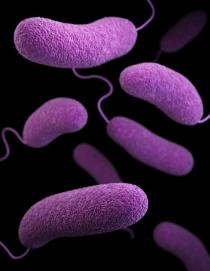
Research – Genomic epidemiology of domestic and travel-associated Vibrio parahaemolyticus infections in the UK, 2008–2018

Science Direct

CDC Vibrio

Image CDC

Globally, V. parahaemolyticus is the most prevalent food-poisoning bacterium associated with seafood consumption. To date, the epidemiology of Vibrio parahaemolyticus infections in the UK has remained unexplored. Here we analysed archived V. parahaemolyticus strains isolated from domestic infections and travellers into the UK from 2008 to 2018 and who had submitted clinical samples to Public Health England (PHE)’s Gastrointestinal Bacteria Reference Unit. A total of 48 strains were retrieved from the PHE strain collection, confirmatory tested by PCR and analysed by genome-wide phylogeny using a global collection of genomes with representative strains from the major epidemic clones. Most reported infections entering the UK originated from travellers returning from Southeast Asia, however cases were also reported to have potentially originated from the USA, Cuba, India, Turkey, Caribbean, France, Slovenia and also within the UK, highlighting the wide geographical spread of infections. A large genetic diversity of V. parahaemolyticus strains was observed, with sequence type 3 (ST3; pandemic group) strains the most common sequence type (23 of the 48 analysed strains, 47.9%). The majority of strains were tdh positive (25/48, 71%), with 5 isolates positive for both haemolysin genes (tdh and trh), with 2 isolates trh positive only (5.7%). Six isolates did not possess either haemolysin gene. We demonstrate that whole genome sequencing can be effective to type certain human pathogens entering a traditionally considered “non-endemic” county and this was captured via passive epidemiological surveillance systems. Such approaches may potentially provide a useful snapshot of the diversity of a given pathogen group circulating worldwide.