Category Archives: STEC

Research – A cluster of Shiga Toxin-producing Escherichia coli O157:H7 highlights raw pet food as an emerging potential source of infection in humans

Cambridge Org

In August 2017, a cluster of four persons infected with genetically related strains of Shiga toxin-producing Escherichia coli (STEC) O157:H7 was identified. These strains possessed the Shiga toxin (stx) subtype stx2a, a toxin type known to be associated with severe clinical outcome. One person died after developing haemolytic uraemic syndrome. Interviews with cases revealed that three of the cases had been exposed to dogs fed on a raw meat-based diet (RMBD), specifically tripe. In two cases, the tripe had been purchased from the same supplier. Sampling and microbiological screening of raw pet food was undertaken and indicated the presence of STEC in the products. STEC was isolated from one sample of raw tripe but was different from the strain causing illness in humans. Nevertheless, the detection of STEC in the tripe provided evidence that raw pet food was a potential source of human STEC infection during this outbreak. This adds to the evidence of raw pet food as a risk factor for zoonotic transmission of gastrointestinal pathogens, which is widely accepted for SalmonellaListeria and Campylobacter spp. Feeding RMBD to companion animals has recently increased in popularity due to the belief that they provide health benefits to animals. Although still rare, an increase in STEC cases reporting exposure to RMBDs was detected in 2017. There has also been an increased frequency of raw pet food incidents in 2017, suggesting an increasing trend in potential risk to humans from raw pet food. Recommendations to reduce the risk of infection included improved awareness of risk and promotion of good hygiene practices among the public when handling raw pet food.
USA – More added to patient list in E. coli outbreak tied to organic yogurt

Food Safety News

An E. coli outbreak linked to locally produced organic yogurt is growing, with 15 people now confirmed infected. Eleven of the patients are children.

Washington State health officials report nine of the patients have required hospitalization and four have developed the potentially deadly kidney complication known as hemolytic uremic syndrome (HUS). No deaths have been reported as of the health department’s May 26 update.

“The outbreak is likely linked to PCC Community Market brand yogurt produced by Pure Eire Dairy,” according to the update and information previously reported by state and local officials. The dairy also produces organic yogurt under the Pure Eire brand.

RASFF Alert -STEC E.coli – Lamb Meat

RASFF

Shigatoxin-producing Escherichia coli in lamb meat from New Zealand in Germany

Germany – “Every day” pepper salami 200 g – Enterohaemorrhagic E.coli (STEC)

LMW

Warning type: Food
Date of first publication: 05/26/2021
Product name:

“Every day” pepper salami 200 g

Manufacturer (distributor): Zentrale Handelsgesellschaft mbH Offenburg The item was sold exclusively through branches of the Globus retail chain.
Reason for warning:

Enterohaemorrhagic E.coli (STEC) were detected in samples as part of a routine check.

Packaging Unit: 00 g
Durability:

Best before: 05/29/2021

Lot identification: Batch: 1104
Additional Information:

Please refer to the company’s press release attached.

Contact to the responsible authorities:

Baden-Württemberg: poststelle@mlr.bwl.de

Bavaria: poststelle@lgl.bayern.de
Hesse: Schnellwarnung@rpda.hessen.de
Mecklenburg-Western Pomerania: poststelle@lm.mv-regierung.de
Lower Saxony: poststelle@ml.niedersachsen.de
North Rhine-Westphalia: poststelle@mulnv.nrw.de
Rhineland-Palatinate: Poststelle.Referat22@lua.rlp.de
Saarland: poststelle-luv@lav.saarland.de
Saxony: poststelle@sms.sachsen.de
Saxony-Anhalt: poststelle@ms.sachsen-anhalt.de
Thuringia: LM-Ueberendung@tlv.thueringen.de

USA – FDA Releases Results of FY20-FY21 Romaine Lettuce Sampling Assignment


FDA

Eurofins Food Testing UK

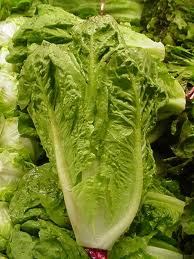
The U.S. Food and Drug Administration is releasing the findings of a sampling assignment that tested raw agricultural commodity romaine lettuce mostly at facilities and on farms in the Salinas, California, and Yuma, Arizona growing regions for the presence of pathogens that have been linked to outbreaks of foodborne illness.

The assignment to detect pathogenic Escherichia coli (specifically, Shiga toxin-producing E. coli or STEC) and Salmonella spp began in November 2019 and ended in December 2020, after a pause in sample collection and testing from March through October 2020 due to the COVID-19 pandemic. The FDA did not detect any pathogens during the assignment.

The agency prioritized sample collection at farms and FDA-registered facilities identified in traceback investigations as suppliers of romaine lettuce possibly linked or linked to outbreaks of foodborne illnesses from 2017 to 2019.   The FDA collected and tested 279 samples for both pathogens. Each sample was made up of 10 subsamples, with each subsample consisting of one or more heads or hearts of romaine lettuce and weighing at least 300 grams. This approach – the collection and testing of samples composed of multiple subsamples – increases the probability of detecting pathogens if present, given that microbial hazards may not be uniformly present. Agency field staff collected all samples in their natural form but for the outer leaves having been removed. No fresh-cut lettuce was collected.

Ensuring the microbiological safety of leafy greens continues to be a priority to the FDA. Although no pathogens were detected during this assignment, maintaining surveillance during the growing/harvesting season is helpful to informing the agency’s leafy greens prevention efforts, specifically those outlined in the FDA’s  Leafy Greens Action Plan. The FDA originally released the action plan in March 2020 to foster a more urgent and collaborative approach to preventing leafy greens outbreaks caused by STEC.  In April 2021, the FDA released an updated version of the plan which reaffirms our commitment to advancing leafy greens safety.

For More Information

EU – Shiga toxin-producing Escherichia coli (STEC) infection – Annual Epidemiological Report for 2019

ECDC

ECDC’s annual surveillance reports provide a wealth of epidemiological data to support decision-making at the national level. They are mainly intended for public health professionals and policymakers involved in disease prevention and control programmes.

Executive summary

  • For 2019, 29 EU/EEA countries reported 8 313 confirmed cases of Shiga toxin-producing Escherichia coli (STEC) infection.
  • The overall notification rate was 2.2 cases per 100 000 population.
  • After a stable period, the notification rate increased in 2018−2019.
  • The highest notification rates were reported in Denmark, Iceland, Ireland, Malta, and Norway.
  • The highest rate of confirmed cases was observed in 0–4-year-old children (10.3 cases per 100 000 population).

Research – Lactic Starter Dose Shapes S. aureus and STEC O26:H11 Growth, and Bacterial Community Patterns in Raw Milk Uncooked Pressed Cheeses

MDPI

Adding massive amounts of lactic starters to raw milk to manage the sanitary risk in the cheese-making process could be detrimental to microbial diversity. Adjusting the amount of the lactic starter used could be a key to manage these adverse impacts. In uncooked pressed cheeses, we investigated the impacts of varying the doses of a lactic starter (the recommended one, 1×, a 0.1× lower and a 2× higher) on acidification, growth of Staphylococcus aureus SA15 and Shiga-toxin-producing Escherichia coli (STEC) O26:H11 F43368, as well as on the bacterial community patterns. We observed a delayed acidification and an increase in the levels of pathogens with the 0.1× dose. This dose was associated with increased richness and evenness of cheese bacterial community and higher relative abundance of potential opportunistic bacteria or desirable species involved in cheese production. No effect of the increased lactic starter dose was observed. Given that sanitary criteria were paramount to our study, the increase in the pathogen levels observed at the 0.1× dose justified proscribing such a reduction in the tested cheese-making process. Despite this, the effects of adjusting the lactic starter dose on the balance of microbial populations of potential interest for cheese production deserve an in-depth evaluation. View Full-Text

RASFF Alerts -STEC E.coli – Lamb Meat

RASFF

Shigatoxin-producing Escherichia coli in lamb meat from New Zealand in Germany

USA – Additional patients identified in outbreak tied to organic yogurt; one in Arizona – E.coli O157

Food Safety News

More patients are being identified by investigators working on an E. coli O157 outbreak that has been limited to Washington State. However, today Arizona officials confirmed there is a child in that state with an infection from the same strain of the pathogen.

There are 11 confirmed patients in Washington in the outbreak linked to locally produced organic yogurt sold by Pure Eire Dairy. Another three probable patients are from the Moses Lake area in Grant County, WA. Teresa McCallion of the Washington Department of Health said it is not unusual for counties and local health departments to know of probable cases before they are added to the state’s tally.

“We only report confirmed cases,” McCallion told Food Safety News on Wednesday evening. The Washington Health Department is working on a special outbreak information web page, which McCallion said should be available soon.

USA – USDA – Outbreak Investigations

FSIS USDA

The table below lists outbreak investigations in which FSIS responded by posting a recall of FSIS-regulated product linked to illness, a public health alert, and/or an after-action review report. The table does not include outbreak investigations that did not result in one or more of these outcomes.

Outbreak Year Pathogen Product Outcomes & References Active
2021 Salmonella Hadar Turkey, ground FSIS Public Notification: FSIS Issues Public Health Alert for Raw Ground Turkey Products Linked to Salmonella Hadar Illness

CDC Notice: Salmonella Outbreak Linked to Ground Turkey

Yes
2021 Salmonella Enteritidis Chicken, raw, breaded, stuffed (suspect) Yes
2021 Escherichia coli O157:H7 (E. coli) Beef, ground (suspect) No
2021 Escherichia coli O145 (E. coli) Beef, ground (suspect) No
2021 Escherichia coli O157:H7 (E. coli) Unknown

CDC Notice: View CDC Investigation Notice

No
2021 Listeria monocytogenes Unknown No