Category Archives: STEC

Research – Presumptive probiotic bacteria from traditionally fermented African food challenge the adhesion of enteroaggregative E. coli

Wiley Online

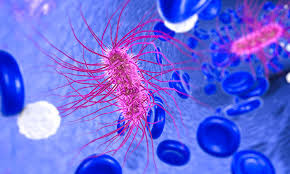
E.coli

Colonization of intestinal tract with the potential to exclude, displace, and inhibit enteric pathogens is principally dependent on the adhesion ability of probiotics. Therefore, probiotic efficacy is considered to be mainly determined by their adhesion ability. The current study reports the antagonistic effect of four lactic acid bacteria (LAB) on the adhesion profile of four diarrhoeagenic and one non‐diarrhoeagenic enteroaggregative Escherichia coli (EAEC). All the bacterial strains investigated adhered to the Caco‐2 cells. All the LAB tested competitively excluded, displaced, and inhibited at least three (non‐) diarrhoeagenic EAEC strains from adhesion (p < 0.05). In all, Lactobacillus plantarum, FS2 exhibited the strongest adhesion to the Caco‐2 cells, competitive exclusion (CE), displacement, and inhibition against most of the EAEC strains. Additionally, the competence to exclude, displace, and inhibit the EAEC from adhesion depended on both the pathogens and the LAB strains tested; signifying the participation of several mechanisms. Contrary to all the EAEC strains, gastro‐intestinal stress factors such as low pH (2.5) had no effect on the adhesion of the LAB. Unlike the gastro‐intestinal acidic conditions, bile salt conditioning (at pH 6.5) had no effect on the adhesion of both EAEC and LAB. In conclusion, all the LAB tested showed specific anti‐adherence effects including CE, displacement, and inhibition against the selected EAEC. The results indicate that all the LAB, particularly, the L. plantarum, FS2 had a good ability for exerting antagonistic effects against the selected EAEC for the prevention of gastrointestinal infection.

USA – Morse’s Sauerkraut worker sick with E. coli – source unknown – STEC E.coli

Food Poison Journal

The Maine Center for Disease Control and Prevention (Maine CDC) has identified a case of Shiga toxin-producing E. coli (STEC) infection in a Waldoboro food service worker, according to a Monday evening news release.

The individual handled deli food at Morse’s Sauerkraut in Waldoboro while infectious from April 1 through May 13.

An assessment of the individual’s illness determined that patrons of Morse’s Sauerkraut may be at risk for STEC infection, the Maine CDC announced.

Individuals who purchased deli items from Morse’s Sauerkraut between April 1 and May 13 should watch for symptoms of infection, such as severe stomach cramps, diarrhea (often bloody), and vomiting.

Research -Epidemiological investigation of recurrent outbreaks of haemolytic uraemic syndrome caused by Shiga toxin-producing Escherichia coli serotype O55:H7 in England, 2014–2018

Cambridge Org

Recurrent outbreaks of haemolytic uraemic syndrome (HUS) caused by Shiga toxin-producing Escherichia coli (STEC) serotype O55:H7 occurred in England between 2014 and 2018. We reviewed the epidemiological evidence to identify potential source(s) and transmission routes of the pathogen, and to assess the on-going risk to public health. Over the 5-year period, there were 43 confirmed and three probable cases of STEC O55:H7. The median age of cases was 4 years old (range 6 months to 69 years old) and over half of all cases were female (28/46, 61%). There were 36/46 (78.3%) symptomatic cases, and over half of all cases developed HUS (25/46, 54%), including two fatal cases. No common food or environmental exposures were identified, although the majority of cases lived in rural or semi-rural environments and reported contact with both wild and domestic animals. This investigation informed policy on the clinical and public health management of HUS caused by STEC other than serotype O157:H7 (non-O157 STEC) in England, including comprehensive testing of all household contacts and household pets and more widespread use of polymerase chain reaction assays for the rapid diagnosis of STEC-HUS.

RASFF Alerts – STEC E.coli – Beef Meat – Organic Beef Meat

RASFF

E. Coli STEC (O26) in bovine fresh meat from New Zealand in the Netherlands

RASFF

Shigatoxin-producing Escherichia coli (in 1 out of 5 samples /25g) in organic bovine meat from Spain in Italy

USA – FDA to Implement Sampling Effort for Lettuce Grown in Salinas Valley, California

FDA

The U.S. Food and Drug Administration will be collecting and testing samples of lettuce grown in California’s Salinas Valley from local commercial coolers from May through November 2021. The agency will test the samples for Shiga toxin-producing Escherichia coli (STEC), including E. coli O157:H7, and Salmonella spp. as part of ongoing surveillance efforts following reoccurring outbreaks linked to this region, including most recently in the fall of 2020.

The FDA assignment will direct sampling to be conducted at commercial cooling and cold storage facilities where field heat is removed from harvested lettuce and where product is cold-stored before processing. Sampling may include pre-cooled product (preferred) or post-cooled product. Sample collection at commercial coolers helps the FDA efficiently obtain samples from multiple farms at centralized locations and facilitates prompt traceback and follow-up if contamination is detected.

The agency plans to collect and test a total of approximately 500 post-harvest samples of iceberg, leaf and romaine lettuce. Each sample will consist of 10 subsamples, each made up of one head of lettuce (trimmed, cored and possibly wrapped), or in the case of romaine lettuce, loose leaves or one package of hearts.  FDA laboratories will conduct all testing.

During this sampling assignment, the FDA will take extra precautions to help ensure the safety of agency investigators and firm employees during the COVID-19 pandemic. FDA investigators will preannounce their visits to firms per the Agency’s COVID-19 safety practices. They will be outfitted with personal protective equipment (PPE) and will carry out their work while adhering to local, state and applicable CDC guidance.

Helping to ensure the safety of leafy greens remains a high priority of the FDA. This assignment adds to other work underway in collaboration with stakeholders in the California Central Coast growing region to identify where the recurring strain of pathogenic E. coli is persisting and the likely routes of leafy green contamination with STECs.  This includes continued implementation of actions identified in the recently updated Leafy Greens Action Plan, including a multi-year longitudinal  study to assess the environmental factors impacting the presence of foodborne pathogens in this region. Consistent with the action plan, if the FDA detects a pathogen such as E. coli O157:H7, the agency will conduct a follow-up investigation to identify potential sources and routes of contamination. Such investigations are designed to inform what additional preventive measures may be needed to help prevent outbreaks of foodborne illness.

USA – It is now 9 with E. coli in King and Snohomish counties – likely source is fresh, organic produce

Food Poison Journal

The Snohomish Health District said Tuesday it has identified two cases of Shiga toxin-producing E. coli (STEC) in Snohomish County residents. Following public health interviews, these cases do appear to be connected to a cluster of STEC cases among seven children in King County.

Seattle King County Public Health is investigating a new cluster of seven children infected with Shiga toxin-producing E. coli (also known as STEC) in King County. All cases are currently under 15 years of age, and three are under 5 years of age. Cases have been reported during April 22–May 1, 2021.

Our investigation is ongoing. We have identified multiple types of fresh produce, mostly organic, in common among the majority of cases but cannot yet rule out other possibilities. We are still uncertain if these cases share the same source of their infection or not. Updates will continue to be posted when more information is available.

USA – Fresh, organic produce common source of E. coli O157 infections in 7 children

Food Poison Journal

Public Health is investigating a new cluster of seven children infected with Shiga toxin-producing E. coli (also known as STEC) in King County. All cases are currently under 15 years of age, and three are under 5 years of age. Cases have been reported during April 22–May 1, 2021.

Our investigation is ongoing. We have identified multiple types of fresh produce, mostly organic, in common among the majority of cases but cannot yet rule out other possibilities. We are still uncertain if these cases share the same source of their infection or not. Updates will continue to be posted when more information is available.

USA – New E. coli outbreak hits children; investigation ongoing with no source yet

Food Safety News

ecoli

At least seven children are sick with E. Coli infections in a new outbreak involving an unknown source. All of the sick children are younger than 14, with three of them younger than five years old, according to an outbreak announcement by King County, WA, health officials.

“Our investigation is ongoing, and we have not identified any foods, restaurants, or other sources in common among all cases. It is not yet known whether these cases share the same source or not,” officials reported in the announcement.

The children became ill between April 22 and May 1. Six of the seven children have been so sick they had to be admitted to hospitals. One of the sick children is confirmed as having developed a life-threatening kidney complication called hemolytic uremic syndrome (HUS) and is recovering. A second child is suspected to have HUS.

hus

RASFF Alerts – STEC E.coli – Meat – Beef

RASFF

Stec in meat from Argentina in Multiple EU Countries

RASFF

Shigatoxin-producing Escherichia coli in frozen lamb loins from New Zealand in Italy

RASFF

STEC in beef from Argentina via the Netherlands in Multiple EU Countries

RASFF

Shigatoxin-producing Escherichia coli in chilled beef rump and loin sets from Paraguay in the Netherlands

RASFF

E. coli stec in fresh meat from Argentina in Spain

USA – Factors Potentially Contributing to the Contamination of Leafy Greens Implicated in the Fall 2020 Outbreak of E. coli O157:H7

FDA

Executive Summary

Between August and December 2020, the U.S. Food and Drug Administration (FDA) and multiple state and federal partners were involved in an outbreak investigation related to E. coli O157:H7 illnesses and the consumption of leafy greens. The outbreak, which caused 40 reported domestic illnesses, was linked via whole genome sequencing (WGS) and geography to outbreaks traced back to the California growing region associated with the consumption of leafy greens in 2019 and 2018. FDA, alongside state and federal partners, investigated the outbreak to identify potential contributing factors that may have led to leafy green contamination with E. coli O157:H7. The E. coli O157:H7 outbreak strain was identified in a cattle faeces composite sample taken alongside a road approximately 1.3 miles upslope from a produce farm with multiple fields tied to the outbreaks by the traceback investigations. In addition, several potential contributing factors to the 2020 leafy greens outbreak were identified.

Isolates within this cluster of illnesses are part of a reoccurring strain of concern and are associated with outbreaks that have occurred in leafy greens each fall since 2017. The two most recent outbreaks associated with this strain were an outbreak in 2018 (linked to romaine lettuce from the Santa Maria growing region of California) and an outbreak in 2019 (linked to romaine lettuce from the Salinas growing region of California). Clinical isolates from cases in this 2020 outbreak appear more closely related to those from the 2019 outbreak than the 2018 outbreak. In addition, several specific food and environmental isolates that appear to be highly related to this 2020 outbreak include a faecal-soil composite sample collected by FDA in February 2020 from the Salinas growing region and two leafy green samples collected in 2019 by state partners as a part of the 2019 investigation that traced back to the Salinas growing region.

As part of this investigation, tracebacks of leafy greens consumed by ten ill individuals from eleven points of service were conducted. Although that traceback investigation was based on a relatively small number of the total cases, it was based on those cases which presented the strongest evidence via purchase card information, invoices, bills of lading, and electronic data. The traceback investigation identified the Salinas growing region of California as a geographical region of interest.

In light of this most recent finding, combined with previous outbreak investigation findings in the region, FDA has identified key trends regarding the issues of a reoccurring strain, a reoccurring region, and reoccurring issues around adjacent and nearby land use of primary importance in understanding the contamination of leafy greens by E. coli O157:H7 that occurred in 2020 and previous years.

FDA also recognizes the interconnection between people, animals, plants, and their shared environment when it comes to public health outcomes. As such, we strongly encourage collaboration among various groups in the broader agricultural community (i.e. livestock owners; leafy greens growers, state and federal government agencies, and academia) to address this issue. With this collaboration, the agricultural community, alongside academic and government partners, can work to identify and implement measures to prevent contamination of leafy greens. FDA recommends that these parties participate in efforts to understand and address the challenge of successful coexistence of various types of agricultural industries to ensure food safety and protect consumers against foodborne illnesses.

Download the Full Report (PDF 563KB)