Category Archives: STEC

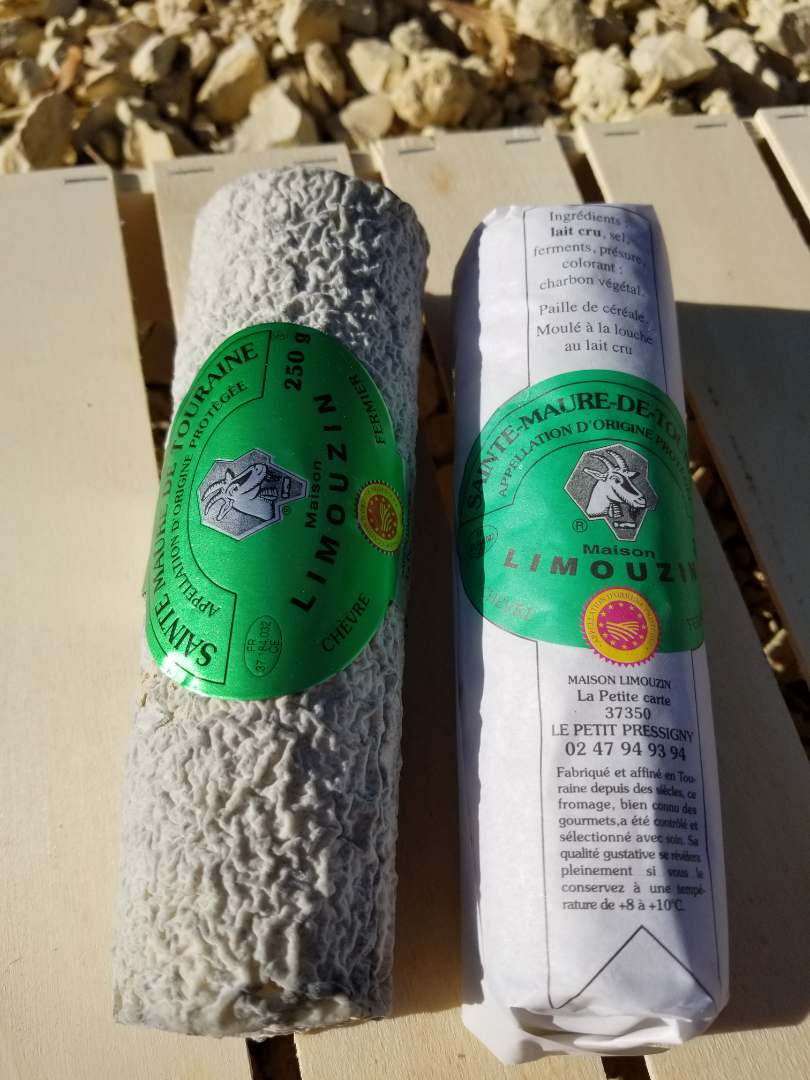
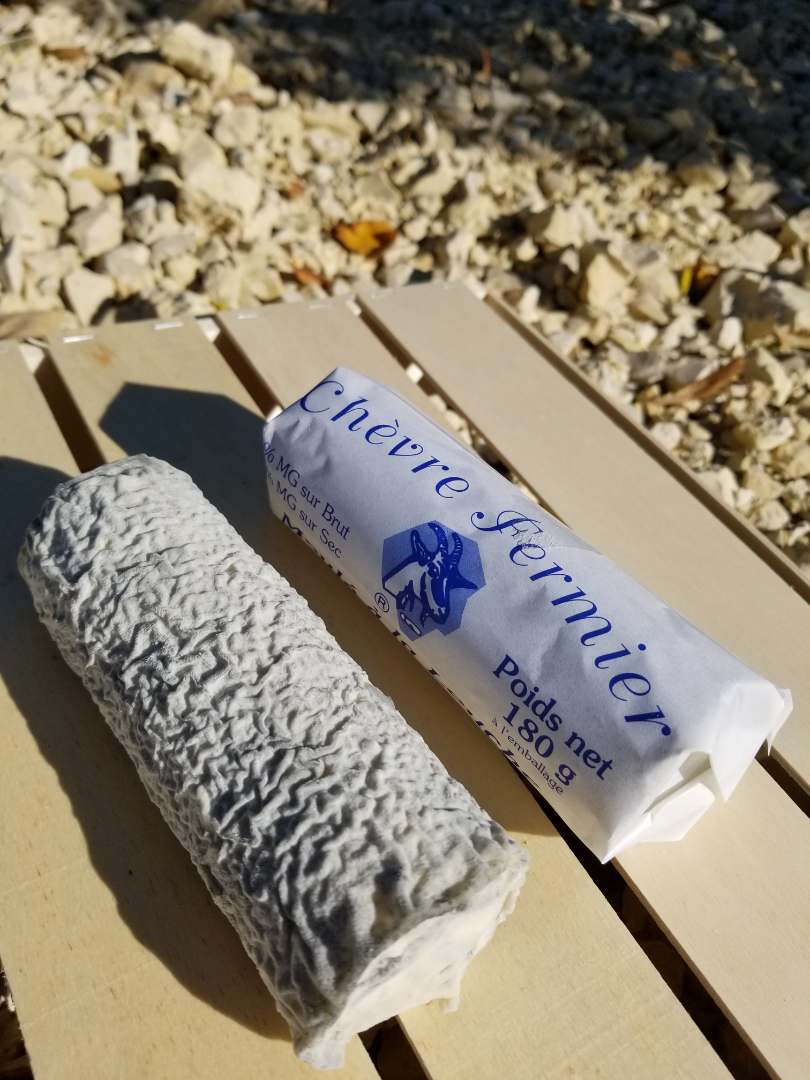
France – FARM CHEESE – STEC E.coli

Gov france

Identification information of the recalled product

  • Product category Feed
  • Product subcategory Milk and dairy products
  • Product brand name LIMOUZIN HOUSE
  • Model names or references FARM GOAT MOLDED WITH A LADLE
  • Identification of products
    Batch Date
    from 04/06 to 22/06 Date of minimum durability between 08/14/2023 and 08/21/2023
  • Packaging packaged in the self-service department
  • Marketing start/end date From 06/16/2023 to 06/23/2023
  • Storage temperature Product to be stored in the refrigerator
  • Health mark FR 37.184.032
  • Geographic area of ​​sale Whole France
  • Distributors LECLERC AMBOISE THE CART CHAMBRAY-LES-TOURS THE MARKET HALL AU BON COIN RESTAURANT LULLY PIZZERIA

France – PDO SAINTE MAURE DE TOURAINE – STEC E.coli

Gov france

Identification information of the recalled product

  • Product category Feed
  • Product subcategory Milk and dairy products
  • Product brand name LIMOUZIN HOUSE
  • Model names or references PDO SAINTE MAURE DE TOURAINE
  • Identification of products
    Batch Date
    from 04/06 to 22/06 Date of minimum durability between 08/14/2023 and 08/21/2023
  • Packaging bare cut packed in the self-service department
  • Marketing start/end date From 06/16/2023 to 06/23/2023
  • Storage temperature Product to be stored in the refrigerator
  • Health mark FR 37.184.032
  • Geographic area of ​​sale Whole France
  • Distributor sLECLERC AMBOISE RESTAURANT CHATEAU DE PRAY COCCIMARKET ATHEE S/CHER GRAND FRESH EPISERVICE GRAND PRESSIGNY LA CHARRETTE TRUYES LA CHARRETTE CHAMBRAY-LES-TOURS COCCI DESCARTES LECLERC CHATELLERAULT ANTONIN THE MARKET HALL LA CHARRETTE TRUYES

Norway searches for source of E. coli outbreak; Austrian outbreak under investigation

Food Safety News

Norwegian officials are investigating an E. coli outbreak that has affected half a dozen people.

The Norwegian Institute of Public Health (FHI) said six people, living in different parts of the country, are sick. E. coli O157:H7 with the same genetic profile has been detected in all patients.

Two people fell ill in October and November 2022, while the remaining four became sick in February, March and May this year. No-one has developed serious illness. They are between the ages of 14 and 49, and five are men.

Two patients live in Rogaland, while Viken, Trøndelag, Vestland, and Oslo all have one case each.

Meanwhile, several children have fallen ill with E. coli infections in a state of Austria beginning in late May.

In recent weeks, 11 children and young people, mostly from three childcare facilities in the Frastanz area, have contracted infections caused by Shiga toxin-producing E. coli (STEC). The serotype was not mentioned by officials.

At least two children developed HUS and another four were hospitalized, said officials in the province of Vorarlberg.

France sees a rise in outbreaks in 2021

Food Safety News

The number of outbreaks in France went up in 2021 but was still below 2018 and 2019 levels.

Figures from Santé publique France show there were 1,309 outbreaks affecting 11,056 people in 2021. A total of 512 people went to hospitals and 16 died.

Reported outbreaks rose from 1,010 in 2020 when figures were strongly impacted by the COVID-19 pandemic, according to officials.

For 327 incidents in 2021, a pathogen could be microbiologically confirmed in food or in at least one sick person per outbreak. A pathogen was suspected without microbiological confirmation for 734 outbreaks.

16 deaths in outbreaks
The most frequently microbiologically confirmed pathogen was Salmonella 147 times. It was mostly Salmonella Enteritidis, followed by monophasic Salmonella Typhimurium but the type was not known in 92 incidents. Confirmed Salmonella outbreaks were responsible for 935 patients and 166 hospitalizations.

Campylobacter caused 52 outbreaks with 178 patients and Bacillus cereus had 46 with 665 patients. Nineteen norovirus outbreaks sickened 493 and 11 histamine outbreaks affected 35 people.

Seven outbreaks were due to E. coli, six to Yersinia enterocolitica, four to Shiga toxin-producing E. coli (STEC), and one each because of Listeria monocytogenes, Clostridium botulinum, and Shigella.

The pathogen was identified in patients for 208 outbreaks, of which 143 were confirmed with Salmonella. Identification of the agent took place in food samples for 89 epidemics with 67 confirmed as Bacillus cereus, Staphylococcus aureus and Clostridium perfringens.

The top suspected pathogens based on epidemiological and clinical information, but not microbiologically confirmed, were the toxins Bacillus cereus, Staphylococcus aureus and Clostridium perfringens. For these three pathogens, 3,787 patients and 169 hospital trips were recorded.

Research – Risk Factors for Non-O157 Shiga Toxin–Producing Escherichia coli Infections, United States

CDC

Abstract

Shiga toxin–producing Escherichia coli (STEC) causes acute diarrheal illness. To determine risk factors for non-O157 STEC infection, we enrolled 939 patients and 2,464 healthy controls in a case–control study conducted in 10 US sites. The highest population-attributable fractions for domestically acquired infections were for eating lettuce (39%), tomatoes (21%), or at a fast-food restaurant (23%). Exposures with 10%–19% population attributable fractions included eating at a table service restaurant, eating watermelon, eating chicken, pork, beef, or iceberg lettuce prepared in a restaurant, eating exotic fruit, taking acid-reducing medication, and living or working on or visiting a farm. Significant exposures with high individual-level risk (odds ratio >10) among those >1 year of age who did not travel internationally were all from farm animal environments. To markedly decrease the number of STEC-related illnesses, prevention measures should focus on decreasing contamination of produce and improving the safety of foods prepared in restaurants.

Research – Risk Factors for Non-O157 Shiga Toxin–Producing Escherichia coli Infections, United States

CDC

Abstract

Shiga toxin–producing Escherichia coli (STEC) causes acute diarrheal illness. To determine risk factors for non-O157 STEC infection, we enrolled 939 patients and 2,464 healthy controls in a case–control study conducted in 10 US sites. The highest population-attributable fractions for domestically acquired infections were for eating lettuce (39%), tomatoes (21%), or at a fast-food restaurant (23%). Exposures with 10%–19% population attributable fractions included eating at a table service restaurant, eating watermelon, eating chicken, pork, beef, or iceberg lettuce prepared in a restaurant, eating exotic fruit, taking acid-reducing medication, and living or working on or visiting a farm. Significant exposures with high individual-level risk (odds ratio >10) among those >1 year of age who did not travel internationally were all from farm animal environments. To markedly decrease the number of STEC-related illnesses, prevention measures should focus on decreasing contamination of produce and improving the safety of foods prepared in restaurants.

UK – Large rise of E. coli O26 infections noted in England

Food Safety News

An increase in a type of E. coli over the past decade has prompted scientists to warn of an emerging threat to public health in England.

While part of the rise is because of better detection of non-O157 Shiga toxin-producing E. coli (STEC) in labs, there is evidence more people are actually getting sick.

Researchers looked at STEC O26:H11 clonal complex (CC) 29 in England. Between January 2014 and December 2021, 834 human isolates from 724 patients belonging to CC29 were sequenced at the UK Health Security Agency (UKHSA).

STEC O26:H11 notifications in 2021 were eight times higher than those recorded in 2014. Diagnoses of STEC O26 in England have increased each year from 19 in 2014 to 144 in 2021. Most cases were female and the highest proportion belonged to the 0 to 5 age group, found the study in the Journal of Infection.

Hemolytic Uremic Syndrome (HUS) was diagnosed in 40 cases and three children died. HUS is a severe complication associated with E. coli infections that causes kidney failure.

Luxembourg – CANTAL ENTRE-DEUX FROM THE AUCHAN BRAND – STEC E.coli

SAP

Auchan is recalling the following product in Luxembourg :

Name CANTAL BETWEEN TWO
Brand Auchan
Unit 250g
bar code 3596710160730
Date of minimum durability (MDD) 05/17/2023
Batch 23087128
Sale period  06/04/2023 to 17/05/2023

Danger  : Presence of E. coli STEC – Escherichia coli likely to produce toxins (shigatoxins)

E. coli STEC can cause food poisoning which can occur within a week after consumption and result in gastrointestinal disorders often accompanied by cramps. These symptoms may be aggravated in young children, immunocompromised subjects and the elderly. People who have consumed these products and have these symptoms are invited to consult a doctor and report this consumption to him.

Sale confirmed in Luxembourg by: Auchan

Source of information: Auchan recall notification

Research – Whole-Genome Sequencing of Shiga Toxin-Producing Escherichia coli for Characterization and Outbreak Investigation

MDPI

Abstract

Shiga toxin-producing Escherichia coli (STEC) causes high frequencies of foodborne infections worldwide and has been linked to numerous outbreaks each year. Pulsed-field gel electrophoresis (PFGE) has been the gold standard for surveillance until the recent transition to whole-genome sequencing (WGS). To further understand the genetic diversity and relatedness of outbreak isolates, a retrospective analysis of 510 clinical STEC isolates was conducted. Among the 34 STEC serogroups represented, most (59.6%) belonged to the predominant six non-O157 serogroups. Core genome single nucleotide polymorphism (SNP) analysis differentiated clusters of isolates with similar PFGE patterns and multilocus sequence types (STs). One serogroup O26 outbreak strain and another non-typeable (NT) strain, for instance, were identical by PFGE and clustered together by MLST; however, both were distantly related in the SNP analysis. In contrast, six outbreak-associated serogroup O5 strains clustered with five ST-175 serogroup O5 isolates, which were not part of the same outbreak as determined by PFGE. The use of high-quality SNP analyses enhanced the discrimination of these O5 outbreak strains into a single cluster. In all, this study demonstrates how public health laboratories can more rapidly use WGS and phylogenetics to identify related strains during outbreak investigations while simultaneously uncovering important genetic attributes that can inform treatment practices.

RASFF Alerts – STEC/EHEC E.coli – Cheese – Pigtail

RASFF

Detection of E. coli STEC on cheese from France in Austria, Belgium, Denmark, Germany, Iceland, Ireland, Luxembourg, Netherlands, Netherlands Antilles, Northern Ireland, Portugal, Spain, Sweden, Switzerland, Thailand, United Kingdom.

RASFF

STEC/EHEC in pigtail from the Netherlands in Belgium