Category Archives: STEC E.coli

Research – Consumer knowledge and behaviors regarding food safety risks associated with wheat flour

Journal of Food Protection

Consumers do not consider flour, a low-moisture food product, a high-risk for microbial contamination. In the past ten years, however, flour has been identified as a source of pathogenic bacteria, including Salmonella and E. coli . Online surveys were conducted to study consumers’ flour-handling practices and their knowledge about food safety risks related to flour. The survey also evaluated message impact on three food safety messages in communicating information and convincing consumers to adopt safe flour handling practices. Flour-using consumers (n = 1,045) from the United States reported they used flour to make cakes, cookies, and bread. Most consumers stored flour in sealed containers. Less than 1% kept a record of product identification numbers, like lot numbers, and less than 11% kept brand and use-by-date information. Many consumers (85%) were unaware of flour recalls, or outbreaks, and few (17%) believed they would be affected by flour recalls or outbreaks. If the recall affected the flour they bought, nearly half of the consumers (47%) would buy the same product from a different brand for a few months before they returned to the recalled brand. Among consumers who use flour to bake, 66% said they ate raw cookie dough or batter. Raw dough “eaters” were more difficult to convince to avoid eating and playing raw flour than “non-eaters.” Food safety messages were less impactful on those raw dough “eaters” than “non-eaters.” Compared with the food safety message with only recommendations, those messages with recommendations and an explanation as to the benefits of the practice were more effective in convincing consumers to change their practices. These findings provide insight into effective consumer education about safe flour-handling practices and could assist in the accurate development of risk assessment models related to flour handling.

Germany – German authorities investigate E. coli infections involving daycare centers

Food Safety News

More than 20 E. coli infections are being investigated in a German municipality.

Four day care centers in the Lützow-Lübstorf district are affected by the outbreak of E. coli O26. Lützow-Lübstorf is in Nordwestmecklenburg, in Mecklenburg-Vorpommern, Germany.

Enterohaemorrhagic E. coli (EHEC) are often referred to as Shiga toxin-producing E. coli (STEC).

Authorities initially reported 18 patients but that had risen to 25 by the end of this past week. They warned further testing is ongoing so more cases are expected. Those sick include children and their relatives as well as a couple of day care center employees.

Research – Preharvest Treatment Improves Tomato Food Safety

Technology Networks

cherry-tomato-pristine-variety

When vegetable farmers harvest crops, they often rely on postharvest washing to reduce any foodborne pathogens, but a new University of Georgia study shows promise in reducing these pathogens — as well as lowering labor costs — by applying sanitizers to produce while it is still in the fields.

Salmonella, Shiga toxin-producing E. coli and Listeria monocytogenes are major causes of foodborne diseases and of public health concern in the U.S. Tomato-associated salmonella outbreaks reported to the Centers for Disease Control and Prevention have increased in frequency and magnitude in recent years, and fresh produce accounted for 21% of E. coli outbreaks reported to the CDC over a 20-year span.

Initially researchers were going to study the use of a nonchlorine-based sanitizer made of two food additives approved by the U.S. Food and Drug Administration — levulinic acid and sodium dodecyl sulfate — as a postharvest wash solution. However, at the suggestion of a producer involved in the study — Bill Brim of Lewis Taylor Farms in Tifton, Georgia — they designed the study using the solution in a preharvest spray, said Tong Zhao, associate research scientist with the Center for Food Safety on the UGA Griffin campus.

While producers commonly use chlorine-based disinfectants — including chlorine gas, sodium hypochlorite, calcium hypochlorite and chlorine dioxide — to treat produce postharvest, the preharvest application of bactericides is not a common practice, Zhao said.

RASFF Alert – STEC E.coli – Lamb Carcasses

European Food Alerts

RASFF

shigatoxin-producing Escherichia coli (stx+;eae+) in lamb carcasses from Belgium in Belgium

Norway – Microbiological control of pasteurised and unpasteurised dairy products, 2018

Mattilsynet

The microbiological quality was generally good for the 189 dairy products on the Norwegian market that the Norwegian Food Safety Authority examined in 2018. Nevertheless, we see that there are microbiological challenges in connection with unpasteurised dairy products.

What did we investigate? 189 samples of unpasteurised and pasteurised cheeses and other dairy products produced in Norway and in the EU.
Period: 2018
What were we looking for?

The four categories have been analysed for various disease-causing bacteria (pathogens). These choices are made in order to get the most information for each category.

The different categories are:

PN = pasteurised milk product produced in Norway.

P EU = pasteurised milk product produced outside Norway.

UN = unpasteurised milk product produced in Norway.

U EU = unpasteurised milk product produced outside Norway.
 

The various disease-causing infectious agents we analysed for:

Listeria monocytogenes (pathogen): PN, P EU, UN, U EU, number 189 pcs.

Shigatoxin-producing Escherichia coli (STEC) (pathogen): UN, U EU, number 96 pcs.

E. coli (hygiene parameter): PN, UN, U EU, 169 st.

S. aureus (hygiene parameter): UN, number 71 st.

Toxins (enterotoxin) from S. aureus (pathogen): UN, U EU, number 96 pcs.

Salmonella (pathogen): U EU, number 25 st.

What did we find?

Listeria monocytogenes : No detection in 189 samples of dairy product.

Shigatoxin-producing Escherichia coli (STEC):
One finding in French red cow cheese of cow’s milk ( E. coli O-, stx2 and eae ). A total of 25 unpasteurised milk products produced outside Norway were examined. No findings in 71 unpasteurised milk products from Norway.

Escherichia coli (hygiene parameter):
In 73 pasteurised milk products from Norway, there was a detection and this was above the lower limit value (100 cfu / g) but below the upper limit value (1,000 cfu / g). No E. coli was detected above the detection limit of 10 colony forming units / g sample (cfu / g) in the other samples.

In 61 of the 71 unpasteurised milk products produced in Norway, E. coli was not detected above the detection limit of 10 colony-forming units / g sample (cfu / g). 3 st. (4.2%) was above 100 cfu / g.

In unpasteurised dairy products from the EU (25), 5 (20%) of the products had more than 100 cfu/ g E. coli. There is no microbiological criterion for E. coli in the regulations for unpasteurised cheeses.

Staphylococcus aureus:
Of 71 samples, none exceeded the regulatory limit of 10,000 cfu/ g.

Of the 96 unpasteurised dairy products examined, the enterotoxins AE Toxins (enterotoxins), which some S. aureus can produce , were not detected .

Salmonella was not detected in the 25 samples of unpasteurised milk products produced outside Norway.

Report Link

USA – Outbreak of E. coli Infections – Unknown Source 2 – Update

CDC

CDC E.coli

CDC, public health and regulatory officials in several states, and the U.S. Food and Drug Administration (FDA) are investigating several multistate outbreaks of E. coli O157:H7 infections. This outbreak is different from two other E. coli O157:H7 outbreaks CDC is currently investigating (E. coli outbreak with unknown source 1 and E. coli outbreak with unknown source 3).

At A Glance
  • Since the last update on October 28, 2020, 16 ill people were added to this investigation.
  • CDC is not advising people avoid any particular food at this time.
  • Investigators are working to collect different types of data to identify the source of this outbreak.
  • CDC will provide updates as they become available.

Take action if you have symptoms of an E. coli infection:

  • Talk to your healthcare provider.
  • Write down what you ate in the week before you got sick.
  • Report your illness to your local or state health department.
  • Help us solve the outbreak by answering public health officials’ questions about your illness.

Follow these general ways to prevent getting sick from E. coli:

  • Wash your hands after using the restroom or changing diapers, before and after preparing or eating food, and after contact with animals.
  • Cook meats thoroughly. Use a food thermometer to check that the meat has reached a safe internal temperatureexternal icon.
  • Don’t cross-contaminate food preparation areas. Thoroughly wash hands, counters, cutting boards, and utensils after touching raw meat.
  • Wash fruits and vegetables before eating, unless the package says the contents have been washed.
  • Avoid raw milk, other unpasteurized dairy products, and unpasteurized juices.
  • People usually get sick from Shiga toxin-producing E. coli (STEC) 2 to 8 days (average of 3 to 4 days) after swallowing the germ.
  • Symptoms often include severe stomach cramps, diarrhea (often bloody), and vomiting. Some people may have a fever, which usually is not very high (less than 101˚F/38.5˚C).
  • Some people with a STEC infection may get a type of kidney failure called hemolytic uremic syndrome (HUS).
  • Antibiotics are not recommended for patients with suspected E. coli infections until diagnostic testing can be performed and E. coli infection is ruled out. Some studies have shown that administering antibiotics to patients with E. coli infections might increase their risk of developing HUS, and a benefit of treatment has not been clearly demonstrated.
  • For more information, see Symptoms of E. coli Infection.
Investigation Details

November 23, 2020

Since the last update on October 28, 2020, 16 ill people were added to this investigation.

As of November 19, 2020, a total of 39 people infected with the outbreak strain of E. coli O157:H7 have been reported from 18 states. A list of the states and the number of cases in each can be found on the Map of Reported Cases page.

Illnesses started on dates ranging from August 10, 2020, to October 23, 2020. Ill people range in age from 1 to 85 years, with a median age of 38 years, and 62% are female. Of 30 ill people with information available, 19 people were hospitalized and 4 people developed hemolytic uremic syndrome (HUS), a type of kidney failure. No deaths have been reported.

Illnesses might not yet be reported due to the time it takes between when a person becomes ill and when the illness is reported. This takes an average of 2 to 4 weeks. Please see the Timeline for Reporting Cases of E. coli O157 Infection for more details.

Investigation of the Outbreak

Investigators are continuing to collect different types of data to identify the source of this outbreak.

State and local public health officials are interviewing ill people to determine what they ate and other exposures in the week before they got sick. Of the 22 ill people interviewed to date, all reported eating a variety of leafy greens, like spinach (16), romaine lettuce (15), iceberg lettuce (12), and mixed bag lettuce (8). No single type or brand of leafy greens or other food item has been identified as the source of this outbreak. CDC is not advising people avoid any particular food at this time.

This investigation is ongoing, and CDC will provide more information as it becomes available.

USA – Dole Fresh Vegetables Announces Limited Recall of Organic Romaine Hearts – STEC E.coli

FDA

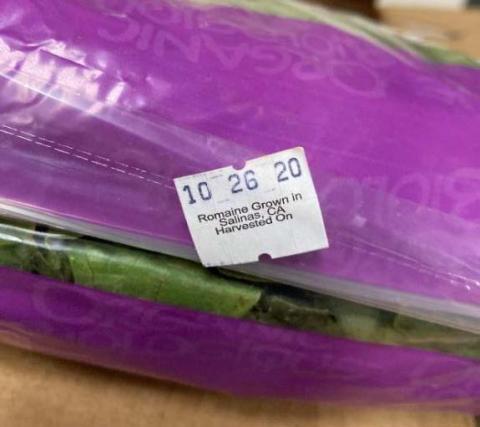
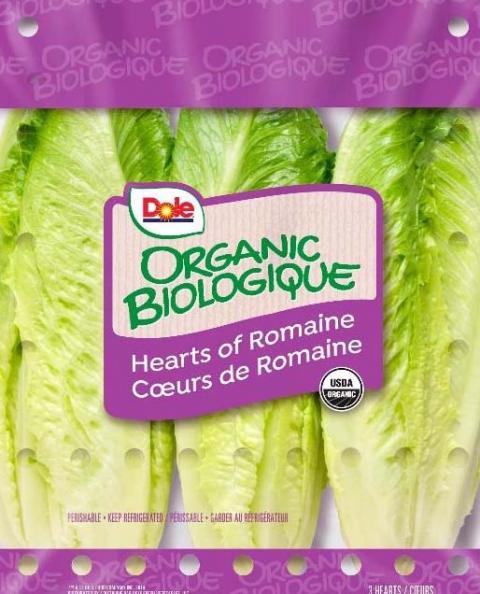
Dole Fresh Vegetables, Inc. is voluntarily recalling a limited number of cases of organic romaine hearts. The products being recalled are Dole™ Organic Romaine Hearts 3pk (UPC 0-71430-90061-1), combined English/French packaging, with Harvested-On dates of 10-23-20 and 10-26-20, and Wild Harvest Organic Romaine Hearts (UPC 7-11535-50201-2), with Harvested-On dates of 10-23-20 and 10-26-20.  The recall is being conducted due to a possible health risk from E. coli in the two products.  Dole Fresh Vegetables is coordinating closely with regulatory officials. No illnesses have been reported to date in association with the recall.

Pathogenic E. coli can cause diarrhea, severe stomach cramps and vomiting.  Most people recover within a week, but some illnesses can last longer and can be more severe.

The Harvested-On sticker is located on the upper right corner of each bag and the UPC code is located on the bottom right corner of the back of each bag. The Dole package contains three organic romaine hearts and the Wild Harvest product is packaged in a 12oz bag. The impacted products were distributed in AZ, HI, IA, IL, IN, KS, MD, MI, MN, MO, MS, MT, NC, ND and VA. These products were harvested and packed nearly 4 weeks ago and should no longer be in commerce.  Consumers are advised to check product they have in their homes and discard any product matching the production description, UPC codes and Harvested-On dates listed above.

This precautionary recall notification is being issued due to an isolated instance in which a package of Dole™ Organic Romaine Hearts – 3pk yielded a positive result for pathogenic non-O157 E.coli STEC in a routine sample collected at a retail store by the Michigan Department of Agriculture and Rural Development. There is no indication at this time that this positive result is related to any illnesses nor consumer complaints and it is not associated with the strains connected to the ongoing outbreaks currently under regulatory investigation.

No other Dole products are included in the recall. This voluntary recall does not apply to any bagged or clamshell salad romaine product. Only the specific Organic Romaine Hearts listed, with the exact UPC codes and Harvested-On dates identified above, are included in the recall. Consumers who have any remaining product with these UPC codes and Harvested-On dates should not consume it, but rather discard it. Retailers and consumers with questions may call the Dole Consumer Center at 1-800-356-3111, which is open 24 hours a day.


Company Contact Information

Consumers:
Consumer Center
 1-800-356-3111
Media:
William Goldfield
 1-818-874-4853
 William.Goldfield@Dole.com

Product Photos

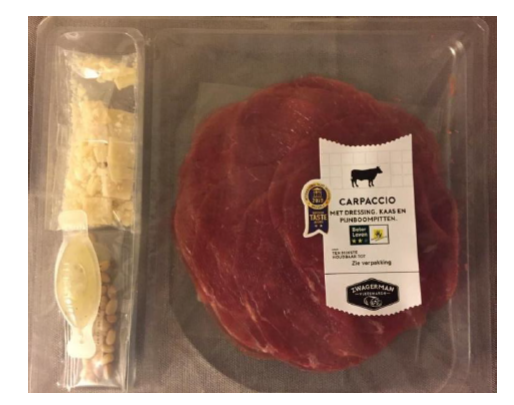
Netherlands – Zwagerman Carpaccio with pine nuts – STEC E.coli

NVWA

Important safety warning Lidl: Zwagerman carpaccio

Lidl is recalling the product ‘Zwagerman Carpaccio with pine nuts’. This concerns the packaging with a best-before date of 21 November 2020. The STEC bacteria has been found in the product.

Download ‘Important safety warning Lidl: Zwagerman carpaccio’

PDF document | 1 page | 166 KB

Warning | 21-11-2020

Zwagerman carpaccio

© Lidl

Don’t eat the carpaccio!

Customers are urged not to eat this carpaccio. Eating a product with an E. coli bacteria (faeces bacteria, STEC, EHEC) can, if not thoroughly cooked, result in nausea, vomiting and (bloody) diarrhea within a week. Especially for young children, the elderly, people with low immunity and pregnant women. Consult your doctor for more information if you have health problems after eating the said product.

For more information, see the Lidl website .

Research – Investigations of Possible Multistate Outbreaks of Salmonella, Shiga Toxin–Producing Escherichia coli, and Listeria monocytogenes Infections — United States, 2016

CDC

Problem/Condition: Salmonella, Shiga toxin–producing Escherichia coli (STEC), and Listeria monocytogenes are the leading causes of multistate foodborne disease outbreaks in the United States. Responding to multistate outbreaks quickly and effectively and applying lessons learned about outbreak sources, modes of transmission, and risk factors for infection can prevent additional outbreak-associated illnesses and save lives. This report summarizes the investigations of multistate outbreaks and possible outbreaks of Salmonella, STEC, and L. monocytogenes infections coordinated by CDC during the 2016 reporting period.

Period Covered: 2016. An investigation was considered to have occurred in 2016 if it began during 2016 and ended on or before March 31, 2017, or if it began before January 1, 2016, and ended during March 31, 2016–March 31, 2017.

Description of System: CDC maintains a database of investigations of possible multistate foodborne and animal-contact outbreaks caused by Salmonella, STEC, and L. monocytogenes. Data were collected by local, state, and federal investigators during the detection, investigation and response, and control phases of the outbreak investigations. Additional data sources used for this report included PulseNet, the national molecular subtyping network based on isolates uploaded by local, state, and federal laboratories, and the Foodborne Disease Outbreak Surveillance System (FDOSS), which collects information from state, local, and territorial health departments and federal agencies about single-state and multistate foodborne disease outbreaks in the United States. Multistate outbreaks reported to FDOSS were linked using a unique outbreak identifier to obtain food category information when a confirmed or suspected food source was identified. Food categories were determined and assigned in FDOSS according to a classification scheme developed by CDC, the Food and Drug Administration (FDA), and the U.S. Department of Agriculture Food Safety and Inspection Service (FSIS) in the Interagency Food Safety Analytics Collaboration.

A possible multistate outbreak was determined by expert judgment to be an outbreak if supporting data (e.g., temporal, geographic, demographic, dietary, travel, or food history) suggested a common source. A solved outbreak was an outbreak for which a specific kind of food or animal was implicated (i.e., confirmed or suspected) as the source. Outbreak-level variables included number of illnesses, hospitalizations, cases of hemolytic uremic syndrome (HUS), and deaths; the number of states with illnesses; date of isolation for the earliest and last cases; demographic data describing patients associated with a possible outbreak (e.g., age, sex, and state of residence); the types of data collected (i.e., epidemiologic, traceback, or laboratory); the outbreak source, mode of transmission, and exposure location; the name or brand of the source; whether the source was suspected or confirmed; whether a food was imported into the United States; the types of regulatory agencies involved; whether regulatory action was taken (and what type of action); whether an outbreak was publicly announced by CDC via website posting; beginning and end date of the investigation; and general comments about the investigation. The number of illnesses, hospitalizations, cases of HUS, and deaths were characterized by transmission mode, pathogen, outcome (i.e., unsolved, solved with suspected source, or solved with confirmed source), source, and food or animal category.

Results: During the 2016 reporting period, 230 possible multistate outbreaks were detected and 174 were investigated. A median of 24 possible outbreaks was under investigation per week, and investigations were open for a median of 37 days. Of these 174 possible outbreaks investigated, 56 were excluded from this analysis because they occurred in a single state, were linked to international travel, or were pseudo-outbreaks (e.g., a group of similar isolates resulting from laboratory media contamination rather than infection in patients). Of the remaining 118 possible multistate outbreaks, 50 were determined to be outbreaks and 39 were solved (18 with a confirmed food source, 10 with a suspected food source, 10 with a confirmed animal source, and one with a suspected animal source). Sprouts were the most commonly implicated food category in solved multistate foodborne outbreaks (five). Chicken was the source of the most foodborne outbreak-related illnesses (134). Three outbreaks involved novel food–pathogen pairs: flour and STEC, frozen vegetables and L. monocytogenes, and bagged salad and L. monocytogenes. Eleven outbreaks were attributed to contact with animals (10 attributed to contact with backyard poultry and one to small turtles). Thirteen of 18 multistate foodborne disease outbreaks with confirmed sources resulted in product action, including 10 outbreaks with recalls, two with market withdrawals, and one with an FSIS public health alert. Twenty outbreaks, including 11 foodborne and nine animal-contact outbreaks, were announced to the public by CDC via its website, Facebook, and Twitter. These announcements resulted in approximately 910,000 webpage views, 55,000 likes, 66,000 shares, and 5,800 retweets.

Interpretation: During the 2016 reporting period, investigations of possible multistate outbreaks occurred frequently, were resource intensive, and required a median of 37 days of investigation. Fewer than half (42%) of the 118 possible outbreaks investigated were determined to have sufficient data to meet the definition of a multistate outbreak. Moreover, of the 50 outbreaks with sufficient data, approximately three fourths were solved.

Public Health Action: Close collaboration among CDC, FDA, FSIS and state and local health and agriculture partners is central to successful outbreak investigations. Identification of novel outbreak sources and trends in sources provides insights into gaps in food safety and safe handling of animals, which helps focus prevention strategies. Summarizing investigations of possible multistate outbreaks can provide insights into the investigative process, improve future investigations, and help prevent illnesses. Although identifying and investigating possible multistate outbreaks require substantial resources and investment in public health infrastructure, they are important in determining outbreak sources and implementing prevention and control measures.

Research – Microbiological control of pasteurized and unpasteurized dairy products, 2018 – Norway

Mattilsynet

The microbiological quality was generally good for the 189 dairy products on the Norwegian market that the Norwegian Food Safety Authority examined in 2018. Nevertheless, we see that there are microbiological challenges in connection with unpasteurized dairy products.

What did we investigate? 189 samples of unpasteurized and pasteurized cheeses and other dairy products produced in Norway and in the EU.
Period: 2018
What were we looking for? The four categories have been analyzed for various disease-causing bacteria (pathogens). These choices are made in order to get the most information for each category.

The different categories are:

PN = pasteurized milk product produced in Norway.

P EU = pasteurized milk product produced outside Norway.

UN = unpasteurized milk product produced in Norway.

U EU = unpasteurized milk product produced outside Norway.
The various disease-causing infectious agents we analyzed for:

Listeria monocytogenes (pathogen): PN, P EU, UN, U EU, number 189 pcs.

Shigatoxin-producing Escherichia coli (STEC) (pathogen): UN, U EU, number 96 pcs.

E. coli (hygiene parameter): PN, UN, U EU, 169 st.

S. aureus (hygiene parameter): UN, number 71 st.

Toxins (enterotoxin) from S. aureus (pathogen): UN, U EU, number 96 pcs.

Salmonella (pathogen): U EU, number 25 st.

What did we find? Listeria monocytogenes : No detection in 189 samples of dairy product.

Shigatoxin-producing Escherichia coli (STEC):
One finding in French red cow cheese of cow’s milk ( E. coli O-, stx2 and eae ). A total of 25 unpasteurized milk products produced outside Norway were examined. No findings in 71 unpasteurized milk products from Norway.

Escherichia coli (hygiene parameter):
In 73 pasteurized milk products from Norway, there was a detection and this was above the lower limit value (100 kde / g) but below the upper limit value (1,000 kde / g). No E. coli was detected above the detection limit of 10 colony forming units / g sample (kde / g) in the other samples.

In 61 of the 71 unpasteurized milk products produced in Norway, E. coli was not detected above the detection limit of 10 colony-forming units / g sample (kde / g). 3 st. (4.2%) was above 100 kde / g.

In unpasteurized dairy products from the EU (25), 5 (20%) of the products had more than 100 kde / g E. coli. There is no microbiological criterion for E. coli in the regulations for unpasteurized cheeses.

Staphylococcus aureus:
Of 71 samples, none exceeded the regulatory limit of 10,000 kde / g.

Of the 96 unpasteurized dairy products examined, the enterotoxins AE Toxins (enterotoxins), which some S. aureus can produce , were not detected .

Salmonella was not detected in the 25 samples of unpasteurized milk products produced outside Norway.