Category Archives: Salmonella

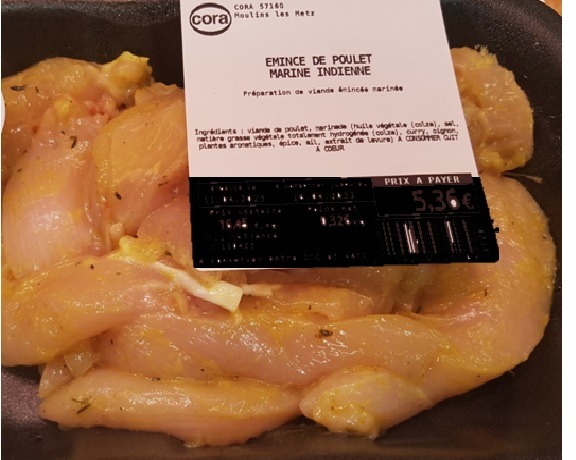
France – Indian marinated chicken mince – Salmonella

Gov france

Identification information of the recalled product

  • Product category Feed
  • Product subcategory Meats
  • Product brand name prepared by the store
  • Model names or references Indian marinated chicken mince
  • Identification of products
    GTIN Batch Date
    2054234000000 packed on 03/31/2023 Use-by date 05/04/2023
  • Packaging variable weight tray
  • Marketing start/end date From 31/03/2023 to 05/04/2023
  • Storage temperature Product to be stored in the refrigerator
  • Health mark/
  • Geographic area of ​​sale cora Moulins les Metz (57)
  • Distributor scora store Moulins les Metz

Practical information regarding the recall

  • Reason for recall presence of salmonella
  • Risks incurred by the consumer Salmonella spp (causative agent of salmonellosis)

Research – Austria reports Salmonella and Yersinia data for 2022

Food Safety News

Submissions of human Salmonella isolates are approaching pre-COVID-19 pandemic levels in Austria after a decline in 2020 and 2021, according to the Federal Ministry of Labour, Social Affairs, Health and Consumer Protection (BMSGPK).

In 2022, the number of isolates sent to the National Reference Centre for Salmonella increased by 118. This past year, 1,166 Salmonella isolates were submitted to the reference center compared with 1,048 in 2021. It is still below the 1,872 sent in 2019.

In 2022, the Austrian National Reference Centre for Yersinia at the Austrian Agency for Health and Food Safety (AGES) received 201 human isolates.

Of these, 107 were pathogenic, and 94 were non-pathogenic. Among the pathogenic ones, 105 belonged to Yersinia enterocolitica including 88 serovar O:3; biovar 4, and two were Yersinia pseudotuberculosis.

A total of 130 cases of yersiniosis were reported to BMSGPK. This was about the same level as in 2021. Based on data from 38 patients, 22 cases reported diarrhea, 11 had cases of abdominal pain and three each mentioned vomiting and fever.

USA – FDA – Core Outbreak Table – Update

FDA

What’s New

  • On 4/11/2023, an updated outbreak advisory was issued for the outbreak of hepatitis A virus linked to frozen organic strawberries (reference #1143).
  • The outbreak of Listeria monocytogenes (ref #1127) linked to enoki mushrooms has ended and the FDA investigation is closed.
Date
Posted
Ref Pathogen
or
Cause of
Illness
Product(s)
Linked to
Illnesses

(if any)
Total
Case
Count

Status
3/29/2023 1141 Salmonella Infantis Raw Flour See
CDC
Investigation
Notice
Active
3/8/2023 1144 Salmonella Hartford Not Yet
Identified
53 Active
3/1/2023 1143 Hepatitis A Virus Frozen Organic
Strawberries
See
Outbreak
Advisory
Active
2/15/2023 1123 Listeria
monocytogenes
Not Yet
Identified
See
CDC
Investigation
Notice
Active

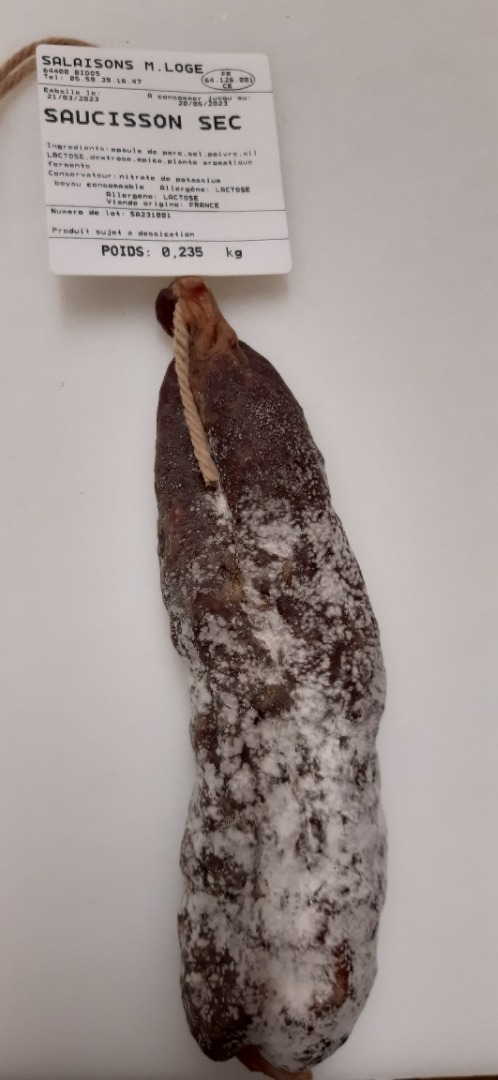
France – Dry Sausage – Salmonella

Gov france

Identification information of the recalled product

  • Product category Feed
  • Product subcategory Meats
  • Product brand name dry sausage
  • Model names or references Dry sausage batch SA231001
  • Identification of products
    Batch Date
    BATCH SA231001 Use-by date 05/31/2023
    Use-by date 05/20/2023
    Use-by date 05/21/2023
    Use-by date 05/22/2023
    Use-by date 05/23/2023
    Use-by date 05/24/2023
    Use-by date 05/25/2023
  • Packaging Naked product
  • Marketing start/end date From 03/21/2023 to 03/25/2023
  • Storage temperature Product to be stored at room temperature
  • Health mark EN 64126 001 EC
  • Geographic area of ​​sale 30Km around the manufacturing site
  • Distributors LECLERC OLORON, INTERMARCHE ARAMITS, INTERMARCHE ACCOUS, VIVAL LASSEUBE, DELICE DES VALLEES JURANCON, OLORON PRIMEUR OLORON, ROCHANGE LAGOR, LOU MERCAT GOES, FROMAGERIE ARRIBE HERRERE, BUTCHER KREMER GAN, DAVANCENS OLORON

Practical information regarding the recall

  • Reason for recall Salmonella detected during a self-check analysis

Research – How to deal with food poisoning while traveling—and how to avoid it altogether

National Geographic

Some countries have a reputation for putting travelers at a higher risk for gastrointestinal illnesses. But you can get sick from an improperly handled meal anywhere in the world.

Pad thai from a Bangkok street vendor or raw milk cheese from a bistro in France taste delicious in the moment. But for many travelers, the local dishes that make trips meaningful sometimes give them food poisoning—and the wrong sort of vacation memories.

By some metrics, gastrointestinal infections related to food or water affect 30 to 70 percent of all travelers during or immediately after their trips, according to a 2015 study in BMJ Clinical Evidence. Each year, one in six Americans and nearly one in 10 people worldwide suffer from such illnesses caused by bacteria (E. coli, salmonella, listeria), viruses (norovirus, hepatitis A), or parasites (giardiasis, roundworms, tapeworms).

Lower-income countries have a reputation for putting travelers at a higher risk for food poisoning, but people are just as likely to be sickened from an improperly handled meal in Italy or Australia—or from some sushi at their local supermarket.

Here’s why people get food poisoning, what to do if it strikes, and how to (maybe) prevent it, read at the link above.

Research – Microbiological Risk Assessment in Foods: Background and Tools, with a Focus on Risk Ranger

MDPI

Risk assessment is an important phase of the food production path; it is strictly related to the processing chain as a necessary step for safe foods. This paper represents a contribution to understanding what is and how risk assessment could be conducted; it aims to provide some information on the structure of risk assessment, the tools for its identification and measurement and the importance of risk assessment for correct communication. In this context, after a focus on the background and on some commonly used tools (Risk Ranger, FDA-iRisk, decision tree, among others), the paper describes how to perform risk assessment through three case studies: lettuce (for Listeria monocytogenes), chicken salad (for Escherichia coli), and fresh egg pasta (for Staphylococcus aureus) in the first step, and then a comparison of risk for chicken salad contaminated by different pathogens (E. coli O157:H7, Campylobacter spp. and Salmonella sp.). As a final step, a critical evaluation of Risk Ranger was carried out, pointing out its pros and cons.

Research – Evaluation of peroxyacetic acid, liquid buffered vinegar, and cultured dextrose fermentate as potential antimicrobial interventions for raw chicken livers

Wiley Online

This study aimed to evaluate the use of peroxyacetic acid (PAA), buffered vinegar (BV), and cultured dextrose fermentate (CDF) to reduce Salmonella on artificially inoculated raw chicken livers, one of the most consumed offal around the world. Samples were inoculated with a 5-strain cocktail of poultry-borne Salmonella to obtain 106 CFU/g and immersed for 90 s with agitation in one of the following treatments: distilled water (control), 450 ppm PAA, 2.0% (w/v) BV, or 1.5% (w/v) CDF, prior to storing at 4°C. Salmonella was enumerated on XLD agar and monitored for 14 days. Data were analyzed using analysis of covariance. After immersion, there was a significant Salmonella reduction (p < .05) with all treatments, including the control. PAA resulted in the greatest numerical reduction at 0.65 ± 0.12 log; however, there were no significant differences in the reductions among all other treatments (p > .05). After 14 days, higher numerical reductions were observed for PAA, but only when compared to CDF. Although similar reductions (p > .05) were noted after 14 days except for CDF, Salmonella counts were lowest in all timepoints when PAA was used. PAA and CDF inhibited the growth of aerobic bacteria until day 3 while BV inhibited the growth up to 7 days. Regarding objective color, chicken livers immersed in PAA became lighter, but the difference was not sustained over time. No differences were observed in redness or yellowness values across any treatments.

RASFF Alerts – Salmonella – Polish Chicken Products – Chicken Legs -Raw Cured Sausage- Pistachio Paste – Sesame Seeds – Black Pepper – Chicken Meat – Paprika Powder – Sesame Paste- Romanian Chicken Products – Onion Powder- Turkey Meat

RASFF

Chicken legs contaminated with Listeria and Salmonella from Belgium in Luxembourg

RASFF

Presence of Salmonella spp. in cured raw sausage “Sopressa nostrana” from Italy in Austria

RASFF

Salmonella in pistachio paste from Italy in Belgium

RASFF

Salmonella spp. in sesame seeds from Nigeria in Greece

RASFF

Salmonella spp in sesame seeds from Nigeria in Greece

RASFF

Salmonella spp. in sesame paste from Türkiye in Germany and Austria

RASFF

Salmonella enteritidis in chicken meat from Spain in Belgium

RASFF

Salmonella Infantis (in 2 out of 5 units) in fresh chicken thighs from Poland in Latvia

RASFF

Salmonella spp in paprika powder from China in Hungary and Slovenia

RASFF

Salmonella spp.in sesame paste from Syria in  Austria, Belgium, Denmark, Germany, Italy, Netherlands, Poland, Sweden

RASFF

Salmonella spp. in black pepper from Brazil in Germany

RASFF

Salmonella Senftenberg in sesame seeds from India in Austria and Germany

RASFF

Salmonella Infantis in poultry meat products from the Netherlands in France

RASFF

Salmonella enterica ser. Enteritidis in frozen chicken meat and chilled chicken thigh fillets from Romania in Central African Republic, Cyprus, Ghana, Hungary, Moldova, Romania, Spain, United Kingdom

RASFF

S. Agona, S. Idikan, S. Richmond, S. Falkensee, S. Molade, S. Mbandaka and S. Senftenberg in onion powder from Hungary in Germany

RASFF

Salmonella spp. in turkey meat from Italy in Germany

RASFF

Salmonella spp in chicken meat from Romania in Hungary

Belgium – Chicken chipolatas (500g and 1kg) from the Belgian Quality brand – Salmonella

AFSCA

Recall from Aldi
Product: Chicken chipolatas (500g and 1kg) from the Belgian Quality brand
Problem: Possible presence of Salmonella.
PRODUCT DESCRIPTION

Product name: CHICKEN CHIPOLATA 500g
CHICKEN CHIPOLATA 1kg
Brand: Belgian Quality
EAN code: 27095690 (500g)
2007030027791 (1kg)
Expiration dates (BBD): 06/04/2023 (500g)
07/04/2023 (1kg)
Batch numbers: PMM680511123086 (500g)
PMM918711123086 (1kg)
Type of packaging: plastic tray
Weight: 500g / 1kg
Sales period: 29/03/2023- 06/04/2023
Points of sale: ALDI stores


REASON FOR RECALL

Possible presence of Salmonella in the above items.
ALDI has therefore decided to withdraw these products from the market and to recall them from consumers. Other ALDI products are not affected by this recall.

DESCRIPTION OF THE RISK

Possible symptoms of salmonella poisoning are: fever, abdominal cramps and diarrhea within 12 to 48 hours of eating the contaminated food. The risk of infection is higher in the elderly, children, pregnant women and immunocompromised people.

Have you consumed this product and do you have these symptoms? Consult your GP and explain that you have consumed this product.

PRACTICAL INFORMATION

Please do not consume the product and return it to the store. Returned products will be refunded (also without receipt). For any additional information, you can contact our customer service: serviceclients@aldi.be .

USA – FDA – Core Outbreak Table – Investigations of Foodborne Illness Outbreaks

FDA

Date
Posted
Ref Pathogen
or
Cause of
Illness
Product(s)
Linked to
Illnesses

(if any)
Total
Case
Count

Status
3/29/2023 1141 Salmonella Infantis Raw Flour See
CDC
Investigation
Notice
Active
3/8/2023 1144 Salmonella Hartford Not Yet
Identified
53 Active
3/1/2023 1143 Hepatitis A Virus Frozen Organic
Strawberries
See
Outbreak
Advisory
Active
2/15/2023 1123 Listeria
monocytogenes
Not Yet
Identified
See
CDC
Investigation
Notice
Active
11/9/2022 1127 Listeria
monocytogenes
Enoki
Mushrooms
See
Outbreak
Advisory
Active