Category Archives: Salmonella

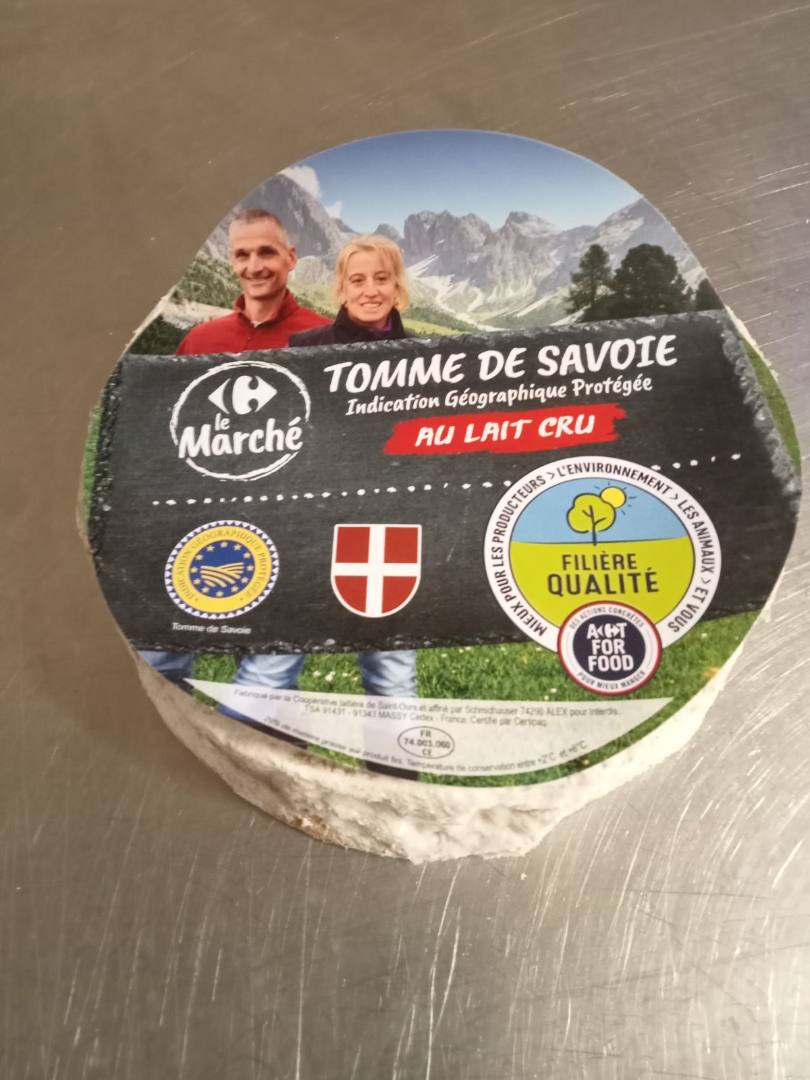
France – TOMME DE SAVOIE WITH RAW MILK – Salmonella

Gov france

Identification information of the recalled product

  • Product category Feed
  • Product subcategory Milk and dairy products
  • Product brand name Carrefour Le Marché Quality Line
  • Model names or references Tomme de Savoie made with raw milk sold in the cheese section
  • Identification of products
    GTIN Batch Date
    3365670124010 12002223082 Date of minimum durability 25/05/2023
    3365670124010 12002223082 Date of minimum durability 05/27/2023
    3365670124010 12002223082 Date of minimum durability 05/30/2023
    3365670124010 12002223082 Date of minimum durability 03/06/2023
    3365670124010 12002223082 Date of minimum durability 06/06/2023
    3365670124010 12002223082 Date of minimum durability 06/21/2023
  • Packaging Section of cheeses
  • Marketing start/end date From 04/12/2023 to 05/15/2023
  • Storage temperature Product to be stored in the refrigerator
  • Health mark FR 74 003 060 CE
  • Further information Cheese sold in the individual cheese department in Carrefour France hypermarkets and the Carrefour Market La Roche sur Foron store. Sold between April 12 and May 15, 2023.
  • Geographic area of ​​sale Whole France
  • Distributors Hyper Carrefour and Carrefour Market store La Roche sur Foron

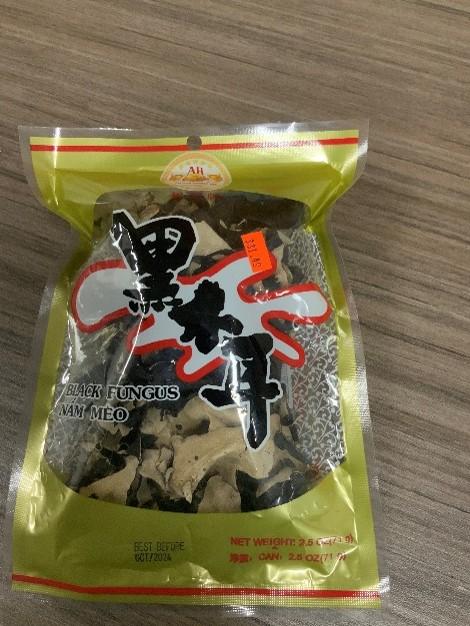
USA – Recall Press Release: TW4115 Black Fungus (Nam Meo) – Salmonella

FDA

Company Announcement

AH USA GROUP INC. is recalling its TW4115 Black Fungus (Nam Meo) product due to possible contamination. The recall is being conducted in cooperation with the California Department of Public Health and is being taken as a precautionary measure to ensure the safety and health of our consumers.

Distribution:

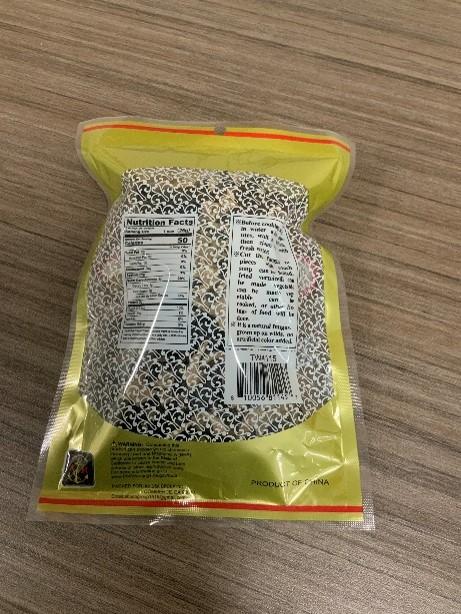
The recalled TW4115 Black Fungus (Nam Meo) product was distributed in the following states: California, Florida, Texas, Illinois, Georgia, Washington, Arizona, Louisiana, Wisconsin, Ohio, Oklahoma, and Pennsylvania. through small grocery stores. Golden Koi’s Black Fungus are distributed by AH USA GROUP INC., this brand of Black fungus has a shelf life best buy date of October 2024. Packaged in a sized container of 2.5 OZ. The item code for this product is TW4115.

Illnesses:

To date, there are no reported incidents correlated with Salmonella in this product. However, we have been informed that the state of Pennsylvania collected a sample of the product and found traces of salmonella. According to the testers, three types of salmonella were detected, Salmonella Javiana, Salmonella Mgulani, and Salmonella Weltevreden. All strains of Salmonella can cause similar symptoms, including diarrhea, fever, and abdominal cramps. These symptoms usually develop within 12 to 72 hours after exposure to the bacteria and can last for up to a week. In severe cases, Salmonella infection can lead to dehydration and hospitalization. It is important to practice good food hygiene, such as washing hands and cooking food thoroughly, to reduce the risk of Salmonella infection.

Action:

Consumers who have purchased the recalled TW4115 Black Fungus (Nam Meo) product are urged to return it to the place of purchase for a full refund or to dispose of it immediately. Consumers with questions can contact Phon Quang at (323-721-1205) from 8:30-4:30 Monday to Friday.

AH USA GROUP INC. takes food safety very seriously and apologizes for any inconvenience or concern this recall may cause. We remain committed to providing safe, high-quality products and will continue to work closely with CDPH to ensure the safety of our products.

Sincerely, Phon Quang
AH USA GROUP INC.
2845 Supply Ave. Commerce CA 90040


Company Contact Information

Consumers:
Phon Quang
 323-721-1205

Product Photos

Norway – Ramco Norge AS withdraws halvah from Syria after the discovery of Salmonella spp.

Matportalen

Ramco Norge AS withdraws halvah from Syria after the discovery of Salmonella spp.

Ramco Norge AS is withdrawing halvah from Syria after finding Salmonella spp. in the product. This applies to the variants natural, pistachio and chocolate and pack sizes 200, 400 and 900 grams.

The withdrawal applies to the following item

  • Halvah tahini natural, pistachio and chocolate
  • Package sizes; 200, 400 and 900 grams
  • Importer; Ramco Norway AS
  • Lot number; production date 11/2021 and best before 11/2023
  • Country of origin; Syria
  • Producer; Algota co. Food Products

The product is sold in independent grocery stores throughout Norway.

Ramco Norge AS asks consumers who have bought the product to return it to the store.

Salmonella spp . can cause illness with symptoms such as diarrhoea, headache, abdominal pain, nausea and possibly fever. In rare cases, the diarrhea can be long-lasting and severe.

Contact Ramco Norge AS
Telephone + 47 958 35 952 and e-mail: info@ramconorge.com

France – Sausage – Salmonella

Gov france

Identification information of the recalled product

  • Product category Feed
  • Product subcategory Meats
  • Product brand name Unbranded
  • Model names or references Plain Chipolota sausage meat
  • Identification of products
    Batch Date
    04/26/2023 Use-by date 30/04/2023
  • Packaging Sold in the traditional department of the E.LECLERC Thiverny-Montataire store
  • Marketing start/end date From 04/26/2023 to 04/30/2023
  • Storage temperature Product to be stored in the refrigerator
  • Geographic area of ​​sale Whole France
  • Distributors E.LECLERC Thiverny-Montataire

Practical information regarding the recall

  • Reason for recall Demonstration of the presence of salmonella

Research – Fate of Listeria monocytogenes, Salmonella spp., and Shiga Toxin-Producing Escherichia coli on Slices of an All-Beef Soppressata during Storage

MDPI

Abstract

Cells of Listeria monocytogenesSalmonella spp., or Shiga toxin-producing Escherichia coli (STEC) were inoculated (ca. 4.0 log CFU/slice) onto slices (ca. 4 g each slice) of an all-beef soppressata (ca. pH 5.05 and aw 0.85). The storage of vacuum-sealed slices of inoculated soppressata at 4 °C or 20 °C for 90 days resulted in reductions of all three pathogens by ca. 2.2 to 3.1 or ca. ≥3.3 log CFU/slice, respectively. When pathogen levels decreased to below detection (≤1.18 log CFU/slice) by direct plating, it was possible to recover each of the target pathogens by enrichment, albeit more frequently from slices stored at 4 °C (p < 0.05) compared to 20 °C. In summary, the slices of the commercially produced beef soppressata selected for this study did not provide a favorable environment for either survival or outgrowth of surface-inoculated cells of L. monocytogenesSalmonella spp., or STEC during storage.

Research – Salmonella Biofilm Formation under Fluidic Shear Stress on Different Surface Materials

MDPI

Abstract

This study characterized biofilm formation of various Salmonella strains on common processing plant surface materials (stainless steel, concrete, rubber, polyethylene) under static and fluidic shear stress conditions. Surface-coupons were immersed in well-plates containing 1 mL of Salmonella (6 log CFU/mL) and incubated aerobically for 48 h at 37 °C in static or shear stress conditions. Biofilm density was determined using crystal violet assay, and biofilm cells were enumerated by plating on tryptic soy agar plates. Biofilms were visualized using scanning electron microscopy. Data were analyzed by SAS 9.4 at a significance level of 0.05. A surface–incubation condition interaction was observed for biofilm density (p < 0.001). On stainless steel, the OD600 was higher under shear stress than static incubation; whereas, on polyethylene, the OD600 was higher under static condition. Enumeration revealed surface–incubation condition (p = 0.024) and surface–strain (p < 0.001) interactions. Among all surface–incubation condition combinations, the biofilm cells were highest on polyethylene under fluidic shear stress (6.4 log/coupon; p < 0.001). Biofilms of S. Kentucky on polyethylene had the highest number of cells (7.80 log/coupon) compared to all other strain–surface combinations (p < 0.001). Electron microscopy revealed morphological and extracellular matrix differences between surfaces. Results indicate that Salmonella biofilm formation is influenced by serotype, surface, and fluidic shear stress.

RASFF Alerts – Salmonella – Polish Chicken Products – Brazilian Chicken Products – Sesame Seeds – Beef – Chicken – Chicken Mince – Tahini Paste – Pork Sausage Meat- Pork Mince Meat

RASFF

Salmonella spp. in organic sesame seeds from Uganda in Germany

RASFF

Presence of Salmonella Typhimurium in beef from the Netherlands in Italy

RASFF

Salmonella typhimurium in chicken from the Netherlands in the UK

RASFF

Salmonella Enteritidis in fresh chicken from Poland in the UK

RASFF

Salmonella infantis, Newport in frozen halal chicken wings from Poland in Italy

RASFF

Salmonella Infantis in frozen chicken mince in the Netherlands

RASFF

Salmonella in Tahini paste from Egypt in Slovenia and the Czech Republic

RASFF

Salmonella Minnesota in frozen chicken breast fillets from Brazil, via Ireland in the Czech Republic

RASFF

Presence of Salmonella Derby in pork sausage meat and pork minced meat from raw material originating in the Czech Republic in Slovakia

RASFF

Salmonella Minnesota in frozen chicken half breast fillets from Brazil in the Czech Republic and Netherlands

RASFF Alert -Animal Feed- Salmonella – Raw Dog Food

RASFF

Salmonella in complete feed (raw pet food) for dogs from Greece in Romain, Slovenia and Bulgaria

Research – Norway records rise in outbreaks in 2022

Food Safety News

The number of outbreaks and people sick in them in 2022 went up from the year before, based on new data from Norway.

A total of 34 foodborne outbreaks were reported in 2022, which is up from 23 and 25 outbreaks in 2020 and 2021 but lower than the 46 outbreaks in 2019.

Overall, 628 people were sick this past year with the largest incident affecting 100 people, according to a report published by the Norwegian Institute of Public Health (FHI). In the 25 outbreaks in 2021, 327 patients were recorded.

Eight norovirus outbreaks sickened 135 people in 2022. Five outbreaks with 148 cases were caused by Salmonella. Cryptosporidium and Yersinia were behind three each with 14 and 51 patients, respectively.

Ten people were sick in two Listeria outbreaks. One Campylobacter outbreak had six patients and one E. coli event affected seven people. The agent was unknown for 11 outbreaks with 257 cases.

Most foodborne outbreaks were reported in connection with restaurants, cafes and other catering establishments.

USA- FDA -Investigations of Foodborne Illness Outbreaks Update

FDA

What’s New

  • For the outbreak linked to morel mushrooms (ref #1152), the case count has increased from 30 cases to 41 cases.
  • For the outbreak of hepatitis A virus (ref #1143), cases have increased from 8 to 9. This change has been made on the advisory for this outbreak.
Date
Posted
Ref Pathogen
or
Cause of
Illness
Product(s)
Linked to
Illnesses

(if any)
Total
Case
Count

Status
4/26/2023 1152 Not Yet Identified Morel Mushroom
(suspect)
41 Active
3/29/2023 1141 Salmonella Infantis Raw Flour See
Outbreak
Advisory
Active
3/1/2023 1143 Hepatitis A Virus Frozen Organic
Strawberries
See
Outbreak
Advisory
Active
2/15/2023 1123 Listeria
monocytogenes
Not Yet
Identified
See
CDC
Investigation
Notice
Active