Category Archives: Research

Research – In Vitro Screening of Chicken-Derived Lactobacillus Strains That Effectively Inhibit Salmonella Colonization and Adhesion

MDPI

nhibition of Salmonella by Lactobacillus has been a popular research topic for decades; however, the inhibition potential of chicken-derived Salmonella by chicken-derived Lactobacillus has not yet been studied. In this study, 89 strains of Lactobacillus from chicken intestines were isolated by national standard method, Gram staining, physiological, and biochemical experiments and molecular sequencing; The inhibition characteristics of 89 strains of chicken derived Lactobacillus against 10 strains Salmonella (S. Enteritidis SE05, SC31, SC21, SC72 SC74, SC79, SC83, SC87; S. bongori SE47; S. Typhimurium, SC85) were detected by agar inhibition zone, The results showed that the inhibition zone of 24 strains of chicken derived Lactobacillus was more than 10 mm, which indicated that the isolated chicken derived Lactobacillus could effectively inhibit the growth of Salmonella; The drug resistance and bile salt tolerance of these 24 strains were analyzed, The results showed that the standard strains LG and L76 were not resistant, and the other 22 Lactobacillus strains showed different degrees of resistance. The strains LAB24, LAB26, LAB53, LAB69, and L76 showed good tolerance at the concentration of 3 g/L bile salt; Caco-2 cell experiment and flow cytometry were used to analyze the inhibitory effect of chicken derived Lactobacillus on the adhesion of Salmonella to Caco-2 cells, The results showed that 16 probiotics could effectively inhibit the adhesion of Salmonella to Caco-2 cells. Twelve probiotics were identified by molecular biology. The results showed that L76 was Enterococcus faecalis, and the other 11 strains were Lactobacillus. View Full-Text
Research – Behavioral Ethics and the Incidence of Foodborne Illness Outbreaks

Springer

Cognitive biases play an important role in creating and perpetuating problems that lead to foodborne illness outbreaks. By using insights from behavioural ethics, we argue that sometimes people engage in unethical behaviour that increases the likelihood of foodborne illness outbreaks without necessarily intending to or being consciously aware of it. We demonstrate these insights in an analysis of the 2011 Listeriosis outbreak in the U.S. from the consumption of contaminated cantaloupes. We then provide policy implications that can improve our understanding of other kinds of disease outbreaks and epidemics.

Kenya – Tough Terms As Kenya Lifts Tanzania, Uganda Maize Imports Ban -Aflatoxin

All Africa

All stakeholders dealing in maize imports would be required to be registered, the consignments coming in must be accompanied with certificate of conformity on aflatoxin levels and that traders have to issue details of their warehouses and the certificate of conformity should indicate that the aflatoxin levels complies with the maximum required levels of 10 parts per billion, the Ministry of Agriculture said. This comes a week after Kenya banned the importation of maize from two neighbouring countries, Tanzania and Uganda, after studies revealed higher than normal levels of mycotoxins. In a letter to the neighbours, the Kenya Agriculture and Food authority said they were “conducting surveillance on the safety of food imports into Kenya”. Mycotoxins are naturally occurring toxins produced by certain fungi and can be found in food. It grows on a variety of different crops and foodstuffs including cereals, nuts, spices, dried fruits, apples and coffee beans, often under warm and humid conditions.

Nigeria – Study Shows 76% Of Germs On Ready-To-Eat Fruits Are Multidrug-Resistant

Tribune Online

CONSUMPTION of fresh cut, ready-to-eat fruits (FCFs) processed and vended in open markets in Nigeria may constitute human health risks, causing food-borne diseases, due to microbial contamination, a study warns.

In the study, researchers had assessed pineapple and watermelon, which are among the commonest ready-to-eat fruits retailed and consumed regularly, including samples of fruit wash water and vendors’ hand, and found them heavily infested with different germs.

India – Evolution of Organic Food Safety Standards in India

FNB News

Food safety is the key to achieve better public health. The high incidence of foodborne illness is a burden on public health and contributes significantly to the cost of health care. Though most of the foodborne illnesses are rare and often not reported in India, however, a nationwide study reported an alarming 13.2 per cent prevalence at the household level. Therefore there is a need for a comprehensive approach for safer and nutritious food for Indian citizens. Safer food promises a healthier lifestyle, longer lives, less costly healthcare and more resilient food industry.
The Indian food industry is regulated by the number of legislations covering licensing, sanitation, and permits. Food Safety and Standards Act 2006, established by the Government of India, was a vital step in the direction of developing the standards for food and regulating and monitoring the manufacture, processing, storage, distribution, sale, and import of food to ensure the availability of safe and nutritious food for human consumption.

Research – Moving Forward to the Future: A Review of Microbial Food Safety Education in China

Liebert Pub

Millions of foodborne illness cases occur in China annually, causing significant social and economic burdens. Improper food handling has been observed not only among commercial food handlers but also among residential food handlers. It is critical to conduct a comprehensive scoping review of previous efforts to identify food safety knowledge gaps, explore the factors impacting knowledge levels, and synthesize the effectiveness of all types of food safety educational interventions for commercial and residential food handlers in China. This review aims to analyze food safety education studies published over the past 20 years and provide foundations for developing more effective food safety educational interventions in China. A total of 35 studies were included in this review. Most studies reported that Chinese commercial and residential food handlers had insufficient food safety knowledge, especially in the areas of foodborne pathogens and safe food-handling practices. The factors impacting food handlers’ knowledge levels included education level, gender, income level, residency (rural vs. urban), the use of WeMedia, college students’ major, and food safety training experiences. Food handlers in the following demographic groups tend to have lower levels of food safety knowledge: lower education levels, the elderly, males, lower-income levels, rural residents, those who do not use WeMedia, those without food safety training experience, or college students in nonbiology-focused majors. Many food handlers did not always follow recommended food safety practices, such as proper meat handling practices, handwashing practices, and cleaning and sanitation practices. Thirteen studies evaluated the effectiveness of educational interventions, and knowledge increases were reported after all interventions. The findings of this review provide guidance to researchers, educators, and government agencies in their future efforts to develop education programs emphasizing the importance of microbial food-safety content and behavior change regarding food safety and hygiene practices.

Taiwan – TFDA Initiated 2021 Inspection Project for Ice Cube – Food Safety

TFDA

Ice cubes are usually used to cooling drinks and foods during the summer and hot weather days in Taiwan. In order to continuously ensure the sanitation and safety of ice cube product for consumers, Taiwan Food and Drug Administration (TFDA) will initiate the 2021 Inspection Project for Ice Cube, and will be conducted with local government health bureaus to improve food safety and sanitation management.

The inspection items will focus on the registration requirements for food businesses, the Regulation on Good Hygiene Practice for Food (GHP), the product liability insurance, the self-management, the product traceability, the transport control, the food practitioner sanitation management. And the ice cube products will be checked of labeling and hygiene compliance. Violating provisions of the Act Governing Food Safety and Sanitation will be punished by law.

TFDA strongly recommends food businesses effectively implementing the self-management following the Act Governing Food Safety and Sanitation to ensure ice cubes safety and sanitation to protect the health of consumers.

Research – Microbial Safety of Smoothie Drinks from Fresh Bars Collected in Slovakia

MDPI

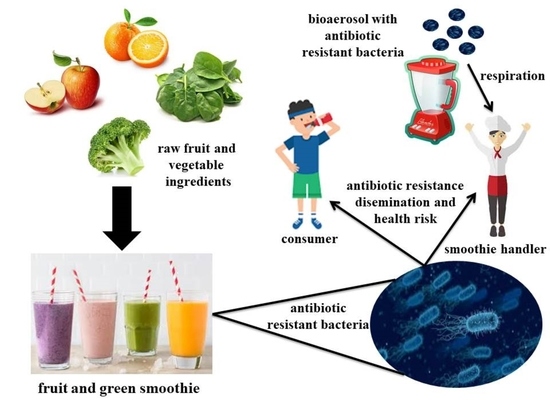
Among the many consumers in Slovakia, smoothies are nowadays gaining popularity. Smoothie drinks are prepared from raw fruits and vegetables. Therefore, their microbiological safety depends on hygiene standards. The aim of this work was to monitor and quantify selected sensitive and antibiotic-resistant microorganisms present in collected smoothies. Twenty analyzed smoothie samples were collected from six food service establishments (fresh bars) in the capital city of Slovakia, Bratislava. Antibiotic-resistant bacteria were found in at least one of each fresh bar. Antibiotic-resistant coliform bacteria prevailed, especially in green smoothies or juices containing more vegetable ingredients. Resistance to ampicillin, ciprofloxacin, tetracycline, chloramphenicol, and gentamicin was observed in the case of coliform bacteria. More than half of the smoothie drink samples did not contain resistant enterococci. On the other hand, vancomycin-resistant enterococci were detected in 20% of samples. The most frequently isolated antibiotic-resistant strains belonged to the Enterobacter spp. or Klebsiella spp. genus. In the last part of the work, the pretreatment effect of smoothie components on the selected microorganisms’ counts in the final product was investigated. Washing ingredients with an aqueous solution of a biocide agent containing silver and hydrogen peroxide proved to be the most effective way to decrease bacterial counts. View Full-Text

Korea – Food Poisoning Cases Plummet amid Attention to Personal Hygiene

Korea BizWire

South Korea’s drug safety agency said Thursday that the number of food poisoning cases in South Korea declined sharply last year, falling to about a half of the annual average for the previous five years, with the number of food poisoning patients more than halving.

The number of food poisoning cases occurring last year in the country stood at 178, which is equivalent to 52 percent of the annual average of 343 cases for the previous five years from 2015 to 2015, according to the Ministry of Food and Drug Safety.

Accordingly, the number of food poisoning patients also dropped to 2,747 last year, a level that is equivalent to 40 percent of the annual average of 6,874 for the previous five years.

The number of food poisoning patients per 1 million people stood at 139 in 2016, 109 in 2017, 222 in 2018, 79 in 2019 and 53 in 2020.

The numbers of both cases and patients marked the lowest the ministry has ever seen during the entire period that it has been collecting relevant data, since 2002.

The ministry attributed the decline in both food poisoning cases and patients to the sharp decrease in the number of group meal programs, including school meals, due to the outbreak of the coronavirus.

Research – Persistence of Foodborne Pathogens on Farmers Market Fomites

Journal of Food Protection

The number of farmers markets registered by the U. S. Department of Agriculture (USDA) has seen a significant increase, jumping from 1,755 in 1994 to 8,771 in 2019. Microbial studies have found evidence that produce sold at farmers can yield higher microbial counts than their retail counterparts; however, no previous literature explored the efficacy of microbial (bacteria and virus) persistence on a variety of different farmers market fomites over a 2-month period. The objectives of the current study were to conduct observations to determine the most commonly used food contact surface fomites at farmers markets and to investigate the persistence of key foodborne pathogens ( Escherichia coli O157:H7, Listeria monocytogenes, Salmonella spp., Staphylococcus aureus, and MS2 bacteriophage) on these fomites. A repeated-measures analysis of variance was used to compare the persistence rates of foodborne pathogens on cardboard, plastic, tablecloth, molded pulp fiber, and wicker baskets used to store, transport, and display produce at farmers markets. In general, molded pulp fiber, plastic and wicker surface materials supported the persistence of foodborne pathogens the most, with S. aureus demonstrating the highest log concentrations over the longest period of time. Additionally, Salmonella and E. coli strains also persisted for a significant period of time (approximately 32-days) on all fomites with the exception of tablecloth. The results suggest that foodborne pathogens on these fomites pose a high-risk of cross-contamination particularly if the fomites cannot be washed, rinsed, and sanitized effectively (e.g. cardboard). The results highlight the need avoid using porous, single-use storage containers such as cardboard, molded pulp fiber and wicker containers for extended periods of time and suggest the use of easily cleanable materials such as plastic containers.