Category Archives: Research

Research – Salmonella, Food Safety and Food Handling Practices

MDPI

kswfoodworld salmonella

Salmonellosis is the second most reported gastrointestinal disorder in the EU resulting from the consumption of Salmonella-contaminated foods. Symptoms include gastroenteritis, abdominal cramps, bloody diarrhoea, fever, myalgia, headache, nausea and vomiting. In 2018, Salmonella accounted for more than half of the numbers of foodborne outbreak illnesses reported in the EU. Salmonella contamination is mostly associated with produce such as poultry, cattle and their feeds but other products such as dried foods, infant formula, fruit and vegetable products and pets have become important. Efforts aimed at controlling Salmonella are being made. For example, legislation and measures put in place reduced the number of hospitalizations between 2014 and 2015. However, the number of hospitalizations started to increase in 2016. This calls for more stringent controls at the level of government and the private sector. Food handlers of “meat processing” and “Ready to Eat” foods play a crucial role in the spread of Salmonella. This review presents an updated overview of the global epidemiology, the relevance of official control, the disease associated with food handlers and the importance of food safety concerning salmonellosis. View Full-Text

UK – Northern Ireland – Consultation on the rationalisation of official control shellfish biotoxin and phytoplankton monitoring points in Carlingford Lough

FSA

Northern Ireland specific
Consultation seeking stakeholders’ views on the proposed rationalisation of biotoxin and phytoplankton monitoring in Carlingford Lough and the implementation of Representative Monitoring Points (RMPs) and Associated Harvesting Areas (AHAs).

Who will this consultation be of most interest to?

Carlingford Lough shellfish harvesters, enforcement authorities, official control sampling officers, official control testing laboratories and other interested stakeholders.

Consultation subject

A proposal by the Food Standards Agency (FSA) to rationalise the number of official control monitoring points for biotoxin and phytoplankton monitoring in Carlingford Lough and introduce Representative Monitoring Points (RMPs) and Associated Harvesting Areas (AHAs) .

Purpose of the consultation

To seek comments from industry, enforcement authorities, and other interested stakeholders on the proposed rationalisation of biotoxin and phytoplankton monitoring in Carlingford Lough and the implementation of RMPs and AHAs.

Consultation Pack

How to respond

Responses to this consultation should be emailed or posted to the addresses below:

Email: executive.support@food.gov.uk

Postal address:

Food Standards Agency in Northern Ireland
Executive Support Unit
10a-c Clarendon Road, Belfast
Co Antrim
BT1 3GB

Research – Contamination of ready-to-eat street food in Pakistan with Salmonella spp.: Implications for consumers and food safety

IJID Online

kswfoodworld salmonella

Highlights

  • Microbial contamination of street food sold in Quetta.
  • 38% (121/320) of ready-to-eat food samples were contaminated with microbial pathogens.
  • Food quality was worse in summer months.
  • Salmonella enteritidis and Salmonella typhimurium were identified by multiplex polymerase chain reaction.
  • Isolated pathogens showed antibiotic resistance.

Abstract

Objectives

Ready-to-eat (RTE) food sold in Quetta, Pakistan was assessed for microbial contamination.

Methods

Equal numbers of samples were collected from four categories of RTE food – burgers, shawarma, pizza and sandwiches – from January 2018 to December 2018. Microbial contamination of individual food samples was assessed by quantifying the total aerobic count obtained from plating samples on bacterial growth medium. Salmonella spp. serovars were identified using polymerase chain reaction.

Results

Approximately 38% (121/320) of RTE food samples were not fit for human consumption. The most contaminated type of RTE food was shawarma (49%). Microbial contamination of food samples was higher in summer compared with the other seasons. Approximately 40% (49/121) of food samples that were not fit for human consumption were contamined with Salmonella spp. Salmonella enteritidis (69%) and Salmonella typhimurium (31%) were the only serovars among the samples testing positive for Salmonella spp. Of the 49 samples with high microbial counts, S. enteritidis was present in 34 samples and S. typhimurium was present in 15 samples. The antibiotic sensitivity results demonstrated that both S. enteritidis and S. typhimurium were resistant to amoxicillin. In addition, S. enteritidis was resistant to chloramphenicol and erythromycin, and S. typhimurium presented high resistance to erythromycin. Both S. typhimurium and S. enteritidis were highly sensitive to kanamycin.

Conclusion

RTE food sold by street vendors in Quetta was found to be contaminated with Salmonella spp. and poses a great health risk to consumers. As such, consumption should be avoided, and the health authorities should take stringent action to ensure the quality of street food in order to reduce the healthcare burden.

Publisher’s Platform: Pathogen information at your fingertips on our ‘bug’ sites

Food Safety News

Marler Clark developed expertise in foodborne pathogens other than E. coli, we began to post information that we learned during litigation and by working with some of the best experts in the world.  The culmination of those efforts is our “bug” websites, which we offer in the link above, peruse and share with those you care about.

Research – Effect of food matrix type on growth characteristics and hemolysin production of Vibrio alginolyticus

Journal of Food Protection

Food Illness

The growth and hemolysin production of two V.   alginolyticus  strains (HY9901 and ATCC17749T) at 30 °C in briny tilapia, shrimp, scallop, oyster, pork, chicken, freshwater fish and egg fried rice were investigated. Bacterial counts were enumerated by plate counting. Hemolysin production was evaluated by blood agar and hemolytic titer tests. The two V.   alginolyticus  strains displayed similar growth and hemolysin production patterns in the foods. Based on the goodness of fit primary model statistics (R 2 , MSE, BF, AF), the modified Gompertz model was a better fit to V.   alginolyticus  growth in foods than the logistic model. Growth kinetic parameters of V.   alginolyticus  displayed a higher μ max and shorter λ in briny tilapia > shrimp > freshwater fish > egg fried rice > scallop > oyster > chicken > pork. It was notable that the V.   alginolyticus  counts were similar at the stationary phase, with no significant growth behavior difference between raw and cooked foods. Significantly higher (p < 0.05) thermostable direct hemolysin (TDH) activity was produced by V.   alginolyticus  in briny tilapia > freshwater fish > shrimp > chicken > egg fried rice > scallop > oyster > pork. But the hemolytic titer was not consistent with the TDH activity, being significantly higher (p < 0.05) in briny tilapia > egg fried rice > shrimp > freshwater fish > chicken > scallop > oyster > pork. Contrary to current belief, V.   alginolyticus  displayed a higher hemolysin production in some non-seafoods (freshwater fish, egg fried rice and chicken) than in scallop or oyster. This is the first report of growth and toxicity of V. alginolyticus  in different food matrices and confirmation that some non-seafood contaminated with V. alginolyticus  can be even more pathogenic. This study will enhance the awareness of non-seafood safety and improve the V.   alginolyticus  risk assessment accuracy.

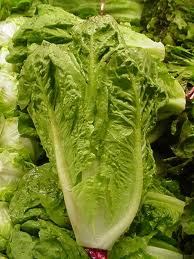
Research – An Overview of Traceback Investigations and Three Case Studies of Recent Outbreaks of Escherichia coli O157:H7 Infections Linked to Romaine Lettuce

Journal of Food Protection

Eurofins Food Testing UK

Leafy greens contaminated with Shiga toxin-producing Escherichia coli (STEC) have continued to cause foodborne illness outbreaks in recent years and present a threat to public health. An important component of foodborne illness outbreak investigations is determining the source of the outbreak vehicle through traceback investigations. The Food and Drug Administration is home to traceback investigation experts that employ a standardized process to initiate, execute, and interpret the results of traceback investigations in collaboration with the Centers for Disease Control and Prevention and state and local partners. Traceback investigations of three outbreaks of STEC infections linked to romaine lettuce in 2018 and 2019 were examined to demonstrate challenges, limitations, and opportunities for improvement. The three outbreaks resulted in a total of 474 illnesses, 215 hospitalizations, and five deaths. These illnesses were linked to the consumption of romaine lettuce from three distinct growing regions in Arizona and California. Some of the challenges encountered included the time it took to initiate a traceback, limited product-identifying information throughout the supply chain, lack of interoperability in record keeping systems, and co-mingling of product from multiple suppliers. These challenges led to time delays in the identification of the farm source of the leafy greens and the inability to identify the root cause of contamination. Implementation of technology enabled traceability systems, testing of these systems, and future regulations to incentivize adoption of traceability systems are some of the initiatives that will help address these challenges by improving traceback investigations and ultimately preventing foodborne illnesses and future outbreaks from occurring.

Research – Factors affecting persistence of Listeria monocytogenes need to be identified for evaluation and prioritization of interventions.

Centre For Produce Safety

Listeria kswfoodworld food safety food poisoning

Image CDC

The foodborne pathogen Listeria monocytogenes can survive over time in food processing environments such as produce facilities. These “resident” Listeria strains increase the likelihood for finished product contamination, recalls, and outbreaks. Advances in sequencing allow for enhanced discrimination between Listeria strains, such as those that may be unique to a specific facility. This results in improved traceback from listeriosis patients to the facility where the implicated food was prepared. However, sequencing advances have also enabled us to better understand how a unique Listeria strain may survive and spread in a facility over time. Thus far, there is little peer-reviewed research on how to prevent, eliminate, or manage a “resident” Listeria strain in a facility, particularly for the produce industry. This project was designed to review published and unpublished data to identify factors that may contribute to a Listeria persisting in a facility and to validate potential interventions suitable for produce facilities using experiments in commercial facilities as well as computer modeling. This project will provide industry with tools to (i) help identify what characteristics of their facilities may allow a Listeria to persist, and (ii) select and justify interventions that are used to prevent, eliminate, or manage Listeria persistence.

Technical Abstract

Persistence of Listeria in produce packing and fresh-cut facilities continues to be a concern that the industry tries to address through development and implementation of “seek and destroy” programs. While industry has considerably improved their ability to detect Listeria persistence (“seek”), identification and implementation of strategies to eliminate or manage persistence (“destroy”) remains a major challenge. There thus is a need for the produce industry to have improved resources to (i) rapidly identify factors (root causes) that may be responsible for or contribute to Listeria persistence, as well as factors that contribute to dispersal of resident strains; and (ii) identify appropriate science-based
interventions that can be used to prevent, eliminate, or manage relevant root causes. In particular, the produce industry has a need for data and procedures to validate Listeria persistence interventions, which will allow produce facilities to justify a given control strategy to regulatory agencies, customers, and third-party auditors. This project was thus designed to (i) assemble a comprehensive list of factors that contribute to the establishment and dispersal of “resident” Listeria in produce packing and fresh-cut facilities and to (ii) use different approaches to validate interventions that target these factors. Validation approaches will include (i) identifying relevant previous scientific literature; (ii) experimental
validation in commercial facilities, and (iii) in silico validation utilizing agent-based models for produce packinghouses and fresh-cut facilities. To achieve these project goals, we propose the following objectives:

Obj. 1: Conduct a systematic review of published and unpublished data and literature to identify modifiable factors that may contribute to resident Listeria in produce packing and fresh-cut facilities and relevant interventions, assess the validity of these findings based on the strength of evidence and prioritize interventions for assessment in Objs. 2 and 3 using expert elicitation.

Obj. 2: Use controlled experiments and observational studies to validate selected interventions identified in Obj. 1 in produce packing and fresh-cut facilities with resident Listeria.

Obj. 3: Validate selected interventions that are challenging to validate experimentally (e.g., extensive facility modifications) using our previously developed agent-based model.

Results from all three objectives will be used to assemble a resource document that includes (i) a comprehensive list of factors that are well supported to contribute to Listeria persistence and dispersal of resident strains, and (ii) interventions for each factor, along with justification and data supporting each intervention. In addition, we will also develop a step-by-step approach for conducting a root cause analysis to identify the most likely factors contributing to a given persistence event and selecting appropriate interventions. These resource documents will be assembled into a toolkit and made available through different mechanisms, including collaborations with produce trade organizations, to facilitate their widespread use. Ultimately, the project outcomes will allow industry to more effectively control Listeria persistence, leading to a lower risk of cross-contamination and recalls.

Research- Fish, Tilapia, and Shigellosis: A review

AJAR

Foodborne diseases are considered a relevant issue in health around the world due to their incidence, mortality and negative effects on the economic and productive sector. Fish is considered a food of high nutritional quality, being of global production, distribution and commercialization mainly for human consumption. Among the fish worldwide obtained from capture fisheries and mainly aquaculture for human consumption is Tilapia, due to the adaptability of this fish under cultivation conditions in addition to the fact that its meat is of quality and accessible economic value. Fish due to its composition, is highly susceptible to deterioration and contamination by different hazards throughout the food chain, putting the safety of products and public health at risk. Shigellosis is among the diseases that may be contracted from the consumption of food contaminated by bacteria of the genus Shigella spp.; food contamination is mainly related to inadequate or non-hygienic conditions and practices in the production, processing and handling of food. Therefore, the purpose of this review is to provide a general perspective of foodborne diseases, especially shigellosis, causal agents, conditioning factors, related foods such as fish, as well as control and preventive actions in order to protect the food safety and public health.

USA – Outbreak sickens dozens; no cause found; investigation closed

Food Safety News

The FDA has concluded its investigation of an outbreak of Salmonella Miami with a one-word public statement: closed.

A source for the pathogen, which has sickened at least 64 people, remains unknown, according to the Food and Drug Administration. In its weekly outbreak update, the agency ended the investigation with as little fanfare as it began it. The FDA’s initial announcement was a one-line entry on its weekly outbreak update table.

As of yesterday, the Centers for Disease Control and Prevention had not posted any information about the outbreak. The CDC did not respond to a request for comment on April 14, the day of the FDA announcement. 

UK – Sainsbury’s Campylobacter rates in chicken hit FSA threshold

Food Safety News

Campylobacter kswfoodworld

Sainsbury’s has recorded the worst Campylobacter in chicken results for the final three months of 2020 closely followed by Tesco.

Figures come from the top nine retailers in the United Kingdom publishing the latest quarter of testing findings.

The Food Standards Agency (FSA) threshold is 7 percent of birds with more than 1,000 colony forming units per gram (CFU/g) of Campylobacter.

Sainsbury’s reported 7 percent of chickens sampled were above 1,000 CFU/g in the fourth quarter of 2020 (4Q), compared to 2 percent in 3Q, slightly more than 4 percent in 2Q and about 3 percent in 1Q 2020.