Category Archives: Mold Toxin

Research – Evaluation of the dietary exposure of the Catalan population to mycotoxins of the genus Fusarium

ACSA

Within the framework of total diet studies, the Catalan Food Safety Agency (ACSA) publishes a second study on the evaluation of mycotoxins: “Evaluation of the dietary exposure of the Catalan population to mycotoxins of the genus Fusarium”.

In 2014, a first study was published in which the presence of the main mycotoxins in food intended for human consumption in the Catalan market was determined, and the intake of food linked to this contamination to estimate the food exposure of the population residing in Catalonia, and evaluate the risk to health (ACSA, 2014). Considering the results obtained, the ACSA considered it necessary to carry out this second, more specific study on mycotoxins, evaluating those that were found most frequently in the foods of the Catalan market, the mycotoxins of the genus Fusarium, and also taking into account the most exposed population groups.

The present study shows that the mycotoxins detected with greater frequency were DON and ENNB followed, with a much lower frequency, by mycotoxin T-2 and mycotoxins FB1 and DON-3G. The rest of mycotoxins analyzed (3-ADON, 15-ADON, NIV, FUS-X, zearalenone, HT-2, FB2 and FB3) will always present levels below the detection limit.

All the age groups evaluated have an exposure to DON and ENNB lower than the respective safety values. The average exposure of the adult population and children in Catalonia to the mycotoxin DON presents values ​​between 7.5% and 10.1% of the safety value. The average exposure of the population to ENNB presents values ​​​​that are two orders of magnitude lower than the extrapolated safety values.

Total diet studies make it possible to better understand the reality linked to the main chemical pollutants that reach the Catalan market, and in this way specific decisions can be made to correct possible risk situations for the health of consumers.
RASFF Alerts – Aflatoxin – Groundnuts – Peanuts – Pistachios – Dried Figs

RASFF

Aflatoxin B1 in groundnut kernels from Argentina in the Netherlands

RASFF

Aflatoxins in peanuts from the United States in Germany

RASFF

Aflatoxins in dried organic figs from Turkey in Germany

RASFF

Aflatoxins in pistachios from Turkey in Germany

RASFF

Aflatoxins in dried figs from Turkey in Greece

RASFF

Aflatoxins in peanuts from the United States in Germany

RASFF Alert – Animal Feed – Aflatoxin – Corn Gluten

RASFF

Aflatoxin B1 in corn gluten from Austria in Germany and Switzerland

Research – Strategies for Controlling the Sporulation in Fusarium spp

MDPI

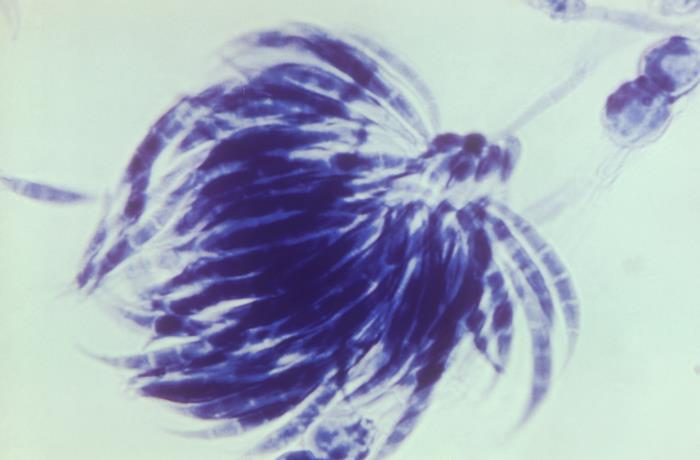
Fusarium species are the most destructive phytopathogenic and toxin-producing fungi, causing serious diseases in almost all economically important plants. Sporulation is an essential part of the life cycle of FusariumFusarium most frequently produces three different types of asexual spores, i.e., macroconidia, chlamydospores, and microconidia. It also produces meiotic spores, but fewer than 20% of Fusaria have a known sexual cycle. Therefore, the asexual spores of the Fusarium species play an important role in their propagation and infection. This review places special emphasis on current developments in artificial anti-sporulation techniques as well as features of Fusarium’s asexual sporulation regulation, such as temperature, light, pH, host tissue, and nutrients. This description of sporulation regulation aspects and artificial anti-sporulation strategies will help to shed light on the ways to effectively control Fusarium diseases by inhibiting the production of spores, which eventually improves the production of food plants.

Czech Republic – KROLEWSKI CHEESE 45% – Mold/Mould

Potravinynapranyri

Illustrative photo #1

Place of inspection:
Bedřichov ( Bedřichov 1597, 468 12 Bedřichov )
ID: 07942125
Food group: Milk and milk products Cheese
KROLEWSKI CHEESE 45%
Category: Dangerous foods
Invalid parameter:
fungi visible to the eye

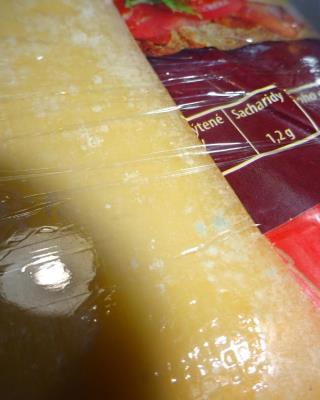
There were green and white mold colonies on the surface of the cheese. Food is not considered safe if it shows signs of spoilage.

The sample was taken from a loaded package that had three different shelf life dates on it.

Batch: Batch number: 41
Packaging: packed partly in the original technological packaging and partly in clear food foil
Quantity of the product in the package: 3.06 kg
Date of sample collection: 3/11/2022
Reference number: 22-000605-SZPI-CZ
 
The sample was detected by the official control of the State Agricultural and Food Inspection.

Research – Emerging health threat and cost of Fusarium mycotoxins in European wheat

Nature.com

CDC Fusarium1

Mycotoxins harm human and livestock health, while damaging economies. Here we reveal the changing threat of Fusarium head blight (FHB) mycotoxins in European wheat, using data from the European Food Safety Agency and agribusiness (BIOMIN, World Mycotoxin Survey) for ten years (2010–2019). We show persistent, high, single- and multi-mycotoxin contamination alongside changing temporal-geographical distributions, indicative of altering FHB disease pressure and pathogen populations, highlighting the potential synergistic negative health consequences and economic cost.

USA – Something South African LLC Recalls the Peppercorn Collection Gift Set Because of Possible Health Risk – Mould and Ochratoxin A

FDA

Summary

Company Announcement Date:
FDA Publish Date:
Product Type:
Food & Beverages
Reason for Announcement:
Mold (Aspergillus brasiliensis) and Ochratoxin A contamination
Company Name:
Something South African LLC
Brand Name:
World Market
Product Description:
Pepper Collection Gift Set

Company Announcement

Something South African LLC of Seattle, WA is recalling the Peppercorn Collection Gift Set, affected Best Before End (BBE) date of JUN/2024, Batch 494951-T, because mold (Aspergillus brasiliensis) and Ochratoxin A were detected in the Malaysian Long Pepper.

The affected Malaysian Long Pepper is visible through a sleeve of the Peppercorn Collection Gift Set (SKU 549153). This set has the net wt. 4.87oz/138g and UPC 6 009686 793712. This set consists of eight different kind of dried peppers and each kind is packaged in a sealed glass tube.

The gift set that contains the affected Malaysian Long Pepper has the Best Before End (BBE) date of JUN/2024 and Batch 494951-T printed on the back side of a package. The product was sold at the World Market stores nationwide and on the World Market e-commerce web site www.worldmarket.comExternal Link Disclaimer.

No illnesses have been reported to date.

The recall was initiated when our supplier notified us that mold (Aspergillus brasiliensis) and Ochratoxin A were detected in the Malaysian Long Pepper. The company has ceased the production and distribution of the product as our supplier continues with their root cause investigation.

RASFF Alert- Aflatoxin – Peanut Paste – Hazelnuts – Pistachio Kernels

RASFF

Aflatoxins in peanut paste from Italy in Germany

RASFF

Aflatoxins over the legal limits in hazelnuts in shell from GEORGIA in Italy

RASFF

AFLATOXINS IN HAZELNUTS FROM GEORGIA in Bulgaria and Germany

RASFF

Aflatoxins in pistachio kernels from the Islamic Republic of Iran In Germany, Italy and the UK

Research – Alltech: Testing of corn and forage in Europe indicates moderate to high mycotoxin risk for dairy cows.

Feed Navigator

In all regions of Europe, grass and corn silage samples contained levels of mycotoxins that would be deemed higher risk for use in dairy production, finds the Alltech 2022 European Harvest Analysis.

RASFF Alert – Mycotoxin – Ochratoxin A – Turkish Figs

RASFF

Ochratoxin A in Turkish Figs in the Netherlands