Category Archives: microbial contamination

Research – Surveillance of foodborne disease outbreaks in China, 2003–2017

Science Direct

Foodborne disease remains a major public health problem worldwide. To understand the epidemiology and changes of foodborne disease in China, data reported to the National Foodborne Disease Outbreak Surveillance System during 2003–2017 were collected. A total of 19,517 outbreaks, which resulted in 235,754 illnesses, 107,470 hospitalizations, and 1,457 deaths, were reported in this period. Of the 13,307 outbreaks with known etiology, 31.8% of outbreaks were caused by poisonous mushrooms, followed by Vibrio parahaemolyticus (11.3%), saponin (8.0%), Salmonella (6.8%), nitrite (6.4%), pesticide (4.8%), Staphylococcus aureus (4.2%) and Bacillus cereus (3.0%). Among 18,955 outbreaks with reported setting, 46.6% were associated with food prepared in a household, followed by 22.5% with food prepared in a restaurant, and 18.4% prepared in a canteen. Of the 13,305 outbreaks associated with a single food category, fungi (mainly poisonous mushroom) were the most commonly implicated food category, followed by meats, vegetables, aquatic animals, condiments, poisonous plants (such as saponin, tung oil or seed, aconite) and grains (such as rice, noodle, rice noodle). Analysis of foodborne disease outbreaks can provide insight into the most important causative agents and sources of foodborne disease, and assist public health agencies determine the high-risk etiology and food pairs, specific points of contamination and settings to reduce foodborne disease illnesses.

Research – Potential of pulsed electric field to control Aspergillus parasiticus, aflatoxin and mutagenicity levels: Sesame seed quality

Wiley Online

kswfoodworld

Image CDC

Seed processing technologies are essential for seed safety and functionality through protection of physicochemical quality, pathogen inactivation, aflatoxin detoxification and alleviation of mutagenicity. Design of a pilot‐scale unit of pulsed electric fields (PEF) to treat sesame seeds with respect to quality parameters, Aspergillus parasiticus inactivation and aflatoxin reduction as well as alleviation of aflatoxin mutagenicity were prompted in this study. PEF energy ranged from 0.97 to 17.28 J achieved maximum reductions of peroxide value and acidity number of 67.4 and 85.7%, respectively, and did not change color L*, a*, b* and hue values. A 60% reduction of A. parasiticus counts occurred at the maximum PEF energy. Aflatoxins G1, G2, B1, and B2 contents decreased by 94.7, 92.7, 86.9, and 98.7%, respectively. Except for the samples treated by 2.16 J with 100 μg/plate and by 6.80 J with 10 μg/plate, PEF treatment provided elimination of aflatoxin mutagenity. It is concluded that PEF treatment can be used to treat sesame seeds with preservation of physicochemical properties, inactivation of A. parasiticus and decomposition of aflatoxins with reduced mutagenicity.

Research – Human Norovirus strains differ in sensitivity to the body’s first line of defense

Science Daily

Interferon (IFN) responses are one of the first defenses the body mounts against viral infections, and research has shown that it plays a role controlling viral replication. But when researchers at Baylor College of Medicine investigated whether IFN restricted human norovirus (HuNoV) infection in human intestinal enteroids (HIEs), a cultivation system that recapitulates many of the characteristics of the human infection, they unexpectedly discovered that endogenous IFN responses by HIEs restricted growth of HuNoV strain GII.3, but not of GII.4, the most common strain worldwide.

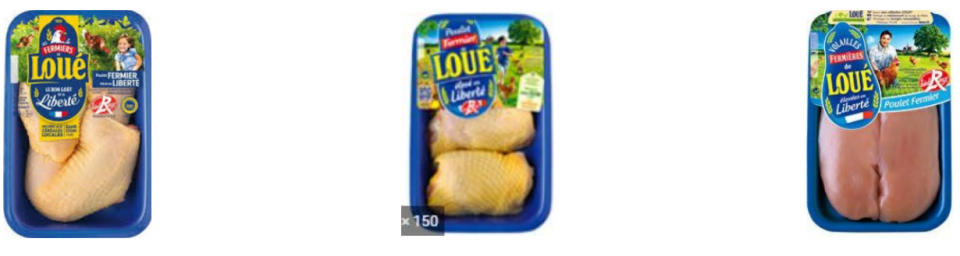
Luxembourg – TRAY OF 2 YELLOW CHICKEN THIGHS, TRAY OF 2 WHITE CHICKEN FILLETS, TRAY OF 3 HIGH CHICKEN THIGHS FROM THE LDC BRAND – PRESENCE OF SALMONELLA

SAP

Last name Tray of 2 yellow chicken thighs
Mark LDC
Bar code 0217823000000
Best before date (DLC) 09/09/2020
Lot 2020037392
Last name Tray of 2 white chicken fillets
Mark LDC
Bar code 3266980282882
Best before date (DLC)

NEW DLC!

1) 08/09/2020 & 09/09/2020

2) 09/22/2020

Lot

NEW LOT!

1) 2020037371

2) 2020038037

Last name Tray of 3 tall chicken thighs
Mark LDC
Bar code 3266980006969
Best before date (DLC) 09/11/2020
Lot 2020037371

Danger: Presence of salmonella


Salmonella can cause symptoms such as nausea, vomiting, abdominal cramps, diarrhea, fever and headache within 6 to 72 hours after consumption. These symptoms may be aggravated in young children, immunocompromised individuals and the elderly. People who have consumed these products and who present these symptoms are advised to consult a doctor, notifying him of this consumption.


Sale in Luxembourg by: Auchan

A sale by other operators cannot be excluded.

Source of information: Auchan recall notification.


Communicated by: Government Commission for Quality, Fraud and Food Safety .


Denmark – Risk of mold in various rye breads

DVFA

kswfoodworld

Image CDC

Lantmännen Schulstad is recalling several types of rye bread, after several own samples show that there is a risk of mold in several types of rye bread. The company has also received some customer complaints.
The risk of mold makes the rye breads unsuitable as food.

Recalled Foods , Published: September 18, 2020

Rye bread produced from 09-09-2020 to 10-09-2020 and exclusively with letter markings PH, PI and PG and “best before” dates from 18.09 and 19.09.
What food:
Forester 
Net weight: 1000 grams
Best before date: 18.09.PH, 18.09.PI, 19.09.PH, 19.09.PI
EAN barcode: 5701205005498
Forester 
Net weight: 500 grams
Best before date: 18.09.PG, 18.09.PI, 19.09.PG, 19.09.PI
EAN barcode: 5701205005481
Sch. Schwarzbrød
Net weight: 1000 grams
Best before date: 18.09.PH, 18.09.PI, 19.09.PH, 19.09.PI
EAN barcode: 5701205005498
Sold in:
Shops across the country
What food:
Coop COOP Schwarzbrot
Net weight: 500 grams
Best before date: 18.09.PG, 18.09.PI, 19.09.PG, 19.09.PI
EAN barcode: 5700383226435
 
Sold in:
COOP stores nationwide
What food:
Rema 1000 Schwarzbrød
Net weight: 500 grams
Best before date: 18.09.PG, 18.09.PI, 19.09.PG, 19.09.PI
EAN barcode: 5705830010704
REMA 1000 Coarse Rye Bread 
Net weight: 1000 grams
Best before date: 18.09.PH, 18.09.PI, 19.09.PH, 19.09.PI
EAN barcode: 5705830600752
Sold in:
REMA1000 stores nationwide
Rye bread produced from 09-09-2020 to 17-09-2020 and exclusively with letter marking AI and “best before” dates from 18.09 and 25.09.
What food:
Kondi Karl Rye Bread 
Net weight: 500 grams
Best before date: 18.09 to 25.09 AI
EAN barcode: 5701205005511
Livelihood Kernegrov 
Net weight: 475 grams
Best before date: 18.09 to 25.09 AI
EAN barcode: 5701205006938
Sold in:
Shops across the country
Company recalling:
Lantmännen Schulstad A / S
Cause:
The company has had errors in production and found mold on several of its own reference samples. 
Risk:
Risk of mildew makes the products unsuitable as food.

Advice for consumers:
The Danish Veterinary and Food Administration advises consumers to deliver the products back to the store where they were purchased or to discard them.


Ireland – Recall of Me2you Italian Pasta Salad due to the Possible Presence of Listeria monocytogenes

FSAI

Thursday, 17 September 2020

Summary
Category 1: For Action
Alert Notification: 2020.59
Product: Me2you Italian Pasta Salad; pack size: 250g
Batch Code: PS611; use by: 17/9/20
Country Of Origin: United Kingdom

Message:

Me2you is recalling the above batch of Me2you Italian Pasta Salad due to the possible presence of Listeria monocytogenes.  Point-of-sale recall notices will be displayed in stores supplied with the implicated batch.

Nature Of Danger:

Symptoms of Listeria monocytogenes infection can include vomiting, nausea, persistent fever, muscle aches, severe headache and neck stiffness.  In rare cases, the infection can be more severe, causing serious complications.  Some people are more vulnerable to Listeria monocytogenes infections, including pregnant women, babies, and people with weakened immune systems, including the elderly.  The incubation period (time between initial infection and first symptoms appearing) is on average 3 weeks but can range between 3 and 70 days.

Action Required:

Inspectors:

A distribution list will be emailed to PEHOs in due course. Please notify the FSAI (foodincidents@fsai.ie) of any concerns.

Consumers:

Consumers are advised not to eat the implicated batch.

USA – Austin federal court makes it official: Blue Bell owes record $17.25 million in criminal penalties – Listeria monocytogenes

Food Safety News

A federal court in Texas sentenced ice cream manufacturer Blue Bell Creameries L.P. to pay $17.25 million in criminal penalties for shipments of contaminated products linked to a 2015 listeriosis outbreak.

The Brenham, Texas-based Blue Bell is an iconic 113-year old ice cream maker whose product was once only available in the Lone Star State.   It now distributes in about half the country with manufacturing in Texas, Alabama, and Oklahoma.   The 2005 listeria outbreak proved both costly and deadly for the ice cream maker.

RASFF Alerts – Salmonella – Paprika Powder – Frozen Whole Cockerels

European Food Alerts

RASFF

Salmonella (presence /25g) in paprika powder from China in Spain

RASFF

Salmonella enterica ser. Indiana (present /25g) in frozen whole cockerels from France in Finland

RASFF Alerts – Moulds – Condensed Milk and Cocoa Coating – Chilled Fish Fillets – Strawberry Jam

European Food Alerts

RASFF

chilled curd bars with condensed milk and cocoa coating from Lithuania infested with moulds in Poland

RASFF

chilled fish fillets (Thunnus spp) from Ghana unfit for human consumption (infested with mould) in the UK

RASFF

strawberry jam from Belgium infested with moulds in Belgium

RASFF Alert – Aflatoxin – Groundnut Kernels

European Food Alerts

RASFF

aflatoxins (B1 = 16.8; Tot. = 19.3 µg/kg – ppb) in groundnut kernels from Argentina in Bulgaria